
¿El afeitado engrosa el vello? Desmontando el mito

¿El afeitado engrosa el vello? La respuesta es no. El afeitado no afecta al grosor, el color ni el ritmo de crecimiento del vello. En este artículo se explica la ciencia que hay detrás del crecimiento del vello y se desmienten los mitos más comunes sobre el afeitado y el grosor del vello.
Principales conclusiones
- El afeitado corta el vello en la superficie de la piel sin modificar su grosor, color o ritmo de crecimiento.
- La aparición de un vello más grueso o más oscuro después del afeitado es un efecto visual causado por las puntas romas del vello recién cortado.
- La velocidad de crecimiento del vello está controlada por la genética y las hormonas, no por el afeitado; las creencias comunes que sugieren lo contrario son mitos.
Entender el crecimiento del cabello
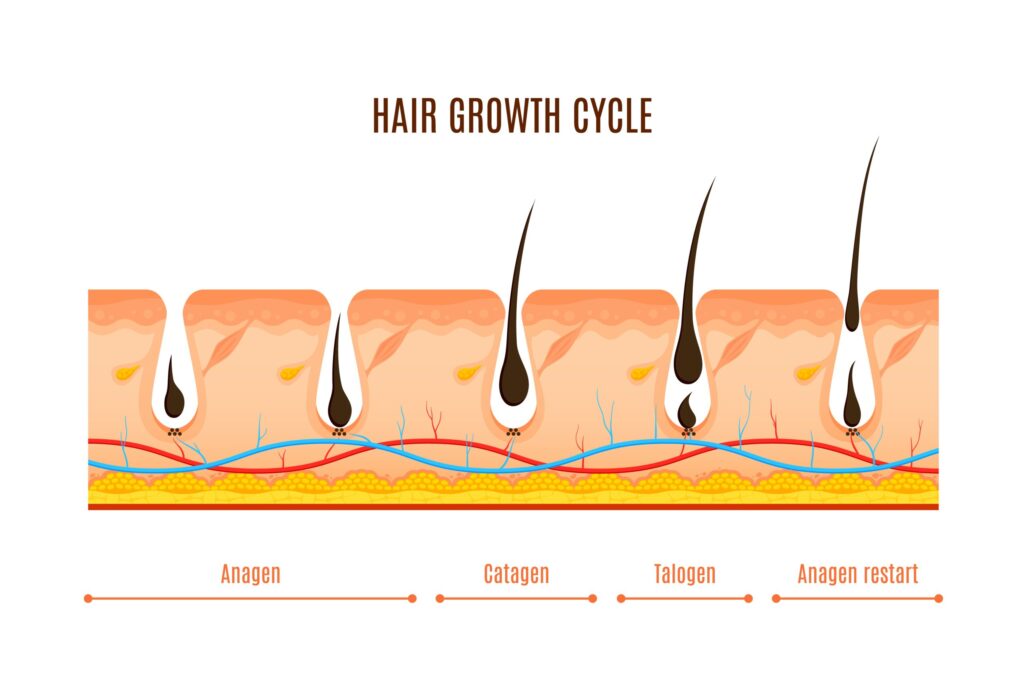
El crecimiento del pelo es un proceso fascinante y complejo que implica varias fases y estructuras biológicas. En el centro de este proceso se encuentran los folículos pilosos, incrustados en la piel y responsables de la producción del vello. Saber cómo se desarrolla el vello a partir de estos folículos ayuda a aclarar mitos sobre el afeitado y el crecimiento del vello.
Un examen más detallado del ciclo de crecimiento del cabello revela que éste crece por etapas, cada una de ellas con características distintas. Estas etapas incluyen:
- Anágena (crecimiento)
- Catágeno (regresión)
- Telógeno (reposo)
- Muda Reconocer estas fases y la función de los folículos pilosos nos permite ver cómo afecta el afeitado al aspecto y el crecimiento del vello.
El ciclo de crecimiento del cabello
El ciclo de crecimiento del cabello consta de tres fases principales:
- Anágeno: El pelo crece activamente desde el folículo piloso, con células que se multiplican rápidamente y producen el tallo piloso. Esta fase puede durar varios años y contribuye a la longitud del pelo.
- Catágeno
- Telógeno
El cabello entra en la fase catágena, cuando el crecimiento se ralentiza. Durante esta fase, el folículo piloso también empieza a encogerse. Por último, durante la fase telógena, el crecimiento del pelo se detiene por completo y el pelo acaba cayéndose. Esta fase puede durar varios meses y está muy influenciada por los cambios hormonales.
Comprender estas fases nos ayuda a ver que el crecimiento del vello es un proceso cíclico, influido por diversos factores internos más que por acciones externas como el afeitado.
Función de los folículos pilosos
Los folículos pilosos son estructuras complejas que desempeñan un papel fundamental en la producción y el crecimiento del cabello. Cada folículo contiene un bulbo donde se forma el tallo piloso y células madre que son vitales para la regeneración del cabello durante el ciclo capilar. Sorprendentemente, una persona tiene más de cinco millones de folículos pilosos en todo el cuerpo, con raíces y una concentración significativa en el cuero cabelludo.
Estos folículos tienen la capacidad de regenerarse, lo que significa que el pelo puede volver a crecer incluso después de sufrir daños. Hormonas como los estrógenos son cruciales para mantener la salud de los folículos pilosos, sobre todo en las mujeres, y las hormonas del estrés, como el cortisol, pueden alterar los ciclos de crecimiento del pelo y provocar su caída. Esta capacidad regenerativa y la influencia hormonal subrayan la complejidad del crecimiento del pelo y el impacto limitado del afeitado.
¿El afeitado engrosa el vello?
La idea de que el afeitado hace que el vello vuelva a crecer más grueso es un mito muy extendido que ha sido desmentido por pruebas científicas. El afeitado no afecta al grosor, el color ni el ritmo de crecimiento del vello. Cuando te afeitas, sólo estás cortando el vello a nivel superficial, sin alterar la raíz ni el folículo piloso en sí. Esto significa que el vello volverá a crecer con el mismo grosor y textura que antes.
La percepción de que el pelo afeitado parece más grueso se debe al ángulo romo con el que se corta el pelo, que le da un tacto más áspero. Sin embargo, una vez que el pelo crece, recupera su textura y aspecto originales. Entender esto ayuda a disipar el mito y aclara que el afeitado no cambia fundamentalmente las propiedades del vello.
Por qué el pelo afeitado parece más áspero
La sensación de un vello más grueso tras el afeitado es puramente una ilusión táctil. Cuando se afeita el vello, se corta por el tallo, dejando una punta roma. Esta punta roma puede parecer más áspera y gruesa cuando empieza a crecer, pero no indica ningún cambio real en el diámetro o la estructura del vello.
Además, como el pelo se corta en la superficie de la piel, no ha tenido tiempo de afinarse de forma natural, lo que contribuye a la sensación de aspereza. Esto ayuda a explicar por qué el pelo recién afeitado tiene un tacto diferente, pero su grosor no varía, lo que lo hace más fino y suave, a diferencia del pelo sin afeitar.
La ilusión de un pelo más grueso
La ilusión de un vello más grueso tras el afeitado puede atribuirse a las puntas romas creadas por la maquinilla de afeitar. Estas puntas romas pueden proyectar una sombra o parecer más oscuras contra la piel, dando la impresión de un vello más grueso. Sin embargo, se trata de un mero efecto visual y no refleja ningún aumento real del grosor del vello ni lo hace parecer más fino.
Los tallos del pelo cortado también pueden parecer más perceptibles debido a su borde recto, lo que crea la falsa percepción de una mayor densidad. Comprender estas ilusiones visuales y táctiles ayuda a desmentir el mito y proporciona una imagen más clara de lo que le ocurre al vello después del afeitado.
¿Afecta el afeitado a la velocidad de crecimiento del vello?
La creencia de que el afeitado afecta a la velocidad de crecimiento del vello es otro error común. El afeitado no influye en la velocidad de crecimiento del vello; ésta viene determinada principalmente por la genética. El vello suele crecer a un ritmo constante de entre medio centímetro y un centímetro al mes, independientemente del afeitado. Sin embargo, después del afeitado, la velocidad de crecimiento del vello puede variar en función de la genética y la ubicación del vello.
El vello vuelve a crecer sano después del afeitado, pero el propio acto de afeitarse no acelera ni ralentiza el proceso de crecimiento. Comprender esto es esencial para cualquiera que desee controlar sus expectativas sobre el crecimiento del vello tras el afeitado.
Genética y crecimiento del cabello
La genética desempeña un papel importante a la hora de determinar la velocidad y el patrón de crecimiento del pelo. La velocidad a la que crece el pelo y su densidad general son en gran medida rasgos hereditarios. Factores como la etnia, la edad y la composición genética individual contribuyen a las variaciones en las tasas de crecimiento del cabello.
Puesto que el afeitado no altera los factores genéticos, no puede cambiar la velocidad inherente del crecimiento del vello. Esto pone de relieve que cualquier cambio percibido en la velocidad de crecimiento lento es casual y no un resultado directo del afeitado.
Hormonas y crecimiento del cabello
Las hormonas influyen significativamente en el crecimiento del vello, y la testosterona y los andrógenos desempeñan un papel crucial. Por ejemplo, la testosterona puede acelerar el crecimiento del vello en determinadas zonas del cuerpo, mientras que los andrógenos son responsables de convertir el vello fino en vello terminal más grueso durante la pubertad.
Los cambios hormonales durante las distintas etapas de la vida, como la pubertad o la menopausia, también pueden influir en los patrones de crecimiento y la densidad del cabello. Comprender la influencia hormonal proporciona una imagen más clara de por qué el crecimiento del cabello varía entre las personas y con el paso del tiempo.
Métodos de depilación alternativos
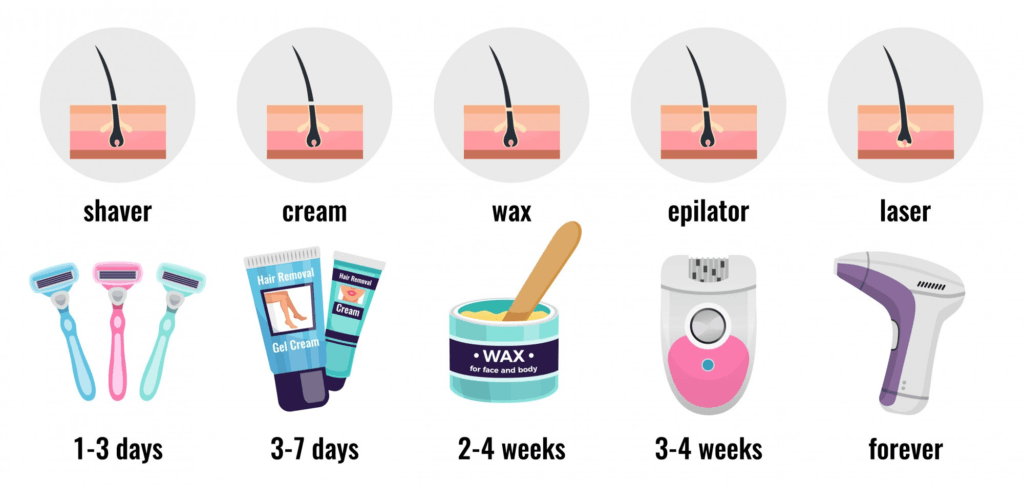
Para quienes buscan alternativas al afeitado, existen otros métodos de depilación que ofrecen distintas ventajas y longevidad. La cera, la depilación láser y la depilación son algunas de las opciones más populares. Cada método se centra en la eliminación del vello de forma única, proporcionando distintos grados de permanencia y suavidad.
Explorar estas alternativas puede ayudarle a elegir las mejores técnicas de depilación para sus necesidades y preferencias. Comprender los pros y los contras de cada método le permitirá tomar decisiones informadas sobre su rutina de depilación.
Depilación
La depilación con cera es un método que elimina el vello desde la raíz, dando como resultado:
- Una superficie cutánea más suave durante más tiempo que con el afeitado
- Eliminación de todo el vello del folículo, retrasando el rebrote durante varias semanas.
- La depilación con cera elimina el vello desde la raíz, por lo que tarda más tiempo en volver a crecer.
- Reducción de la frecuencia de las sesiones de depilación, lo que la convierte en una opción cómoda para quienes buscan resultados más duraderos
Sin embargo, la depilación con cera puede ser más dolorosa que el afeitado y puede requerir una aplicación profesional para obtener los mejores resultados.
Depilación láser
La depilación láser es un método muy eficaz que actúa sobre los folículos pilosos con energía láser para inhibir el crecimiento futuro del vello y eliminar el vello corporal no deseado. Este método proporciona resultados duraderos tras varias sesiones y reduce significativamente la aparición de vello enquistado.
El tratamiento con láser ataca y daña los folículos pilosos, reduciendo gradualmente la densidad y el crecimiento del vello. Aunque requiere una inversión económica y múltiples tratamientos, los beneficios a largo plazo lo convierten en una opción popular para muchos. La depilación láser suele requerir de cinco a ocho tratamientos para obtener resultados óptimos.
Depilación
La depilación es otro método de depilación que ofrece resultados más duraderos que el afeitado. La depilación elimina el vello de raíz, retrasando su crecimiento y dejando la piel suave durante semanas. Aunque puede ser más dolorosa que el afeitado, el largo periodo de piel suave y la menor frecuencia de depilación la convierten en una opción atractiva para quienes buscan una solución más duradera.
Existen varios dispositivos de depilación para uso doméstico que ofrecen comodidad y eficacia.
Consejos para un afeitado más suave
Para conseguir un afeitado más suave es necesario prepararse adecuadamente, utilizar herramientas de calidad y aplicar unos buenos cuidados después del afeitado. Utilizar una crema o gel de afeitar específicos puede reducir la fricción y permitir un afeitado más apurado. Hidratar la piel después del afeitado ayuda a mantener la suavidad y evitar irritaciones. Se recomienda afeitarse en la dirección de crecimiento del vello para minimizar la irritación y los pelos enquistados. Lo mejor es afeitarse después de la ducha, cuando la piel está limpia y húmeda.
Seguir estos consejos de afeitado garantiza una experiencia de afeitado cómoda y eficaz, minimizando el riesgo de pelos enquistados e irritación de la piel. Poner en práctica estas prácticas puede transformar tu rutina de afeitado en un proceso más agradable y eficaz.
Exfoliar antes de afeitar
Exfoliar la piel antes del afeitado es esencial para un afeitado más suave. Ayuda a eliminar las células muertas que pueden acumularse en la superficie de la piel, reduciendo el riesgo de vello encarnado. Exfoliarse uno o dos días antes del afeitado garantiza que la piel esté preparada y permite un afeitado más apurado.
La exfoliación elimina las células muertas de la piel, mejorando la calidad del afeitado y evitando irritaciones. Este sencillo paso puede marcar una diferencia significativa a la hora de conseguir un afeitado suave y cómodo.
Utilice herramientas de afeitado de calidad
Las herramientas de afeitado de alta calidad son esenciales para obtener los mejores resultados. Las maquinillas afiladas minimizan la irritación de la piel y permiten un afeitado más apurado, mientras que las cremas o geles de afeitar adecuados ayudan a lubricar la piel y el vello.
Cambiar la cuchilla de afeitar cada cinco o siete usos garantiza que se mantenga afilada, evitando tirones y molestias. Invertir en herramientas y productos de afeitado de calidad mejora la experiencia general del afeitado y garantiza unos resultados más suaves.
Cuidados después del afeitado
Los cuidados posteriores al afeitado son esenciales para mantener la hidratación de la piel y evitar irritaciones. Se puede utilizar un producto calmante después del afeitado para eliminar cualquier residuo y mantener la hidratación de la piel al tiempo que se previene la irritación de la cuchilla.
La aplicación de un bálsamo para después del afeitado ayuda a reducir la irritación y a mantener un tacto suave. Un cuidado adecuado después del afeitado garantiza un afeitado cómodo y mantiene la piel sana e hidratada. Hidratar la piel después del afeitado ayuda a mantenerla suave y a restaurar la barrera cutánea.
Mitos comunes sobre el afeitado
Los mitos más comunes sobre el afeitado suelen dar lugar a malentendidos y expectativas poco realistas sobre el crecimiento del vello. El afeitado no afecta a la velocidad de crecimiento del vello ni a su grosor; estas características vienen determinadas principalmente por la genética y las influencias hormonales.
Proporcionar información objetiva sobre estos mitos ayuda a aclarar ideas erróneas y permite darse cuenta de cómo afecta el afeitado al vello.
El afeitado hace que el vello vuelva a crecer más oscuro
La creencia de que el afeitado hace que el vello vuelva a crecer más oscuro es un mito persistente que carece de base científica. El afeitado no cambia el color del vello. El vello que vuelve a crecer después del afeitado es del mismo color que antes; puede parecer más oscuro debido a la punta roma que deja la maquinilla, que puede proyectar una sombra más pronunciada contra la piel.
Esta idea errónea persiste porque el vello recién rapado es más perceptible cuando empieza a crecer de nuevo. Sin embargo, a medida que el vello nuevo sigue creciendo, se hace visible y recupera su forma cónica y color naturales, disipando la ilusión de un vello más oscuro.
El afeitado acelera el crecimiento del vello
Otro mito muy extendido es que el afeitado hace que el vello vuelva a crecer más deprisa. Esta percepción es incorrecta; el afeitado no influye en la velocidad de crecimiento del vello. La velocidad a la que vuelve a crecer el vello viene determinada por factores genéticos y hormonales, no por el afeitado.
La ilusión de que el vello vuelve a crecer más rápido se debe a la textura más gruesa del nuevo crecimiento, que puede hacer que el vello parezca más prominente poco después del afeitado. Las pruebas científicas confirman que el afeitado no aumenta la velocidad de crecimiento del vello.
Resumen
En resumen, los mitos que rodean al afeitado y al crecimiento del vello, como que el afeitado hace que el vello vuelva a crecer más grueso, más oscuro o más rápido, han sido completamente desmentidos. El afeitado simplemente corta el vello a nivel superficial, dejando una punta roma que puede parecer más áspera, pero que no altera el grosor, el color ni el ritmo de crecimiento del vello. Comprender el ciclo de crecimiento del vello y el papel de los folículos pilosos ayuda a aclarar por qué el afeitado no tiene ningún efecto duradero sobre las propiedades del vello.
Para quienes buscan alternativas al afeitado, métodos como la depilación con cera, la depilación láser y la depilación ofrecen diferentes ventajas y resultados más duraderos. Cada método se centra en la eliminación del vello de forma única, proporcionando distintos grados de permanencia y suavidad. Incorporando consejos para un afeitado más suave, como exfoliarse antes de afeitarse y utilizar herramientas de afeitado de calidad, puedes mejorar tu experiencia de afeitado y mantener una piel sana y suave. Con estos conocimientos, podrás tomar decisiones informadas sobre tus rutinas de depilación y disipar con confianza cualquier mito persistente sobre el afeitado.
Preguntas frecuentes
¿El afeitado hace que el vello vuelva a crecer más grueso?
El afeitado no hace que el vello vuelva a crecer más grueso; simplemente crea una punta roma que puede parecer más áspera. El grosor natural del vello no se ve afectado.
¿El afeitado hace que el vello vuelva a crecer más oscuro?
El afeitado no hace que el vello vuelva a crecer más oscuro; sólo puede parecer más oscuro temporalmente debido a la punta roma. Al final, el vello recuperará su color natural a medida que crezca.
¿Afecta el afeitado a la velocidad de crecimiento del vello?
El afeitado no afecta a la velocidad de crecimiento del vello; en ella influyen principalmente factores genéticos y hormonales. Por lo tanto, puede estar seguro de que el afeitado no alterará la rapidez con la que vuelve a crecer el vello.
¿Cuáles son los métodos de depilación alternativos al afeitado?
Entre los métodos de depilación alternativos se encuentran la cera, la depilación láser y la depilación, cada uno de los cuales ofrece resultados más duraderos que el afeitado. Los métodos de depilación como la cera o los tratamientos con láser pueden prolongar el tiempo que tarda en volver a crecer el vello en comparación con el afeitado. Considere estas opciones en función de sus necesidades de depilación eficaz.
¿Cómo puedo conseguir un afeitado más suave?
Para conseguir un afeitado más suave, es esencial exfoliarse antes, utilizar herramientas de afeitado de calidad y asegurarse de que el cuidado posterior al afeitado es el adecuado para minimizar la irritación y favorecer la suavidad de la piel. La aplicación de estas prácticas mejorará enormemente tu experiencia de afeitado.




 English (UK)
 Français
 Deutsch
 Italiano
 Español
 Nederlands
 Português