
Tolle
Shorter sides and a longer top, swept up and back at the front.
A quiff is a men's haircut with shorter sides and a longer top, where the hair at the front is lifted up off the forehead and swept slightly back. The fringe is the longest part and the length shortens towards the crown, which is what lets the front stand up without the whole top having to. It sits between a strukturierter Crop and a full pompadour, and of jeder Eintrag im Verzeichnis it is the one that most rewards a hair dryer.
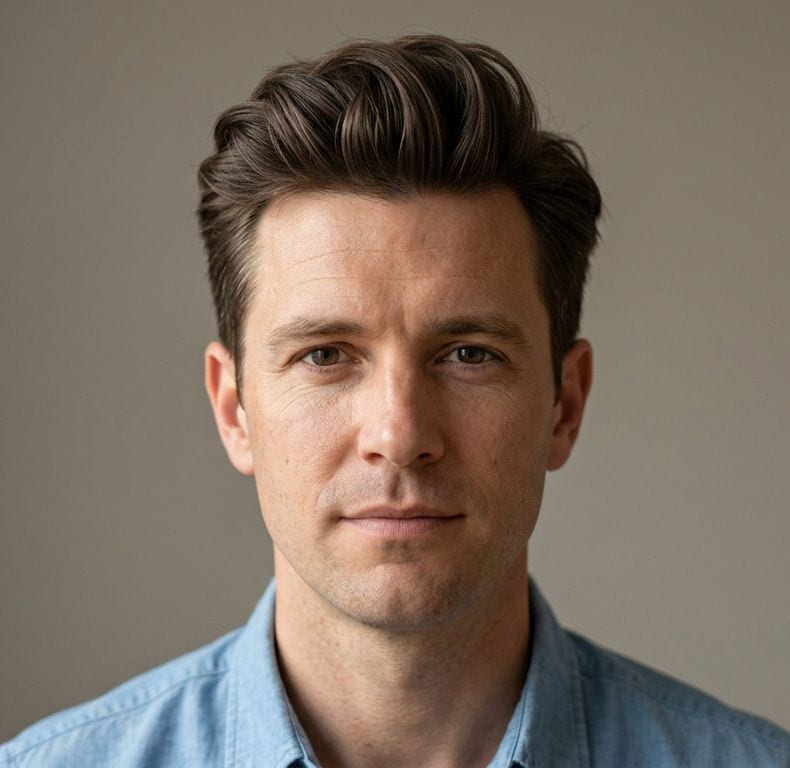
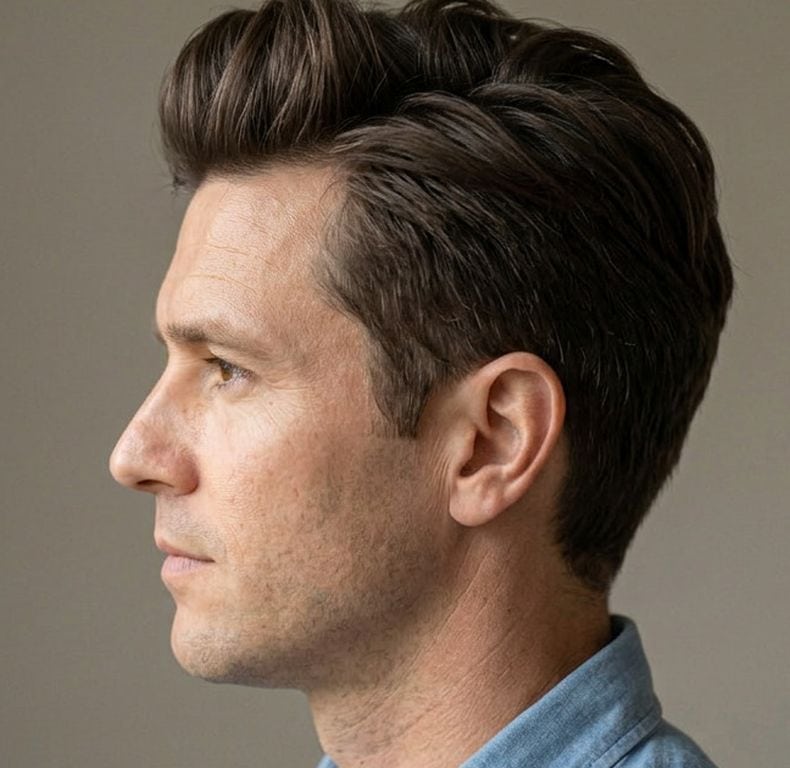
Auf einen Blick
- Auch bekannt als
- Quiff haircut
- Beilagen
- A grade 3 to 4, or scissor cut
- Nach oben
- 6 to 10cm, longest at the front
- Vorderseite
- Lifted up and swept back
- Instandhaltung
- Every 4 to 6 weeks
- Am besten auf
- Round and square faces. The height lengthens the face
- Vermeiden Sie dies, wenn
- Your hair is very fine or you do not want to style it daily
- Bekannt geworden durch
- Alex Turner (in the Arctic Monkeys' Suck It and See era, 2011), Gary Barlow (with a short back and sides)
5 £ Rabatt auf Ihre erste Lieferung
Ein frischer Haarschnitt kommt mit einem sauberen Nackenausschnitt am besten zur Geltung. Eine scharfe Klinge sorgt dafür, dass dies auch zwischen den Friseurbesuchen so bleibt – ganz ohne die Rasurbrandstellen, die eine stumpfe Klinge hinterlässt.
5 £ Rabatt auf Ihr erstes Abonnement oder Ihre erste VIP-Bestellung – einmal pro Kunde, Abmeldung mit einem Klick
So fragst du deinen Friseur
- Ask for a quiffLonger on top, longest at the front, and shorter sides.
- Give the side lengthA grade 3 or 4, or scissor cut, blended into the top.
- Keep the frontAsk them not to take much off the front.
- Ask for a blow dryWatch how they lift it, so you can do it at home.
Die Varianten
Derselbe Schnitt, anders getragen. Was sich ändert, ist die Länge, wo der kurze Teil beginnt und wie das Oberteil gestylt wird.
Wird es bei deinem Haar funktionieren?
Der Haartyp bestimmt, wie ein Haarschnitt sitzt und wie schnell er seine Form verliert. Die folgende Tabelle gibt einen kurzen Überblick.
| Heterosexuell | Ideal | Holds the lift with product. |
|---|---|---|
| Gewellt | Ideal | Waves add volume. |
| Lockig | Werke | Curls give lift, but it reads less neat. |
| Coily | Vermeiden | Hard to get the swept-back lift. |
| Dick | Ideal | Thick hair holds the height. |
| Fein oder ausdünnend | Vermeiden | The lift exposes thin areas at the front. |
Passt es zu Ihrem Gesicht?
Ob ein Haarschnitt die Höhe betont oder die Breite reduziert, entscheidet darüber, wie er zu Ihrer Gesichtsform passt. Der Haartyp spielt zwar eine größere Rolle, aber das ist hier nur die Kurzfassung.
| Oval | Ideal | Ausgewogene Proportionen, sodass der Schnitt selbst den Ausschlag gibt. |
|---|---|---|
| Rund | Ideal | Height on top and shorter sides lengthen the face. |
| Platz | Ideal | Height on top balances a strong jaw. |
| Länglich | Vermeiden | Extra height makes a long face look longer. |
| Herz | Werke | Keep the height modest so the forehead does not look wider. |
| Diamant | Werke | Some fullness on top helps; very tight sides stress the cheekbones. |
Passende Bartfrisuren
Haare und Bart bilden eine einheitliche Kontur. Diese sorgen bei diesem Schnitt für die richtigen Proportionen.


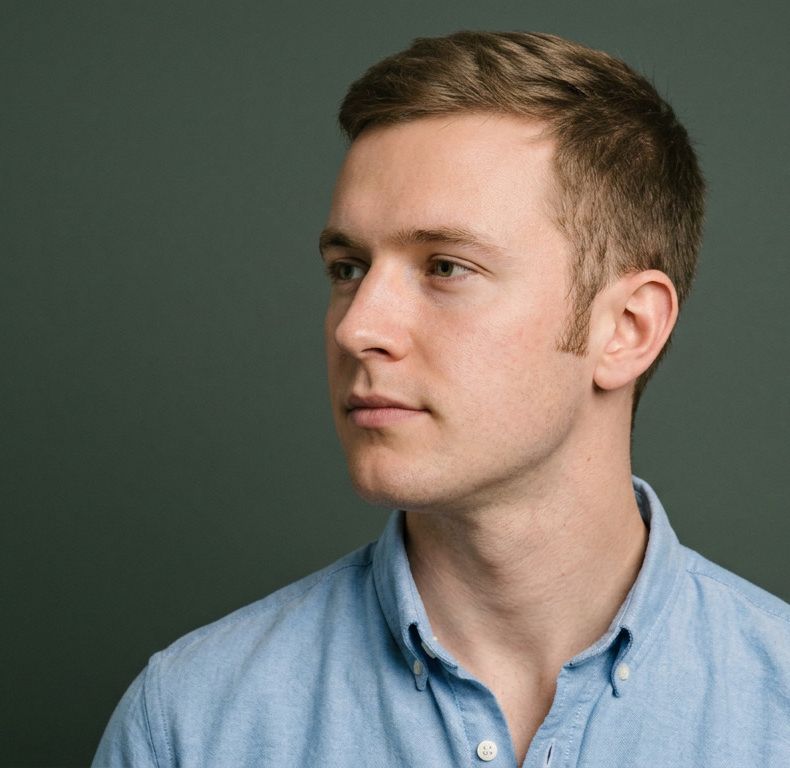
What a quiff actually is
Three things make a quiff. The sides are shorter than the top. The top is graded, longest at the front and shorter at the crown. And the front is styled up and back, so the forehead is clear and the hair has visible height at the hairline.
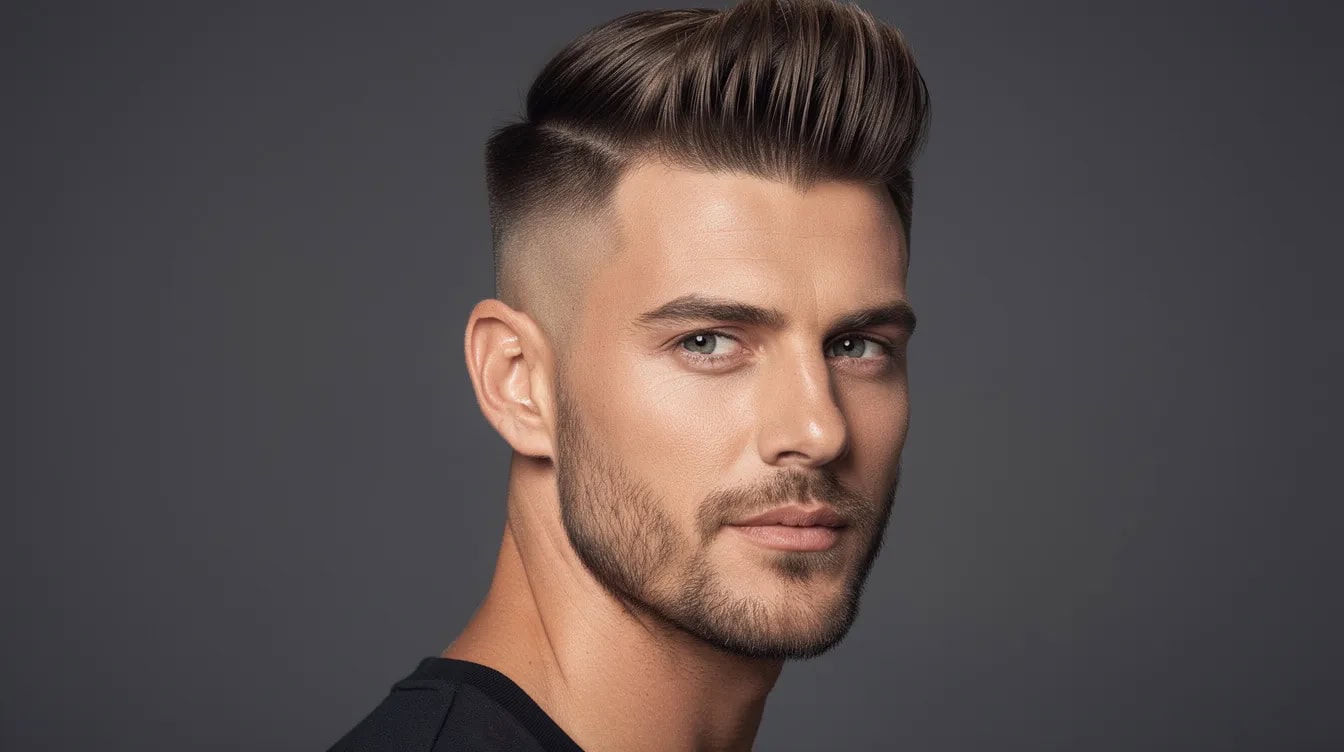
That grading is the part people miss. If the whole top is one length, lifting the front pulls the rest of the hair up with it and you get a flat-topped block. If the top is graded, the front can rise and roll back while the crown lies flat behind it.
The finish can go either way. A classic quiff is smooth and fairly neat, often with scissor-cut sides. A textured quiff is matte and a bit rough, pushed up with the fingers rather than combed. Both are the same cut styled differently.
Quiff, pompadour and slick back
These three all use the length on top, and they get mixed up constantly.
A pompadour brushes all of the top straight back from the forehead with a lot of volume at the front, usually with a shiny finish and a firm hold. It is taller, heavier and takes longer to style. A quiff is lighter, with the front rising up and slightly back and the rest of the top lying flatter, often with a matte finish.
A slick back also combs the hair back, but flat, with little or no height. If your quiff has collapsed by mid-afternoon, it is turning into a slick back.
The practical difference is time. A slick back needs a comb and product. A quiff needs a hair dryer. A pompadour needs both and patience.
Who a quiff suits
Thick, straight or wavy hair is the ideal. It holds height with very little product and the wave adds volume of its own. This is the hair the cut was built around.
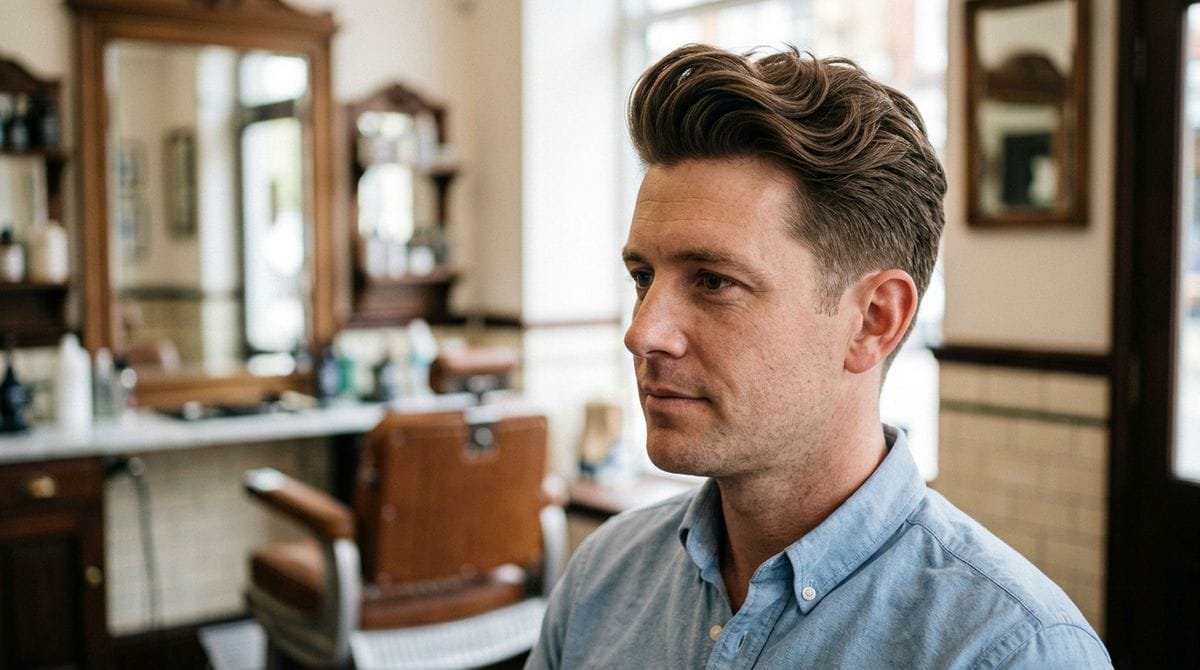
Curly hair can do it, and the curls give natural lift, but the result is rounder and less neat. Leave more length on top and expect a softer shape.
Fine or thinning hair is the difficult case. Lifting the front exposes the hairline and any thin patches behind it, and fine hair collapses under its own weight. A shorter quiff, about 5cm at the front, with plenty of texture and careful drying, is the realistic version. If the front is thinning noticeably, the Frisuren für Männer mit schütterem Haar page has better answers.
Coily hair rarely takes the swept-back lift and there are better cuts for it.
Gesichtsform genuinely matters with a quiff, because it adds height. On a round or square face that height lengthens the face, which is usually welcome. On a long face it stretches it further, so keep the quiff short and the sides a little fuller.
How much length you need
The front needs at least 6cm to lift into a recognisable quiff. Shorter than about 5cm and it behaves like a textured crop no matter what you do with the dryer.
- Short quiff. About 5 to 6cm at the front. Modest height, quick to style.
- Medium quiff. About 7 to 8cm at the front, shortening to 4 or 5cm at the crown. The most common version and the best balance of height and effort.
- Long quiff. 9 to 10cm or more at the front. More height and movement, more drying time.
Hair grows roughly a centimetre a month. From a crop with 3cm on top, a medium quiff is three or four months away. Keep the sides tidy while you wait and ask the barber to leave the front alone.
How to ask a UK barber for a quiff
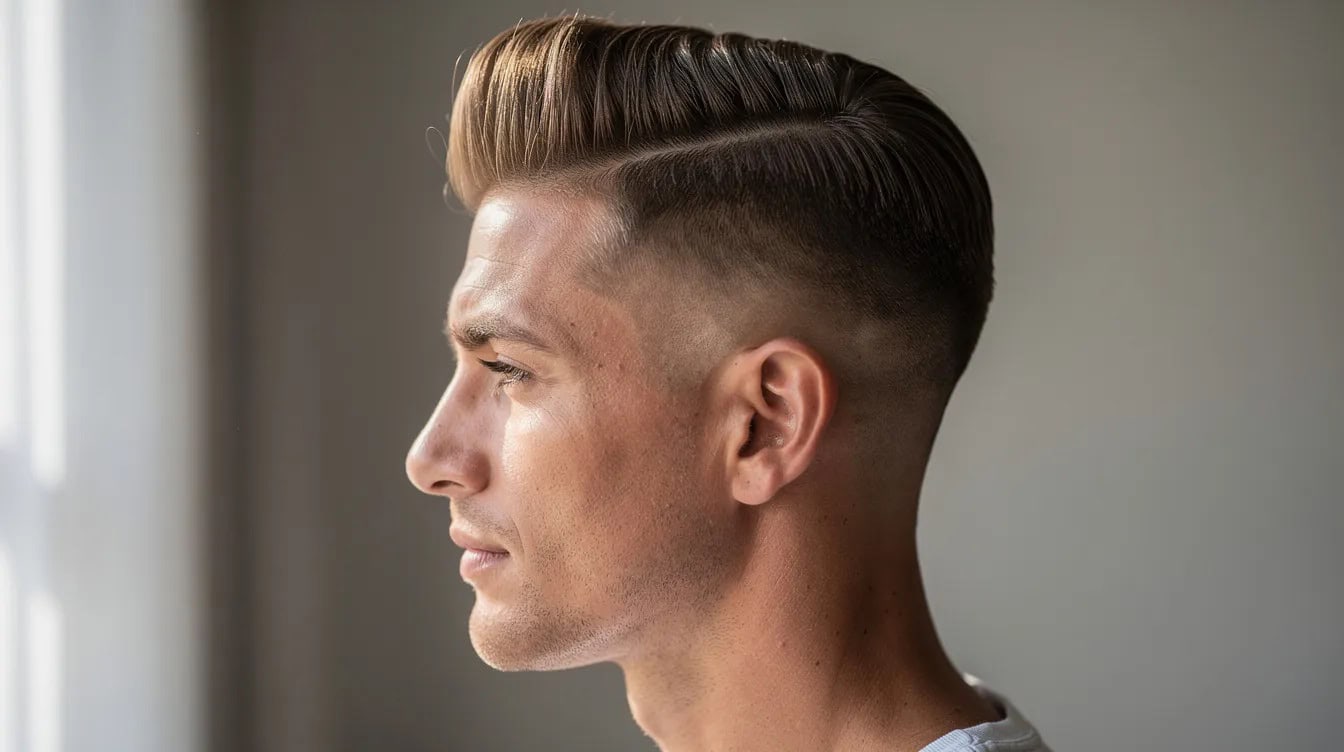
Bring a side-on photo. The profile shows the height and the grading, which a front photo hides.
- Ask for a quiff. "Longer on top, longest at the front, with shorter sides." Most barbers know the word.
- Die Seiten. For the classic look, a grade 3 or 4 (9mm or 12mm), or scissor cut, blended into the top. For more contrast, ask for a taper or a fade, for example a low taper fade starting at a grade 1 (3mm) around the ears. Say whether you want any skin showing. Most quiffs do not need it.
- Die Spitze. "Leave about 7 or 8cm at the front, shorter towards the crown, point cut for texture." Ask them not to take much off the front.
- The parting. A natural parting or a soft sweep to one side. A shaved-in parting line is optional and needs keeping.
- The blow dry. Ask them to style it and watch how they lift the front. That is the technique you will repeat every morning.
For a sharper look, a quiff over an undercut disconnects the top from short sides with a clear step. It is a different cut, with its own page.
Styling a quiff at home
The hair dryer does most of the work. Product only holds what the dryer has built.
- Towel dry to damp. Not wet, not dry.
- Add grip. A little sea salt spray or a light mousse at the roots on damp hair helps the front stand up.
- Blow dry. Medium heat. Pull the front forward first with a round brush or your fingers, then lift it up and back from the roots, aiming the air from root to tip. Keep the crown flatter. Finish with cool air to set the shape.
- Apply product. A pea-sized amount of matte clay or paste for a textured quiff, or a pomade or wax for a smoother, shinier finish. Warm it in your palms and work it through from the roots, not just the ends.
- Shape. Lift and push the front back with your fingers. Use a comb only if you want it neat. A quiff should have some movement in it.
Once the cut is right, this takes about five minutes.
For curly quiffs, use curl cream instead of clay, dry with a diffuser on low heat and keep your hands out of it once it is dry.
Pflege und Schnittintervalle
Every four to six weeks, sooner if you have a fade at the sides. Faded sides lose their sharpness in two or three weeks, and the quiff looks worse for it even if the top is fine.
At each cut the barber should trim the top to keep the grading, take weight out if it is getting puffy, and tidy the sides and neckline. Over-long sides are the most common reason a quiff starts looking untidy.
Between cuts, a few things help:
- If it falls flat, check the front is still 6cm or more, dry the roots fully before adding product, and use a firmer matte product.
- If it looks like a helmet, you are using too much product, or the top needs thinning out at the next cut.
- If the front splits, dry it in the opposite direction to the split first, then style it back.
Washing every day with strong shampoo strips the hair and makes it harder to lift. Every other day suits most quiffs better.
Variations
- Classic quiff. Scissor-cut sides, smooth finish. Neat and traditional.
- Textured quiff. Matte product, roughed up with the fingers. More casual.
- Quiff with a fade. Faded sides for more contrast. Needs cutting more often.
- Short quiff. About 5cm at the front. Less height, less daily effort.
- Side-swept quiff. The lift swept towards one side rather than straight back. Softer, and easier on a long face.
Growing out of a quiff is painless. Let the front fall forward and you have a crop. Comb it flat and back and you have a slick back. Keep growing and you are heading towards the medium and long hairstyles.
Fragen, die uns gestellt werden
How long does hair need to be for a quiff?
At least 6cm at the front, ideally 7 to 9cm for real height, with the hair shorter towards the crown. Below about 5cm it behaves like a textured crop.
What is the difference between a quiff and a pompadour?
A pompadour brushes the whole top straight back with a lot of volume and usually a shiny finish. A quiff lifts the front up and slightly back while the rest of the top lies flatter, and is often matte. A quiff is lighter and quicker to style.
What grade should the sides be for a quiff?
A grade 3 or 4 (9mm or 12mm), or scissor cut, for a classic quiff. For more contrast, a taper or fade starting at grade 1 (3mm) or lower around the ears. The shorter the sides, the more often they need cutting.
Does a quiff suit a round face?
Usually, yes. The height at the front lengthens the face, which balances a round one. Keep the sides short so they do not add width.
Can I have a quiff with fine or thinning hair?
A short, textured quiff can work on fine hair with careful drying and a light matte product. If the hairline or the front is thinning noticeably, lifting it exposes the thin area, and a shorter cut is usually the better choice.
How often should I get a quiff cut?
Every four to six weeks. If the sides are faded, every three or four weeks to keep them sharp.
Other classic cuts
Nahe Verwandte und ihre Unterschiede.
Stöbern Sie nach dem, was Ihnen wichtig ist
Dasselbe Verzeichnis, aus einem anderen Blickwinkel betrachtet.