
Pompadour
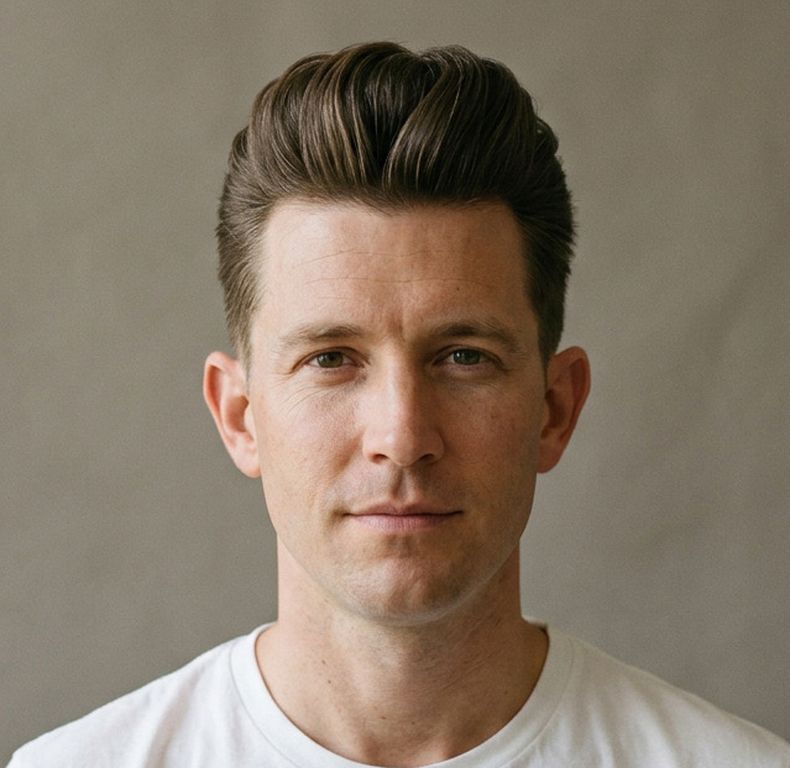
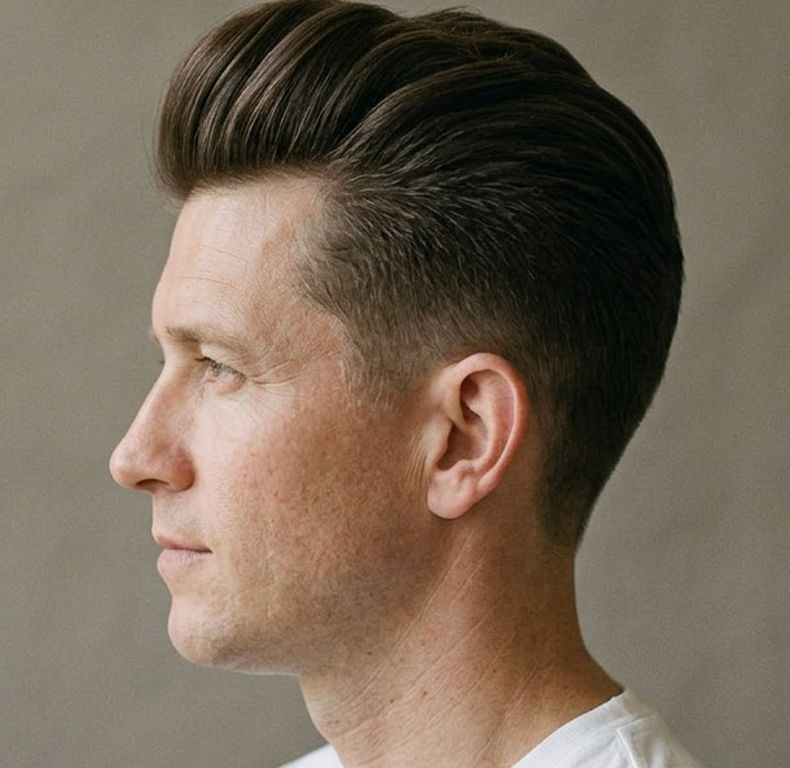
A long top brushed up and back into a full, rounded wave of volume, over short sides.
A pompadour is a men's haircut with short sides and a long top, where all of the hair on top is swept up off the forehead and back towards the crown, with the most height at the front. It is the tallest and most structured of the classic cuts, usually finished smooth with some shine. Of all the classic men's hairstyles in the directory, it asks the most of your hair, your hair dryer and your patience.
De un vistazo
- También se conoce como
- Pomp, modern pompadour
- Sides
- A low fade, or a grade 2 to 3
- Top
- 8 to 12cm, longest at the front
- Parte delantera
- Lifted and rolled back in one wave
- Finish
- Pomade for shine, or clay for a matte modern version
- Mantenimiento
- Every 4 to 6 weeks
- Lo mejor en
- Round and square faces. The height lengthens the face
- Evítalo si
- Your face is long, or you will not blow dry it
- Popularised by
- Elvis Presley (in the 1950s), James Dean (in the 1950s)
5 £ de descuento en tu primer envío
A fresh cut looks sharpest with a clean neckline. A sharp blade keeps it that way between visits, without the razor burn a blunt one leaves.
5 £ de descuento en tu primera suscripción o pedido VIP: una oferta por cliente; puedes darte de baja con un solo clic.
How to ask your barber
- Ask for a pompadourLong on top, longest at the front, with short sides.
- Choose the sidesA low fade or a grade 2 to 3, blended into the top.
- Keep the frontAsk them to take very little off the front.
- Ask for a blow dryWatch how they lift and roll it back, so you can copy it at home.
Las variaciones
The same cut, worn differently. What changes is the length, where the short part starts and how the top is styled.
Will it work with your hair?
Hair type decides how a cut sits and how fast it loses its shape. The table below is the short version.
| Straight | Ideal | Takes product well and holds the shape. |
|---|---|---|
| Wavy | Ideal | A natural wave helps the roll. |
| Curly | Obras | Curls add volume but make the roll less smooth. |
| Coily | Evita | Very hard to brush up and back. |
| Grueso | Ideal | Thick hair gives the volume without much product. |
| Fine or thinning | Evita | The lift shows thin areas at the front. |
¿Te quedará bien con tu rostro?
Where a cut adds height and where it takes width away decides how it sits with your face shape. Hair type matters more, but this is the short version.
| Oval | Ideal | Balanced proportions, so the cut itself decides. |
|---|---|---|
| Redondo | Ideal | Height on top and shorter sides lengthen the face. |
| Cuadrado | Ideal | Height on top balances a strong jaw. |
| Oblongo | Evita | Extra height makes a long face look longer. |
| Corazón | Obras | Keep the height modest so the forehead does not look wider. |
| Diamante | Obras | Some fullness on top helps; very tight sides stress the cheekbones. |
Beard styles that go with it
Hair and beard are one outline. These keep the proportions right with this cut.

What a pompadour is
Three things make a pompadour. The sides and back are much shorter than the top. The top is long, at least 7cm and often 10cm or more at the front. And the whole of the top is brushed up and back in one direction, so it forms a rounded roll of hair over the forehead that runs back to the crown.
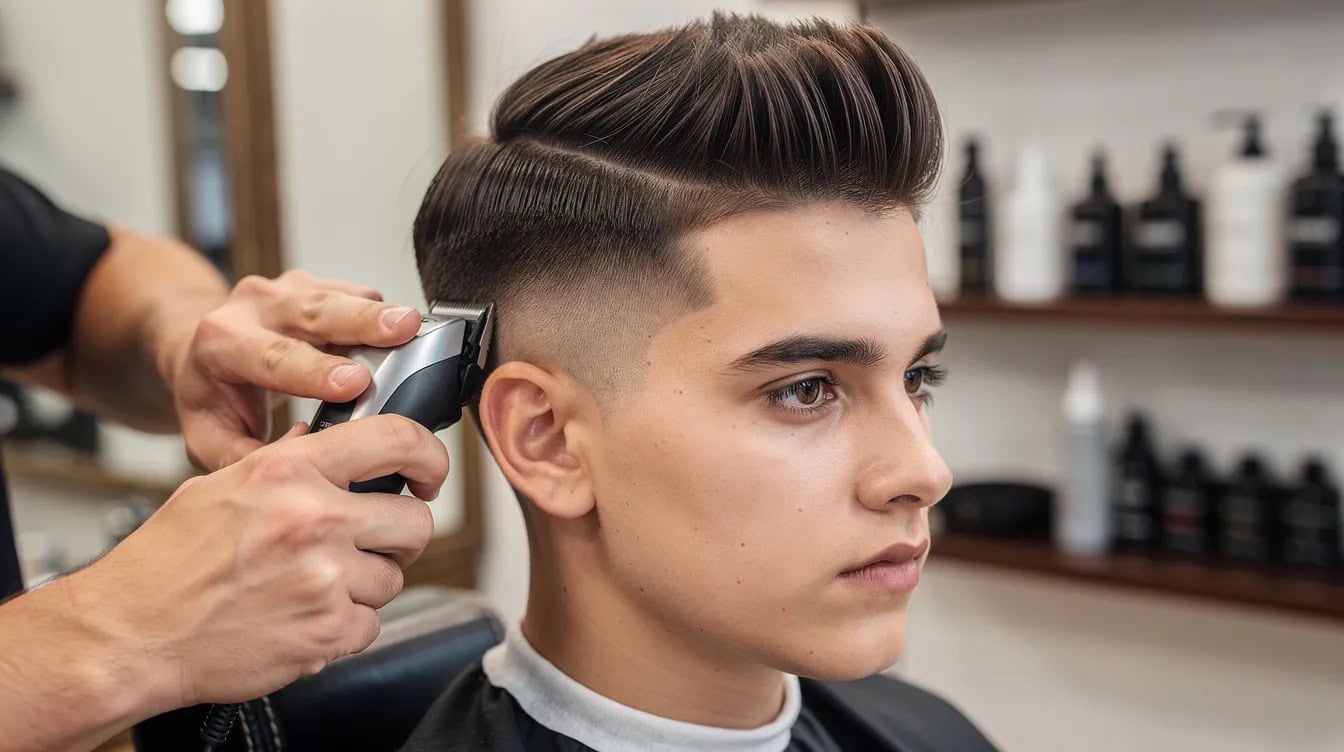
The shape is the giveaway. From the side, a good pompadour is a smooth curve from the front hairline to the crown, highest at the front and sloping down behind. Nothing falls forward. Nothing is pushed to the side unless you add a parting.
The name comes from Madame de Pompadour, the 18th-century French courtier, who wore her own hair swept up high off the forehead. The men's version as most people picture it, tall and glossy with short sides, is a mid-20th-century barbershop look that never quite went away.
Pompadour vs quiff
These two get confused more than any other pair, so here is the difference in plain terms.
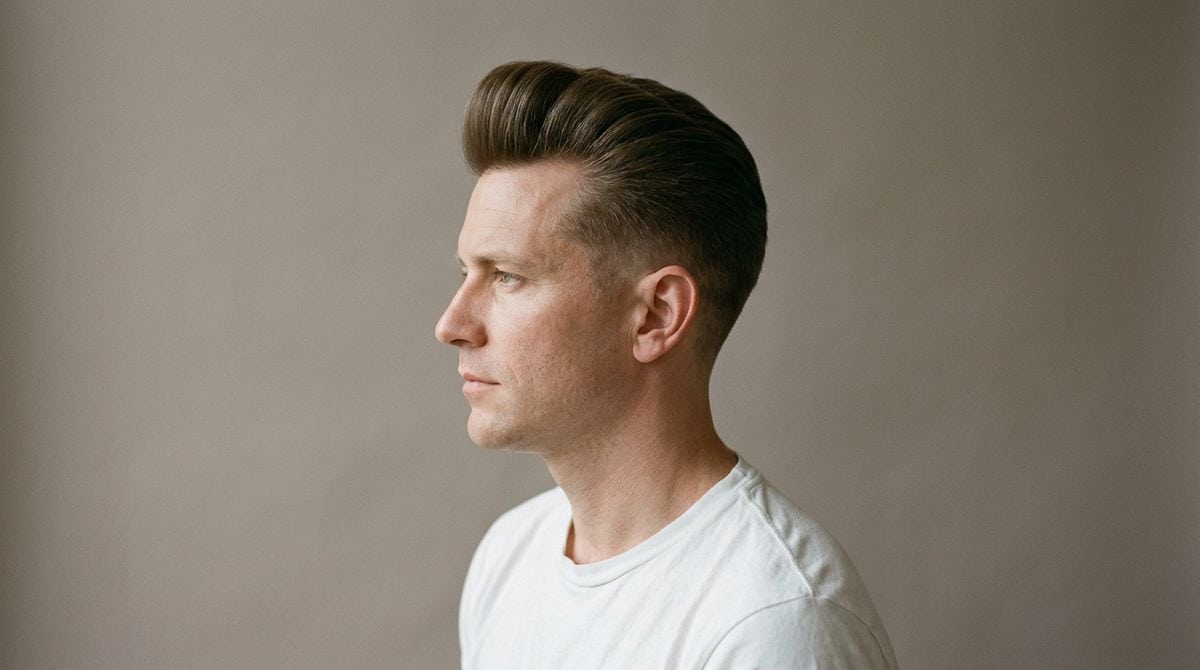
A pompadour sweeps the entire top up and back. The volume runs from the forehead to the crown and the finish is usually smooth, combed and a little shiny. It is taller, heavier and more formal.
A quiff lifts only the front. The hair at the hairline rises up and slightly back, while the rest of the top lies flatter behind it, and the finish is often matte and a bit messy. It is lighter and quicker to style.
Put simply, a quiff is a lifted front and a pompadour is a lifted top. If your pompadour drops by mid-afternoon and only the front is still standing, you are now wearing a quiff. If the height goes completely and the hair lies flat and back, that is a slick back.
Who a pompadour suits
Thick hair, straight or wavy, is the ideal. It has the weight to hold the roll and the density to look full from every angle. Thick hair may need some bulk taken out at the sides so it does not puff outwards.
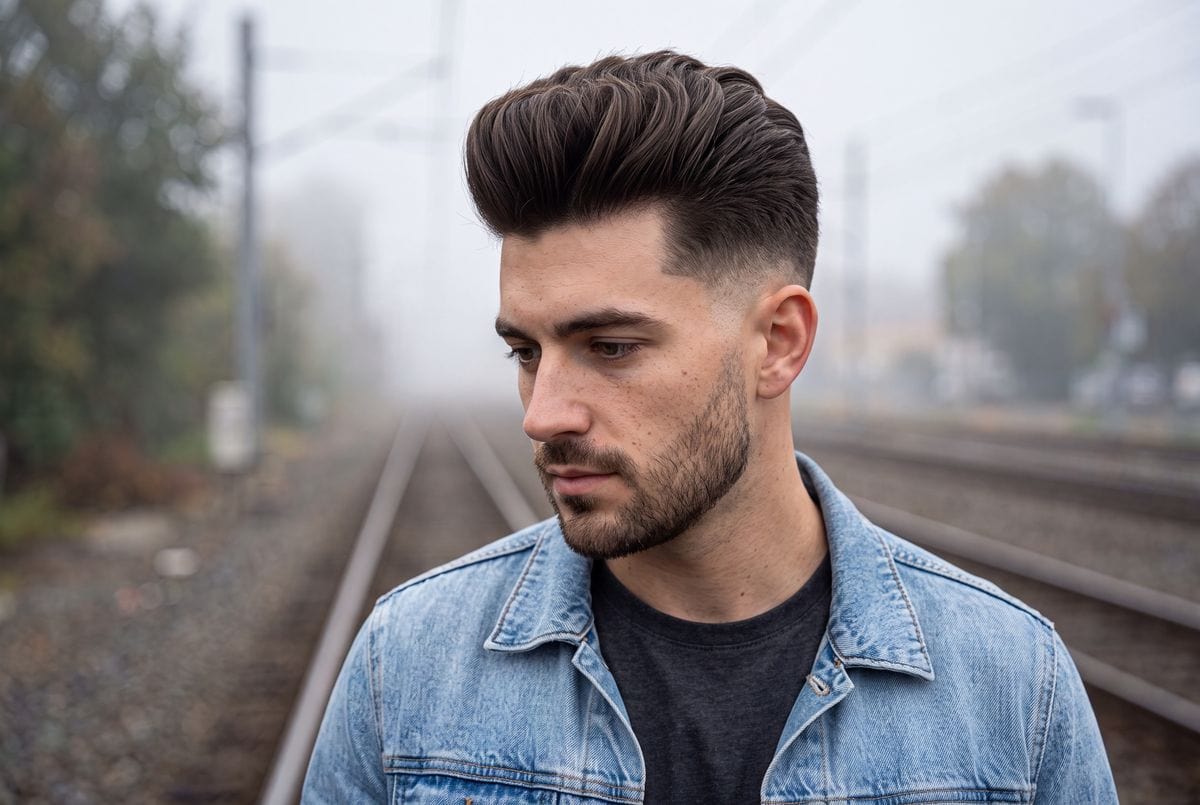
Wavy hair gives a softer, more textured pompadour with natural lift. It is the easiest version to make look relaxed.
Curly hair can do it with plenty of length on top, but the result is rounder and more textured than sleek. Blow drying straightens the roots enough to get the sweep.
Fine or thinning hair struggles. A tall pompadour needs volume the hair does not have, and sweeping everything back shows the hairline and any thin patches behind it. A short pompadour with modest height and a light matte product is the realistic version. If the front is receding noticeably, look at the haircuts for balding men first.
Forma del rostro matters with a pompadour because it adds a lot of height. On a round or square face that height lengthens the face, which usually helps. On a long, narrow face it stretches it further, so keep the pompadour shorter and the sides a little fuller.
Be honest about the morning, too. A pompadour does not survive being towel-dried and left. If you will not use a hair dryer every day, a quiff or a side part gives a similar classic look for far less work.
How much length you need
The front needs at least 7cm for a recognisable pompadour, and 9 to 12cm for real height. The top can shorten a little towards the crown, but not by much, because all of it is being swept back.
- Short pompadour. About 6 to 7cm at the front. Modest height, the most forgiving version and the one to try first.
- Classic pompadour. About 8 to 10cm at the front. The proper shape with a full roll.
- Tall pompadour. 11cm or more at the front. Dramatic, heavy and slow to style.
Hair grows roughly a centimetre a month. From a crop with 3cm on top, a classic pompadour is five or six months away. Keep the sides cut while you wait and ask the barber to leave the top alone apart from tidying the ends. Around the halfway mark you will have a quiff, which is a decent stopping point if you want one.
How to ask a UK barber for a pompadour
Bring a side-on photo. The pompadour is all profile, and a front view hides the shape.
- Ask for a pompadour. "Long on top, swept back, with short sides." Most barbers know it by name.
- The sides. For the classic version, ask for a grade 2 or 3 (6mm or 9mm) or scissor over comb, tapered at the neck. For a sharper, modern pompadour, ask for a fade, say a desvanecimiento bajo starting at a grade 0.5 (about 1.5mm) just above the ears. A higher, closer fade gives more contrast but needs cutting far more often.
- The top. "Leave the length on top, just tidy the ends, and take some weight out if it is heavy." Do not let them thin the front, which is where the height comes from.
- The connection. Say if you want the sides blended smoothly into the top, or disconnected with a clear step, which is an undercut pompadour.
- A parting. Optional. A side part pompadour has the roll swept back and slightly to one side from a parting line. A shaved-in hard part needs touching up at every cut.
Then ask them to style it, and watch how they dry the front. That is the technique you will repeat every morning.
Styling a pompadour at home
The hair dryer builds the shape. The product only holds it.
- Towel dry to damp. Not dripping, not dry.
- Add a pre-styler. A little mousse or sea salt spray at the roots gives grip and lift.
- Blow dry the front up. Medium heat, with a round brush or a comb. Lift the front from the roots and roll it back as you dry. Work back through the top in sections, always drying up and back. Keep the sides flat. Finish with a blast of cool air to set it.
- Apply product. Pomade for the classic smooth, shiny finish. Clay or paste for a matte, more modern look. Warm a small amount in your palms and work it through from the roots, not just the surface.
- Comb it into shape. Comb the front up and back, pushing it slightly forward with your other hand to build the roll. Comb the sides back flat.
- Hold it if needed. A light mist of hair spray on longer pompadours or on damp days.
Expect ten minutes at first and about five once you have the knack.
For curly hair, use a curl cream rather than pomade, dry with a diffuser on low heat and use your fingers rather than a comb, so the curl stays.
Upkeep and how often to cut
Every four to six weeks for a classic pompadour with tapered sides. Every two to three weeks if the sides are faded, because a fade shows growth quickly and a pompadour looks scruffy with fuzzy sides however good the top is.
At each cut the barber should tidy the ends on top, take weight out if it is getting bulky, and keep the sides tight. Long sides are what most often ruin the silhouette, because they puff out and make the top look shorter.
A few fixes between cuts:
- If it collapses by lunchtime, the roots were not dry before you added product, or the product is too heavy for your hair. Dry the roots fully and try a lighter matte product.
- If it looks like a helmet, you are using too much product. Start with less than you think.
- If it splits at the front, dry the front forward first, then back, so it loses its natural parting.
Heavy pomades build up. Wash every other day and use a proper shampoo to clear them.
Variations
- Classic pompadour. Scissor-cut or tapered sides, smooth shiny finish. The traditional look.
- Pompadour fade. Faded sides for sharper contrast. Needs cutting every two to three weeks.
- Undercut pompadour. Short clippered sides with a clear disconnection from the top. Bold, and easy to style since the sides need nothing.
- Side part pompadour. The roll swept back from a parting, often with a hard part. Smart and office-friendly.
- Textured pompadour. Matte product, a looser roll, roughed up with the fingers. Less formal.
- Short pompadour. 6 to 7cm at the front. Less height, less daily work.
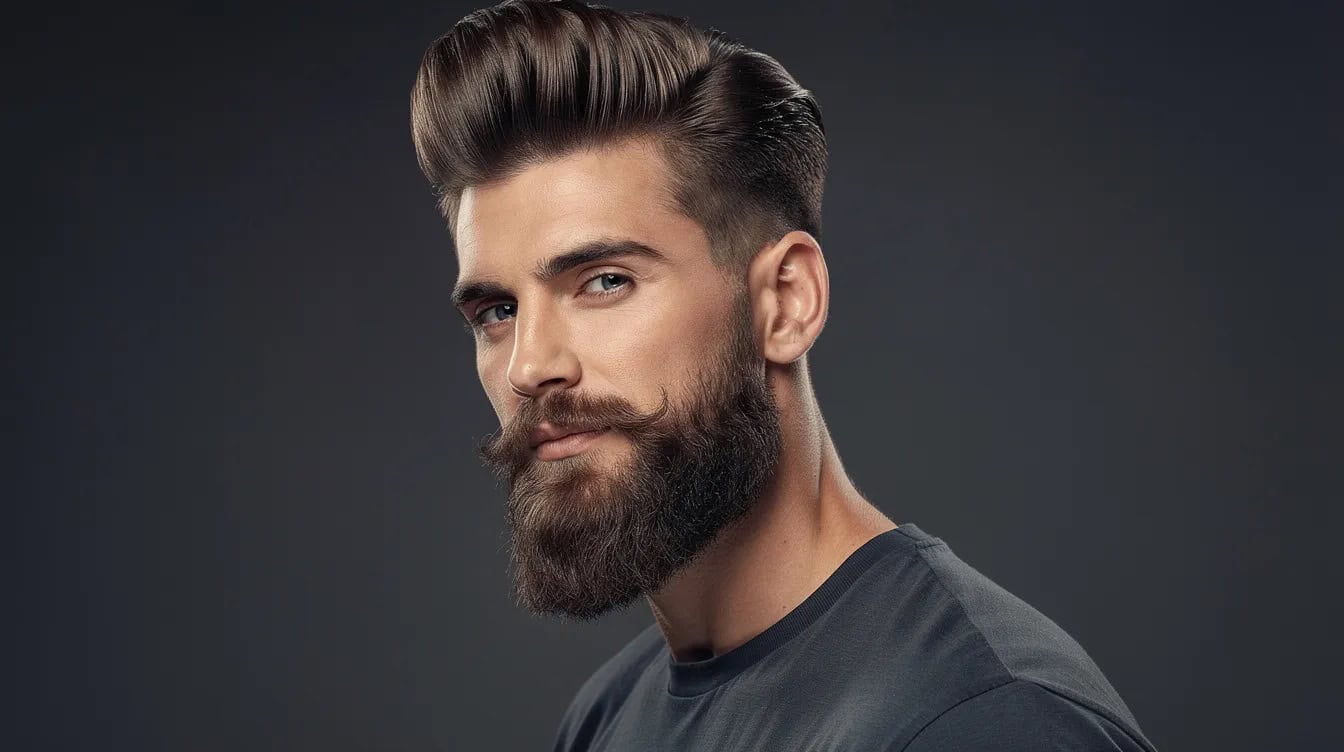
Growing out of a pompadour is easy. Comb it flat and back and you have a slick back. Push it forward and you are into medium and long hairstyles.
Preguntas que nos hacen
How long does hair need to be for a pompadour?
At least 7cm at the front, and 9 to 12cm for a full, tall shape. The rest of the top needs to be fairly long too, because all of it is swept back. Below about 6cm you will get a quiff rather than a pompadour.
What is the difference between a pompadour and a quiff?
A pompadour sweeps the whole top up and back with volume from the forehead to the crown, usually with a smooth, shiny finish. A quiff lifts only the front and lets the rest of the top lie flatter, often with a matte finish. A quiff is quicker to style and needs less length.
How do I ask my barber for a pompadour?
Ask for a pompadour, long on top and swept back with short sides. Say a grade 2 to 4 or scissors for the classic version, or ask for a low fade for a sharper look. Tell them to leave the length on top and not to thin the front, and bring a side-on photo.
What is a pompadour fade?
A pompadour with faded sides instead of tapered ones. The sides go down close to the skin at the bottom and blend up into the long top, which gives more contrast and a more modern look. It needs cutting every two to three weeks to keep the fade sharp.
Does a pompadour suit a receding hairline?
Usually not, if the recession is noticeable. Sweeping everything up and back exposes the temples and draws attention to them. A short pompadour with modest height can work on a slight recession, but a cut that brings the hair forward is usually kinder.
Is the pompadour out of date?
No. The tall, glossy version reads as deliberately retro, but a shorter pompadour with faded sides or a matte finish is a perfectly ordinary modern cut. It suits most workplaces if the height is kept sensible.
Other classic cuts
Close relatives, and how they differ.
Explora según lo que te interese
El mismo directorio, visto desde otra perspectiva.