
Flat Top
Short sides and a top cut dead level, so the head looks squared off.
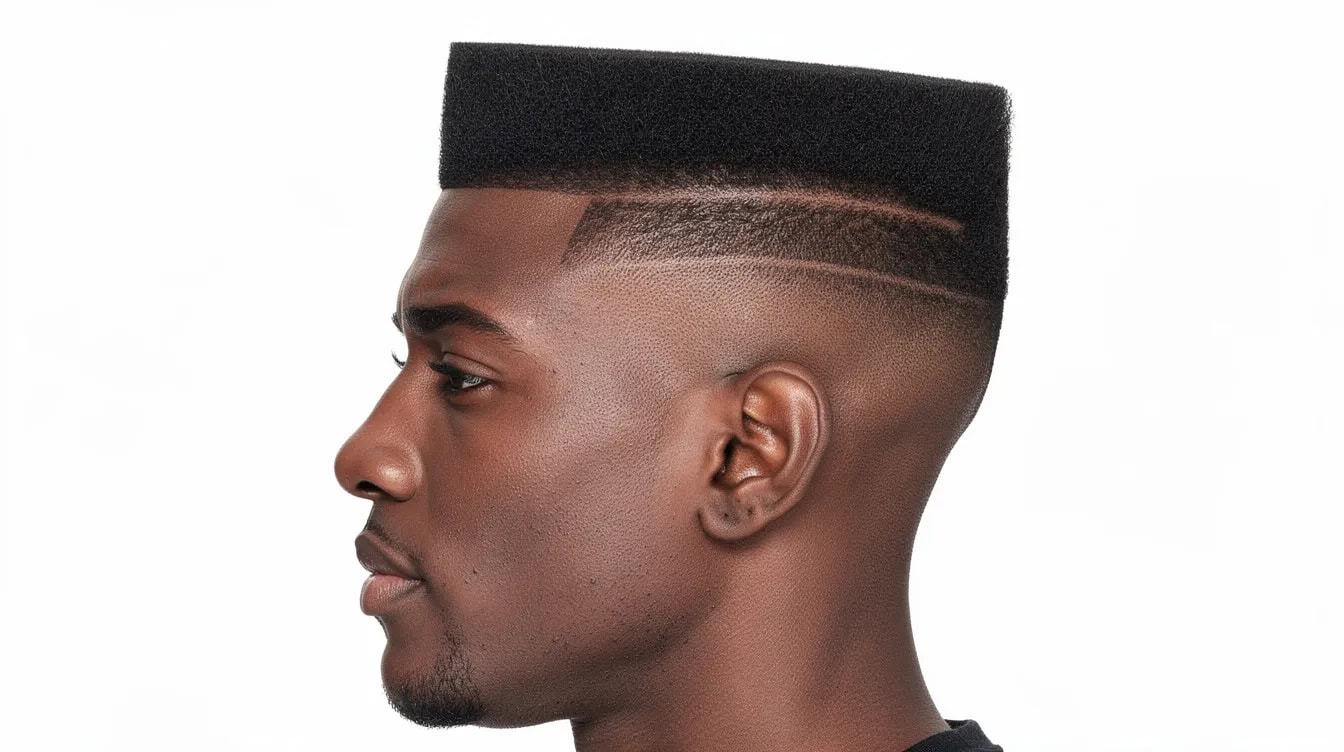
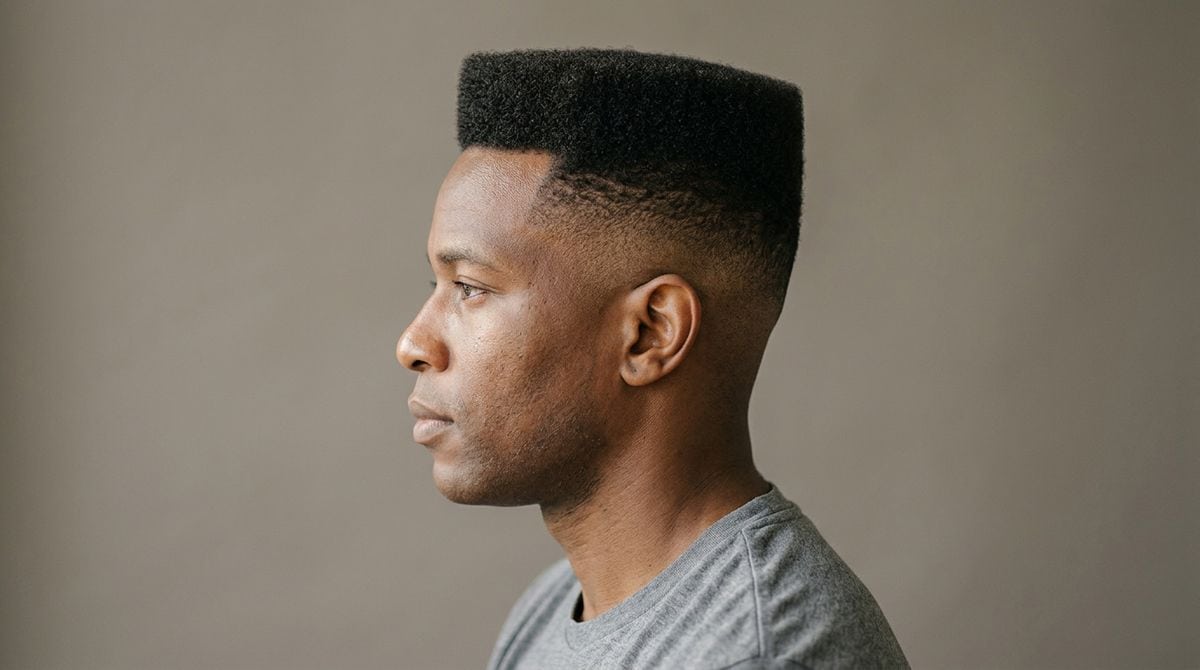
A flat top haircut has short back and sides and a top that stands straight up and is cut dead level, so from the front and side the head reads as a square with a flat lid. The flat surface is the whole point. It is one of the harder cuts in the men's hairstyles directory to do well, and one of the most obvious when it is done badly.
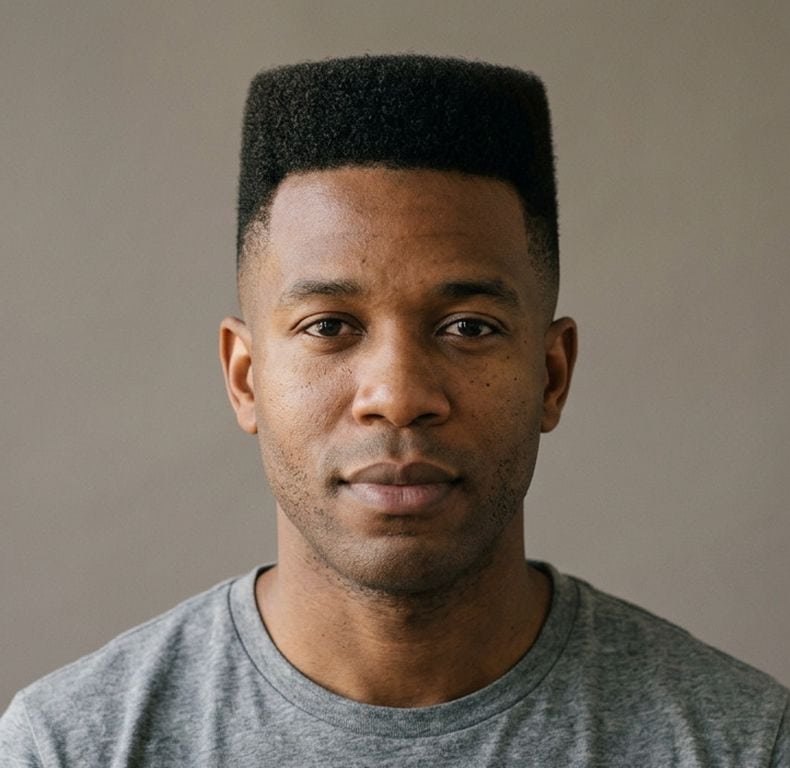
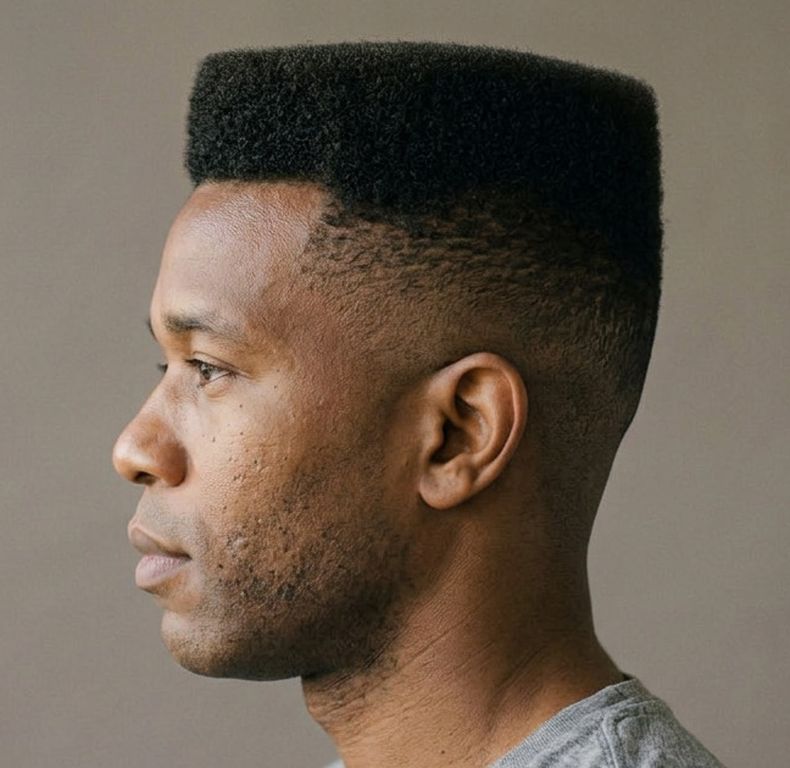
De un vistazo
- También se conoce como
- Flattop
- Sides
- Classically a tapered grade 1; a high fade is the modern option
- Top
- 2 to 5cm, cut to a level plane
- Shape
- Square shoulders and a flat top line
- Mantenimiento
- Every 1 to 2 weeks to keep the line level
- Lo mejor en
- Round and oval faces
- Evítalo si
- Your face is long, or your hair is fine and will not stand up
- Popularised by
- Will Smith (as Will in The Fresh Prince of Bel-Air in the 1990s)
5 £ de descuento en tu primer envío
A fresh cut looks sharpest with a clean neckline. A sharp blade keeps it that way between visits, without the razor burn a blunt one leaves.
5 £ de descuento en tu primera suscripción o pedido VIP: una oferta por cliente; puedes darte de baja con un solo clic.
How to ask your barber
- Find the right barberA flat top needs a clipper-over-comb barber who has cut them before.
- Say how tallGive the height of the top in centimetres.
- Choose the sidesA high fade or a grade 0 to 1.
- Ask for square cornersOr slightly rounded, if you want it softer.
Las variaciones
The same cut, worn differently. What changes is the length, where the short part starts and how the top is styled.
Will it work with your hair?
Hair type decides how a cut sits and how fast it loses its shape. The table below is the short version.
| Straight | Obras | Needs product to stand up straight. |
|---|---|---|
| Wavy | Obras | Waves make the level line harder to hold. |
| Curly | Obras | Curls stand up, but the line needs a skilled cut. |
| Coily | Ideal | Dense coily hair holds a flat top best. |
| Grueso | Ideal | Thick hair stands up on its own. |
| Fine or thinning | Evita | Will not stand up enough to hold the shape. |
¿Te quedará bien con tu rostro?
Where a cut adds height and where it takes width away decides how it sits with your face shape. Hair type matters more, but this is the short version.
| Oval | Ideal | Balanced proportions, so the cut itself decides. |
|---|---|---|
| Redondo | Ideal | Height on top and shorter sides lengthen the face. |
| Cuadrado | Obras | A squared top on a square jaw can look boxy; round the corners slightly. |
| Oblongo | Evita | Extra height makes a long face look longer. |
| Corazón | Obras | Keep the height modest so the forehead does not look wider. |
| Diamante | Obras | Some fullness on top helps; very tight sides stress the cheekbones. |
Beard styles that go with it
Hair and beard are one outline. These keep the proportions right with this cut.
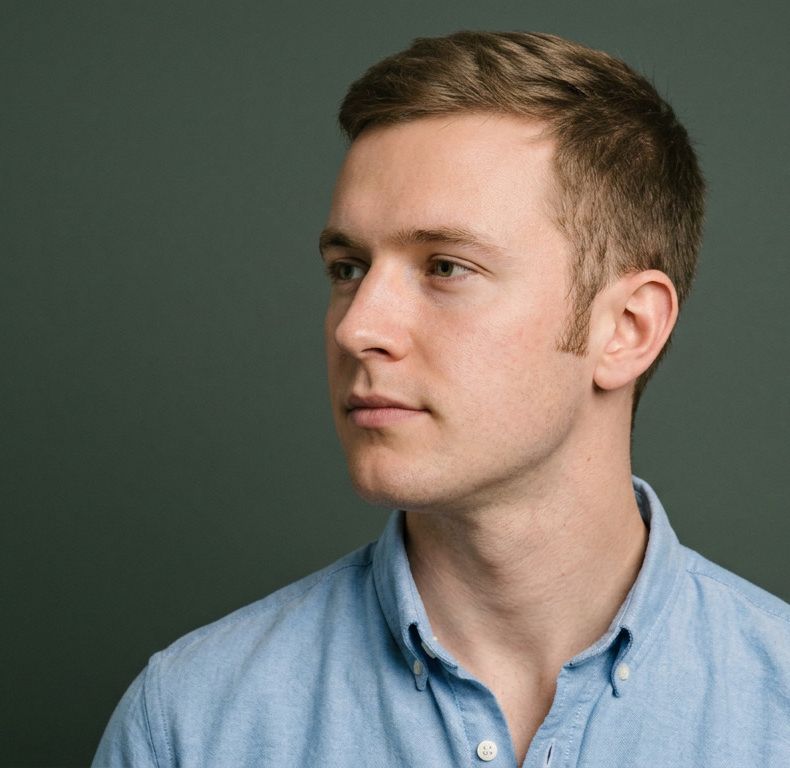


What a flat top is
Look at a flat top from the side and the top is a horizontal line, not a curve. The hair at the front, the corners and the crown is left longer so that, when it stands up, it all finishes at the same height. On a round head that means the hair is shortest at the highest point of the skull and longest towards the edges.
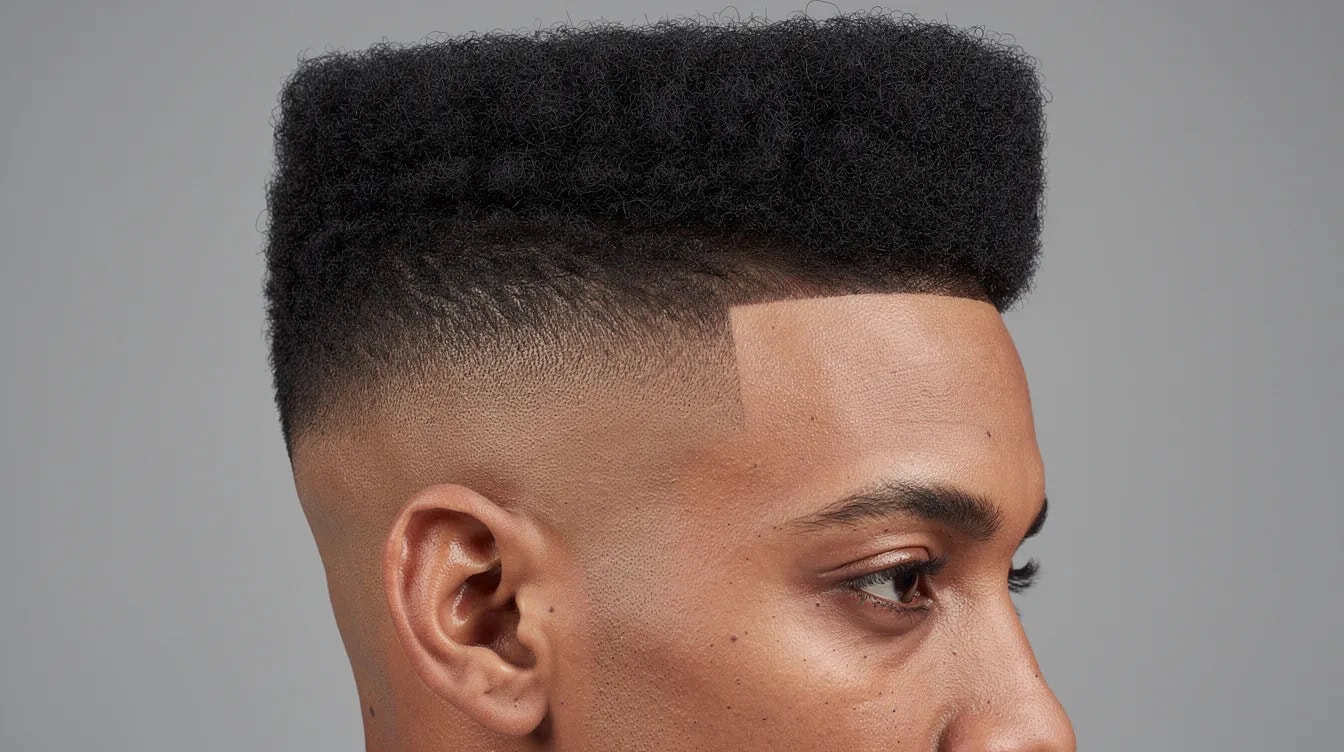
The sides and back are clippered short, usually a grade 1 or 2 tapered at the neck, or faded down to skin on a modern version. The meeting point between the sides and the top is kept squared off. These are the corners, and if the barber rounds them off the cut stops being a flat top.
Top length varies a lot. A short flat top might stand 1.5 to 2cm. A high flat top, the tall version worn in the 1980s and 90s, stands several centimetres higher.
Flat top vs buzz cut, crew cut and high and tight
Flat top vs buzz cut. A buzz cut follows the shape of your head. A flat top works against it, building a square outline by leaving length at the edges of the top. A short flat top and a buzz cut can be the same length in places and still look nothing alike.
Flat top vs crew cut. A crew cut is graded, longest at the front and sloping down to the crown, and the front is pushed up or to the side. A flat top is cut level all the way back and stands straight up.
Flat top vs high and tight. A high and tight takes the sides up very high, often to skin, and leaves a small patch on top that follows the head. Put a level flat platform on that patch and you have a military flat top, which is where the two styles overlap.
Flat top vs butch. A butch is an old name for a very short cut of even length all over. It has no platform. If the top is not cut level, it is not a flat top.
Which hair holds a flat top
This matters more than anything else about the cut. The hair has to stand up on its own and stay there.
Best. Coarse, dense, straight hair. Tightly curled and coily hair, which stands up from the root with no help and takes a sharp level surface. The high flat top grew up on afro hair for exactly that reason.
Workable. Thick wavy hair, with some blow drying and product. Keep it shorter so the wave does not break the line.
Hard work. Fine, soft or thin hair. It will not stand straight, the platform sags by mid-morning, and when it does stand up the scalp shows through. A shorter, lower version is the most you can expect.
Cowlicks and crown whorls. A strong growth pattern pulls the hair in its own direction and puts a dent in the platform. A good barber will spot it and either leave more length there or talk you into a lower flat top.
If you are not sure, ask the barber to look at your hair before cutting. The hairstyles by hair type page has more on what each texture will and will not do.
Who a flat top suits
Face shape. The flat top adds height and hard corners. On a round face that helps, adding length and some structure. On a long face, a tall flat top makes things worse, so keep it low. A square face can take one, but the combination of square jaw and square head is a lot of right angles; softer corners help.
Thinning hair. Mild recession at the temples is fine, and the platform pulls the eye up. Thinning on top is the problem, because a flat platform needs density across its whole surface. The haircuts for balding men page has better routes.
Work and lifestyle. A short flat top over a taper is tidy and practical, and it has long been associated with the armed forces. A tall high flat top is a statement. Either way, it needs a barber far more often than most short cuts.
How to ask a UK barber for a flat top
Start by finding the right barber. Plenty of barbers cut one rarely, and the flat top shows every mistake, because a level surface has nowhere to hide an uneven patch. Ask whether they do flat tops, or look for them in the shop's photos, before you sit down.
Bring photos of the front and side. Then agree the details.
The sides.
- "Grade 1 back and sides, tapered at the neck." The classic.
- "Skin fade on the sides, starting low." A flat top fade, finished with a foil shaver at the bottom.
- "Grade 2, scissor-blended into the corners." Softer, for wavier hair.
The top. Say how tall you want it to stand, in centimetres. "Around 2cm standing up" is a short flat top. "About 5cm, a proper high top" is the tall one.
The corners. "Keep the corners square." Without that the barber may round them, and you get a crew cut.
Anything else. A hard part cut in with a trimmer, or longer sides combed back (sometimes called fenders, part of a flat top boogie). Mention any cowlick, and say if your hair is fine.
Expect it to take longer than a normal cut. The barber will dry the top straight up, cut a guide strip down the middle, then work out from it with clipper over comb, checking the line from the front and side again and again.
Styling a flat top
A good flat top is mostly in the cut. Styling is about getting the hair to stand straight.
- Towel dry.
- Blow dry the top straight up with a brush or comb, lifting from the root. On straight hair this step is not optional.
- Work in a small amount of firm wax or a strong matte product, from the roots up.
- Lightly smooth the surface flat with the flat of your hand or a comb, without pressing it down.
Curly and coily hair usually needs no drying. A little light cream keeps it soft, and a pick or comb lifts it into shape.
Too much product clumps the hair and breaks up the surface. Use less than you think.
Upkeep and how often to cut
Hair grows roughly 1cm a month, and a flat top shows every millimetre. The platform rounds off first, then the corners soften, then the sides fill in.
- Classic or high flat top: every one to two weeks to keep it truly level.
- Short flat top over a taper: two to three weeks.
Many barbers will do a shorter tidy-up between full cuts, levelling the top and refreshing the sides. Between visits, keep the neck and around the ears clean with a trimmer. Do not try to level the top yourself.
Variations and growing it out
- Classic flat top. Short, level platform over a grade 1 or 2 taper.
- Flat top fade. The same platform over a skin fade, for more contrast.
- High flat top. A tall platform, usually on coily hair, with faded sides.
- Military flat top. Very short platform, sides taken up high and tight.
- Curly flat top. A level outline with natural curl texture on the surface.
- Flat top boogie. A longer top with the sides grown and combed back.
Growing one out is easy, because the top is already long. Stop squaring it off and the corners round naturally. A few weeks later it reads as a crew cut, and from there you can go anywhere.
Preguntas que nos hacen
What is a flat top haircut?
A short haircut where the top stands up and is cut level, so it forms a flat surface like a platform, over short tapered or faded sides. The corners between the top and the sides are kept square.
What hair type is best for a flat top?
Thick, coarse hair that stands up on its own, either straight or tightly curled. Coily hair is especially good because it stands from the root and holds a sharp edge. Fine or thin hair struggles to stay up and shows the scalp.
What is the difference between a flat top and a butch cut?
A butch cut is very short and roughly even all over, following the shape of the head. A flat top leaves more length at the edges of the top so it can be cut into a level platform with square corners.
Is a flat top a military haircut?
It has long been associated with the military, and very short versions over high, tight sides are still called military flat tops. Taller versions are just as associated with 1980s and 90s hip hop.
How long does a flat top haircut last?
Not long. It looks sharpest for a week or so, then the surface and corners start to round off. Most men with a classic or high flat top see the barber every one to two weeks.
Why do so few barbers cut flat tops?
It takes a lot of practice to cut a level surface on a round head, and it is not asked for as often as fades and crops. Ask a barber whether they do them before booking.
Other short clipper cuts
Close relatives, and how they differ.
Explora según lo que te interese
El mismo directorio, visto desde otra perspectiva.