
Crop texturé
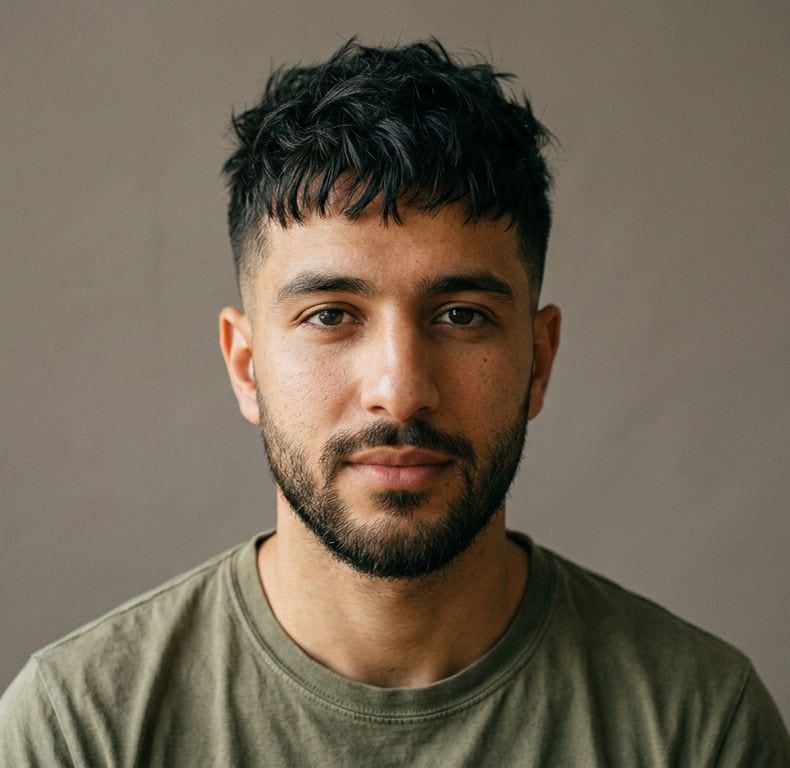
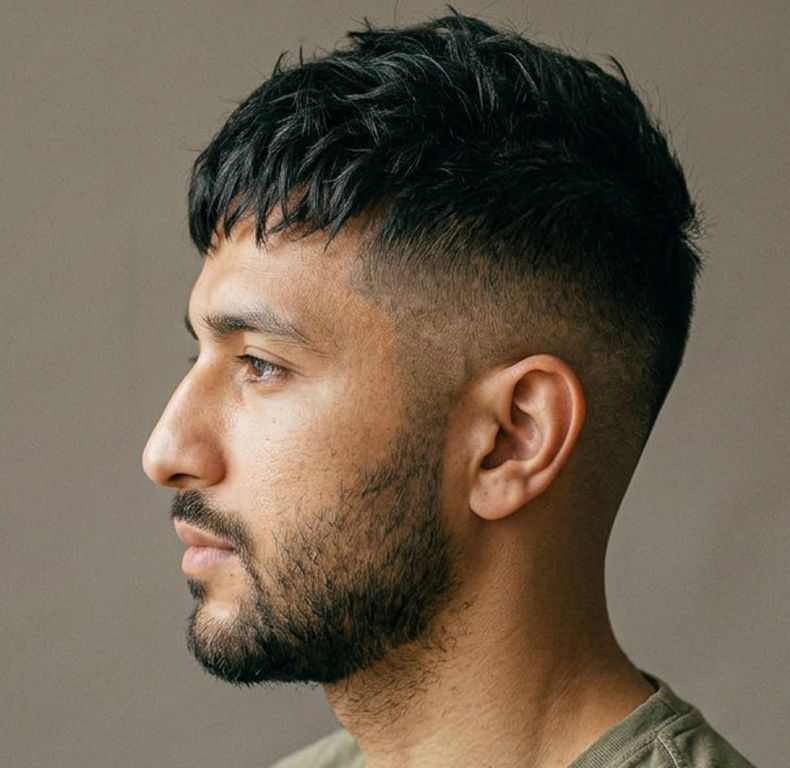
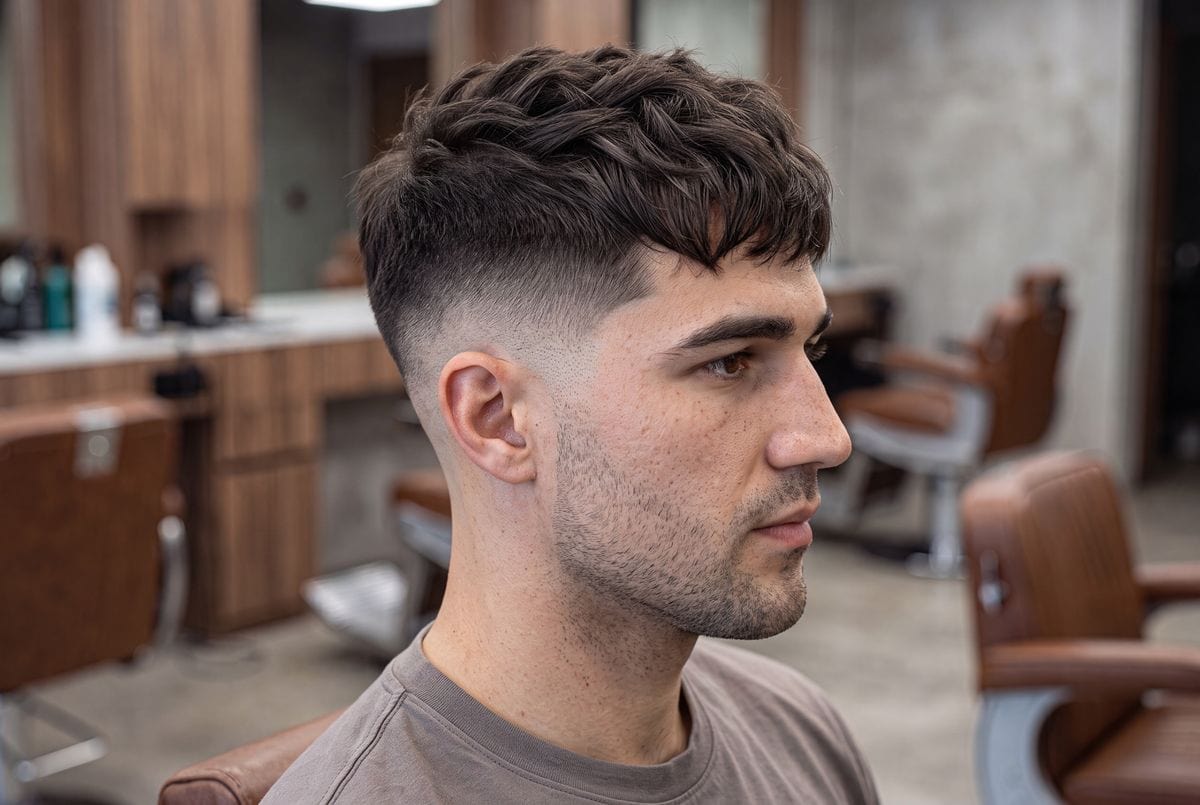
A cropped top cut choppy for movement, with a messy forward fringe and short sides.
A textured crop is a short haircut with a choppy, point-cut top pushed forward into a loose, uneven fringe, over short faded or tapered sides. The top is usually 3 to 5cm and is cut to look deliberately a bit messy. It is the relaxed member of the crop family, and one of the easiest cuts in our men's hairstyles guide to wear well with almost no effort.
En bref
- Également appelé
- Récolte en désordre
- Accompagnements
- A mid or high fade, a taper, or a grade 1 to 2
- Haut de la page
- 3 to 5cm, cut choppy with texture
- Fringe
- Messy and forward, uneven on purpose
- Entretien
- Toutes les 3 à 4 semaines
- À ne pas manquer sur
- Oval, round and square faces
- À éviter si
- Your hair is very fine and you want a heavy fringe
- Rendu populaire par
- Robert Pattinson (a messy crop in 2025), Damon Albarn (a messy textured crop), Matthew Macfadyen (worn salt and pepper)
5 £ de réduction sur votre première livraison
Une coupe récente est particulièrement mise en valeur par un cou bien rasé. Une lame bien affûtée permet de conserver ce résultat entre deux rendez-vous, sans provoquer les irritations que laisse une lame émoussée.
5 £ de réduction sur votre premier abonnement ou votre première commande VIP – une offre par client, désabonnement en un clic
Comment s'adresser à son coiffeur
- Ask for a textured cropChoppy and forward on top, with a messy fringe.
- Ask for point cuttingAsk them to point cut or texturise the top so it moves.
- Choisissez les campsA mid or high fade, a taper, or a grade 1 to 2.
- Say how you style itSo they leave it the right length to work with your product.
Les variations
La même coupe, portée différemment. Ce qui change, c'est la longueur, l'endroit où commence la partie courte et la façon dont le haut est coiffé.
Est-ce que ça ira avec vos cheveux ?
Le type de cheveux détermine la façon dont une coupe tient et la rapidité avec laquelle elle perd sa forme. Le tableau ci-dessous en présente un résumé.
| Hétéro | Œuvres | Needs product to hold the texture. |
|---|---|---|
| Ondulé | Idéal | Waves give texture for free. |
| Bouclé | Idéal | The best version of the cut. |
| Coily | Œuvres | Short coily hair gives natural texture. |
| Épais | Idéal | Thick hair takes texturing well. |
| Cheveux fins ou clairsemés | Œuvres | Light texture adds apparent volume. Keep the top short and do not over-texturise. |
Est-ce que ça ira bien avec votre visage ?
C'est la façon dont la coupe ajoute de la hauteur ou enlève de la largeur qui détermine comment elle s'harmonise avec la forme de votre visage. Le type de cheveux a certes plus d'importance, mais voilà en bref.
| Ovale | Idéal | Des proportions équilibrées : c'est la coupe elle-même qui fait la différence. |
|---|---|---|
| Rond | Idéal | Texture and a little height on top, with short sides, lengthen a round face. |
| Carré | Idéal | Texture on top softens a strong jaw. |
| Oblong | Idéal | Une frange raccourcit le visage. |
| Cœur | Idéal | Une frange permet d'affiner un front large. |
| Diamant | Idéal | Une frange élargit un front étroit. |
Les styles de barbe qui vont bien avec
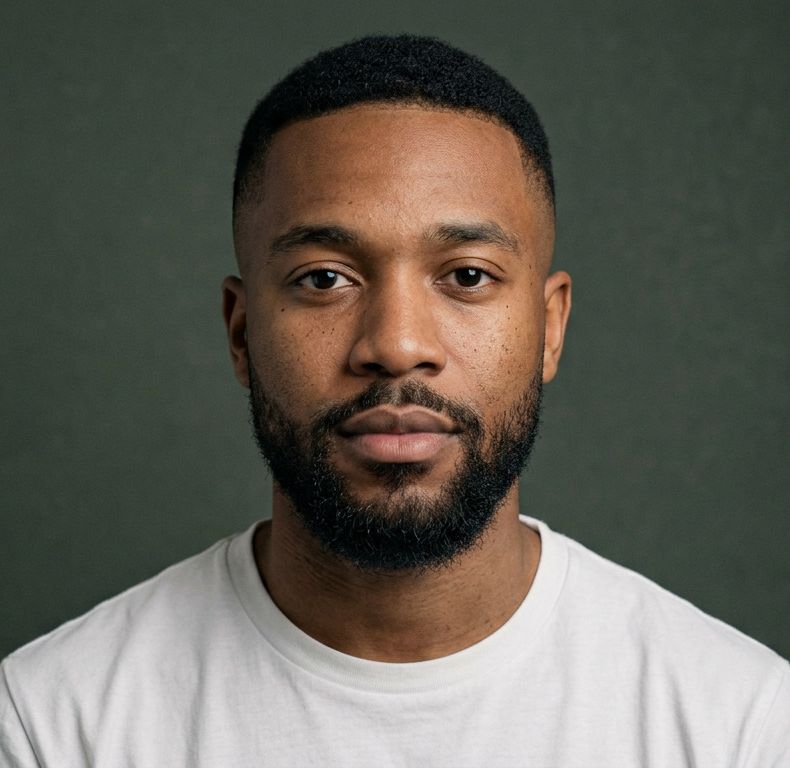
Les cheveux et la barbe ne forment qu'un seul et même contour. C'est ce qui permet de respecter les proportions de cette coupe.


What a textured crop is
The texture is the point. Instead of cutting the top to a flat, even length, the barber point cuts into it, snipping into the ends at an angle, or uses texturising scissors, so the hair breaks into separate pieces of slightly different length. Those pieces catch the light and move, which makes the top look thicker and gives it shape without any height.
The top is pushed forward, but not into a neat line. The fringe is broken up and uneven on purpose, sitting anywhere from high on the forehead to just above the eyebrows.
The sides are usually faded. A mid or high fade is the common pairing, because the short sides make the choppy top stand out. A taper or a plain grade 1 to 2 works too, for a softer finish.
Textured crop vs French crop and Edgar
Textured crop vs French crop. Same frame, different finish. A Récolte française has a flatter, neater top and a tidy fringe line. A textured crop is choppier on top, with a messy, broken fringe and a little more length to work with. If you want tidy, ask for a French crop. If you want it to look good slightly scruffy, ask for a textured crop.
Textured crop vs Edgar. Le Edgar haircut has a dead straight, blunt fringe and a sharp line-up at the temples. It is all hard edges. A textured crop has no hard edges on top at all.
Textured crop vs crew cut. A crew cut lifts the front up or to the side. A textured crop pushes it forward. The textured crop also usually has more contrast at the sides.
Who suits a textured crop
It suits a wide range of men, which is a large part of why barbers cut so many of them.
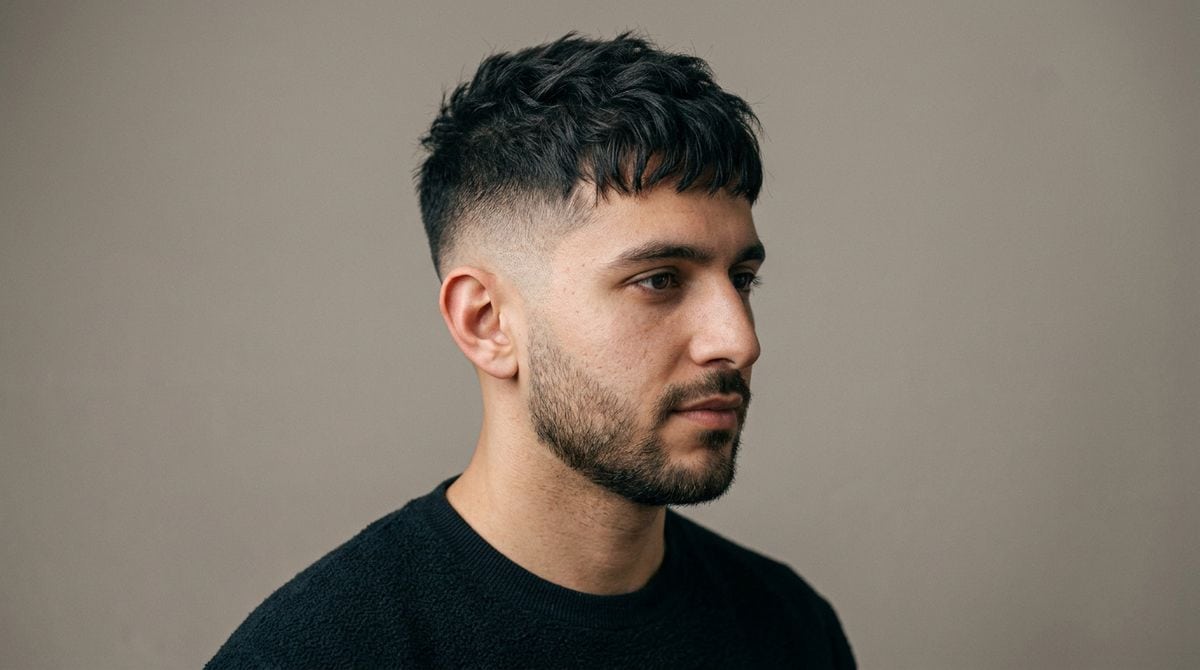
Type de cheveux. Wavy and curly hair are the best match, because the texture is already there and the barber only has to shape it. A curly textured crop, with the curls left on top over short faded sides, is one of the most common versions. Thick hair takes texturing very well, as long as the barber removes enough weight that it does not puff out. Straight hair works, but needs more point cutting and a little product to show the texture. Coily hair kept short gives natural texture with no effort.
Fine and thinning hair. The texture helps. Choppy pieces disguise thin areas better than a flat cut, and a forward fringe softens a receding hairline. The risk is over-texturising, where the barber removes so much weight that the scalp shows through. Ask for a short top with light texture, and keep the sides tight so the top looks fuller. More on that in coupes de cheveux pour les hommes qui perdent leurs cheveux.
Forme du visage. Oval faces suit almost every version. A round face benefits from tight sides and a little lift on top. A square face is softened by a longer, looser fringe. On a long face or high forehead, a lower, fuller fringe helps balance things.
Work and lifestyle. It reads as casual but tidy, and the same cut can be pushed neater for work and roughed up at the weekend. It copes well with hats and helmets, because the texture hides flattening once you run your fingers through it.
How to ask a UK barber for a textured crop
Say "textured crop", then fill in the three parts. Barbers know the name, but the details vary a lot.
Les côtés. Fade or taper, and how high.
- "High fade, grade 1 going down to a 0 at the bottom."
- "Mid skin fade."
- "Just a taper, grade 2 on the sides going to a 1 at the neck."
The top. Give a length and ask for it textured. "About 4cm on top, point cut so it's choppy, and pushed forward."
The fringe. Say where it should finish and how broken up it should be. "Messy fringe, sitting about mid forehead" or "longer fringe, down near my eyebrows, choppy rather than straight."
It also helps to say:
- your hair type, especially if it is fine, thick or curly;
- how you style it, so the barber leaves enough length to work with your product;
- how often you will be back, because a high skin fade looks grown out after two weeks.
If it is your first textured crop, start with the fringe a bit longer. It is easy to take more off. Waiting for it to grow back is not.
Styling a textured crop
One to two minutes, one product.
Towel dry until damp. If your hair is straight or lies flat, a little sea salt spray on damp hair gives it grip. Blow dry with your fingers, pushing the hair forward and lifting at the roots, or just let it air dry if it is wavy.
Then take a small amount of matte clay or paste, warm it between your palms and rough it through the top, back to front. Push the fringe forward and pinch a few pieces to separate them. The finish should be matte. Shine makes a textured crop look wet and clumped, which works against it.
- Fine hair: a light matte paste or cream, very little of it.
- Thick hair: a firmer matte clay to keep the bulk in check.
- Wavy or curly hair: a little curl cream, scrunch and leave it.
Do not overwork it. Most of the texture is in the cut, and the product just shows it off.
Upkeep and how often to cut
Hair grows roughly 1cm a month. A textured crop hides growth better than most short cuts, because the choppy layers blur where the length was. The sides give it away first.
- High or skin fade: every two to three weeks.
- Low or mid fade: every three to four weeks.
- Taper: four to five weeks.
At each visit the barber can clean up the sides and re-texture the top without taking much length off. Very thick or fast-growing hair may need the top thinned more often.
Wash out product most evenings, or at least every couple of days. Build-up on short, textured hair makes it sit flat and greasy, which is the opposite of the point.
Variantes et laisser pousser ses cheveux
The same basic cut, with different settings.
- Textured crop with a high fade. The usual version. Short sides, choppy top, plenty of contrast. The dégradé haut page covers where that starts.
- Textured crop with a skin fade. The sides taken to bare skin with a foil shaver. Maximum contrast, most upkeep.
- Curly textured crop. Curls left on top, short tapered or faded sides. The curl does the texturing.
- Longer fringe. The fringe left down near the eyebrows. Softer, and good for a high forehead.
- Tapered textured crop. Only the edges taken short. More conservative and it grows out gently.
To grow it out, keep the sides tidy and let the top run on. Because it is already choppy, the top grows into a longer, messier crop without an obvious awkward stage. At 6 to 8cm on top, you can push it back, sweep it to the side or move towards something longer. The coiffures selon le type de cheveux page suggests where to go next for your hair.
Questions qui nous sont fréquemment posées
What is a textured crop?
A short haircut with a choppy, point-cut top of around 3 to 5cm, pushed forward into a messy, uneven fringe, usually over faded sides. It is meant to look relaxed and slightly undone rather than neat.
What is the difference between a textured crop and a French crop?
Both have short sides and a forward top. A French crop has a flatter top and a tidier fringe line. A textured crop is cut much choppier, with a broken, uneven fringe and usually a little more length on top.
Is a textured crop good for thinning hair?
It is one of the better options. The choppy layers disguise thin areas and the forward fringe softens a receding hairline. Ask for light texturing rather than heavy thinning, which can make the scalp show, and keep the sides short so the top looks fuller.
Can you get a textured crop with curly hair?
Yes, and it is one of the best versions of the cut. The barber leaves enough length on top for the curls to form and keeps the sides short to control bulk. Use a little curl cream rather than clay.
How short should the fringe be on a textured crop?
Anything from high on the forehead, which looks sportier, to just above the eyebrows, which looks softer. Men with high foreheads usually suit a lower fringe. Start longer on the first cut and take more off next time if you want it.
How often do you need to get a textured crop cut?
Every two to three weeks with a high or skin fade, three to four weeks with a low or mid fade, and four to five with a taper.
Autres cultures
Des proches parents, et en quoi ils diffèrent.
Parcourez les contenus en fonction de ce qui vous intéresse
Le même répertoire, vu sous un autre angle.