
Tende
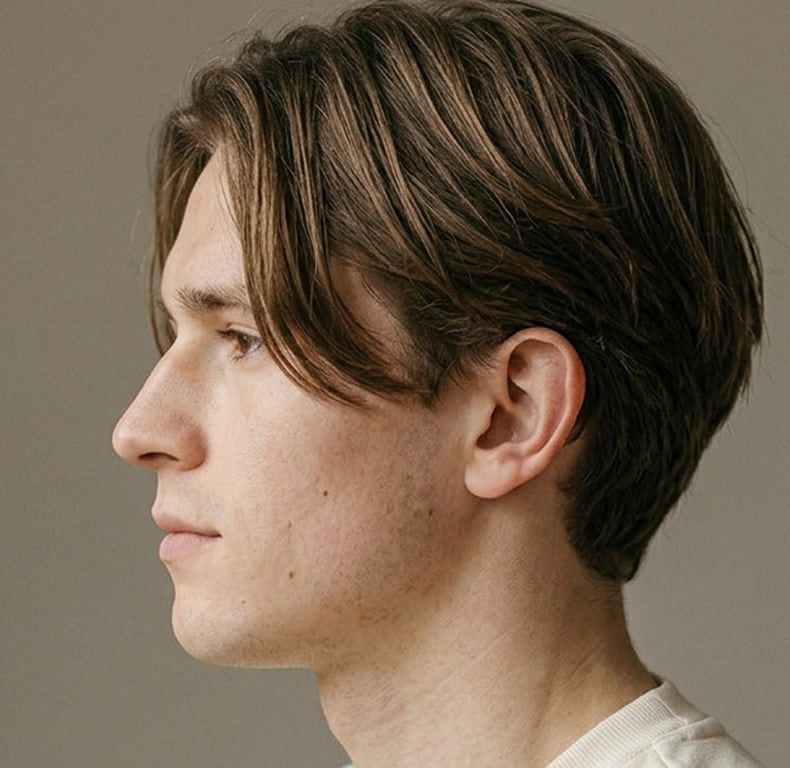
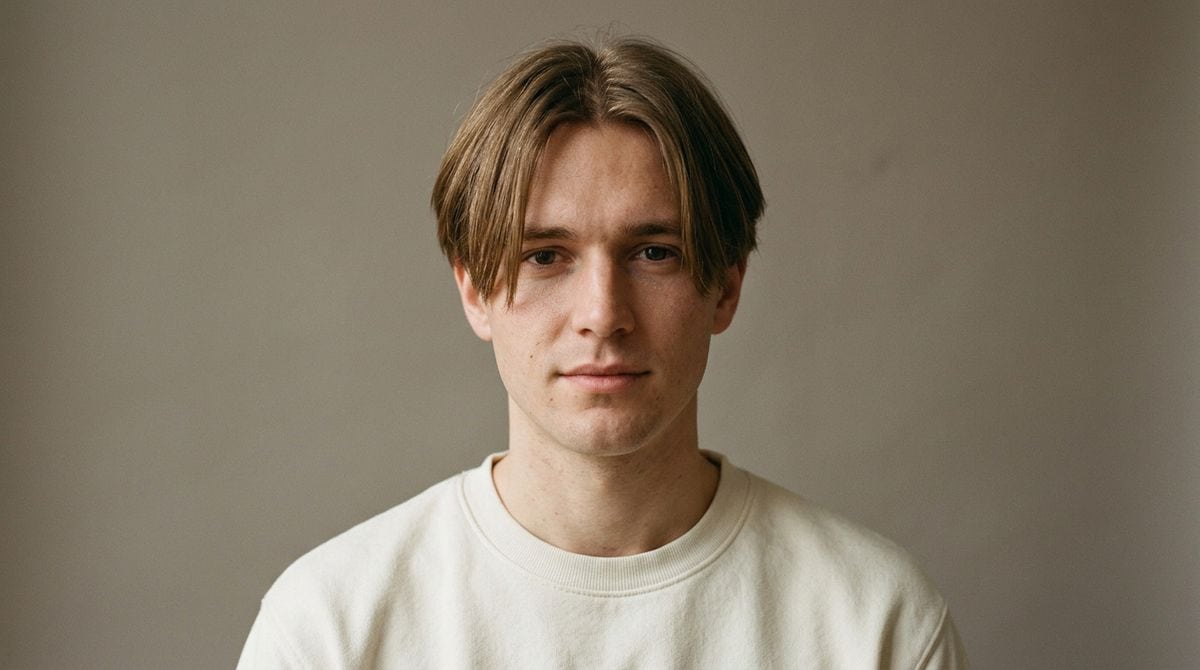
Medium-length hair parted in the middle and falling either side of the forehead.
A curtains haircut is medium-length hair parted in the middle, or just off it, with the fringe falling in two sections either side of the forehead like a pair of drawn curtains. The top is the long part, usually reaching somewhere between the eyebrows and the cheekbones, and the sides and back are kept shorter so the front does the talking. It is one of the few cuts in the full hairstyles directory that is defined almost entirely by its parting.

In sintesi
- Chiamato anche
- Curtain haircut, middle part
- Sides
- Scissor cut, long enough to cover the top of the ear
- Top
- 10 to 15cm, longest at the front
- Parting
- In the middle, or just off it
- Manutenzione
- Every 6 to 8 weeks
- Il meglio su
- Visi ovali e allungati
- Da evitare se
- Your hair is very coarse or has a strong crown whorl at the front
- Popularised by
- Hugh Grant (in the 1990s), Leonardo DiCaprio (in the 1990s), David Beckham (in his 1990s Manchester United days)
5 £ di sconto sulla tua prima consegna
A fresh cut looks sharpest with a clean neckline. A sharp blade keeps it that way between visits, without the razor burn a blunt one leaves.
5 £ di sconto sul tuo primo abbonamento o ordine VIP – un solo sconto per cliente, disiscriviti con un clic
How to ask your barber
- Bring the lengthGrow the front to at least the bridge of your nose before asking.
- Ask for curtainsA centre parting, with the front cut to fall either side of the forehead.
- Sides and backAsk for them scissor cut and kept long enough to blend into the front.
- Ask for layersLight layering at the front helps it fall away from the parting.
Le variazioni
The same cut, worn differently. What changes is the length, where the short part starts and how the top is styled.
Will it work with your hair?
Hair type decides how a cut sits and how fast it loses its shape. The table below is the short version.
| Straight | Ideale | Falls into the parting easily. |
|---|---|---|
| Wavy | Ideale | Waves give the curtains shape. |
| Curly | Opere | Possible, but curls shorten the length a lot. |
| Coily | Evitare | Hard to get coily hair to fall into a centre parting. |
| Spesso | Opere | Ask for weight taken out so it falls rather than sticks out. |
| Fine or thinning | Opere | Length can hide thin areas, but a centre part can show scalp. |
Si adatterà al tuo viso?
Where a cut adds height and where it takes width away decides how it sits with your face shape. Hair type matters more, but this is the short version.
| Ovale | Ideale | Balanced proportions, so the cut itself decides. |
|---|---|---|
| Rotondo | Opere | Let the length fall past the cheeks rather than end at them. |
| Quadrato | Ideale | Length and softness at the sides soften the jaw. |
| Oblungo | Ideale | Length at the sides adds width to a long face. |
| Cuore | Opere | Length around the jaw balances a narrow chin. |
| Diamante | Ideale | Length at the sides softens wide cheekbones. |
Beard styles that go with it
Hair and beard are one outline. These keep the proportions right with this cut.

What curtain hair actually is
Strip away the photographs and curtain hair comes down to three things. There is a parting at or near the centre of the head. The fringe is long enough to fall away from that parting under its own weight. And the sides are shorter than the front, so the fringe frames the face instead of disappearing into a general mop.
People search for it under a handful of names. Curtain haircut, curtains, middle part and, borrowing from women's hairdressing, curtain bangs all describe the same basic curtain hairstyle on a man. The differences are of degree. Short curtains stop at the eyebrows. Classic curtains reach the cheekbones. Long curtain hair runs to chin length or further and starts to overlap with the cuts on the medium and long hairstyles pagina.
It was a nineties look first time round, worn heavy, flat and with almost no product. Modern curtains keep the shape but tidy everything around it: shorter, neater sides, more texture at the front and a softer parting.
Curtains, slick back and the modern mullet
These three get mixed up because they all need length on top. They go in different directions.
Curtains fall forward and outward from a central parting. A slick back takes the same length and combs it straight back off the forehead, with no parting at all. A modern mullet keeps the top and sides short-to-medium and puts the length at the back of the neck instead.
The practical upshot is that curtains are a good resting point if you are growing your hair and are not sure where you are going. From curtains you can sweep it back into a slick back on the days you want it off your face, or keep growing towards something longer, without a single cut being wasted.
Who the curtains haircut suits
Hair type matters more than anything. Straight hair parts cleanly and falls into the shape with very little help, which is why it is the classic version. Wavy hair is arguably better still, because the wave gives the two sides a natural bend and some body. Curly hair can carry a curly curtain style, but curls shorten a lot as they dry, so you need more length than you think and should accept a looser, rounder result. Coily hair rarely falls into a centre parting at all, and fighting it is a losing game. The hairstyles by hair type Questa pagina offre opzioni migliori.
Thick hair works, but ask for weight taken out underneath, or the two sides will flare out sideways instead of falling. Fine hair works too, with one catch. A centre parting shows scalp, and on thinning hair it shows it right at the front where everyone looks first. If you are thinning at the crown or the parting line, choose something else.
Forma del viso is a minor factor here. The style adds width at the forehead and temples, so it tends to suit oval and longer faces best. On a round face, keep the sides tight so the fringe is the only thing adding width.
Work is rarely a problem. A neat set of curtains with tidy sides and a clean neckline passes in most offices. The messier, longer versions read as more casual.
How much length you need
The fringe needs to reach at least the eyebrows when dry, and ideally the bridge of the nose, before it will part and fall properly. That usually means 10 to 15cm on top, longest at the front.
Hair grows roughly a centimetre a month. From a standard short back and sides with a few centimetres on top, that puts you somewhere between four and eight months away, depending on how long you want the finished curtains. The awkward stretch is the middle, when the fringe is too long to ignore and too short to part.
The way through it is to keep getting the sides and neckline tidied every five or six weeks while asking the barber to leave the top alone. A tidy outline makes the half-grown top look deliberate. Cutting the fringe yourself in month three resets the clock.
How to ask a UK barber for curtains
Bring a photo showing the front and the side, ideally of someone with hair like yours. "Curtains" is a clear enough word in most barbers, but the length at the front and the treatment of the sides vary a great deal.
Then say the following, in roughly this order:
- The parting. "Curtains, parted in the middle," or "just off centre" if your hair has a natural split there. Your hair usually knows where it wants to part. Let it.
- The front. "Leave the length at the front, cut so it falls either side of the forehead." Ask for light layering or point cutting through the fringe so the ends sit softly instead of in a blunt line.
- The sides and back. For the classic look, ask for them scissor cut and long enough to blend into the front, covering the top of the ear. For a sharper, more modern take, a low taper at grade 1 or 2 (3mm or 6mm) just around the ears and neckline keeps the edges clean without a hard contrast.
- The weight. If your hair is thick, ask for bulk taken out underneath so the two sides lie flat.
A fade curtain haircut, with the sides faded short and the curtains left long on top, is a recognised variant. Ask for the fade low, starting around the ears, or the top will look disconnected. A low taper fade is the gentlest version and the easiest to grow out.
Before you leave, ask the barber to blow dry it and watch how they do the fringe. Two minutes of watching saves a fortnight of guessing.
Styling curtains at home
The shape comes from the hair dryer more than the product.
Start with damp hair, not dripping. Find your parting with a comb while the hair is wet. Then blow dry the fringe away from the parting, using a round brush or your fingers to sweep each side down and outward. This gives the soft C shape that frames the eyes, sometimes called an S shape curtain style when the ends flick out again at the cheekbone. Finish each side with a blast of cool air to set it.
Product should be light. A small amount of styling cream or a lightweight wax, worked through the mid-lengths, holds the shape without flattening it. Sea salt spray on damp hair before drying gives a rougher, more tousled finish with more body, which suits wavy hair especially. Heavy products weigh the fringe down and make it separate into strands.
For wavy and curly curtain hair, skip the brush. Scrunch a little curl cream into damp hair, set the parting with your fingers, and let it air dry or use a diffuser on low heat. Brushing curly hair once it is dry turns curls into frizz.
A wet look curtains finish, with gel or wax applied to damp hair and left glossy, exists. It is an evening look rather than an everyday one.
Upkeep and how often to cut
Every six to eight weeks for the classic scissor-cut version. If you have a taper or fade at the sides, those need tidying sooner, every three or four weeks, or the outline goes soft before the top needs anything.
At each visit the barber should trim the fringe back to the length you want, clean up around the ears and the neckline, and take out any weight that has built up. Curtains that have gone too long without a cut do not look like curtains any more. They look like hair that needs cutting.
Day to day, the main job is the parting. Comb it in after washing and it will usually hold.
Variations and growing it out
- Short curtains. Fringe to the eyebrows, sides tidy. The easiest version to live with.
- Classic curtains. Centre parting, fringe to the cheekbones, scissor-cut sides.
- Textured curtains. Roughed up with sea salt spray or matte product, parting left loose.
- Curtains with a taper. The edges tapered short around the ears and neck for a neater outline.
- Long curtain hair. Chin length or more, often tucked behind the ears.
If you decide you have had enough, curtains are among the easiest styles to move on from. Shift the parting to one side and you have a side-swept cut. Push it back and you have something close to a slick back. Or ask the barber to shorten the fringe in stages while leaving length at the crown. None of this involves the months of waiting that come with growing out a very short crop.

Domande che ci vengono poste
How long does hair need to be for curtains?
Long enough for the fringe to reach at least the eyebrows when dry, and ideally the bridge of the nose. That is typically 10 to 15cm on top, longest at the front. Shorter than that and the fringe will not stay parted.
Are curtain haircuts still in fashion?
Yes. The modern version is neater than the nineties original, with tidier sides and a softer parting, and it remains a common request in UK barbers, particularly among younger men growing their hair out.
Do curtains suit a round face?
They can, if the sides are kept tight. The fringe adds width at the forehead, so a round face needs the width kept off everywhere else. Oval and longer faces suit curtains most easily.
How do I style a curtain fringe?
Blow dry it from damp, sweeping each side away from the parting with a round brush or your fingers, then set it with cool air. Finish with a small amount of light cream or wax. Wavy and curly hair are better scrunched with curl cream and left to air dry.
Can I have curtains with a receding hairline?
Mild recession at the temples can be softened by a slightly longer fringe and a looser parting. More than that is difficult, because a centre parting exposes the scalp at the front. The haircuts for balding men page covers better options.
What is the difference between curtains and a middle part?
A middle part is just the parting. Curtains is the whole cut: a middle or near-middle parting plus a fringe long enough to fall away either side of it, with shorter sides. Every set of curtains has a middle part; not every middle part is curtains.
Other longer styles
Close relatives, and how they differ.
Sfoglia in base a ciò che ti interessa
La stessa directory, vista da un'altra prospettiva.