
Ivy League
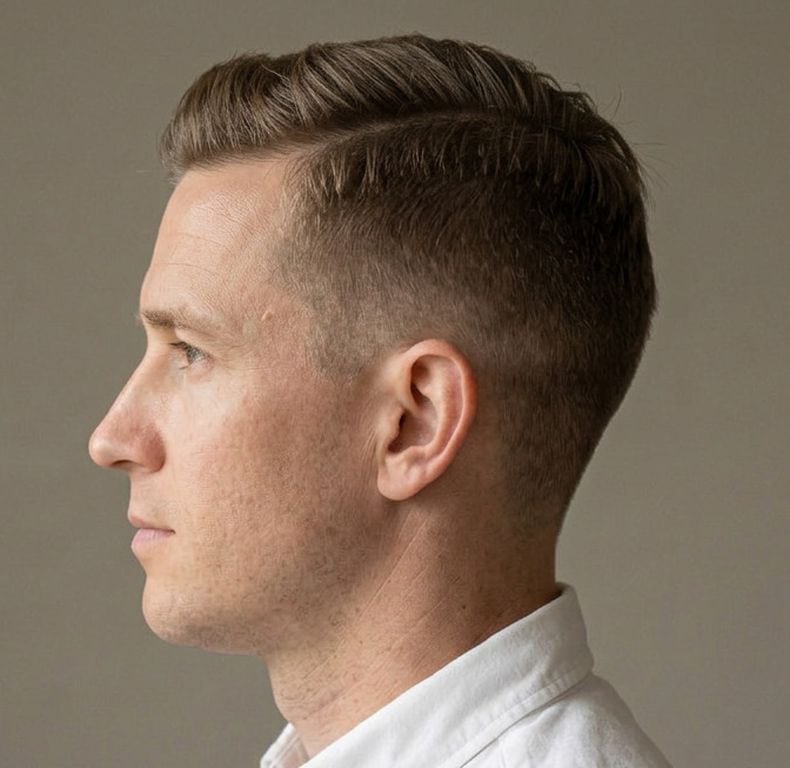
A crew cut left long enough on top to part and comb to the side.
An Ivy League haircut is a short men's cut with tapered sides, usually a grade 2 or 3, and a top left about 3 to 5cm long at the front, getting shorter towards the crown, so it can be combed into a side parting. It is essentially a crew cut with enough length at the front to part. Also called the Princeton or the Harvard clip, it is one of the neatest, least fussy cuts among the classic men's hairstyles we cover.

De un vistazo
- También se conoce como
- Princeton cut, Harvard clip
- Sides
- A grade 2 to 3, tapered at the neck
- Top
- 3 to 5cm at the front, shorter towards the crown
- Parting
- On the side, natural
- Mantenimiento
- Every 3 to 4 weeks
- Lo mejor en
- Oval, square and round faces
- Evítalo si
- You want volume or a lot of styling options
- Popularised by
- Ryan Gosling (his go-to sleek version), Harry Kane (a choppier take)
5 £ de descuento en tu primer envío
A fresh cut looks sharpest with a clean neckline. A sharp blade keeps it that way between visits, without the razor burn a blunt one leaves.
5 £ de descuento en tu primera suscripción o pedido VIP: una oferta por cliente; puedes darte de baja con un solo clic.
How to ask your barber
- Ask for an Ivy LeagueA crew cut long enough on top to part.
- Give the side gradeA grade 2 or 3, tapered at the neck.
- Say the top lengthAbout 3 to 5cm at the front, getting shorter towards the crown.
- Say where you part itLeft or right, natural rather than shaved.
Las variaciones
The same cut, worn differently. What changes is the length, where the short part starts and how the top is styled.
Will it work with your hair?
Hair type decides how a cut sits and how fast it loses its shape. The table below is the short version.
| Straight | Ideal | Parts and lies flat easily. |
|---|---|---|
| Wavy | Ideal | Waves add a little body. |
| Curly | Obras | Keep it short so it holds the parting. |
| Coily | Obras | Works short and neat. |
| Grueso | Ideal | Thin the top so it combs across. |
| Fine or thinning | Ideal | Short and tidy, so thin hair looks deliberate. |
¿Te quedará bien con tu rostro?
Where a cut adds height and where it takes width away decides how it sits with your face shape. Hair type matters more, but this is the short version.
| Oval | Ideal | Balanced proportions, so the cut itself decides. |
|---|---|---|
| Redondo | Ideal | A short top with a little height at the front suits a round face. |
| Cuadrado | Ideal | A neat parting suits a defined jaw. |
| Oblongo | Obras | Keep the top fairly flat rather than lifted. |
| Corazón | Ideal | A side parting breaks up a broad forehead. |
| Diamante | Obras | A parting with some fullness on top works. |
Beard styles that go with it
Hair and beard are one outline. These keep the proportions right with this cut.


What an Ivy League haircut is
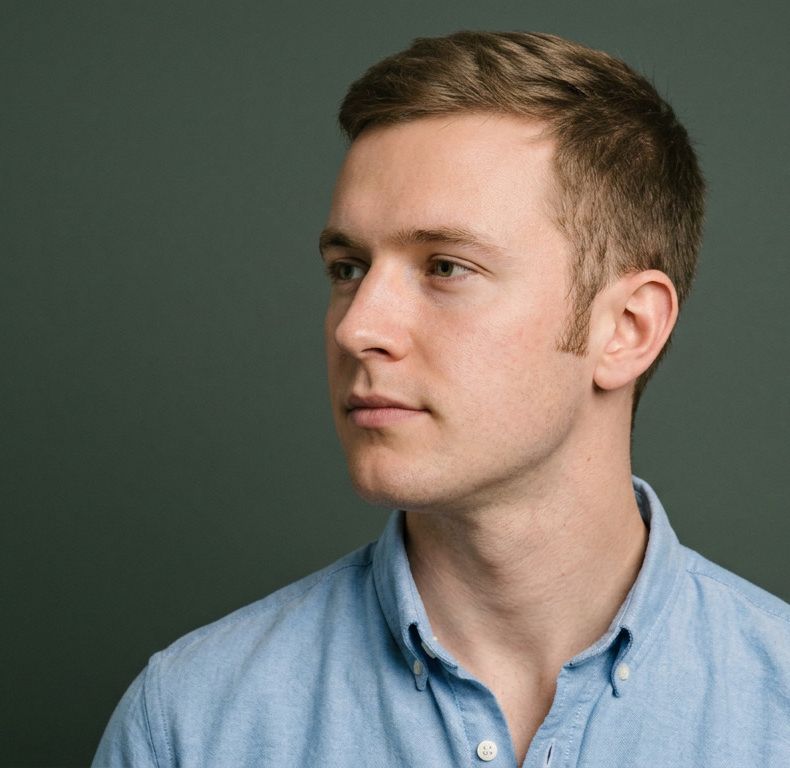
Three things define it. The back and sides are short and tapered, getting gradually shorter towards the neck and ears. The top is graded, longest at the front hairline and shorter at the crown. And the front is long enough to take a side parting and be combed across, rather than standing up.
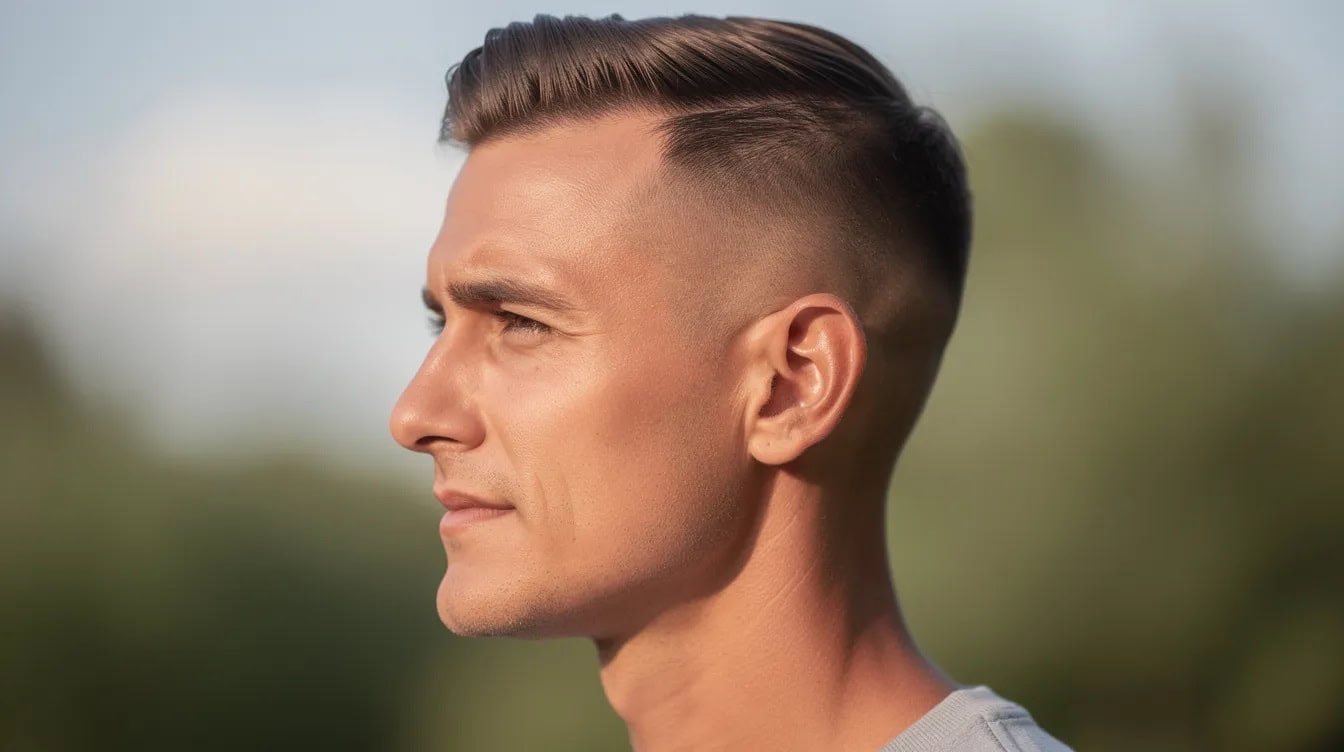
That front-to-back grading matters. It is what lets the fringe sweep to one side while the crown lies flat, so nothing sticks up at the back. Get the top cut to one length and the parting will not sit properly.
The name comes from the American Ivy League universities, where it was a common student haircut in the middle of the last century. It has been a standard smart short cut on both sides of the Atlantic ever since.
Ivy League vs crew cut
The two are the same shape at different lengths.
A crew cut keeps the top at about 1 to 3cm. It is too short to part, so the front is pushed up or brushed forward. It reads as sporty and practical.
An Ivy League leaves the front at 3 to 5cm, enough to part and comb across. The sides and the grading are the same. The extra centimetre or two turns a practical cut into a smart one.
That makes it easy to move between them. Let the top of a crew cut grow for a month or two and you have an Ivy League. Take an Ivy League shorter and you are back to a crew cut.
The Ivy League is also a shorter, more structured cousin of the side part. A side part usually has a longer top of even length. The Ivy League's graded top is what keeps it short and tidy.
Who an Ivy League suits
Straight hair is ideal. It holds a parting with no effort and the taper shows clearly.
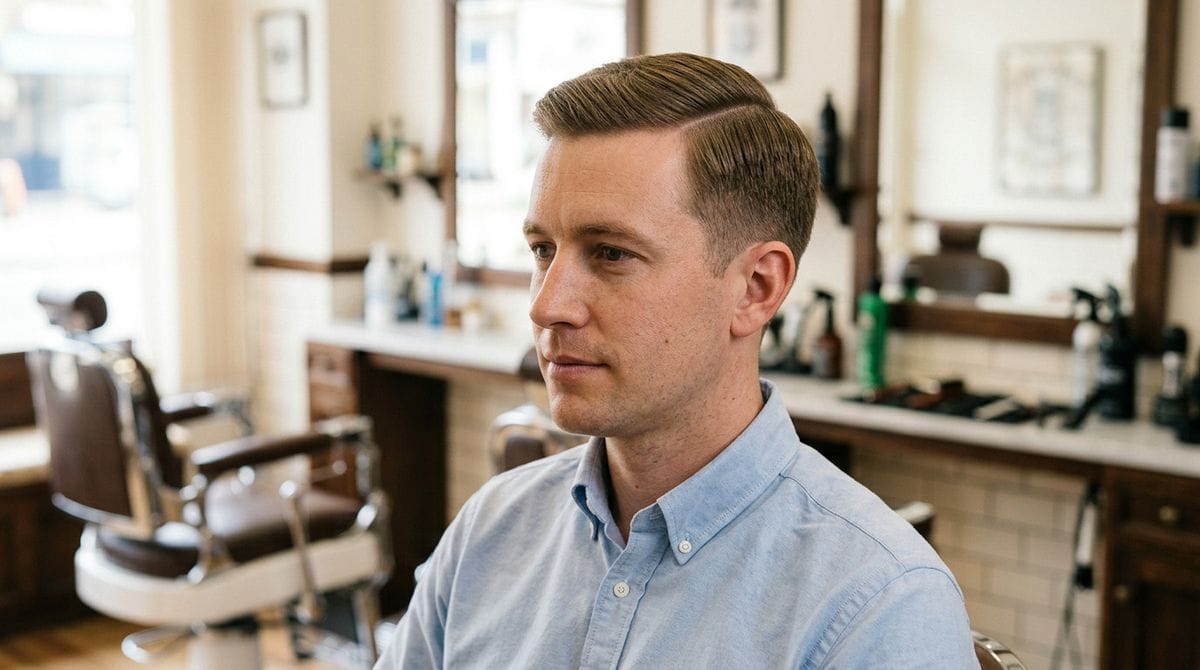
Wavy hair gives it a slightly looser, more relaxed look. Use a cream rather than pomade so the wave stays soft.
Thick hair works well but can look bulky on top. Ask the barber to thin the top so it lies flat.
Curly hair is possible with a little extra length on top and a softer taper at the sides. The parting will be softer than on straight hair.
Fine or thinning hair suits it better than most cuts. The short length makes thin hair look fuller, and combing the fringe across covers a slight recession at the temples. If thinning is more advanced, the haircuts for balding men page has more options.
Forma del rostro is rarely a problem. The modest height suits oval, square and round faces. On a long face, keep the top flat and the sides a touch fuller.
It is also about as safe as haircuts get for work and school. If you want a cut that will not attract comment anywhere, this is one.
How to ask a UK barber for an Ivy League
Some barbers know it by name, some do not, so describe it as well.
- Ask for an Ivy League, or "a long crew cut with a side parting".
- The sides. "A grade 2 on the sides, tapered at the neck." Ask for a grade 3 (9mm) for a softer look. For a more modern version, ask for a fade from a grade 0.5 or 1 around the ears instead. Keep the taper soft if you want it to look classic.
- The top. "About 4cm at the front, shorter towards the crown, long enough to part." Say how much to take off if you are not sure about centimetres.
- The parting. Tell them which side. A natural parting is standard. A shaved-in hard part is an option, but it needs redoing at most cuts.
- El escote. Ask for it tapered rather than squared off. It grows out more gracefully.
Bring a side-on photo if you have one. It shows the grading on top better than a front view.
Styling an Ivy League
It is a two-minute job.
- Start with damp hair. Towel dried.
- Add a small amount of product. A light cream or matte paste for a natural finish, or a little pomade for a neater, slightly shiny look. Work it in from the back forward.
- Set the parting. Run the end of a comb along your parting line from the front hairline back.
- Comb the front across. Sweep the fringe to one side and slightly back. Comb the shorter side down.
- Dry it in place. Let it air dry, or use a hair dryer on low heat in the direction it is combed. Lift the front slightly with your fingers if you want a little height.
On a lazy day it can be towel dried and pushed into place with the fingers, and it will still look tidy.
Upkeep and how often to cut
Every three to four weeks. The tapered sides are what keep it looking sharp, and they are the first part to go fuzzy. A faded version or a hard part needs doing every two to three weeks.
At each cut the barber should tidy the sides and neckline, keep the top graded and trim the fringe back to parting length. If the top gets much longer than 5cm, the cut stops being an Ivy League and starts drifting towards a side part.
Variations
- Classic Ivy League. Scissor-cut top, clipper sides tapered from a grade 2. Neat and smart.
- Short Ivy League. About 3cm at the front. Closer to a crew cut, even less styling.
- Ivy League with a fade. Faded sides for more contrast. More modern, more upkeep.
- Textured Ivy League. Matte product, roughed up with the fingers. Less formal.
- Hard part Ivy League. The parting shaved in. More defined.
It grows out cleanly. Let the top keep going and you have a side part, then a longer short back and sides. For the rest of the family, see the classic haircuts collection.
Preguntas que nos hacen
What is an Ivy League haircut?
A short haircut with tapered sides and a top about 3 to 5cm long at the front, getting shorter towards the crown, worn with a side parting. It is a crew cut left long enough at the front to part and comb across.
What is the difference between an Ivy League and a crew cut?
Length on top. A crew cut keeps the top at about 1 to 3cm, too short to part. An Ivy League leaves 3 to 5cm at the front so it can be combed into a side parting. The sides and the front-to-back grading are the same.
What grade are the sides on an Ivy League?
Usually a grade 2 (6mm), tapered at the neck. A grade 3 (9mm) gives a softer look. For a more modern version, a fade from a grade 0.5 or 1 around the ears.
Is an Ivy League haircut the same as a Princeton or Harvard clip?
Yes. Princeton cut and Harvard clip are other names for the same haircut. Barbers use them more or less interchangeably.
Does an Ivy League suit thinning hair?
Usually, yes. The short length makes thin hair look fuller, and combing the fringe across covers a slight recession at the temples. Avoid a hard part over a thin area.
How often should I get an Ivy League cut?
Every three to four weeks to keep the taper sharp. If the sides are faded, every two to three weeks.
Other short clipper cuts
Close relatives, and how they differ.
Explora según lo que te interese
El mismo directorio, visto desde otra perspectiva.