
Drop Fade
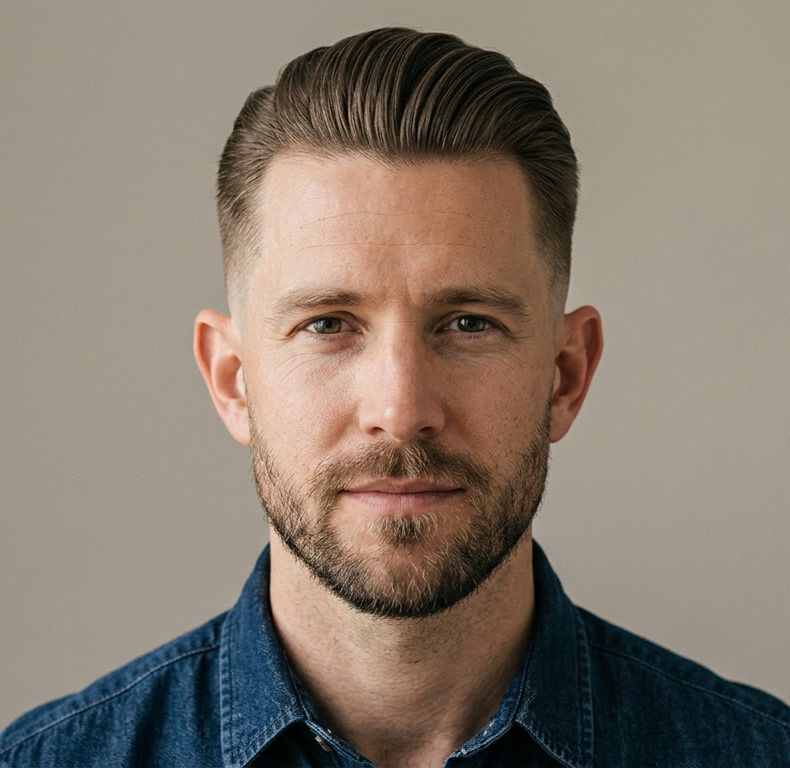
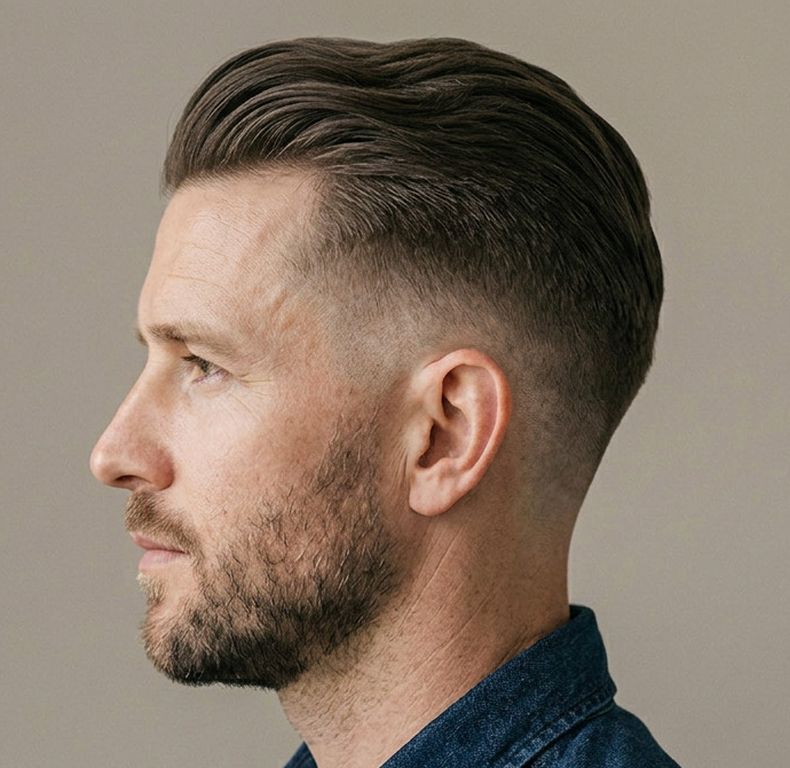
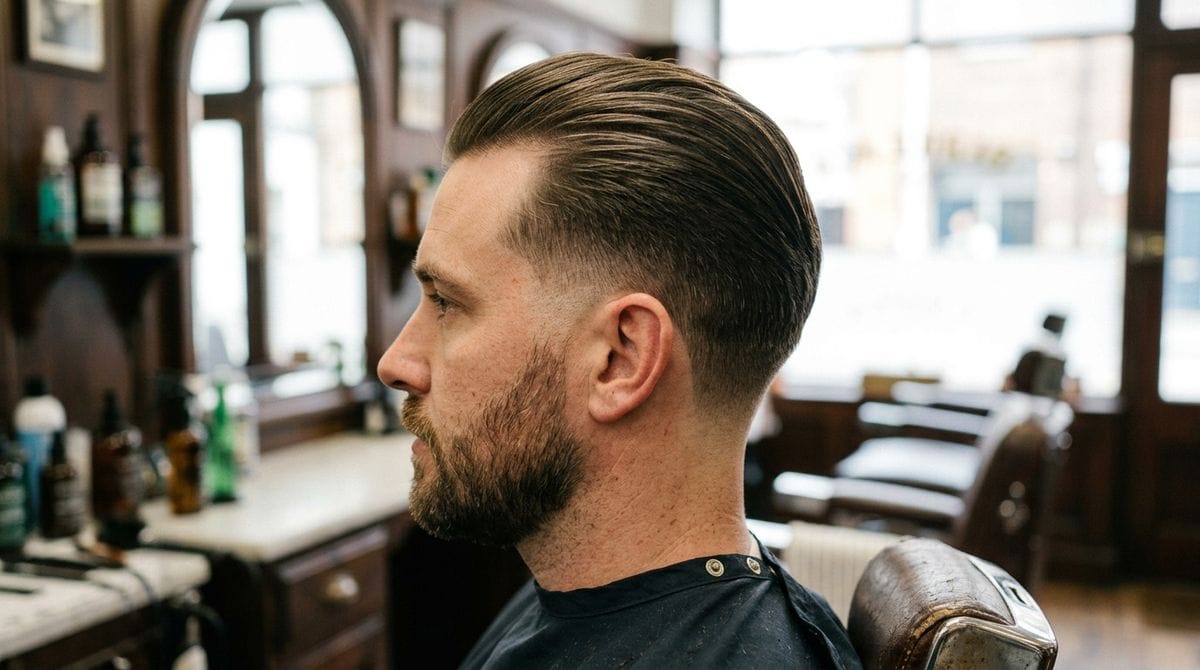
The fade line dips down behind the ear, following the curve of the head.
A drop fade is a fade where the line does not run level round the head. It sits above the ear at the front, then dips down behind the ear and follows the curve of the skull to the nape. The blend is the same as any fade, short at the bottom and longer above. Only the shape of the line is different, and that curve is the whole point. You will find it alongside its relatives in every cut in the directory.
En bref
- Également appelé
- Drop fade haircut
- Accompagnements
- Faded above the ear, dropping lower behind it
- Haut de la page
- 4 to 8cm, often slicked back or a pompadour
- Where it starts
- Above the ear at the front, curving down to the nape
- Goes down to
- A grade 0 or 1, or skin
- Entretien
- Toutes les 2 à 3 semaines
- À ne pas manquer sur
- Heads with a noticeable curve at the back. The barber sets the depth for flatter heads
- À éviter si
- You want a simple, level outline
- Rendu populaire par
- Cole Palmer (a French crop with a mid drop fade), James Anderson (a mid-high drop fade with a small quiff)
5 £ de réduction sur votre première livraison
Une coupe récente est particulièrement mise en valeur par un cou bien rasé. Une lame bien affûtée permet de conserver ce résultat entre deux rendez-vous, sans provoquer les irritations que laisse une lame émoussée.
5 £ de réduction sur votre premier abonnement ou votre première commande VIP – une offre par client, désabonnement en un clic
Comment s'adresser à son coiffeur
- Name itAsk for a drop fade: the line starts above the ear and curves down behind it to the nape.
- Say how highLow or mid at the front, depending on how much contrast you want.
- Say how shortA grade 0 or 1, or skin.
- Describe the topSlicked back, pompadour or textured, with the length.
Les variations
La même coupe, portée différemment. Ce qui change, c'est la longueur, l'endroit où commence la partie courte et la façon dont le haut est coiffé.
Est-ce que ça ira avec vos cheveux ?
Le type de cheveux détermine la façon dont une coupe tient et la rapidité avec laquelle elle perd sa forme. Le tableau ci-dessous en présente un résumé.
| Hétéro | Idéal | Shows the curve cleanly. |
|---|---|---|
| Ondulé | Idéal | Waves sit well above the curve. |
| Bouclé | Œuvres | The curve can get lost under a full curly top. |
| Coily | Idéal | A crisp curve on short coily hair. |
| Épais | Idéal | Takes weight off behind the ears. |
| Cheveux fins ou clairsemés | Œuvres | Fine, as long as the top is not slicked flat. |
Est-ce que ça ira bien avec votre visage ?
C'est la façon dont la coupe ajoute de la hauteur ou enlève de la largeur qui détermine comment elle s'harmonise avec la forme de votre visage. Le type de cheveux a certes plus d'importance, mais voilà en bref.
| Ovale | Idéal | Des proportions équilibrées : c'est la coupe elle-même qui fait la différence. |
|---|---|---|
| Rond | Œuvres | Add a little lift at the front so it does not sit flat and wide. |
| Carré | Idéal | A neat parting suits a defined jaw. |
| Oblong | Œuvres | Keep the top fairly flat rather than lifted. |
| Cœur | Idéal | A side parting breaks up a broad forehead. |
| Diamant | Œuvres | A parting with some fullness on top works. |
Les styles de barbe qui vont bien avec
Les cheveux et la barbe ne forment qu'un seul et même contour. C'est ce qui permet de respecter les proportions de cette coupe.


What a drop fade is
Picture a standard fade from the side. The line where the short hair meets the longer hair runs roughly horizontal, from the temple, over the ear and round the back.
On a drop fade, that line drops. It starts in the same place at the front, then curves downwards behind the ear, so at the back of the head the fade sits much lower than it does at the sides. The finished shape follows the natural curve of the skull rather than cutting across it.
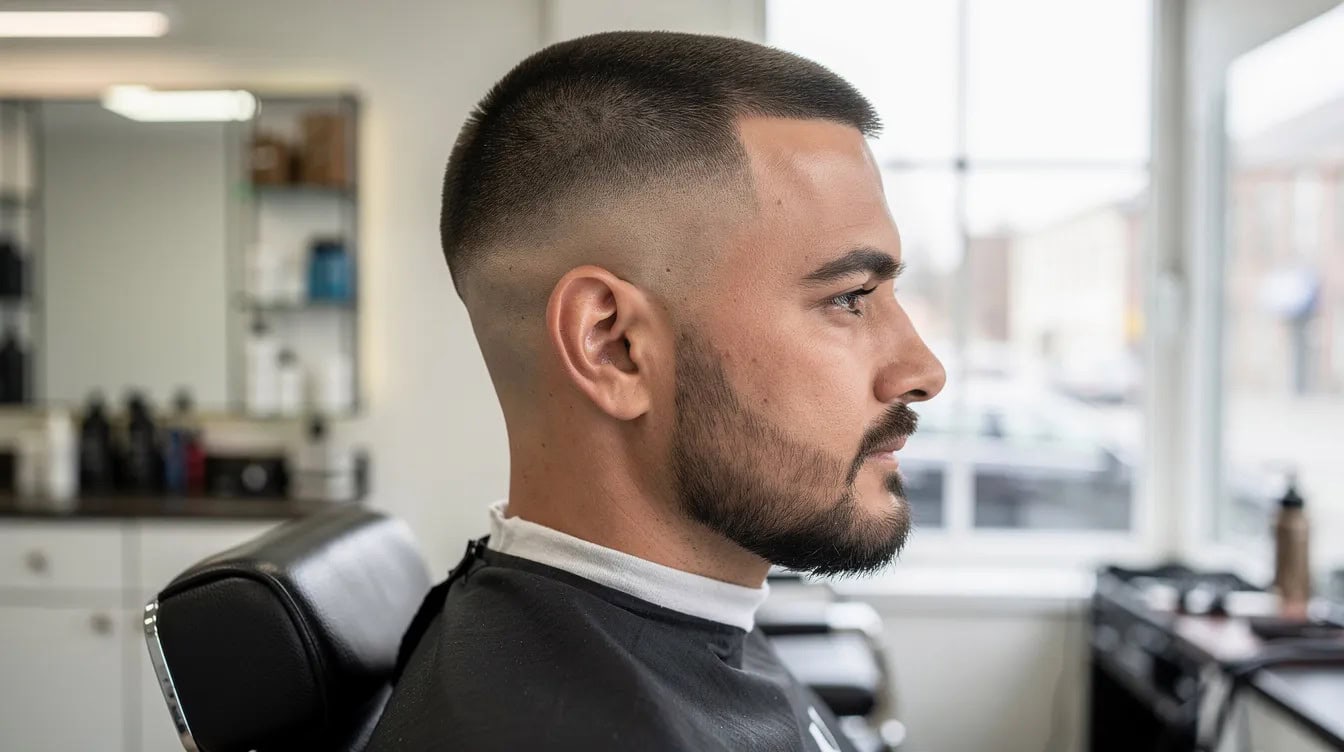
The effect is that more hair is left at the back of the head and the crown, and the outline around and behind the ear looks deliberate and rounded. From the front, a drop fade looks almost exactly like a normal fade. You see the difference from the side and the back.
Like any fade, it can finish at different depths. A grade 0 or a half at the bottom is standard. A drop skin fade goes to bare skin with a foil shaver or razor.
Drop fade vs other fades
Le types of fade are described by two things, height and depth. The drop adds a third, the shape of the line. That means a drop fade can also be low, mid or high.
Drop fade vs low fade. A faible évanouissement runs a level line just above the ear all the way round. A low drop fade starts in the same place but curves down behind the ear. Same front, different back.
Drop fade vs burst fade. These get confused because both involve a curve around the ear. A fondu enchaîné is a semicircle centred on the ear. It is short around the ear and then the length returns at the back, often leaving a longer section at the nape. A drop fade keeps going down to the neckline. The back is short on a drop, longer on a burst.
Drop fade vs taper. A taper only shortens the edges, at the sideburns and the nape. A drop fade blends a full band of the side. Tapers grow out more softly. If you want the gentlest version, look at the fondu enchaîné family instead.
Who a drop fade suits
Head shape. This is the one cut where head shape matters more than face shape. Because the line follows the curve of the skull, it suits heads with a noticeable curve at the back. If the back of your head is flatter, a level fade can look neater, and a good barber will adjust how deep the drop goes to suit you.
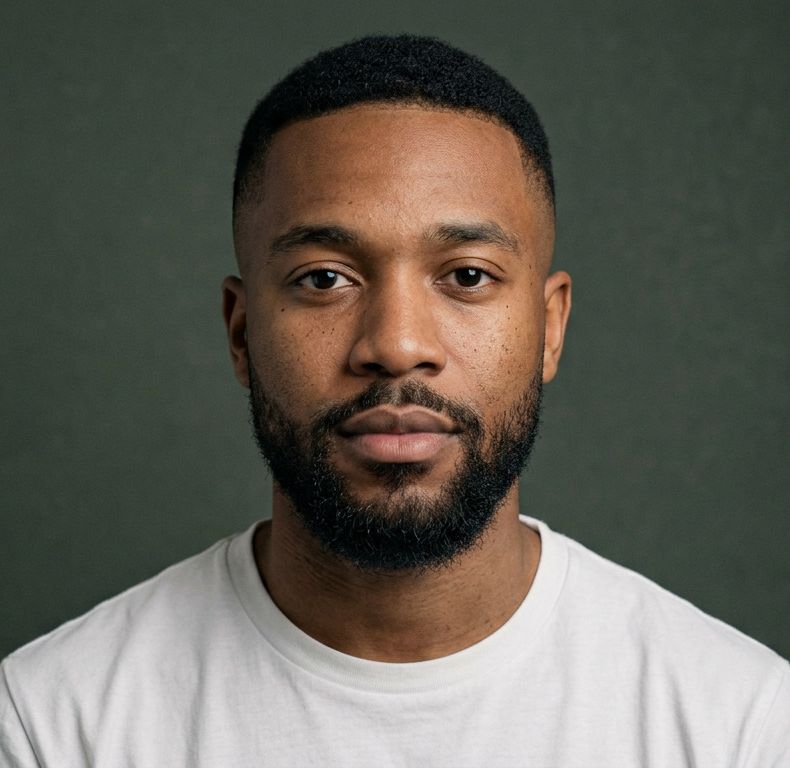
Type de cheveux. Straight and wavy hair show the curve cleanly. On thick hair, a drop fade takes a lot of weight off behind the ears, which stops the back of the head looking wide. Coily hair holds a crisp curve very well. On a full curly top, the curve can get lost under the volume, so keep the top a little more controlled if you want the shape to show. More on this in coiffures selon le type de cheveux.
Fine or thinning hair. Fine, as long as the top is not slicked flat against the head. A slightly higher fade with a grade 1 or longer at the bottom avoids too much scalp showing.
Work. A low drop fade with a guarded finish is about as conservative as a fade gets. A high drop skin fade is much louder.
Avoid it if you want a simple, level outline, or you do not want to explain the cut to a new barber every time.
How to ask a UK barber for a drop fade
Bring a photo that shows the side and the back. Pictures from the front do not show what makes it a drop fade.
- Name it, and describe it. "A drop fade, where the line starts above the ear and curves down behind it to the nape." Not every barber uses the same name, so describe the shape as well.
- Say how high it starts at the front. Low (just above the ear) or mid (around the temple). Low is the most common.
- Give the bottom grade. A grade 0 (no guard, about 0.5 to 1mm), a grade 1 (3mm), or skin.
- Describe the top. Length in centimetres and how you wear it.
Example orders:
- "Low drop fade from a grade 0, curving down behind the ear, about 6cm on top so I can slick it back."
- "Mid drop skin fade, about 4cm on top, textured and pushed forward."
Mention whether you want a squared or a natural neckline. And if you wear a beard, ask for a beard fade so the sideburn blends down into the beard without a hard line.
Styling a drop fade
The fade needs nothing day to day. What you do on top is up to you, but drop fades tend to go with tops that have some length and direction.
Slicked back. About 6 to 8cm on top, combed straight back with a light pomade or cream. This is a classic pairing, because the line of the hair follows the line of the fade. See the cheveux lissés en arrière for the full method.
Pompadour or quiff. Volume at the front, blow-dried up and back, set with a stronger paste or clay. The drop keeps the back neat underneath. The coiffure en crête page covers the drying technique.
Textured crop. 3 to 4cm pushed forward with a small amount of matte paste. The quickest option.
Curls. Curl cream on damp hair and leave it to dry. Keep the top a bit shorter than you might otherwise so the curve still shows.
Keep product off the faded area. On very short hair it just looks greasy.
Upkeep and how often to cut a drop fade
Every two to three weeks. The curve is the first thing to go. Hair grows roughly 1cm a month, and a few millimetres is enough to blur the line behind the ear and make the drop look like an ordinary fade.
A skin drop fade needs the shorter end of that range. One finishing on a grade 1 can stretch to three weeks or a little more.
Stick with the same barber if you can. The depth and shape of the curve is a judgement call, and a new barber will cut it slightly differently.
Drop fade variations
- Low drop fade. Starts just above the ear. The most common version and the easiest to wear.
- Mid drop fade. Starts around the temple, so there is more contrast from the front.
- Drop skin fade. Taken to bare skin at the bottom.
- With a slick back. 6 to 8cm combed back. The curve follows the line of the hair.
- With a pompadour. Volume at the front, neat curve behind.
- With curls. A clean curve under a curly top.
To grow a drop fade out, ask the barber to stop fading and only tidy the neckline. The curve softens within a few weeks. At around six weeks a grade 3 or 4 through the back and sides evens out the lengths.
Questions qui nous sont fréquemment posées
Can you get a low drop fade?
Yes, and it is the most common version. A low drop fade starts just above the ear at the front and curves down behind the ear to the nape. It is subtle from the front and grows out more gently than a mid or high drop.
What is the difference between a drop fade and a burst fade?
A burst fade is a semicircle around the ear, with length coming back at the nape. A drop fade curves down behind the ear and carries on down to the neckline, so the back is short. The burst leaves more hair at the back, the drop leaves less.
Should I get a taper or a drop fade?
A taper is softer and only shortens the edges, so it grows out more gently and suits conservative settings. A drop fade blends a full band of the side and gives a sharper, more shaped outline. Choose the taper for low upkeep, the drop if you want the shape to show.
How long does a drop fade last?
It looks sharp for about one to two weeks. By three weeks the curve behind the ear starts to blur. Most people get it recut every two to three weeks.
Does a drop fade work on curly hair?
Yes. The fade keeps the sides and back tidy while the curls sit on top. Keep the top controlled enough that it does not hang over the curve, or you lose the shape that makes it a drop fade.
Other fades
Des proches parents, et en quoi ils diffèrent.
Parcourez les contenus en fonction de ce qui vous intéresse
Le même répertoire, vu sous un autre angle.