
Hollywoodian
the disconnected beard, and how to cut the line
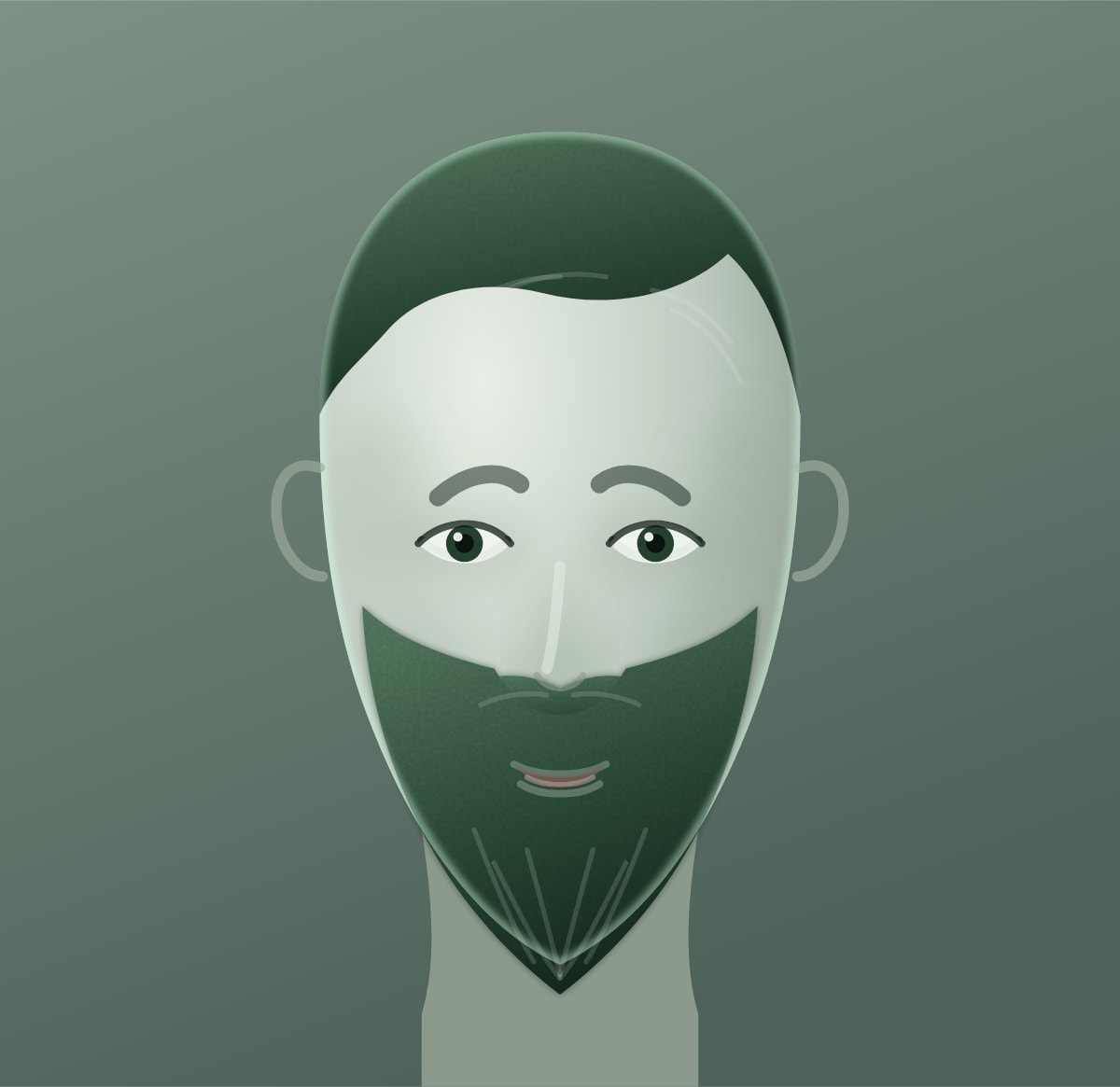
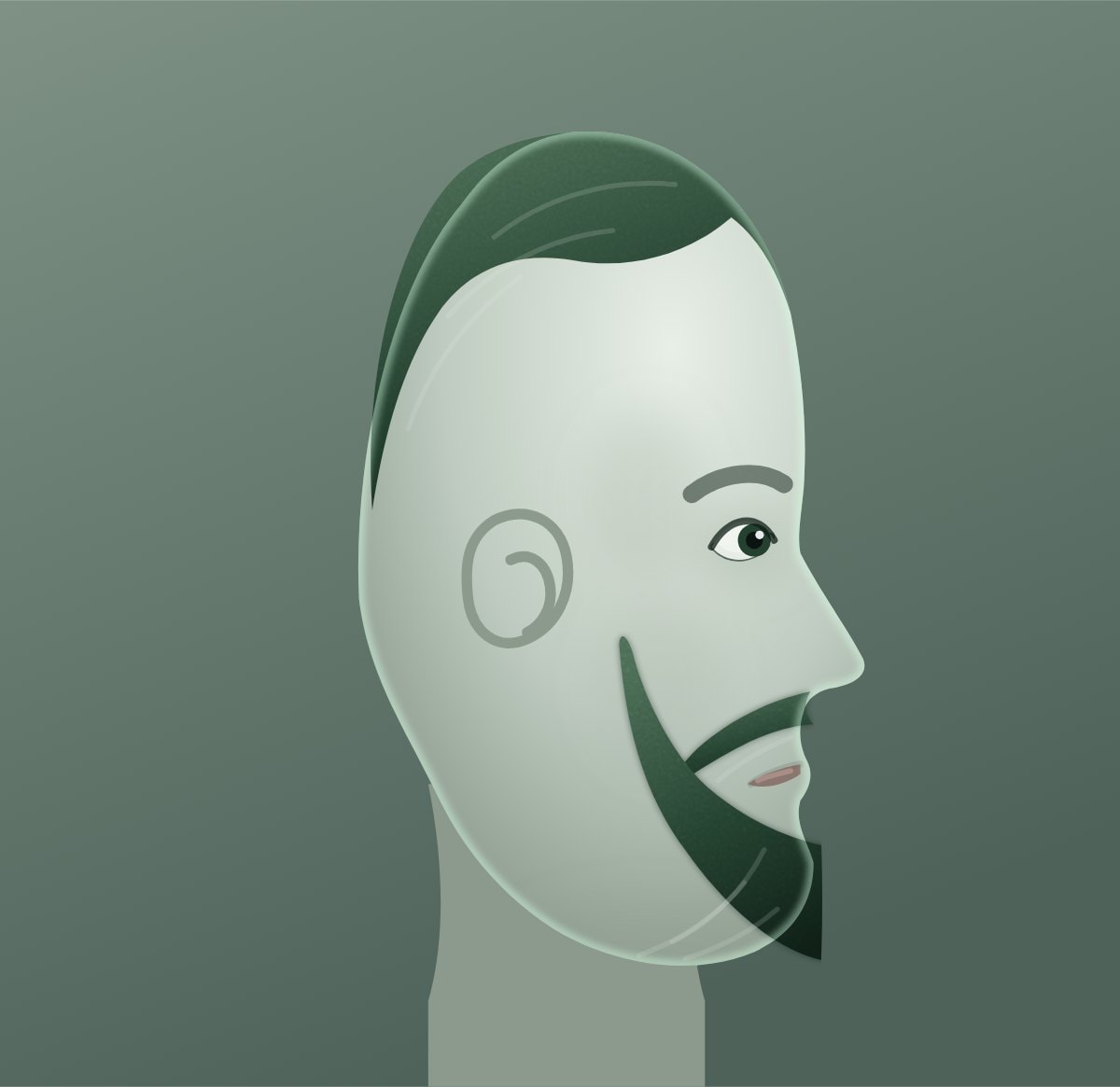
The Hollywoodian is a beard and moustache with the sideburns taken off, so the beard stops before it reaches your hairline and appears to float below the cheekbones. It is one line, cut in one place, and that line is the entire style.
This covers where to put it, how long you need, who it flatters, and why it is easier to get wrong than a full beard.
At a glance
- Also known as
- Nothing else in common use
- What it is
- Beard and moustache with the sideburns cut away.
- Length
- Short, under an inch
- Growing time
- 3 to 4 weeks
- Trim how often
- Every 1 to 2 days
- Best face shapes
- Oval, Square
- Moustache
- Yes
£5 off your first delivery
Cutting the sideburns away is what makes it a Hollywoodian, and that cut has to be re-made every couple of days.
£5 off your first subscription or VIP order - one per customer, unsubscribe with 1 click
The variations
The same shape, worn differently. What changes is length, density and how much you take off at the edges.
Will it suit your face?
Where a style puts weight, and where it takes it away, is what decides whether it suits you. The table below is the short version.
| Oval | Ideal | Takes the shape without adjustment. Set the strap width to taste. |
|---|---|---|
| Round | Ideal | Traces a jaw the face does not show on its own, which is the whole point of it. |
| Square | Works | Already has the jaw this style draws. Keep the strap thinner so it does not double up. |
| Long | Works | Runs horizontally along the jaw, which adds width. Keep the chin short rather than long. |
| Heart | Ideal | Weight along the jaw balances a broad forehead and a narrow chin. |
| Diamond | Works | Squares off the lower face beneath wide cheekbones. |
How to cut one, in four steps
- Grow it out3 to 4 weeks. You cannot see where your growth is dense until it is in, and shaping early is why most first attempts fail.
- Set the lengthTrim the chin and moustache with a guarded trimmer on dry hair, so it sits at its true length.
- Shave the cheeksDownward, with the grain, short passes and light pressure. Pressing harder gives razor burn, not a closer shave.
- Cut the outlineLast, with a precision trimmer. Work from the outside inward on each side, checking both sides between passes.
Full detail, tools and the common mistakes are in the guide below.
What makes a beard a Hollywoodian
Take a normal full beard and shave the top of it away. Not the cheeks entirely, but the section that would run up in front of the ear to join your hair.
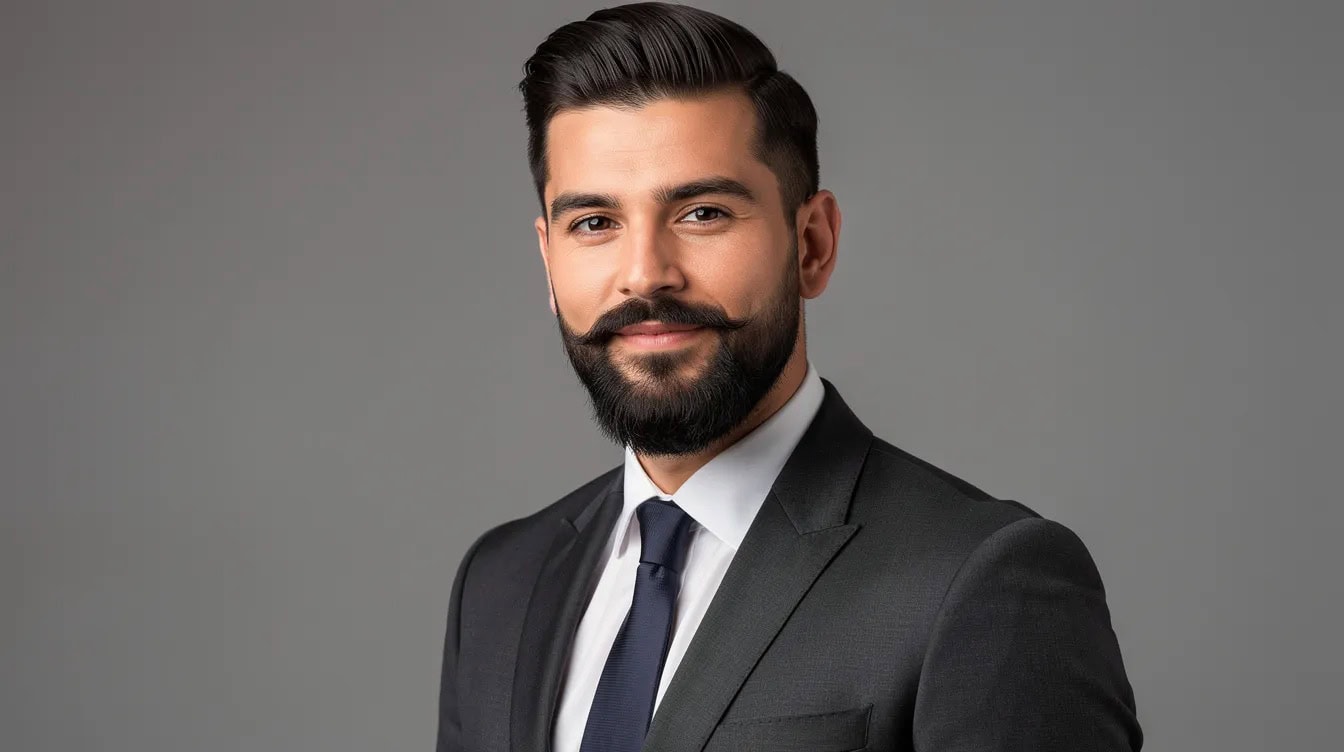
What is left is a beard covering the jaw, chin and lower cheeks, connected to a moustache, with clean skin between the top of the beard and your temple. The beard reads as a deliberate shape sitting on the lower face rather than as hair that grew up the side of your head.
That disconnection is the whole thing. Let the sideburns grow back and you have a plain full beard. Take too much off the cheeks and you drift toward an extended goatee or a chin strap.
It came out of American film in the 1950s and 60s, where actors wanted the jaw definition of a beard without the bulk of one on camera, and it has been a red-carpet staple ever since. Leonardo DiCaprio, Christian Bale and Hugh Jackman have all worn versions.
A note on the name, because it causes confusion: some sources use "Hollywoodian" for a much narrower style, essentially a moustache and chin strap with the cheeks fully bare. The version described here, and drawn in the diagram above, is the standard one: a full beard with the sideburns removed.
Where the line goes
This is the only difficult decision in the style, and everything else follows from it.
Comb the beard down flat, then find two reference points: just in front of the ear at about earlobe height, and the corner of your mouth. The line runs between them, following the natural curve of your jaw rather than cutting straight across.
Everything above that line comes off. Upper cheeks, the whole sideburn, any stray growth by the ears.
Set it lower if your cheeks are thin. The line is a free way to remove the sparsest part of your beard, since cheek growth is nearly always weakest at the top.
Set it higher if your growth is dense, which leaves more beard and a fuller look.
Both sides matter more than the exact height. Nobody will notice whether your line sits a centimetre higher than someone else's. Everybody notices if your two sides disagree. Check from the front and in profile, and photograph both sides if you are not sure, because a mirror flatters asymmetry.
Growing it
Four to six weeks, and up to eight if your growth is slow. You want an inch or more before you start shaping, because you are carving a shape out of a beard rather than building one up from stubble.
Do not shape early. The temptation at two weeks is to cut the line in and see how it looks, and the result is a line set too low that takes another month to grow out of.
The only thing worth tidying during the growing phase is the top of the neck, if your job requires it.
Cutting it
Trim the length first, with a guard, before you touch any edges. Sides and jaw around three to four millimetres, chin left longer at six to nine. That difference is what stops the beard widening your face and what gives the chin its weight.
Cut the cheek line with the trimmer first, taking the bulk off, then finish with a razor and cream for a clean edge. Trimming before shaving is faster and far less irritating than dragging a blade through long hair.
The neckline is separate and equally important. Two finger-widths above the Adam's apple, curving up to behind each ear. A Hollywoodian with a neglected neck loses the point of itself, because the style is entirely about a clean, deliberate outline.
Fade the very edge of the neckline by running the trimmer a guard shorter just above the line. It stops the beard ending in a hard band and looks considerably more natural.
Who it suits
It is at its best on a soft or rounded jaw, because it draws a dark line exactly where the bone does not, and the face reads as more angular than it is.
On a strong square jaw it works but wants restraint: keep the beard tighter along the sides or you double up on definition that is already there.
On a long face it is better than most beard styles, because the shape runs horizontally along the jaw and adds width. Keep the chin shorter rather than longer.
It also handles patchy upper cheeks neatly, since the sparsest area is the part you are shaving off anyway. What it does need is reasonable growth along the jaw itself, and that is the version of patchiness this style cannot hide. If your jawline growth is thin, the patchy beard styles page has better options.
Keeping it
The bare cheeks are the maintenance. The beard itself is straightforward, but the line is visible from across a room and grows back within days.
Re-shave the cheeks and sideburns every two to four days. This is not optional. A blurred cheek line is the difference between a Hollywoodian and a man who has not shaved properly.
Trim the length weekly, keeping the sides shorter than the chin.
Comb it down daily. At this length the jaw hair fluffs outward if left alone, which widens the face and works against the shape.
Oil it if it feels coarse, and moisturise the shaved cheeks. You have two different skin conditions on one face and both want attention.
Where it goes wrong
A cheek line that is too high. The most common error. It leaves too little beard and the effect disappears.
Two lines that do not match. The second most common, and the one people notice.
Letting the sideburns creep back. It stops being a Hollywoodian within a week.
Trimming the chin as short as the sides. You lose the weight at the bottom that makes the jaw read strongly.
Ignoring the neck. All the sharpness of the cheek line is undone by a soft edge underneath it.
Questions we get asked
What is a Hollywoodian beard?
A full beard and moustache with the sideburns shaved off, so the beard is disconnected from your hairline and sits on the lower face. The cheeks keep some hair, unlike a goatee.
What is Keanu Reeves' beard style called?
Usually a Hollywoodian, though he has worn it at varying lengths and sometimes closer to a plain full beard. The disconnected sideburn is the tell.
How long does it take to grow a Hollywoodian?
Four to six weeks, up to eight if your growth is slow. You want an inch or more before shaping, because you are cutting a shape out rather than growing one in.
How do I maintain a Hollywoodian beard?
Re-shave the cheeks and sideburns every two to four days, trim the length weekly with the sides shorter than the chin, and comb it down daily. The line is the job; the beard mostly looks after itself.
Is it good for a round face?
Yes, one of the better options. It draws a defined jawline where the face does not have one, which is exactly what a round face is short of.
What is the difference between a Hollywoodian and a chin strap?
Coverage. A chin strap is a narrow band tracing the jaw with bare cheeks. A Hollywoodian keeps full beard coverage on the lower cheeks and chin, and only removes the sideburns.
Can I wear it in an office?
Generally yes. Clean cheeks, a clean neck and crisp lines read as deliberate grooming rather than as a statement. Keep the chin length moderate.
Does it work with a thin moustache?
It can. Keep the moustache neat and short rather than trying to bulk it out, and let the jaw and chin carry the style.
Other disconnected styles
Same shape, different length or moustache.
If this one is too much work
Same idea, less of your morning.
Browse by what matters to you
The same directory, cut a different way.