
Il taglio "mullet" moderno
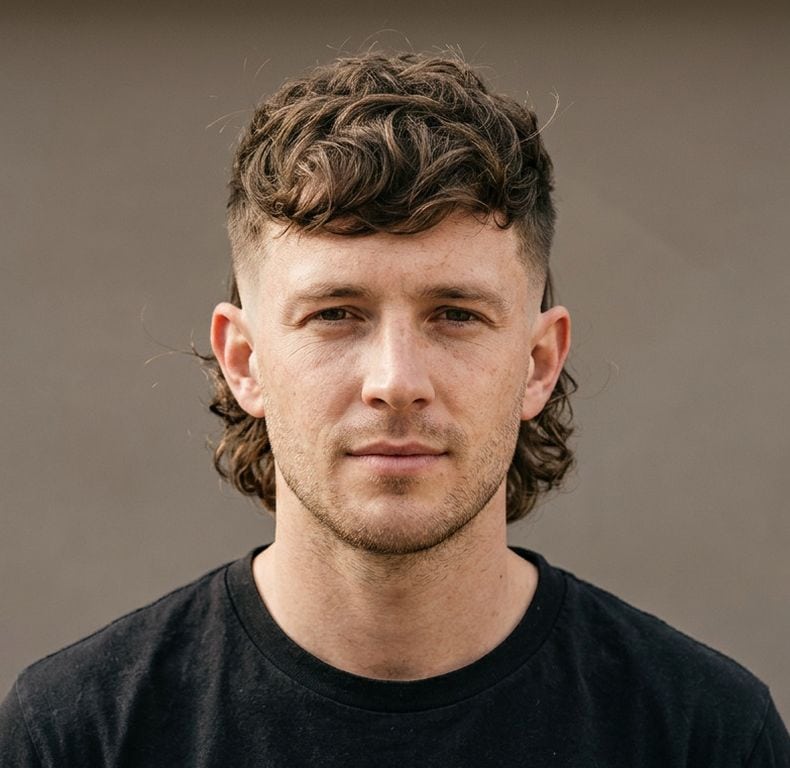
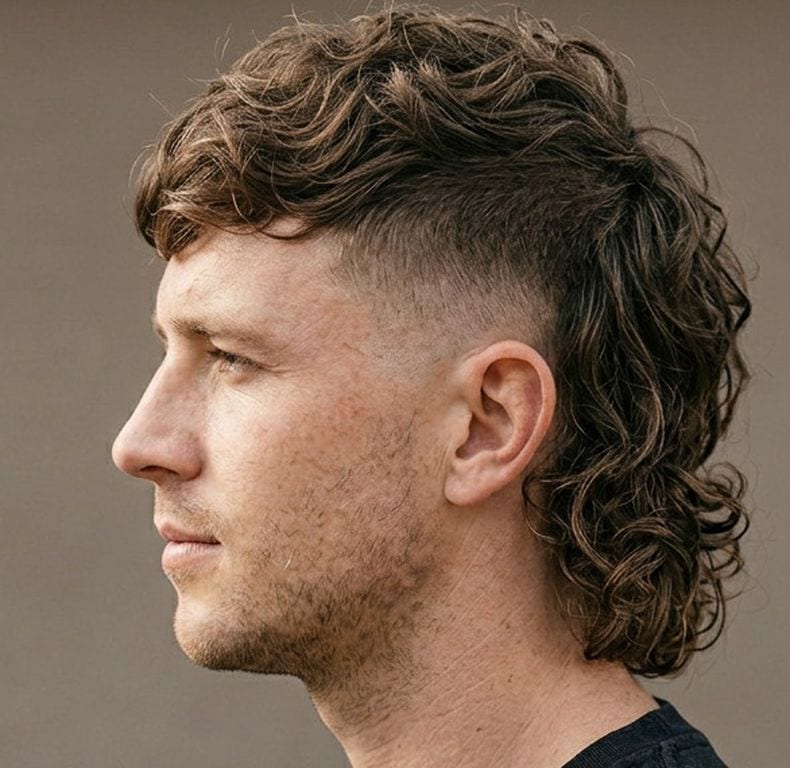
Short at the sides, textured on top, and left long at the back.
A modern mullet is short at the sides, textured on top and left long at the back, so the hair runs down the nape of the neck while the sides stay neat. What makes it modern rather than eighties is the blend. The sides are usually faded or tapered, the top is cut with texture, and the back is layered so it moves instead of hanging as a single sheet. It is the boldest of the longer cuts in more men's hairstyles and the one where the profile matters more than the front.
In sintesi
- Chiamato anche
- Mullet, mullet fade
- Sides
- Short, often faded or tapered
- Top
- 4 to 6cm, textured
- Back
- Left long, down the neck
- Manutenzione
- Sides every 3 to 4 weeks, back every 6 to 8
- Il meglio su
- Oval and square faces
- Da evitare se
- Your workplace expects something conservative
- Popularised by
- Paul Mescal (from 2023), Harry Styles (a short textured mullet at London Fashion Week), Joe Keery (a tousled mullet with a side part)
5 £ di sconto sulla tua prima consegna
A fresh cut looks sharpest with a clean neckline. A sharp blade keeps it that way between visits, without the razor burn a blunt one leaves.
5 £ di sconto sul tuo primo abbonamento o ordine VIP – un solo sconto per cliente, disiscriviti con un clic
How to ask your barber
- Grow the backLet the back grow out first. The sides and top are easy to cut later.
- Choose the sidesA low or burst fade, or a taper, and how short.
- Texture the topAsk for it point cut so it moves.
- Say how long the back staysPoint to where it should end on your neck.
Le variazioni
The same cut, worn differently. What changes is the length, where the short part starts and how the top is styled.
Will it work with your hair?
Hair type decides how a cut sits and how fast it loses its shape. The table below is the short version.
| Straight | Opere | Needs texturing or it looks flat. |
|---|---|---|
| Wavy | Ideale | Waves give the back shape. |
| Curly | Ideale | Curls make the best mullets. |
| Coily | Opere | Possible with length on the back. |
| Spesso | Ideale | Thick hair holds the shape at the back. |
| Fine or thinning | Evitare | The back looks thin without density. |
Si adatterà al tuo viso?
Where a cut adds height and where it takes width away decides how it sits with your face shape. Hair type matters more, but this is the short version.
| Ovale | Ideale | Balanced proportions, so the cut itself decides. |
|---|---|---|
| Rotondo | Opere | Keep the sides tight and let the texture add some height. |
| Quadrato | Ideale | Texture on top softens the angles. |
| Oblungo | Opere | Keep the height down and push the texture forward. |
| Cuore | Opere | Texture brought forward suits it better than height. |
| Diamante | Opere | Keep some fullness on top and at the temples. |
Beard styles that go with it
Hair and beard are one outline. These keep the proportions right with this cut.

What makes a mullet modern
The old mullet was a hard step. Short, often clippered sides met a long, unbroken tail with very little in between, and it looked like two haircuts on one head.
The modern version keeps the outline and softens the joins. The sides are faded or tapered close to the head, the top is a few centimetres of choppy texture, often with a loose fringe pushed forward, and the length at the back is layered so it sits into the neck. From the front it can pass for a textured crop. From the side the mullet is obvious.
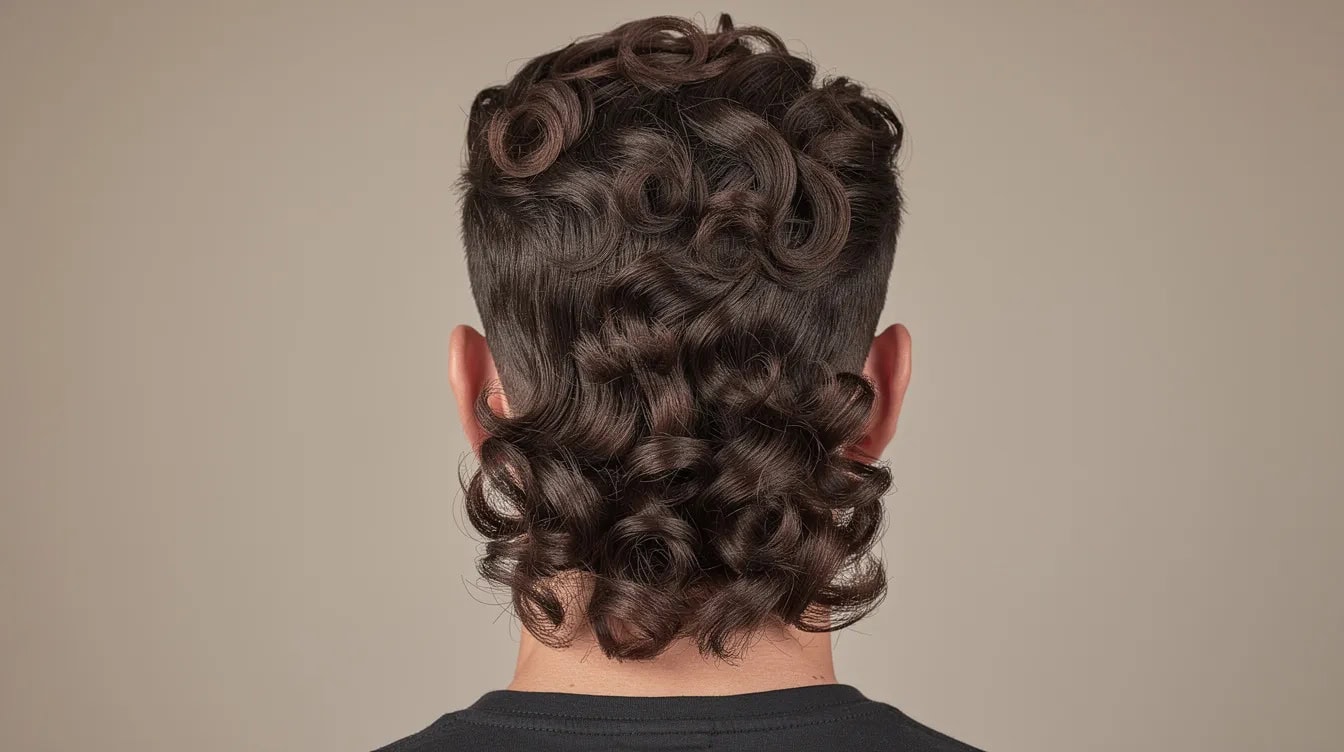
It varies a lot in strength. A short mullet has the back just brushing the collar and reads as a slightly grown-out cut. A long mullet drops well past the collar and is a statement whichever way you look at it.
Modern mullet, burst fade mullet and the wolf cut
Il burst fade mullet is the most common modern version. The sides are faded in a half-circle arc around the ear, leaving weight above and behind it that flows straight into the length at the back. The fade stops before it reaches the nape, which is what lets the back stay long. The burst fade page covers that fade in detail.
A taper mullet only tapers the edges, around the ears and sideburns, and leaves more weight on the sides. It is subtler and grows out more gracefully.
Il wolf cut is a near relative: a shaggier, more heavily layered cut with a mullet shape at the back and a lot of texture all over, often with the sides left longer. If the photo you like has no clipper work on it at all, you are probably looking at a wolf cut or a shag rather than a modern mullet.
Tende sometimes get combined with a mullet, a middle parting at the front with length at the back. It works, but it needs a lot of length everywhere.
Who the modern mullet suits
Curly and wavy hair make the best mullets. The curl fills out the back and gives it shape without any styling, and a taper or fade at the sides keeps the volume where you want it. Curly hair also looks longer than it is, so the shape arrives sooner.
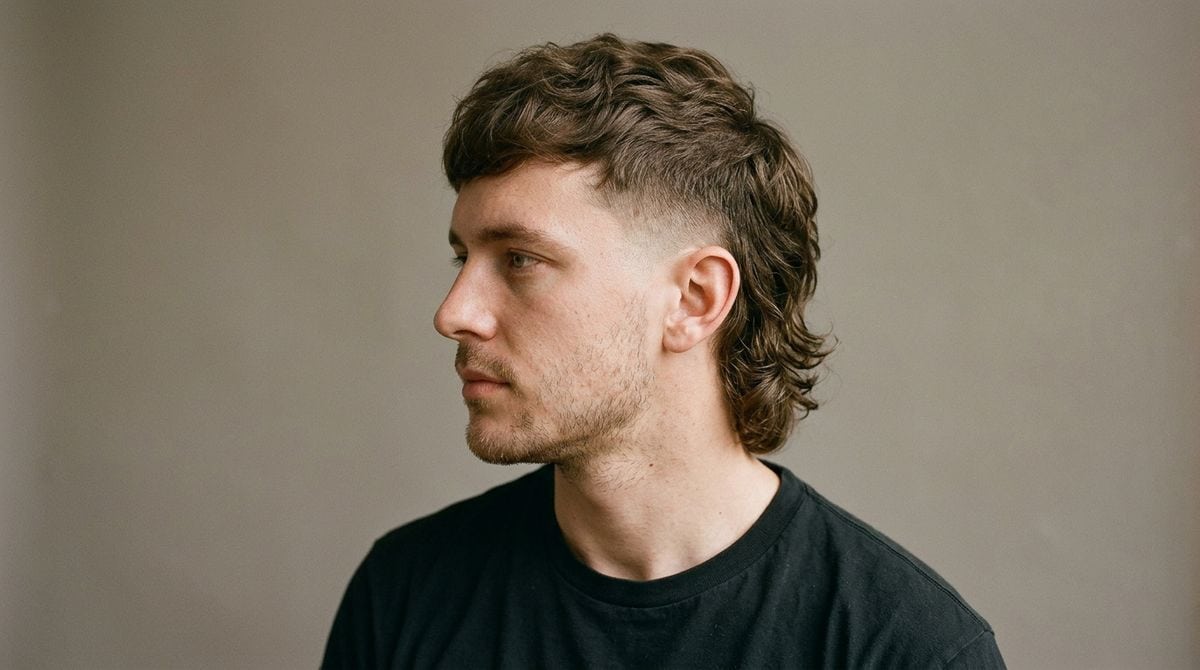
Thick straight hair works well too, but it needs texturing through the top and back or it sits flat and heavy. Ask for point cutting.
Fine or thinning hair is the hard case. The length at the back needs density to look intentional. Thin hair at length looks stringy, and a faded side shows how thin the top is by comparison. A shorter, tighter version with plenty of texture is the best bet, and even then it may not be the right cut.
Forma del viso matters less than with most cuts. The length at the back adds nothing at the front, so oval and square faces carry it most easily. A long face can benefit from a fringe pushed forward to break up the height.
Work is the real question. In creative or relaxed workplaces it barely registers now. In conservative ones, a short mullet with a low taper, the back just at the collar and a tidy fringe is the version that passes.
How much length you need
The back is the bit that takes time. Hair grows roughly a centimetre a month, and the back needs to reach at least the collar before the mullet shape reads as deliberate. From a short back and sides, that is typically three to four months of not cutting the nape.
The top only needs 4 to 8cm, depending on how much fringe you want. The sides can be as short as you like and are cut fresh every visit. So the right order is to grow the back first and leave everything else alone. The sides and top are easy to sort out at any point.
During the grow-out, a good barber will keep the sides and top tidy, cut the top into a textured crop so it looks finished, and simply not touch the back. Tell them that is the plan at every visit, or a reflexive tidy of the nape will cost you a month.
How to ask a UK barber for a modern mullet
Bring a side-on photo as well as a front one. The profile is the whole cut, and "modern mullet" covers everything from barely noticeable to very loud.
- The sides. Choose the fade or taper. A low taper at grade 1 or 2 (3mm or 6mm) around the ears is the conservative option. A burst fade, faded down to grade 0 or 0.5 in an arc round the ear, is the popular one. Say where you want it to start and say clearly that it should not run round the back.
- The top. "Keep about 4 to 6cm on top, point cut for texture." Say whether you want a fringe pushed forward, a short textured fringe or the top swept back.
- The back. Point at the spot on your neck where it should end. "Leave the length at the back, layered so it sits into the neck, not a hard step." If your hair is very thick, ask for weight taken out so it follows the neck instead of flaring out over the collar.
- La scollatura. A clean-shaved nape under the length gives the sharpest finish. A natural one looks softer.
If you wear a beard, mention it. A sharp fade mullet looks best with a well-kept short beard and clean cheek lines. A shaggier mullet sits better with something softer. The elenco degli stili di barba has the options if you want to match the two deliberately.
Styling a modern mullet
Once the cut is right, this is a two-minute job.
Towel dry until damp. Work a small amount of texturising cream, clay or paste through the top and the back with your fingers. Rough-dry with a hair dryer, lifting at the roots on top. For straight hair, bend the back slightly under as you dry so it follows the neck rather than sticking out. A little sea salt spray on damp hair gives more grip and a messier finish.
For wavy and curly mullets, do less. Scrunch curl cream into damp hair, leave the back to sit where it falls and air dry or use a diffuser. Brushing curls once they are dry ruins them. Curly hair at length dries out, so a leave-in conditioner on wash days keeps the back from going frizzy.
Matte products suit the style better than shiny ones. The point is separation and movement, not a polished surface.
Upkeep and how often to cut
A mullet has two schedules.
The sides need doing every three to four weeks if you have a fade, a little longer with a taper. A burst fade especially loses its shape quickly, because the arc softens as it grows.
The top and back need cutting every six to eight weeks, mostly to keep the layers working and the ends healthy. Once the back is at the length you want, the barber trims it to hold that length rather than to shorten it.
Shaving the neckline under the length, or trimming stray hairs around the ears, is fine to do at home between visits. Reshaping the layers is not. The balance between the crown, the sides and the back is easy to get wrong and slow to fix.
Variations and growing it out
- Short mullet. Back just past the collar. The easiest one to live with and to grow out of.
- Burst fade mullet. Faded in an arc round the ear. The popular modern version.
- Taper mullet. Only the edges tapered. Subtler, and softer as it grows.
- Curly mullet. Curls left in at the back, sides tight. Very popular on curly hair.
- Textured mullet. Choppy all over with a matte finish. Deliberately messy.
If you change your mind, the way out is simple. Shorten the back a little at each visit while keeping the top. Within a couple of cuts you have a textured crop or a longer cut on top, and nobody will remember it was ever a mullet. Taking it all off in one visit also works, if you do not mind a few weeks very short.
Domande che ci vengono poste
What is a modern mullet?
A haircut that is short at the sides, textured on top and long at the back. Unlike the eighties mullet, the sides are usually faded or tapered and the back is layered, so the short and long parts blend instead of meeting in a hard step.
How long does it take to grow a mullet?
From a short back and sides, about three to four months for the back to reach the collar, at roughly a centimetre a month. Longer for a long mullet. The top and sides can be cut as normal throughout.
What fade goes with a mullet?
A burst fade is the most common, because it fades in an arc around the ear and leaves the back long. A low taper is subtler. A full fade that runs round the back of the head does not work, because it removes the length the mullet needs.
Is a modern mullet acceptable for work?
In most workplaces, a short mullet with a low taper and a tidy neckline is fine. The longer, louder versions suit creative or relaxed workplaces better. If in doubt, start short. You can always leave the back longer at the next cut.
Can you have a mullet with thin hair?
It is difficult. The length at the back needs density to look deliberate, and faded sides make thin hair on top more obvious. A short, heavily textured version is the best chance, but most men with thinning hair are better served by a shorter cut.
How often should you cut a modern mullet?
The sides every three to four weeks, especially with a fade. The top and back every six to eight weeks, to keep the layers in shape and the ends tidy.
Other longer styles
Close relatives, and how they differ.
Sfoglia in base a ciò che ti interessa
La stessa directory, vista da un'altra prospettiva.