
Chevron moustache
The Thick, Classic Moustache Style
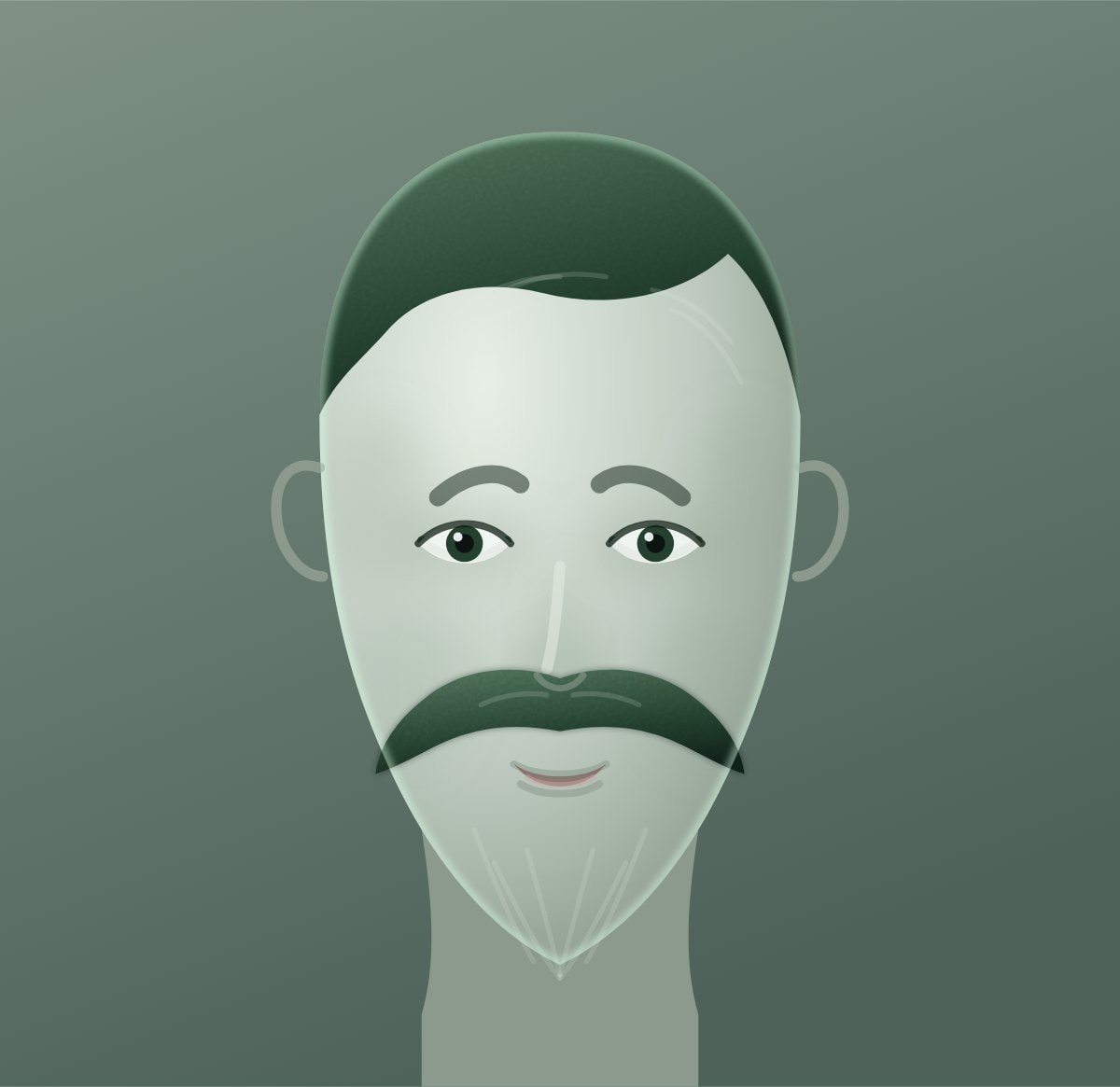
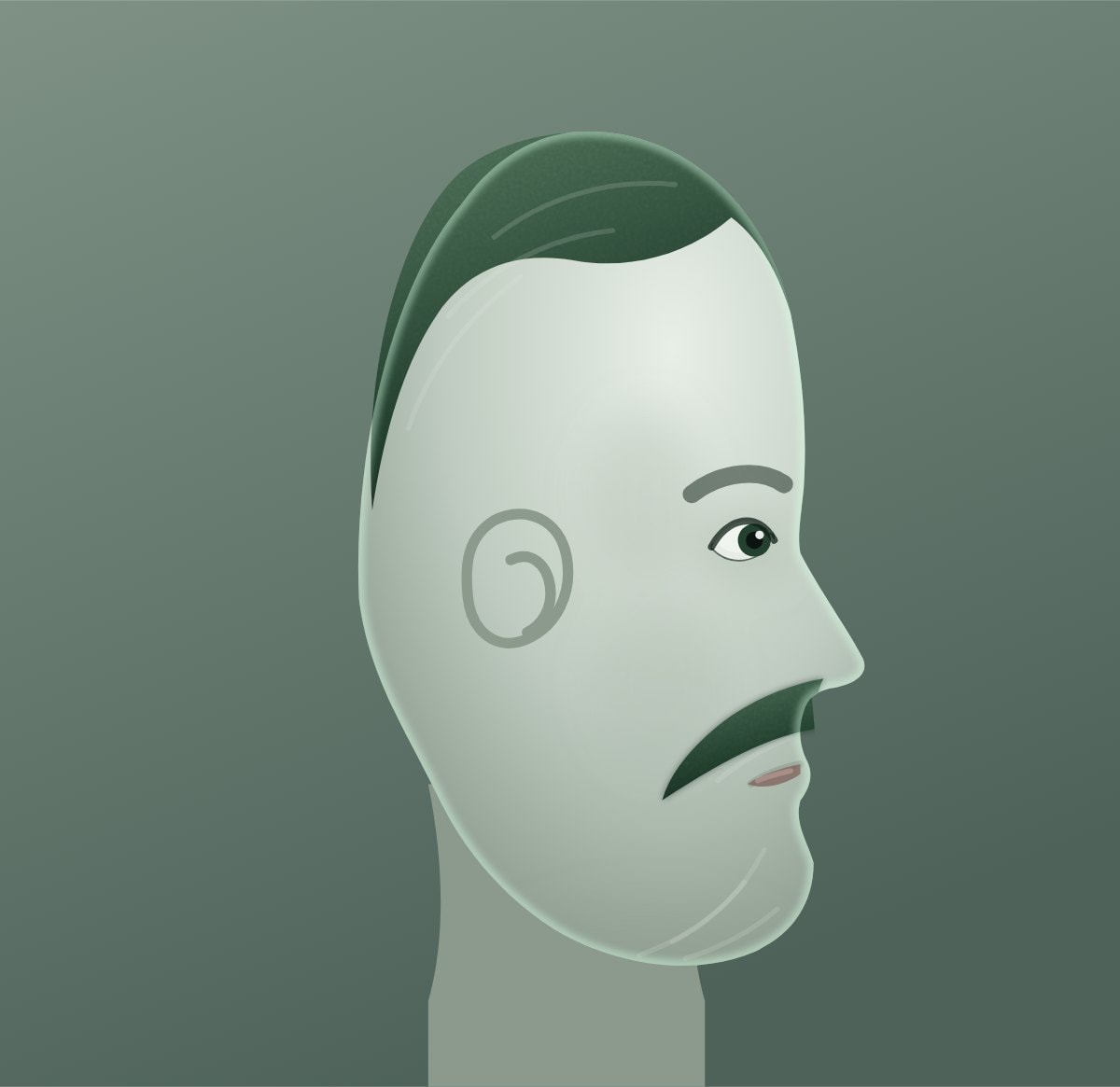
A chevron moustache is thick, wide and angled slightly downward at the ends, covering most of the upper lip. It is the moustache most people picture when they hear the word, and it is the least demanding of any moustache style in this directory.
At a glance
- Also known as
- Chelsea moustache, Dallas or cowboy moustache
- What it is
- Thick and wide, covering the top lip.
- Length
- Short, under an inch
- Growing time
- 3 to 4 weeks
- Trim how often
- Every week or two
- Best face shapes
- Any
- Moustache
- Yes
£5 off your first delivery
A chevron is wide and thick, and it only looks intentional when the cheeks and chin around it are clean.
£5 off your first subscription or VIP order - one per customer, unsubscribe with 1 click
The variations
The same shape, worn differently. What changes is length, density and how much you take off at the edges.
Will it suit your face?
Where a style puts weight, and where it takes it away, is what decides whether it suits you. The table below is the short version.
| Oval | Ideal | No shape to correct, so anything from a pencil to a handlebar sits well. |
|---|---|---|
| Round | Works | Go wider than the mouth rather than heavier, so it does not add bulk. |
| Square | Ideal | A strong jaw carries a heavy moustache without looking top-loaded. |
| Long | Ideal | Horizontal weight across the lip breaks up the length. |
| Heart | Works | Draws the eye down from a broad forehead. |
| Diamond | Works | Adds width across the middle of the face. |
How to cut one, in four steps
- Grow it out3 to 4 weeks. No trimming at all in that time, including the hairs hanging over your lip.
- Set the shapeComb it down and flat, then cut to your outline. Never cut it wet, it dries shorter than you cut it.
- Clear the lipTrim along the top lip line so it does not end up in your mouth. Scissors give more control than a trimmer here.
- Wax and trainWarm the wax between your fingers first, work it in from the centre out, then shape the ends.
Full detail, tools and the common mistakes are in the guide below.
What makes a moustache a chevron
Three things. It is full rather than thin. It is as wide as the mouth or slightly wider. And it sits down over the lip line rather than being trimmed clear of it.
The name comes from the shape: the hair angles gently down and outward from the centre, forming a soft V. It is not a hard geometric line, and a chevron that has been cut to a straight bar reads as a different moustache entirely.
The ends stop at the corners of the mouth. Carry them past and down toward the jaw and you have a horseshoe moustache. Grow them long and turn them upward and you have a handlebar. The classic chevron moustache stays where it is and does nothing dramatic, which is the point.
Chevron and its neighbours
Horseshoe moustache. A chevron with the ends extended down past the corners of the mouth toward the jaw. Same thickness, much more commitment.
Pyramid moustache. Narrower at the top near the nose and wider at the lip line, so it reads as a triangle. A chevron is more even top to bottom.
Walrus. Thicker and longer than a chevron, hanging well over the lip and often over the mouth itself.
Dallas moustache. A chevron worn full and slightly longer, associated with 1970s and 1980s television. In practice most people describing a Dallas moustache mean a generous chevron.
Natural moustache. A chevron moustache that has simply been left alone and tidied at the lip line. This is what many men wear without knowing it has a name.
The useful thing about knowing the neighbours is that they are all the same starting point. Grow a full moustache and you can become any of them, which is why the chevron moustache is the sensible first moustache for anyone unsure.
Who it suits
A chevron moustache adds horizontal weight across the middle of the face, so it shortens and widens.
Long or oblong. The best fit. The width breaks up the vertical.
Square. Very good. A strong jaw carries a heavy moustache comfortably, and the two balance.
Oval. Works without adjustment.
Round. The one to think about. Extra width across a face that already has width can be too much, so keep the chevron moustache closer to the mouth width rather than letting it spread.
Heart. Works well. Weight across the middle balances a broader forehead.
The real requirement is density. A chevron moustache is defined by fullness, and a sparse one looks like facial hair that has not finished growing. If yours comes through thin, a pencil moustache suits fine facial hair far better.
Age is worth a word too. A chevron moustache goes grey visibly, because there is enough of it to show the change. Some men take that as a reason to keep it shorter; others let it be the point of the style.
What you need
Less than any other moustache in this directory.
A pair of small, sharp scissors does almost all of it. The chevron is trimmed rather than shaped, and scissors give the control a trimmer does not.
A moustache comb, to pull the hair down flat before cutting so you are working with its real length and direction.
A beard trimmer with guards, optional, for taking the whole moustache down a level if it gets too long for your face. Most weeks you will not touch it.
Beard oil once it has grown out, worked into the hair. No wax: a chevron moustache is not held in a shape, and wax on a full moustache looks greasy rather than styled.
Growing it
Four to six weeks.
Stop shaving the upper lip and leave it alone. Do not shape it, do not trim the ends, and resist tidying the lip line until there is enough length to see what you have. A chevron is a full moustache, and cutting into it early is what leaves it looking thin.
Keep the cheeks, chin and neck shaved throughout so the moustache reads as a choice rather than as neglect.
Around week three it will start getting into your mouth. That is the point at which most people either trim too much or give up. Trimming just the hair that overhangs the lip is enough to get through it.
Trimming it
The chevron is the easiest moustache to maintain and the easiest to ruin, both for the same reason: there is very little you should do to it.
Comb it down so the hair sits at its true length and direction.
Trim the lip line with scissors, taking off only the hair that hangs below the top edge of your upper lip. Not to the lip line itself, which leaves it looking clipped.
Even the ends at the corners of the mouth, so both sides stop at the same point. Check against the corners rather than by eye.
Leave the body alone. The thickness is the style. Thinning it out with a trimmer is the commonest way a chevron stops looking like one.
Tidy strays individually with scissors.
That is the whole routine, and it takes two minutes once a week.
If the moustache has grown too heavy for your face, take the whole thing down one guard length rather than thinning parts of it. A chevron moustache should be even, and spot-thinning is what makes one look chewed rather than cut.
Keeping it
Once or twice a week, which makes this the lowest maintenance moustache style there is.
The lip line is the only part that needs regular attention, because the hair grows down into the mouth faster than it grows outward. Everything else can be left for a week without the shape suffering.
The skin around it needs shaving on your normal schedule. A chevron over stubbled cheeks looks unintentional, though it works deliberately as part of a beardstache.
Beard oil helps once it has real length, worked into the hair rather than the skin, and a comb keeps it lying in one direction.
If you want to change the chevron moustache into something else later, you already have the length for it. Growing the ends out gives you a horseshoe; growing them longer and waxing them upward gives you a handlebar. Nothing needs to be started again from bare skin.
What goes wrong
It gets thinned out. Running a trimmer through the body of a chevron removes the fullness that defines it, and it takes a month to get back.
The lip line is cut too high. Trimming to the lip rather than to just above it leaves it looking clipped and mean.
The ends are uneven. Measure against the corners of your mouth, and do one side then match the other.
It is judged at week three. The awkward stage is real and short. Trim the lip line and wait.
Questions we get asked
How long does it take to grow a chevron moustache?
Four to six weeks. It needs real fullness rather than length, and that takes longer than most people expect.
What is the difference between a chevron and a horseshoe moustache?
The ends. A chevron stops at the corners of the mouth. A horseshoe moustache carries the ends down toward the jaw on both sides.
Is a chevron moustache high maintenance?
No, it is the lowest of any moustache style here. Trim the lip line once or twice a week and leave the rest alone.
Does a chevron suit a round face?
It can, but keep it to roughly mouth width rather than letting it spread. On a long or square face it is a stronger choice.
Can you grow a chevron with thin facial hair?
Not really. Fullness is the defining feature, and a sparse chevron looks unfinished. A pencil moustache is the better option for finer hair.
Should a chevron cover the upper lip?
Yes, it sits down over the lip line. Trim only the hair that hangs into the mouth, and leave the rest covering the lip.
Other moustaches
Same shape, different length or moustache.
If this one is too much work
Same idea, less of your morning.
Browse by what matters to you
The same directory, cut a different way.