
Burst Fade
A semicircle of fade around the ear, with the length kept at the back.
A burst fade is a fade cut in a semicircle around the ear. The hair is shortest just above and around the ear and gets longer in every direction from there, so the faded area looks like a sun rising behind it. The back of the head, down to the nape, keeps its length. It is the most distinctive shape among more men's hairstyles in the directory, and it is usually worn with curls, a strip of length on top or a mullet.

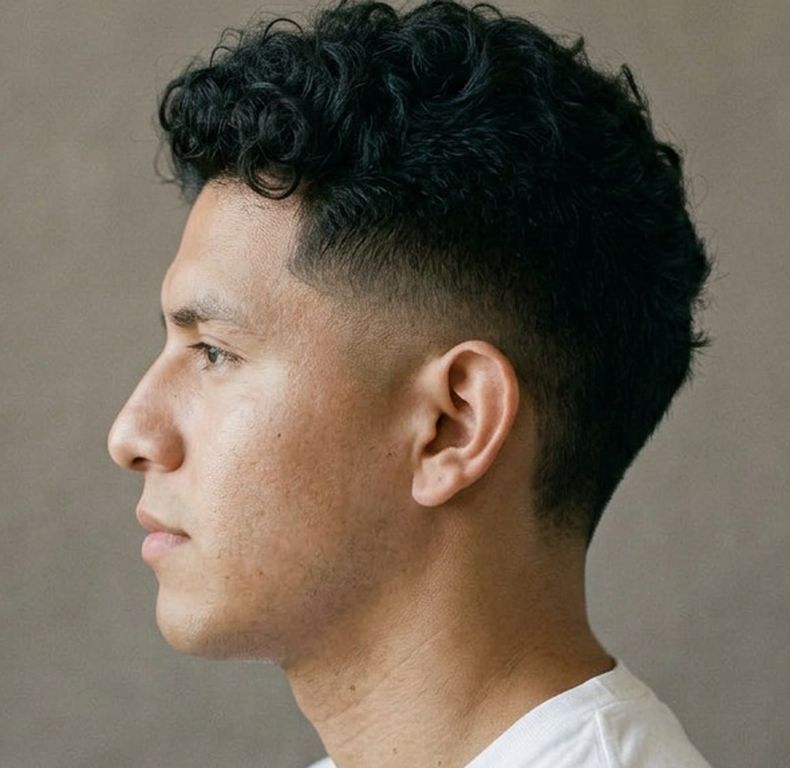
Em resumo
- Também conhecido como
- Sunburst fade, burst taper
- Sides
- Faded in an arc around the ear
- Top
- 4 to 7cm. Textured, curly or a mohawk
- Where it starts
- Above and around the ear, curving down behind it
- Back
- Kept at length down to the nape
- Goes down to
- Usually skin or a grade 0
- Manutenção
- A cada 2 a 3 semanas
- Evite se
- You need something conservative
- Popularised by
- Usher (made the cut famous with his barber Curtis Smith)
5 £ de desconto na sua primeira entrega
A fresh cut looks sharpest with a clean neckline. A sharp blade keeps it that way between visits, without the razor burn a blunt one leaves.
5 £ de desconto na sua primeira subscrição ou encomenda VIP — uma por cliente; cancele a subscrição com um clique
How to ask your barber
- Name itAsk for a burst fade: a semicircle around the ear, with the back left long.
- Say how shortSkin or a grade 0 in the middle of the arc.
- Keep the backSay clearly that the nape keeps its length, or it may get faded as well.
- Describe the topMohawk strip, curls or textured, and the length.
As variações
The same cut, worn differently. What changes is the length, where the short part starts and how the top is styled.
Will it work with your hair?
Hair type decides how a cut sits and how fast it loses its shape. The table below is the short version.
| Straight | Obras | Straight hair at the back can stick out. Keep it trimmed. |
|---|---|---|
| Wavy | Ideal | Waves on top and at the back show well. |
| Curly | Ideal | Made for curls. |
| Coily | Ideal | A sharp arc on coily hair holds its shape. |
| Espesso | Ideal | Clears bulk around the ears. |
| Fine or thinning | Evitar | Relies on volume on top and at the back. |
Vai ficar bem no teu rosto?
Where a cut adds height and where it takes width away decides how it sits with your face shape. Hair type matters more, but this is the short version.
| Oval | Ideal | Balanced proportions, so the cut itself decides. |
|---|---|---|
| Redondo | Ideal | Height on top and shorter sides lengthen the face. |
| Quadrado | Ideal | Height on top balances a strong jaw. |
| Oblongo | Evitar | Extra height makes a long face look longer. |
| Coração | Obras | Keep the height modest so the forehead does not look wider. |
| Diamante | Obras | Some fullness on top helps; very tight sides stress the cheekbones. |
Beard styles that go with it
Hair and beard are one outline. These keep the proportions right with this cut.



What a burst fade is
Most fades run in a band. They start at one temple, go round the back of the head and finish at the other temple, at whatever height you choose. A burst fade does not. The fade is confined to a curved patch around each ear and stops behind it.
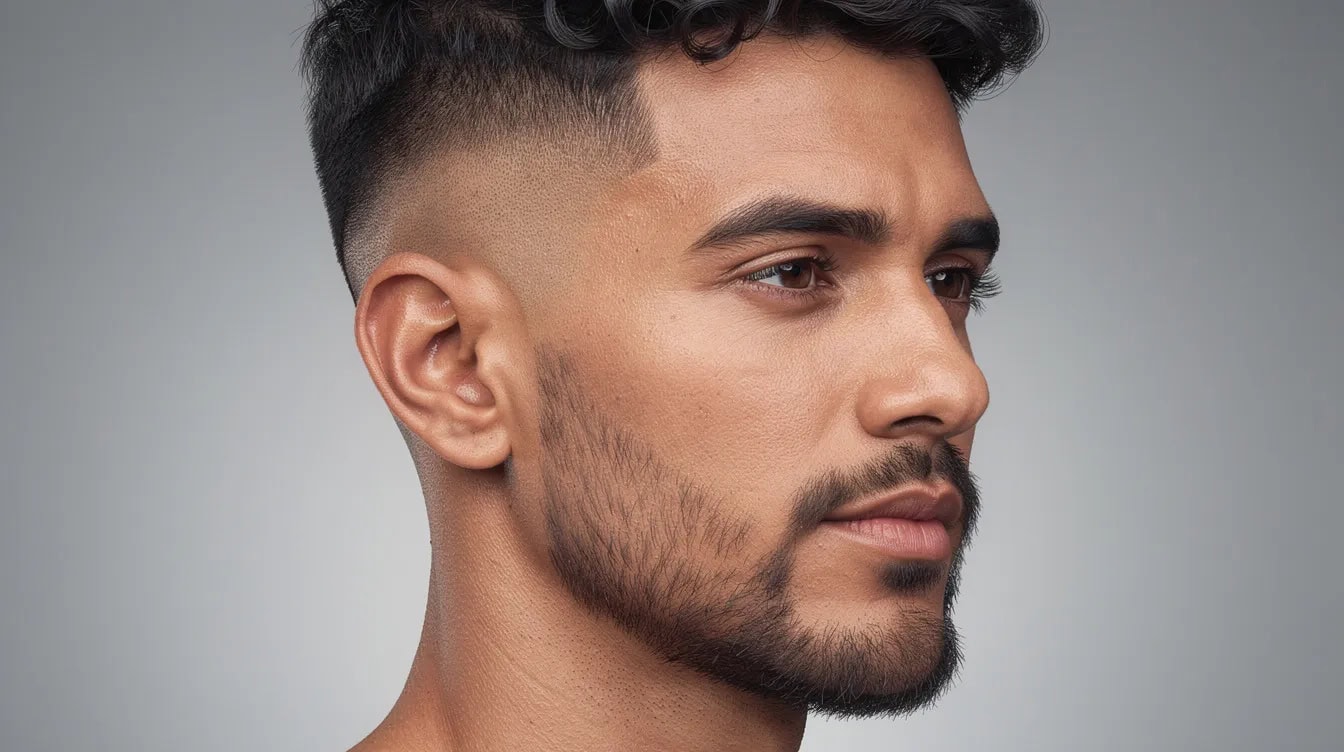
The shortest point is just above and around the ear, usually skin or a grade 0. From there the barber blends up through a half grade and a grade 1 into a grade 2 or 3 at the edges of the arc, and then into the length beyond it. Above the arc, the hair keeps its length. Behind it, so does the back of the head, right down to the neck.
That kept length at the back is the defining feature. If the barber carries the fade across the nape, the burst shape is lost and it becomes an ordinary fade.
The burst also goes by sunburst fade, and a softer version that keeps more length at the bottom is often called a burst taper.
Burst fade vs drop fade and other fades
O drop fade is the one most often confused with it. Both curve near the ear, but a drop fade carries on round the back of the head and dips lower at the nape. The back is faded. A burst stops behind the ear and leaves the back long.
A regular desvanecimento reduzido or mid fade is a straight band round the head. A desvanecimento cónico only shortens the sideburns and the neckline and leaves the area around the ear at length. The burst is close to the opposite of a taper. It takes the area around the ear short and leaves the neckline alone.
O types of fade page has all of them together.
Who suits a burst fade
Curly and coily hair. It suits them best. The arc frames the curls, holds its shape well on dense hair and clears the bulk that would otherwise push out over the ears.
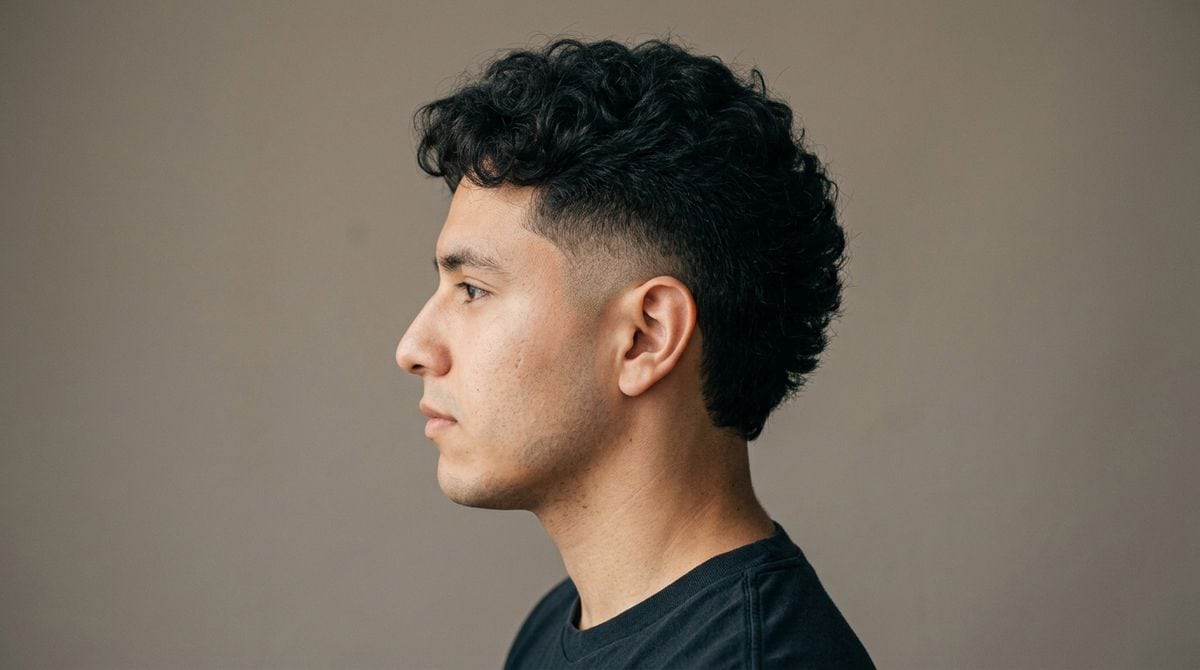
Wavy hair. Good. The waves show on top and at the back.
Thick hair. Good, for the same reason as curly hair. The bulk around the ears goes.
Straight hair. It works, but straight hair at the back can stick out at the sides of the neck as it grows. Keep the back trimmed.
Fine or thinning hair. Not a good choice. The burst relies on volume on top and at the back for its shape. Without it, the arc looks like a patch rather than a style.
Receding hairline. Keep the burst low. A high burst that climbs towards the temple runs into the recession.
Work. A burst fade is a deliberate, fashion-led cut. A low, soft burst under a tidy top can pass in a relaxed workplace, but if you need something conservative, this is the wrong page. A low taper fade is the quiet alternative.
How to ask your barber for a burst fade
Not every barber cuts these often, so be specific.
Name it and describe it. Ask for a burst fade, "a semicircle around the ear, with the back left long". Saying the shape out loud avoids the barber carrying it round into a drop fade.
Say how short. Skin or a grade 0 at the centre of the arc is usual. A grade 0.5 or 1 gives a softer burst taper that grows out more gently.
Say how high. A low burst keeps the arc tight around the ear. A higher one climbs towards the temple and shows more contrast. Point to where you want the top of the arc.
Keep the back. Say clearly that the nape keeps its length. This is the step most often lost.
Describe the top. A strip of length down the middle, curls, or a textured top, and the length in centimetres. Most are worn with 4 to 7cm on top.
Bring photos from the side and the back. A burst is about shape, and a photo explains a shape faster than words.
What to wear on top
- Mohawk or strip. A band of longer hair down the middle with the burst on each side. The best-known version, often called a burst fade mohawk, or on curly hair a frohawk.
- Curls. Left full on top, with the arc framing them.
- Modern mullet. The burst clears the sides and the length at the back carries on into the mullet. The two were made for each other.
- Textured top. 4 to 6cm, messy and matte, for a version that is less of a statement.
- A design. A line shaved into the arc. It needs touching up every time you go back.
Styling
The arc itself needs nothing. For curls, a curl cream or leave-in conditioner on damp hair keeps them defined. A textured top takes a little matte clay or paste on dry hair. A mohawk strip needs a bit of hold to stand up, usually a clay or a firm cream. If you dry curly or wavy hair with a diffuser, keep the volume on top, because the burst depends on the contrast between full hair and tight sides.
Keep heavy product off the faded area, where it catches on the regrowth and dulls the edge.
How often to get it cut
Every two to three weeks. Hair grows roughly 1cm a month, and the arc softens quickly because the contrast is all in one small area. A burst taken to skin looks sharpest for about a week. A softer burst taper stretches closer to three or four weeks.
The back also needs attention. Left alone, the length at the nape grows out over the collar and the shape goes from deliberate to scruffy. Ask the barber to tidy the back each time, without fading it.
Deixar crescer
Because the arc is such a specific shape, growing a burst fade out takes a few cuts. The easiest route is to ask for slightly longer grades in the arc each visit, so it softens into a low fade or a short back and sides, and then let it grow from there.
Perguntas que nos fazem
What is a burst fade?
A fade cut in a semicircle around the ear, shortest just above and around it and longer in every direction from there. The back of the head and the nape keep their length.
What is the difference between a burst fade and a drop fade?
A burst fade stops behind the ear and leaves the back of the head long. A drop fade carries on round the back of the head and dips lower at the nape, so the back is faded too.
What is a burst taper?
A softer burst fade, usually finished at a grade 0.5 or 1 rather than skin, with a gentler blend. It grows out more gently and is easier to wear to work.
Is a burst fade the same as a South of France haircut?
Not quite. "South of France" is a nickname for a burst fade worn with a wide strip of length down the middle of the head. Any burst fade can be cut that way, but a burst fade on its own only describes the arc around the ear.
How often does a burst fade need cutting?
Every two to three weeks. Skin at the centre of the arc shows regrowth within a week or so, and the back needs tidying each time to keep its shape.
Does a burst fade work with straight hair?
Yes, though curly and thick hair hold the shape better. With straight hair, keep the back trimmed so it does not stick out at the sides of the neck.
Other fades
Close relatives, and how they differ.
Pesquise o que é importante para si
O mesmo diretório, visto de uma perspetiva diferente.