
The Colonel’s Journal / Grooming & Guides
The Perfect Beard Neckline: How to Find It, Trim It and Keep It Clean
Last updated on
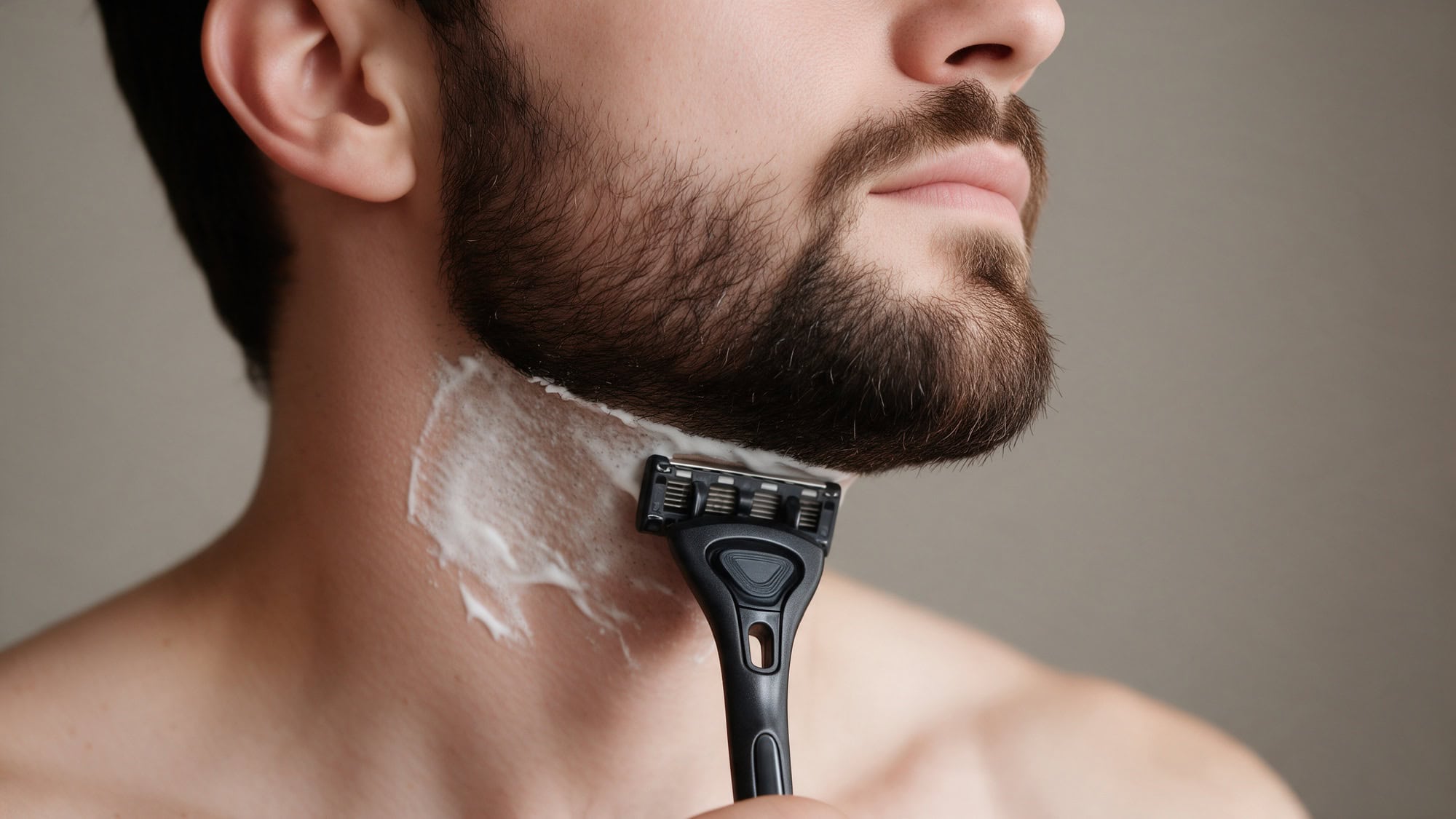
The line where your beard stops and your neck starts does more work than any other part of your grooming. Get it right and even a short beard looks deliberate, your jaw looks stronger and the whole face sharpens up. Get it wrong and a good beard either spills down your throat or looks like it has been stuck on.
On this page
Key takeaways
- Your neckline should sit about two finger widths (roughly 3 to 4cm) above your Adam’s apple, in a soft U-shape that runs from behind one ear to behind the other.
- Never trim it along the jawbone. The hair underneath your jaw is what gives the jaw its shape.
- A trimmer sets the line. A sharp razor below it gives you the clean, smooth finish that makes the line stand out.
- Face shape, neck length and beard length all nudge where the line sits and how soft it should be.
- Short beards need a tidy every two or three days, longer beards every week or two.
What a beard neckline is, and why it matters
The neckline is the bottom edge of your beard: the border where the hair under your jaw and chin meets the bare skin of your neck. It is not the same as the cheek line, which is the top edge of the beard along your cheeks.
A clean neckline is only as good as the blade that finishes it. The Bearded Colonel posts fresh five-blade heads through your letterbox as often as you actually shave, so the edge stays sharp and your neck stays calm.
See the plansA clean neckline separates your face from your throat. It frames the jaw and makes even a modest amount of hair look like a choice rather than something you forgot about. Leave it alone and the beard carries on down the neck until it meets your chest hair, and the result looks shapeless. Take it too high and you get a thin strip of beard along the jaw that seems to float, with bare skin underneath where the hair should be.
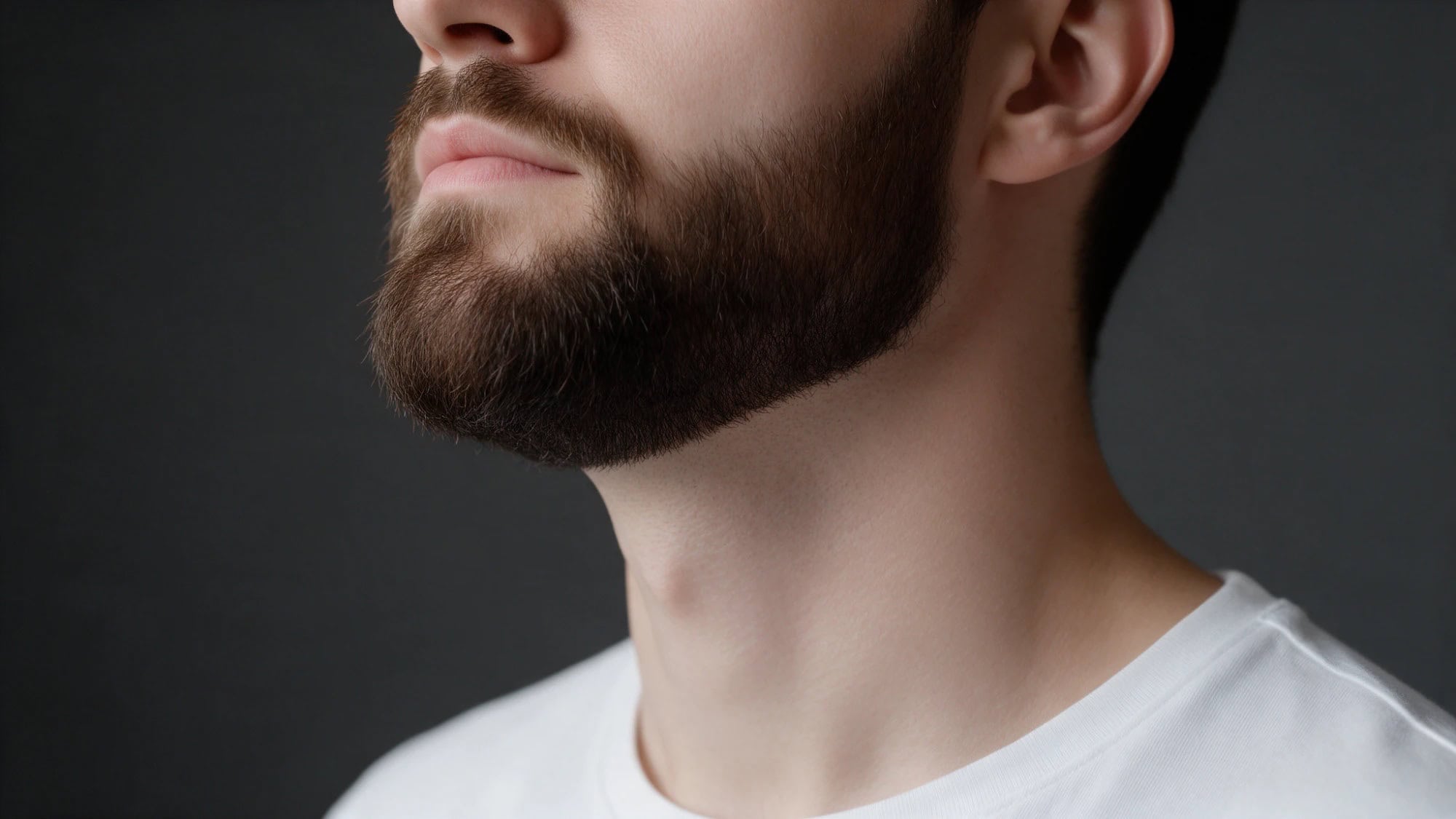
The standard shape is a gentle U. Even light stubble looks better with a defined edge, and longer beards can soften the line but still need shaping.
Where your beard neckline should actually be
As a rule of thumb, set the lowest point of your neckline about two finger widths above your Adam’s apple. For most men that is around 3 to 4cm. From that point the line curves gently upwards on both sides, under the jaw, and finishes just behind each earlobe.
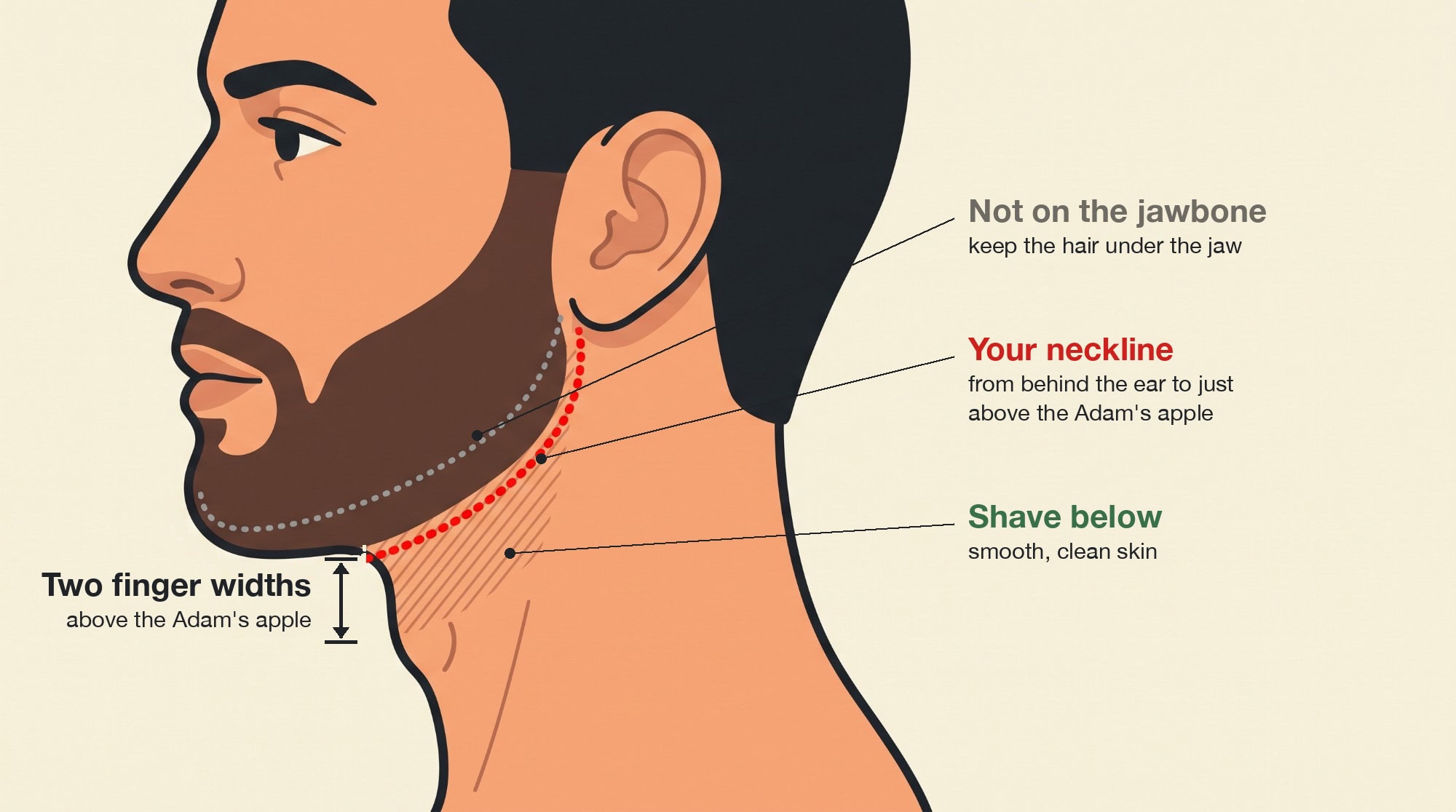
To find it, use the two-finger rule. Place your index and middle fingers together horizontally across your throat, with the lower finger resting on top of your Adam’s apple. The top edge of your upper finger marks the centre of your neckline. That is the lowest point of the curve. From there, picture a smooth line rising towards the soft spot just behind each ear, where your neck meets your head.
Two things to avoid:
- Trimming on the jawbone. It takes away the shadow under the chin that makes the jaw look strong, and it shows off any softness under the chin.
- Going higher than two fingers. Push the line up past that point and a full beard starts turning into a chinstrap.
If you have a short neck, bring the line down by about half a finger. If your neck is long, you can take it a touch higher. Either way, keep the curve smooth and even on both sides.
How face shape and beard style change the line
Treat the two-finger rule as a starting point. Your face shape and the style you are going for both shift it a little.
- Round faces: keep the line slightly lower, with more fullness at the chin. It lengthens the face. A squarer neckline adds definition if you want a sharper look.
- Long or rectangular faces: a slightly higher, flatter curve with more bulk at the sides of the jaw adds width instead of extra length.
- Thin or narrow faces: keep the line a bit lower and let the jaw carry more volume, which makes the face look wider. Steer clear of steep tapers, which only make a narrow face look narrower.
Length matters too. Stubble and short boxed beards suit a crisper, more defined line. Medium and long beards look better with a softer edge, because the bulk hides the transition anyway.
Tools and prep
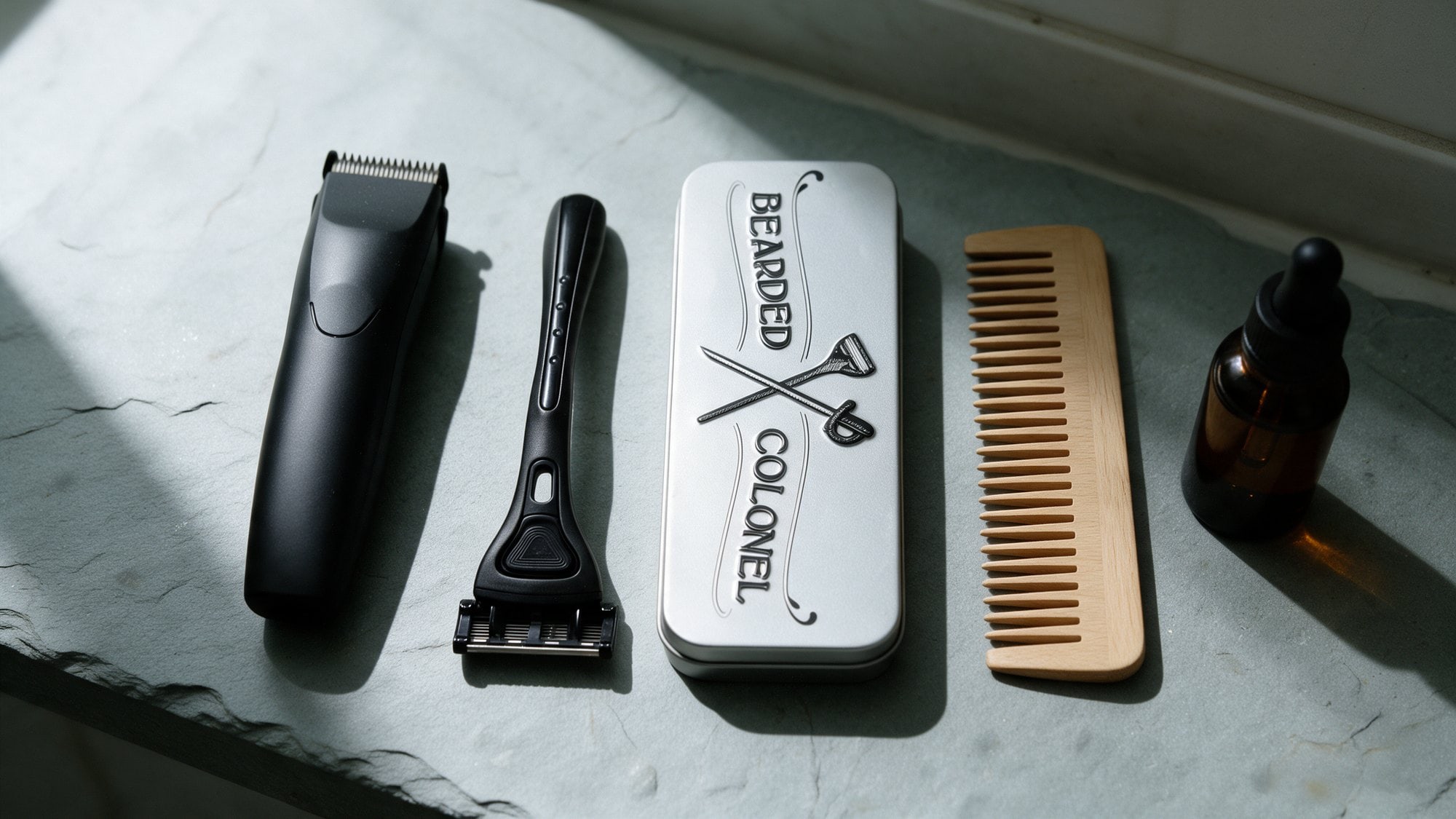
- A beard trimmer with guards. A range from about 1mm to 20mm covers everything from stubble to a full beard.
- A detail head or narrow trimmer for the tight spots under the ears.
- A sharp razor for the skin below the line. A five-blade head with a fresh edge gets the neck smooth in fewer passes, and fewer passes means less irritation.
- A comb. Wide teeth for detangling, fine teeth for lining the hair up before you cut.
- A hand mirror, so you can check the sides and the underside of your jaw. The bathroom mirror alone will lie to you about both.
Prep in four steps:
- Trim after a shower, when the hair and skin are soft and clean.
- Dry the beard properly. Wet hair stretches, so you end up cutting more than you meant to.
- Comb it down and out to see its true length and where the growth naturally thins on your neck.
- Start one guard longer than you think. You can always go shorter. You cannot put hair back.
Step by step: how to trim your beard neckline
If you have never done this before, take it slowly and follow the steps in order.
- Stand normally. Head level, looking straight ahead, not craning your neck back. The line has to look right in everyday posture, not only when you are staring at the ceiling.
- Mark the centre. Two fingers above your Adam’s apple, as above. That is the bottom of the curve.
- Picture the curve. A soft U from that centre point up under the jaw to just behind each ear. It should round upwards, never run straight across.
- Trace a guide. With the trimmer on its shortest setting and no guard, lightly draw the curve. Start in the middle under the chin, work out to one side, then do the other.
- Clear the bulk below. Put a guard back on and take down everything under the guide, working up towards it but leaving a small margin. Rushing here is how lines end up too high.
- Define the edge. Guard off again and go along the guide in short, gentle strokes. Check both sides in the hand mirror.
- Shave below the line. For a properly clean finish, shave the neck below the edge. Use only a thin layer of shaving cream so you can see exactly where the line is, keep the razor under the line, and shave with the grain. Neck hair grows in different directions, so feel which way it runs first. Use a sharp blade. A dull one drags and leaves the neck red and bumpy.
- Final check. Relax your jaw and look from the front and both sides. If it looks right with your head level, it is right.
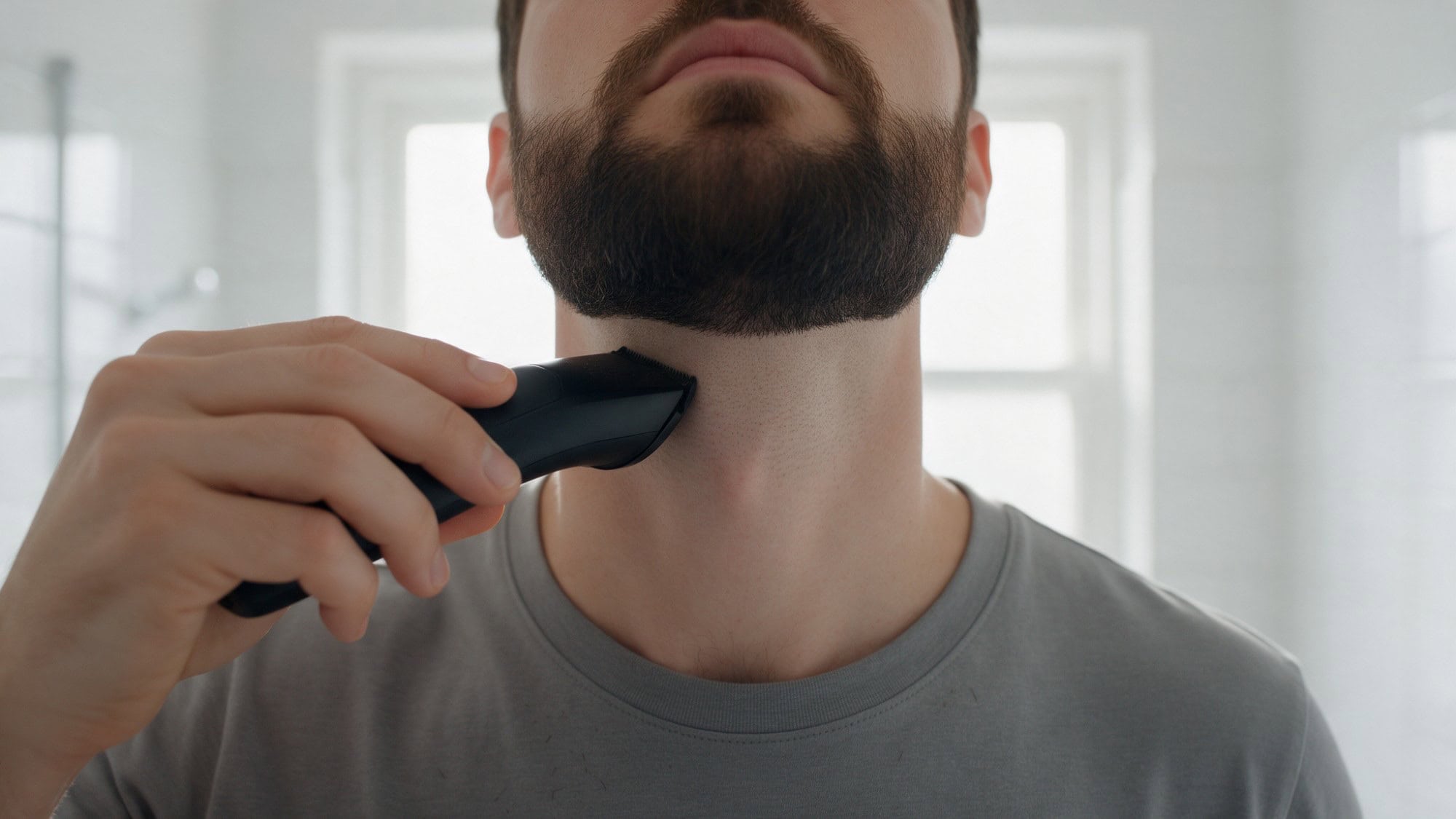
Blending the neck for a natural finish
A hard edge straight into bare skin can look drawn on, especially on shorter beards. Blending softens it.
A simple three-step fade works well. If your beard is at 9mm, use a 6mm guard just above the neckline, 3mm right on the line, and 1 to 2mm below it before the bare skin starts. Trim in small upward strokes from the neck towards the jaw, and overlap each zone slightly so there are no visible steps.
Stubble and short beards gain the most from a fade. A long beard can get away with a softer natural line, because the length hides the neck. Either way, a blended neckline looks more modern than a razor-straight border.
Common beard neckline mistakes (and how to fix them)

- Too high. The most common mistake, and the one in the photo above. The beard stops at the jawbone and the whole underside of the jaw is bare. Put the trimmer down, let the hair grow back for a week or two, then redraw the line lower with the two-finger rule.
- Too sharp and straight. A dead-straight line ignores the curve of your jaw. Soften it by lowering the centre slightly and rounding the corners with a longer guard.
- Chasing perfect symmetry. Every time you “even up” one side, the line creeps higher on both. Get it close, then stop.
- No neckline at all. Leave the neck alone and the beard just carries on down the throat, like the man on the left below. Set a line with the two-finger rule and keep to it.
- Forgetting the sides. Plenty of men get the front right and forget where the neckline meets the area under the ears. Use the hand mirror so the line flows round smoothly without gaps.
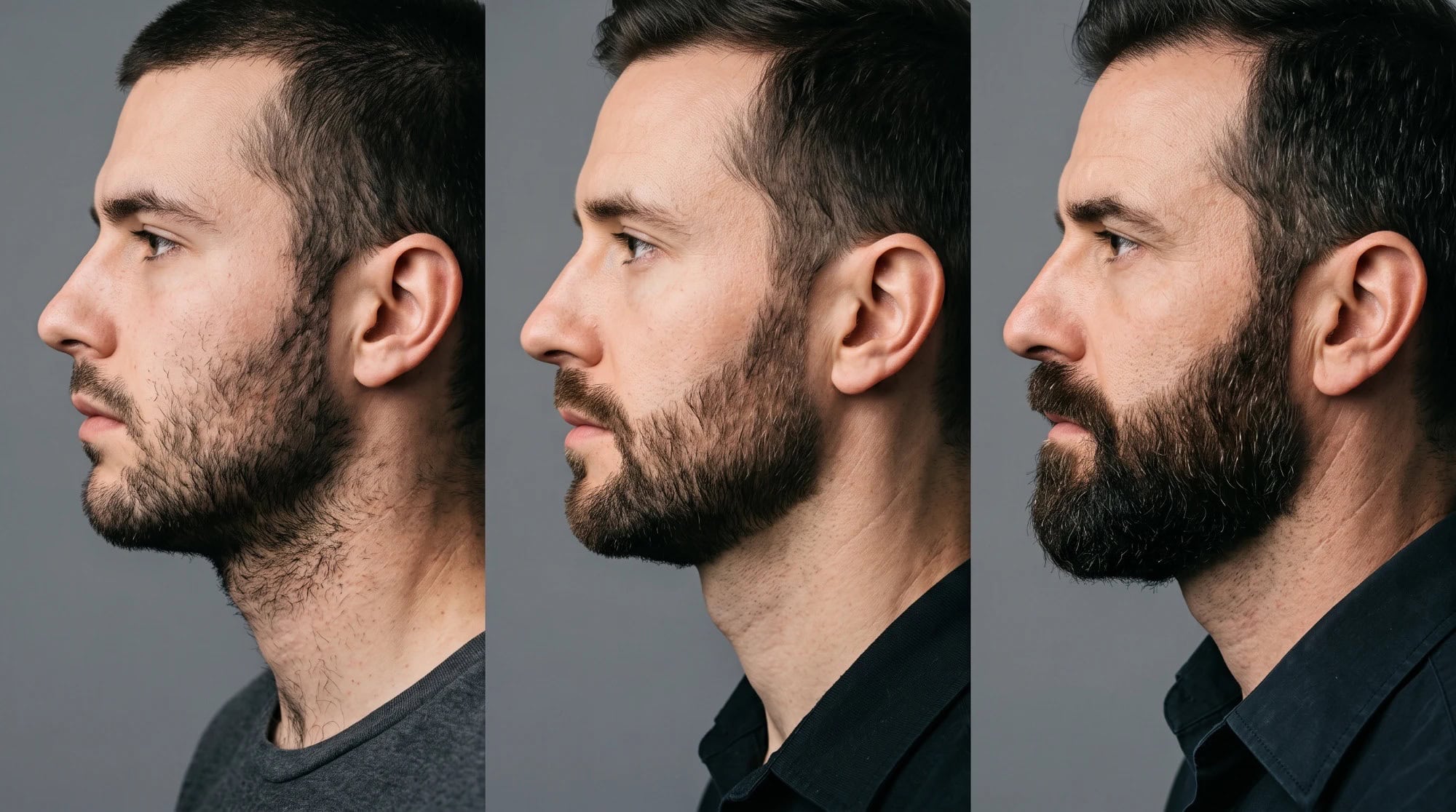
How often to tidy your neckline
How often you tidy up depends mostly on how long you keep your beard, because shorter hair shows stray growth sooner.
| Beard length | How often |
|---|---|
| Stubble or very short (1 to 5mm) | Every 2 to 3 days |
| Short boxed beard (5 to 12mm) | Once a week |
| Full or long beard (12mm and up) | Every 10 to 14 days |
Short beards show stray hairs straight away, so they need the most attention. Longer beards hide regrowth better, so you can leave them longer between tidies.
Between tidies, run the trimmer or razor over any stray hairs below the line in the morning, and do a proper tidy once a week in good light. Keeping your blades fresh helps here too. If you are not sure when yours is past it, here is how long a razor blade really lasts, and a razor subscription takes the remembering out of it altogether.
If you are growing a beard from scratch, leave the neckline alone for the first two or three weeks. Once there is some real length, around week three or four, set a low, natural line and keep it there as the beard fills in.
Aftercare: keeping the neck calm
Neck skin is some of the most sensitive on your body. After you trim or shave:
- Rinse with cool water and pat the skin dry.
- Use an alcohol-free balm with something soothing like aloe or chamomile. Alcohol stings and dries the skin out.
- Oil the beard daily. A few drops of beard oil worked into the beard and along the neckline stop the skin underneath drying out, cut down on itching and keep the edge looking soft rather than wiry.
- Exfoliate once or twice a week. A gentle scrub stops dead skin blocking the follicles, which is what causes ingrown hairs. On days you are not shaving, a mild salicylic acid wash does the same job.
- Give your collar a break. A tight or stiff collar rubbing on freshly shaved skin is asking for irritation. Leave a few hours between shaving and buttoning up.
For the daily side of beard care, washing and combing included, see keeping your beard stylish with minimal effort.
Necklines for different beard lengths
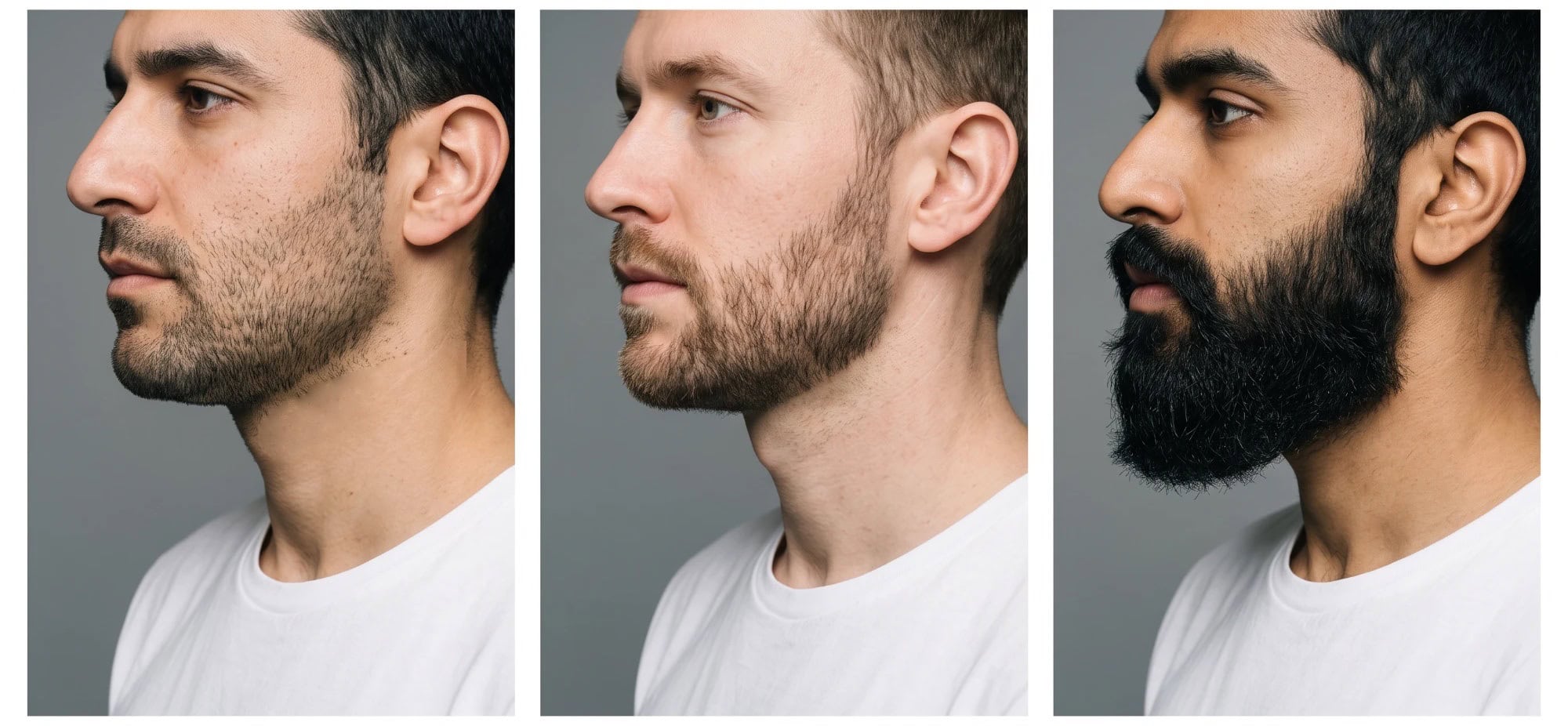
- Stubble: sit the line a little higher and keep it crisp. Short hair shows every uneven patch, so a clean edge is not optional at this length.
- Short boxed beard (5 to 12mm): a clearly defined but gently curved line with a light fade underneath. This is where a good neckline makes the biggest difference.
- Full beard (12mm and up): let the line sit lower and look more natural. Focus on tidying strays and softening the edge rather than keeping it razor sharp. If you are unsure, a barber can set the shape once and you can follow it from then on.
- Sculpted, sharp styles: these rely on an ultra-crisp neckline and need touching up every two or three days. They are the least forgiving of mistakes.
If you are trying a new style, start with the neckline slightly lower and softer than you think. You can always take more off.
Questions people ask
Should I shave my neckline while I am still growing my beard?
Not for the first two or three weeks. The coverage is still patchy, and setting the line too high early on takes weeks to undo. Once there is some bulk, around week three or four, set a low, natural line above the Adam’s apple. If work needs you to look tidy in the meantime, just clear the obvious strays low on the throat.
What if my beard is patchy on the neck?
Very common, and it usually shows less once the beard on the jaw and chin thickens up. Keep the neckline slightly lower and use a short fade to disguise thin spots. Shaving higher only exposes more of the patchiness.
Should I use a razor or just a trimmer on the neckline?
Use both, for different jobs. A trimmer is the safer tool for setting the line, because it is hard to take off too much in one pass. A razor then clears the skin below it for a properly smooth finish, which is what makes the edge look sharp. The irritation people blame on razors usually comes from a dull blade or skipping prep, so shave after a warm shower, use a good shaving cream, go with the grain and keep the blade fresh. If your neck still reacts badly, a trimmer on its shortest setting is the fallback.
How do I stop my neckline from itching?
Itching usually comes from sharp cut hair tips, dry skin or scraping the same spot with a blunt blade. Oil the beard and the skin underneath every day, exfoliate once or twice a week, and keep alcohol-based products off freshly shaved skin.
Does the same rule work for a very long beard?
Mostly. When a beard hangs well below the Adam’s apple, the neckline is hidden, so the job becomes general tidiness under the chin rather than a sharp line. Keep it slightly lower and natural, clear obvious strays on the lower neck, and stop the bulk spreading too far down the throat. Even a long beard looks better groomed with a softly shaped neckline underneath.
How far above the Adam’s apple should my neckline be?
About two finger widths, which is roughly 3 to 4cm for most men. Bring it down half a finger if your neck is short, or up a touch if it is long.
Missed a spot?
More from Grooming & Guides

How to Shave Properly: A Step-by-Step Guide to a Close, Clean Shave
Most shaving problems have nothing to do with the razor. They come from rushing the prep, pressing too hard, or going over the...

What Age Should You Start Shaving? Your First Shave, Start to Finish
There is no set age to start shaving. Most lads start in their early to mid teens, when the hair gets dark enough to notice.
Can You Take a Razor on a Plane? The UK Rules for Hand Luggage
Cartridge and disposable razors are fine in UK hand luggage. Loose blades and loaded safety razors are not.