
El diario del coronel / Cuidado y guías
Styptic Pencil and Alum Block: How to Stop a Shaving Cut Bleeding
Última actualización el
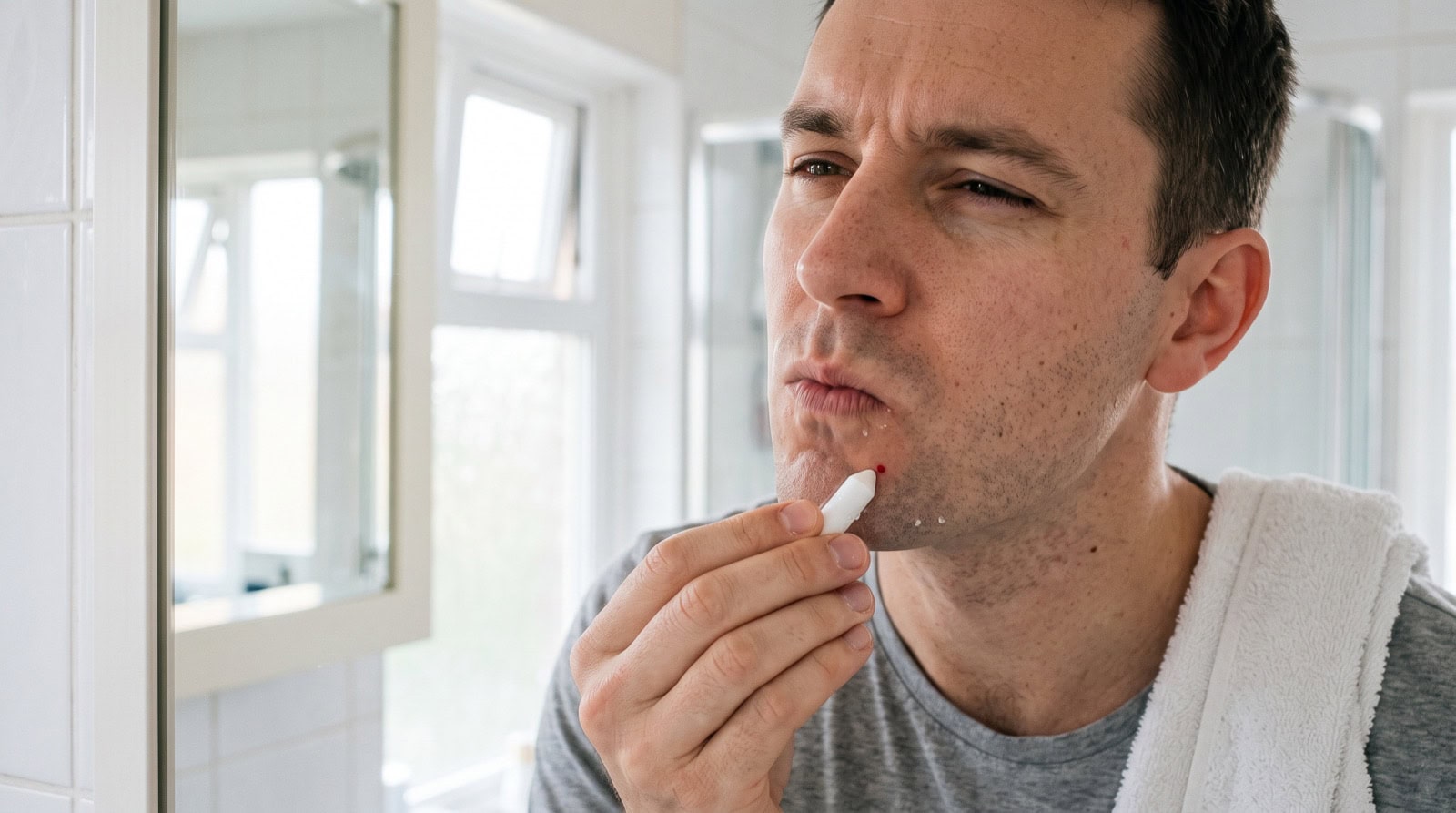
A styptic pencil is a small white stick that stops a shaving cut bleeding in seconds. An alum block does a similar job across the whole face. Both are old barbershop staples, both cost a few pounds, and either one beats walking out of the door with a scrap of toilet paper stuck to your chin. Here is what each one is, how to use them, and how to stop the nicks happening in the first place.
En esta página
Puntos clave
- A styptic pencil is for a single nick. It is a stick of compressed mineral salts that you dab onto a small cut to stop the bleeding.
- An alum block is for the whole shaved area. You glide it over damp skin after a shave to close up tiny nicks and tighten the skin.
- To stop a shaving cut bleeding: cold water, firm pressure with a clean tissue, then a dab of the styptic pencil.
- Most nicks come from a blunt blade, too much pressure or not enough shaving cream. Fixing those is better than any pencil.
- Get medical help for any cut you cannot stop bleeding with firm pressure, or if you take blood-thinning medicine and cuts are slow to stop.
What is a styptic pencil?
A styptic pencil (sometimes sold as a shaving pencil) is a short, chalky white stick, about the size of a lip balm, made mostly from aluminium salts. “Styptic” simply means something that helps stop bleeding. It has been part of the wet shaving kit for generations. It is designed for pinpoint use on the small, annoying cuts you get from shaving: on the chin, along the jaw, on the upper lip or over the contours of the neck.
The best styptic is a blade that does not drag. The Bearded Colonel posts fresh five-blade refills through your letterbox on the schedule you choose, so a sharp one is always to hand.
Ver los planosAluminium salts stop small bleeds by making the proteins in the blood and surrounding tissue clump together, which plugs the tiny blood vessels. Doctors use a related salt, aluminium chloride, the same way to stop bleeding after minor skin procedures.[1] It stings for a moment. That is normal, and it fades quickly.
A styptic pencil is meant for minor cuts and is for external use only. It is not a treatment for deep cuts, large grazes or any wound that would normally need a plaster or a doctor.
What is an alum block?
An alum block is a smooth, translucent block of potassium alum, a natural mineral salt, usually about the size of a bar of soap. Smaller alum sticks work the same way. Potassium alum is also an aluminium salt, so it works on the same principle as a styptic pencil but gently, and over a wider area. After you shave and rinse, you wet the block and glide it over your face. It helps stem the small nicks you may not have noticed and leaves the skin feeling tight and fresh.
Some men use an alum block after every shave as a final step. Others keep it in the cabinet for days when the shave did not go to plan. How well it suits you depends on your skin type. It can dry out sensitive skin, so if your face feels tight or itchy afterwards, use it less often or rinse it off sooner.
Styptic pencil vs alum block
Both do the same basic job, so the choice comes down to how you shave and how often you cut yourself.
| Styptic pencil | Alum block | |
|---|---|---|
| Ideal para | One nick that will not stop | Calming the whole shaved area |
| How to use it | Wet the tip, dab it on the cut | Wet the block, glide it over damp skin |
| Fuerza | Strong, targeted | Milder, spread out |
| Inconvenientes | Stings briefly, can leave a white mark | Can dry sensitive skin |
| Cuánto tiempo dura | Many months | Years, if kept dry |
If you rarely cut yourself, a styptic pencil in the bathroom cabinet is all you need. If you often finish a shave with a few small spots of blood, an alum block is more useful. Plenty of people keep both.
How to stop a shaving cut bleeding
This is the quickest routine for a normal shaving cut. Most stop within a minute or two.
- Enjuaga con agua fría. Cold water helps slow the bleeding. Splash the cut or press a cold, clean flannel against it. It also clears away any shaving cream and hair.
- Apply pressure with a clean tissue or folded cloth. Hold it firmly against the cut for 30 seconds to a minute.[2] That alone stops a lot of small nicks.
- Dab with the styptic pencil to stop bleeding. Wet the tip of the pencil with cold water, then press it onto the cut for a few seconds. Expect a short sting.
- Leave it to dry. Do not wipe it straight away. Once the bleeding has stopped, rinse off any white residue gently with cool water.
- Clean the pencil. Rinse the tip, dry it with a clean tissue and let it air for a few minutes before you put the cap back on.
If you only have an alum block, wet it and hold the corner against the cut for a few seconds instead.
Home fixes, and why toilet paper is not great
Toilet paper tends to stick to the cut and pull it open again when you peel it off. An ice cube wrapped in a clean cloth does a decent job of slowing the bleeding by cooling the area. In a pinch, cold water and steady pressure with a clean tissue work for nearly every shaving cut. A styptic pencil just gets you there faster.
Why do you cut yourself shaving?
A shaving cut almost always comes down to one of a few things, and most of them are easy to fix.
- Una hoja sin filo. This is the main one. A dull edge drags and skips instead of gliding, so you press harder, and that is when it catches the skin. Our guide to Con qué frecuencia hay que cambiar la cuchilla de afeitar goes through the signs that a blade is past it.
- Too much pressure. Pushing the razor into your face makes the blades dig in. Let the weight of the razor do the work.
- Not enough shaving cream. Without a proper lather there is nothing between blade and skin. Shaving dry, or with soap and water, is asking for nicks.
- Rushing. Fast strokes over the jaw, chin and neck are where most cuts happen.
- Afeitarse a contrapelo. Going against the direction of growth catches the hair and the skin. Our post on Por qué no debes afeitarte a contracorriente explica por qué.
- Shaving over spots or bumps. A raised spot or an ingrown hair is easy to slice. Go round it, and never try to shave a spot off.[3] If you get a lot of them, our guide to irritaciones por afeitado explains what causes them.
How to stop shaving cuts before they happen
A styptic pencil is a good thing to own. Not needing it is better, and less irritation for your skin too. These habits prevent most nicks.
- Shave after a warm shower, or wash with warm water and hold a toalla caliente to your face for a minute. Soft hair cuts with less force.
- Use plenty of shaving cream. A rich lather softens the hair and cushions the blade. A brocha de afeitar works it into the stubble and lifts the hairs so they cut cleanly.
- Utiliza una cuchilla afilada. Change it as soon as it tugs. A fresh blade cuts with almost no pressure.
- Movimientos cortos y con poca presión. Tilt your head to flatten tricky areas like the upper lip, chin and neck, rather than pulling the skin tight, which can lead to ingrown hairs.[4]
- Shave with the grain on the first pass. If you want it closer, re-lather and go across the grain.
- Enjuaga la cuchilla cada pocas pasadas. so it does not clog.
- Take your time on the awkward bits. The chin, the corners of the mouth and the Adam’s apple are where most nicks happen.
De la estantería del coronel
Fewer nicks to begin with
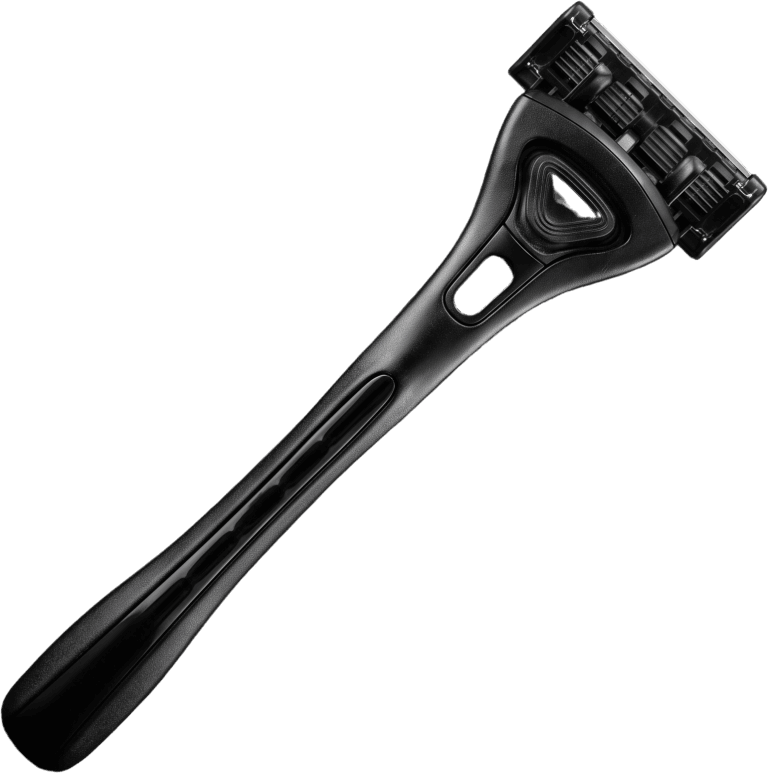
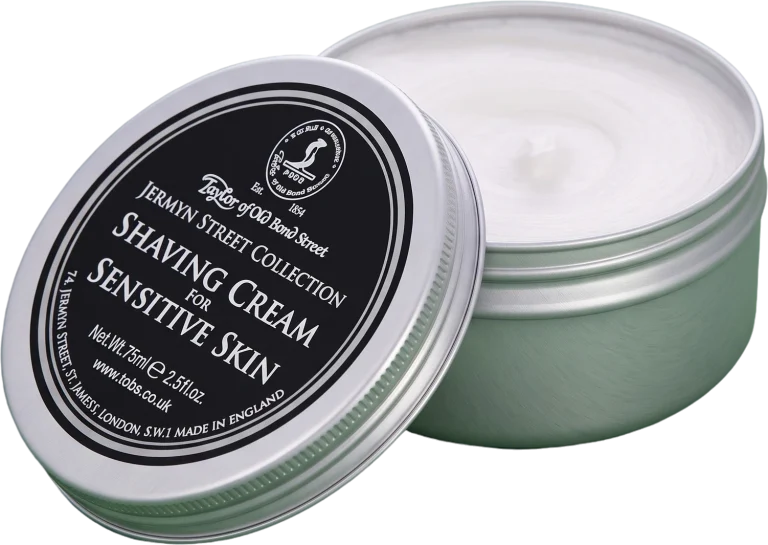
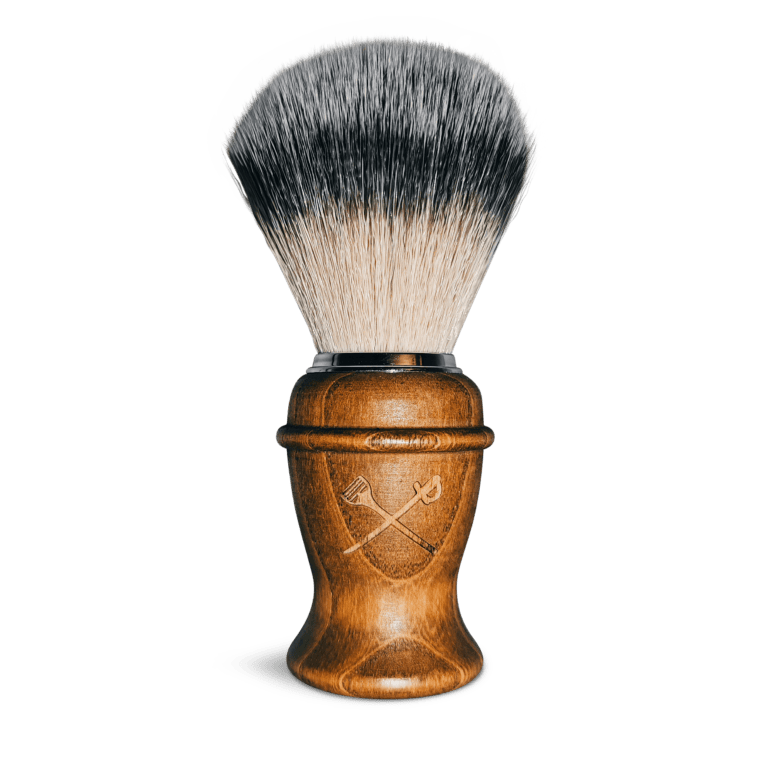
Cada primer pedido de la gama Classic o VIP incluye una garantía de devolución del dinero de 30 días. Pruébalo durante un mes y, si no te convence, te devolvemos el importe íntegro sin necesidad de que nos devuelvas el producto.
A five-blade cartridge spreads the pressure across several edges, so no single blade is pressing hard into the skin. Ours has a roller on the leading edge rather than a fixed strip, which helps keep the cream on your skin, where the blades need it. Refills come with free UK delivery on a subscription, so a fresh one turns up before the old one starts to drag.
Safety: when not to use a styptic pencil
Styptic pencils and alum blocks are safe for most people on small shaving cuts. Some sensible limits:
- Use them on the skin only. Keep them away from your eyes, nose and mouth, and out of reach of children.
- Do not use them on deep cuts, large grazes or wide areas of broken skin.
- If you cannot stop the bleeding with firm, steady pressure, or the cut is deep or large, get urgent medical help.[2]
- If you take blood-thinning medicine and cuts often take a long time to stop, mention it to your GP or pharmacist.
- Most shaving cuts start to heal within a few days. Watch for signs of infection, such as swelling, redness, pain that gets worse, or pus.[2] See a pharmacist or GP if you notice any.
- If a pencil or block makes your skin burn for a long time or come up in a rash, stop using it.
For more on the basics of a comfortable shave, our guide to tu primer afeitado covers technique from the start.
Preguntas que suele hacer la gente
What is a styptic pencil?
A small stick of compressed mineral salts, mostly aluminium salts, used to stop minor shaving cuts bleeding. You wet the tip and dab it on the nick. It stings for a moment, then the bleeding stops.
How do you use an alum block?
Shave and rinse your face, then wet the alum block with cold water and glide it gently over the shaved skin. Leave it for a short while, then rinse with cool water and moisturise with something free of alcohol. Dry the block before you put it away.
How do I stop a shaving cut bleeding without a styptic pencil?
Rinse it with cold water, then press a clean tissue firmly against it for a minute or two without lifting it to check. Most shaving cuts stop with that alone. Avoid sticking toilet paper on it, because peeling it off can reopen the cut.
Do styptic pencils sting?
Yes, briefly. It is a short, sharp sting that fades within a few seconds. An alum block stings less because it is milder.
Can I use an alum block every day?
Many men do. If it leaves your skin feeling dry or tight, use it only when you need it, and follow it with a fragrance-free moisturiser.
Why do I keep cutting myself shaving?
Usually it is a blunt blade, too much pressure or not enough shaving cream. Change the blade as soon as it drags, use a proper lather and let the razor glide rather than pushing it.
Fuentes
- Coakley A and others, Journal of Clinical and Aesthetic Dermatology (2020), A Comparison of Ferric Subsulfate Solution, Silver Nitrate, and Aluminum Chloride for Pain Assessment, Time to Hemostasis, and Cosmesis in Acrochordon Snip Excision
- NHS, Cortes y rasguños
- Academia Americana de Dermatología, Depilación: Cómo afeitarse
- Asociación Británica de Dermatólogos, Pseudofoliculitis (folleto informativo para el paciente)
¿Ha perdido un sitio?
Más de Cuidado y guías
Single Blade vs 5 Blade Razor: How Many Blades Do You Actually Need?
A single blade razor uses one exposed edge. A 5 blade razor stacks five thin blades in a pivoting cartridge.
Itchy After Shaving? Why It Happens and How to Stop It
You finish a good shave, the skin feels smooth, and a few hours later it starts to prickle.
¿Deberían los hombres afeitarse los brazos? ¿Qué pasa y cómo hacerlo correctamente?
La mayoría de los hombres nunca se fijan en el vello de los brazos hasta que algo les hace hacerlo. Por ejemplo, un nuevo tatuaje que quieren que vea la gente.