
Low Fade
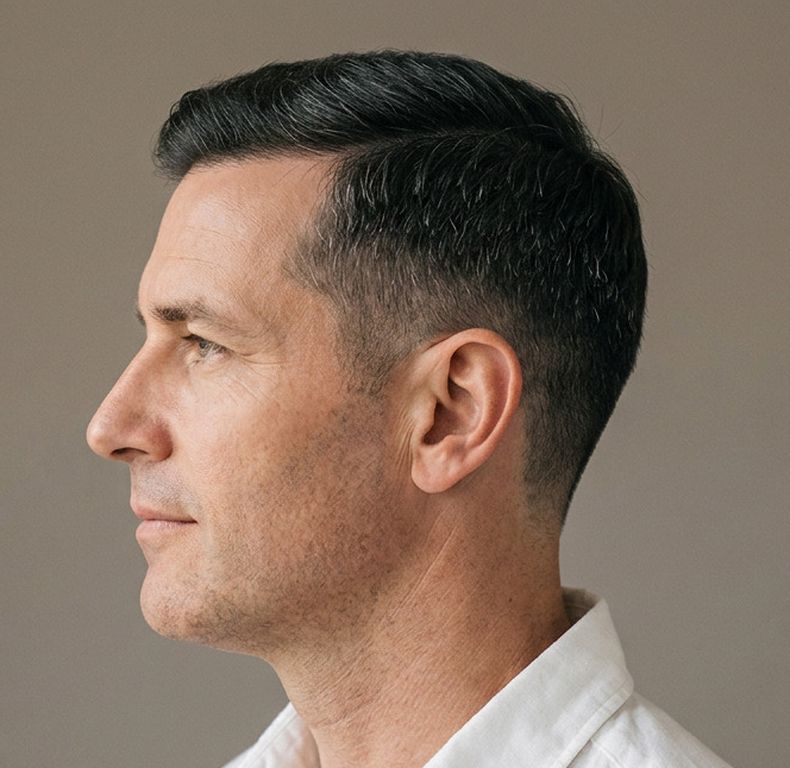
A fade that starts just above the ear and runs round the back, leaving most of the side at length.
A low fade is a haircut where the sides and back blend from short at the bottom to longer above, with the blend starting just above the ear and running level round the back to the nape. Everything above that line keeps its length, so from the front it looks like a neat, tidy short cut and only the outline gives the fade away. It is the quietest fade there is, and one of the easiest to wear anywhere. It sits alongside every other cut in the full men's hairstyles directory.

In sintesi
- Chiamato anche
- Low fade haircut
- Sides
- Length kept above the ear, fading short below it
- Top
- 3 to 8cm, styled any way
- Where it starts
- Just above the ear, running level round to the nape
- Goes down to
- A grade 0 or 1, or skin
- Manutenzione
- Every 3 weeks
- Il meglio su
- Most faces, and workplaces that prefer subtle
- Da evitare se
- You want a dramatic contrast
- Popularised by
- Marcus Rashford (a tapered afro with a low fade), Micheal Ward (a short afro-textured cut with a low fade and line-up)
5 £ di sconto sulla tua prima consegna
A fresh cut looks sharpest with a clean neckline. A sharp blade keeps it that way between visits, without the razor burn a blunt one leaves.
5 £ di sconto sul tuo primo abbonamento o ordine VIP – un solo sconto per cliente, disiscriviti con un clic
How to ask your barber
- Say where it startsAsk for a low fade starting just above the ear and running level round the back.
- Give the bottom gradeA grade 0 or 1 at the bottom, or skin.
- Say what is above itSay how long the sides stay above the fade, for example a grade 3 or scissor cut.
- Describe the topLength and how you style it.
Le variazioni
The same cut, worn differently. What changes is the length, where the short part starts and how the top is styled.
Will it work with your hair?
Hair type decides how a cut sits and how fast it loses its shape. The table below is the short version.
| Straight | Ideale | Sits flat and shows a clean blend. |
|---|---|---|
| Wavy | Ideale | Length above the fade lets waves show. |
| Curly | Opere | Fine, though the curls above the fade need shaping. |
| Coily | Ideale | A neat, low-key fade on short coily hair. |
| Spesso | Ideale | Thin out the sides above the fade to stop them puffing out. |
| Fine or thinning | Opere | Keeps enough length on the sides to avoid looking sparse. |
Si adatterà al tuo viso?
Where a cut adds height and where it takes width away decides how it sits with your face shape. Hair type matters more, but this is the short version.
| Ovale | Ideale | Balanced proportions, so the cut itself decides. |
|---|---|---|
| Rotondo | Opere | Add a little lift at the front so it does not sit flat and wide. |
| Quadrato | Ideale | A neat parting suits a defined jaw. |
| Oblungo | Opere | Keep the top fairly flat rather than lifted. |
| Cuore | Ideale | A side parting breaks up a broad forehead. |
| Diamante | Opere | A parting with some fullness on top works. |
Beard styles that go with it
Hair and beard are one outline. These keep the proportions right with this cut.


What a low fade is
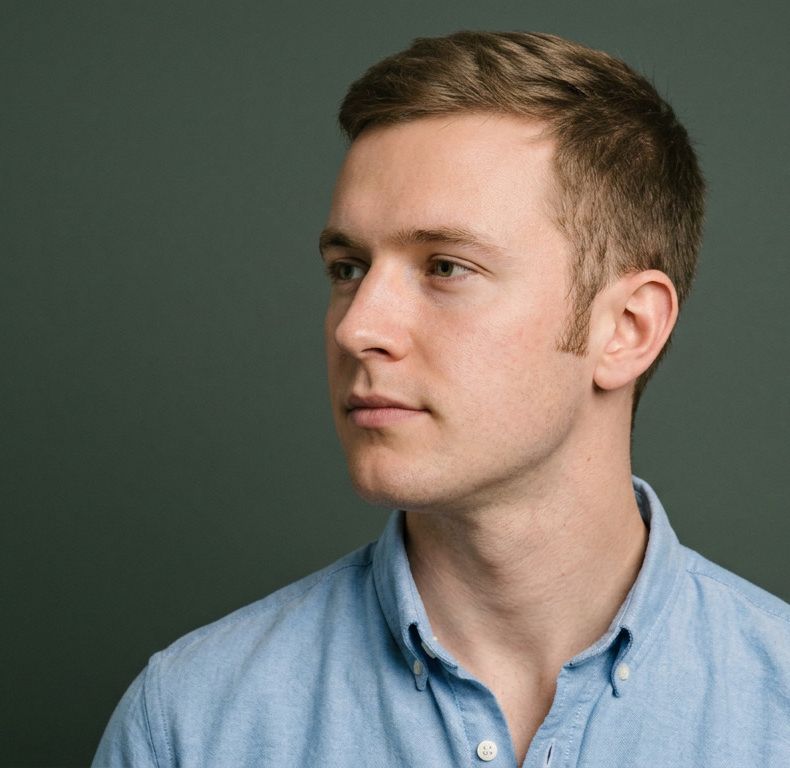
Every fade does the same job. Hair gets gradually shorter towards the bottom of the head, blended so there is no visible step. The name tells the barber where that blend starts. On a low fade it starts low, just above the top of the ear, and follows a level line round the back of the head.
Because the short part is confined to a narrow band around the ears and neck, most of the side keeps its length. That is the whole appeal. You get the clean edge of a fade without much scalp on show.
How short the bottom goes is a separate decision. A standard low fade usually finishes at a grade 0 or a half. Take it right down to bare skin with a foil shaver or a razor and it becomes a low skin fade, which is covered in more detail on the skin fade pagina.
Low fade vs mid fade vs high fade
The three heights are a couple of centimetres apart on the head, and the difference shows mostly from the side.
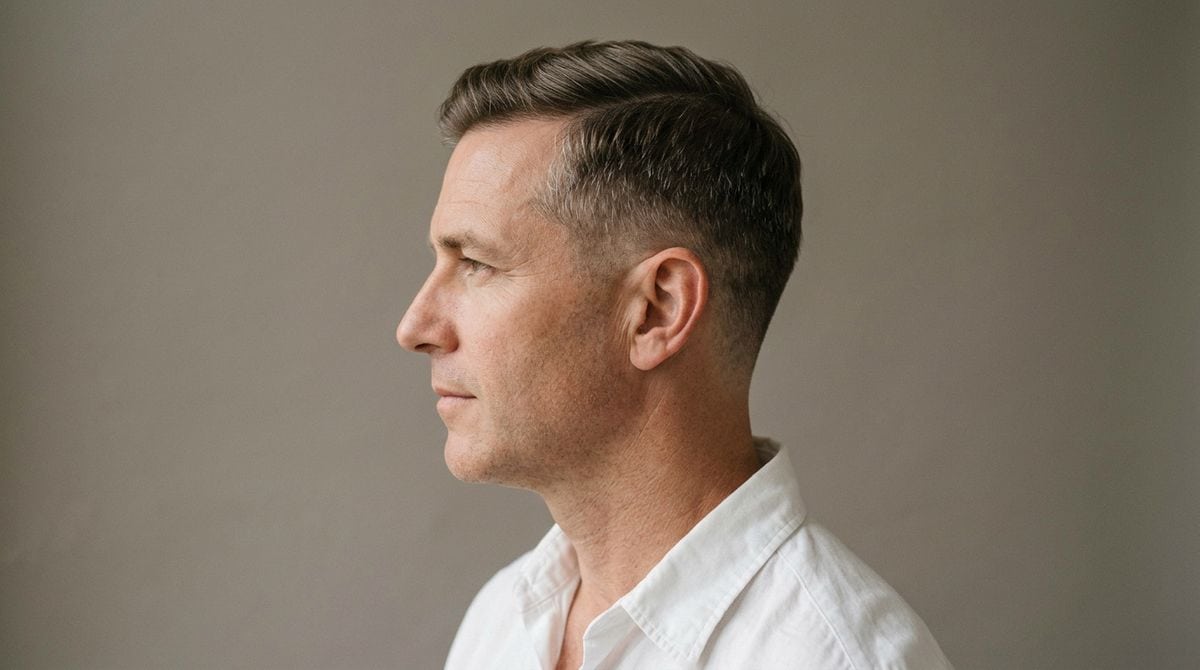
A dissolvenza bassa starts just above the ear. The contrast is small and it grows out slowly.
A mid fade starts higher, around the middle of the side, level with the temple. It shows clearly more contrast from the front and needs cutting a little more often. It is the fade most barbers default to if you just say "a fade".
A high fade starts where the side of the head turns into the top. Almost the whole side is short, and regrowth shows within a week or two.
There is a separate page explaining every type of fade, including the burst and the drop, if you want the full picture.
The mid fade
The mid fade does not have its own page here, because it is the same cut moved up. Same top, same blend, same finishing grade. Only the starting line changes.
Men often start on a low fade and move to a mid once they are used to short sides. It is a sensible order. If you are unsure which you want, ask for low first. Raising a fade at the next cut takes five minutes. Lowering one means waiting for the hair to grow back, which at roughly 1cm a month takes a while.
If you want a mid fade, ask for the fade to start "around the temple" rather than "in the middle", which means different things to different barbers.
Low fade vs low taper
These two get muddled more than any other pair. A low taper only shortens the hair at the very edges, the sideburns and the nape, and leaves the rest of the side at length. A low fade blends a wider band, all the way round, and usually goes shorter at the bottom. If you want the gentlest possible version, the low taper fade is the one to ask for.
Who a low fade suits
Most people. That is the honest answer, and the reason it is so often recommended as a first fade.
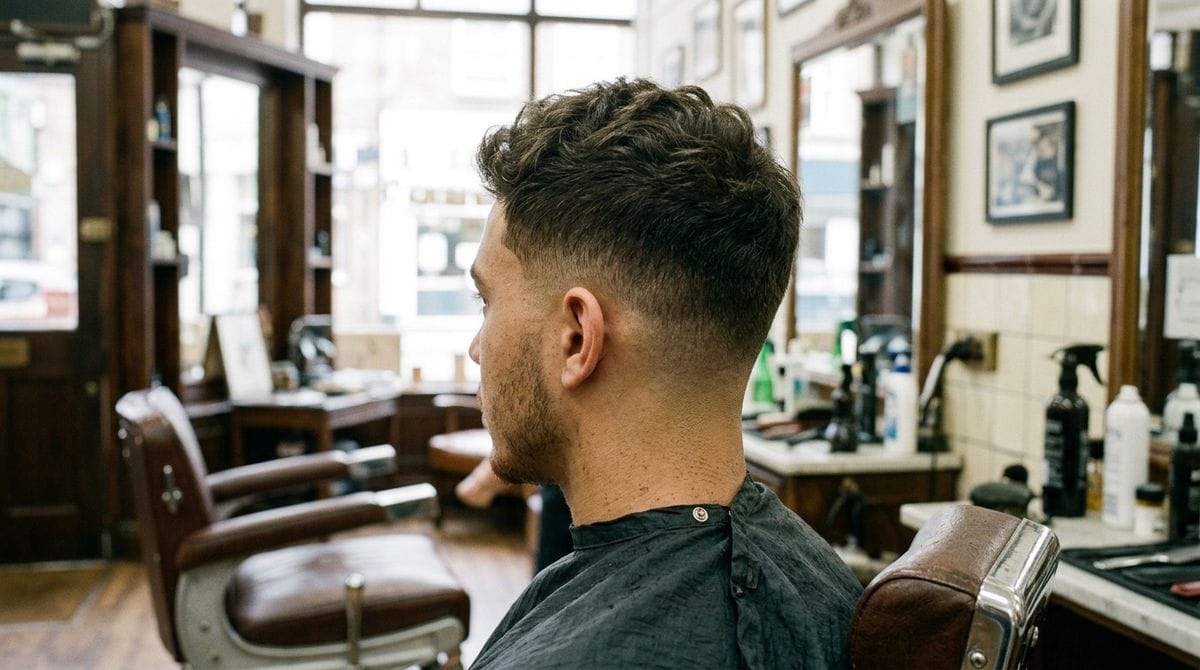
Work and dress codes. A low fade is the safest fade for conservative offices, uniformed jobs and anywhere a high, sharp fade might draw comment. From the front it reads as an ordinary tidy haircut.
Hair type. Straight hair shows the blend cleanly. Wavy hair benefits because the length kept above the fade lets the waves show. On thick hair, ask the barber to thin out the sides above the fade, or they will puff out as they grow and make the head look wider. Curly and coily hair both work well. For more on matching cuts to hair, see hairstyles by hair type.
Fine or thinning hair. A low fade keeps enough length on the sides that it does not exaggerate a thin top. It is a kinder choice than a high or skin fade if coverage is a concern.
Face shape. It matters less here than for most cuts, because the low fade barely changes the outline of the head. If your face is long, keep the top flatter. If it is round, a bit of height on top helps.
Avoid it if you want a dramatic contrast. A low fade will feel too subtle, and a high fade will give you what you are after.
How to ask a UK barber for a low fade
Three things make the difference. Tell the barber where it starts, how short it goes and what happens above it.
- Say where it starts. "A low fade, starting just above the ear, running level round the back." Point to the top of your ear if needed.
- Give the bottom grade. A grade 0 (no guard, about 0.5 to 1mm) is standard. A grade 0.5 (about 1.5mm) or grade 1 (3mm) is softer and grows out more gently. For skin, say "skin fade" and expect a foil shaver or razor.
- Say what sits above the fade. Usually a grade 2 (6mm) or grade 3 (9mm) blending into the top, or scissor cut if you want the sides fuller.
- Describe the top. Give a length in centimetres and say how you wear it.
Two example orders:
- "Low fade from a grade 0, starting just above the ear, blended up into a grade 3, about 4cm on top with a bit of texture."
- "Low fade, no skin, grade 1 at the bottom into a grade 3, scissor cut on top, long enough to part on the left."
Also say whether you want a squared or a natural neckline at the back. Natural grows out more gracefully. And if you wear a beard, ask for a beard fade, which blends the sideburn down into the beard so there is no hard step between the two.
Styling a low fade
The fade itself needs nothing. All the work is on top, and how much depends on the length.
With a short top of about 3cm, such as a textured crop pushed forward, a small amount of matte paste or clay rubbed through dry hair is enough. Thirty seconds.
With 5 to 7cm you can wear a side parting, a quiff or the hair swept back. Rough-dry the hair in the direction you want it to sit, then use a cream or a light pomade and a comb. Longer combed styles take five minutes, not one.
On curly hair, keep enough length for the curl to form, use a curl cream on damp hair, and leave it alone once it dries.
Whatever you use, keep it light and keep it off the faded area. Product on very short hair just looks greasy.
Upkeep and how often to cut a low fade
Every three weeks keeps it sharp. Some men go every two, and at four weeks a low fade has mostly blurred into an ordinary short back and sides.
The low fade is the most forgiving fade for this. Because the short band is narrow and sits low, a week of regrowth is barely visible. A skin version needs cutting more often than one that finishes on a grade 0 or 1, because the contrast with bare skin disappears quicker.
Between cuts, some barbers will tidy the neckline and around the ears for a small charge. It buys you an extra week or so.
Variations and growing it out
The low fade is a base, not a finished look. Common versions:
- With a crop. About 3cm on top, pushed forward. Neat and very little effort.
- Low skin fade. Taken to bare skin at the bottom. Sharper, with more upkeep.
- With a side part. 4 to 7cm on top, combed over. The smart version for work.
- With curls. A curly top with the sides cleaned up underneath.
- Low drop fade. The line dips down behind the ear instead of running level. See the drop fade.
To grow a low fade out, ask the barber to leave the fade alone and only tidy the neckline. Because the faded band is small, it disappears into the sides within a month or so, faster than any other fade.
Domande che ci vengono poste
What is the difference between a low fade and a mid fade?
Where the blend starts. A low fade starts just above the ear. A mid fade starts higher, around the temple. The top and the finishing grade can be identical. The mid fade shows more short hair from the front and needs cutting a little more often.
Should I get a low or a mid fade?
If it is your first fade, or you work somewhere conservative, start with a low fade. It is easier to raise a fade at the next cut than to wait for one to grow back down. Go mid if you want the fade to be obvious from the front.
How often should you get a low fade cut?
About every three weeks. Every two if you want it permanently crisp, or if it is a skin fade. By four weeks it has softened into a plain short back and sides.
What grade is a low fade?
There is no single grade. Most low fades finish at a grade 0 (no guard, about 0.5 to 1mm) and blend up to a grade 2 or 3 (6 to 9mm). For a softer version, ask for a grade 1 (3mm) at the bottom. For a low skin fade, the bottom is shaved to bare skin.
Does a low fade suit a long face?
Yes. A low fade keeps length on the sides, so it does not make the head look narrower and the face longer, which a high fade can. Keep the top fairly flat rather than adding height, and a fringe helps further.
Is a low fade professional?
It is the most office-friendly fade there is. From the front it looks like a tidy conventional haircut. Pair it with a side part or a neat crop and it will pass almost any dress code.
Other fades
Close relatives, and how they differ.
Sfoglia in base a ciò che ti interessa
La stessa directory, vista da un'altra prospettiva.