
French Crop
A short top pushed forward into a short, straight fringe, usually over faded sides.
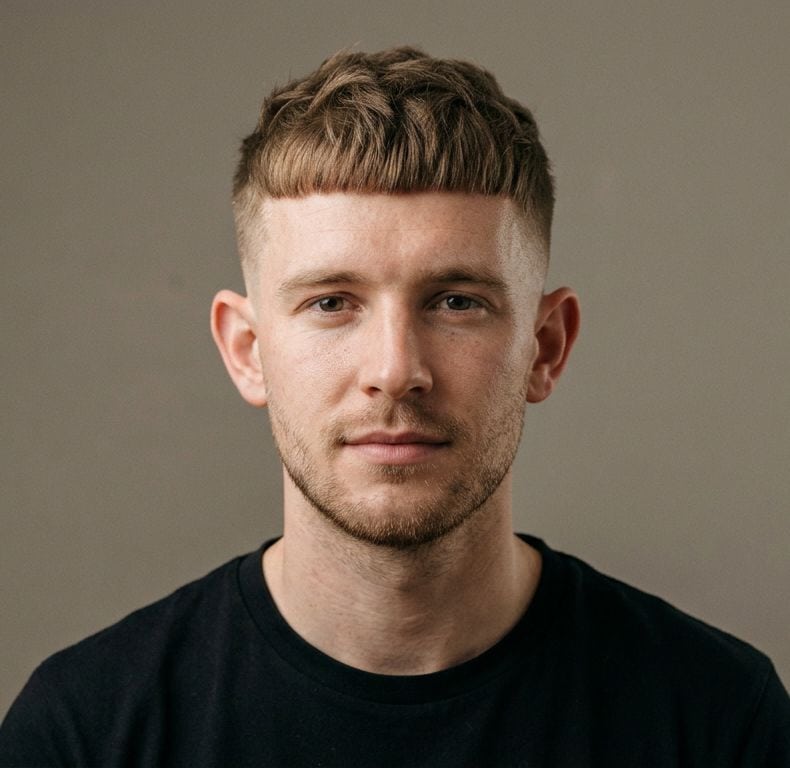
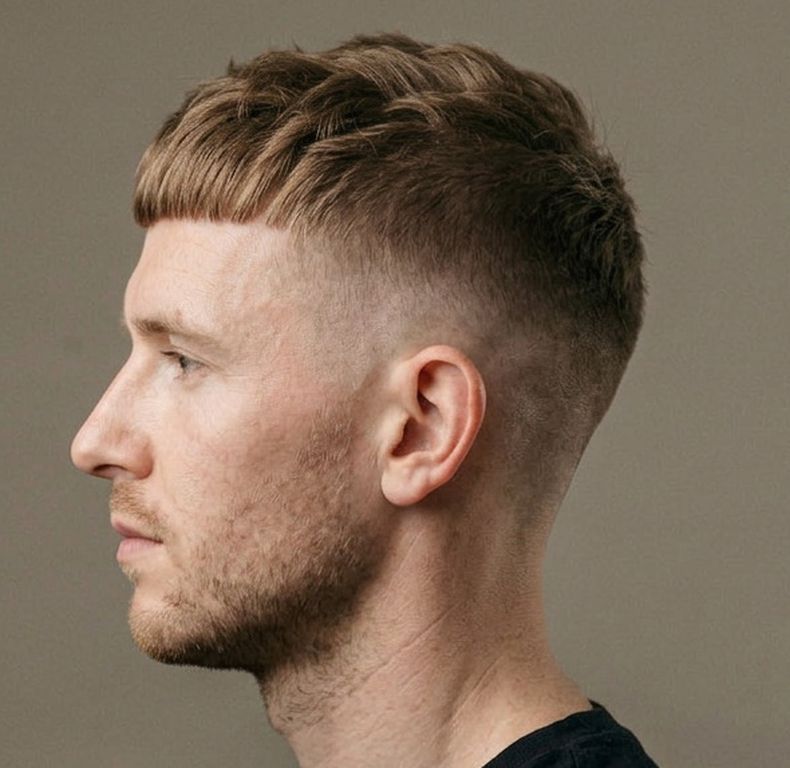
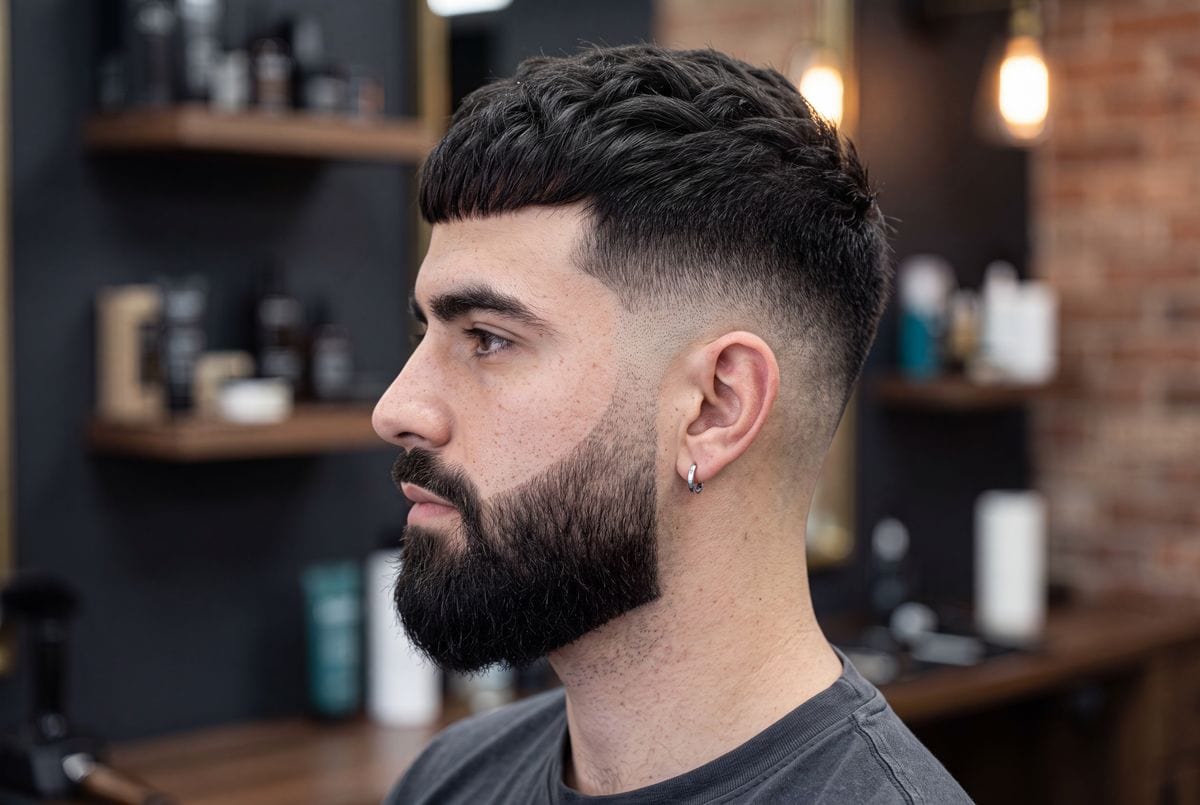
A French crop is a short men's haircut with the top pushed forward into a short fringe across the forehead, and the back and sides faded or tapered short. The top is usually 2 to 4cm and the fringe sits well above the eyebrows. It takes about a minute to style, and of every cut in the directory it is one of the easiest to live with.
In sintesi
- Chiamato anche
- Crop haircut
- Sides
- Faded or a grade 1 to 3
- Top
- 2 to 4cm, pushed forward
- Fringe
- Short and fairly straight, sitting on the upper forehead, well above the brows
- Manutenzione
- Every 3 to 4 weeks
- Il meglio su
- Oval and square faces, and receding hairlines
- Da evitare se
- You have a very low forehead
- Popularised by
- Cole Palmer (with a mid drop fade), Paul Mescal (a wavy French crop), Matt Goss (the Bros singer)
5 £ di sconto sulla tua prima consegna
A fresh cut looks sharpest with a clean neckline. A sharp blade keeps it that way between visits, without the razor burn a blunt one leaves.
5 £ di sconto sul tuo primo abbonamento o ordine VIP – un solo sconto per cliente, disiscriviti con un clic
How to ask your barber
- Ask for a French cropShort on top and pushed forward into a short fringe.
- Say how short the fringe goesUsually on the upper forehead, well above the eyebrows.
- Choose the sidesFaded, and how high, or a grade 2 to 3 all round.
- Choose the finishBlunt and straight, or textured with the clippers or thinning scissors.
Le variazioni
The same cut, worn differently. What changes is the length, where the short part starts and how the top is styled.
Will it work with your hair?
Hair type decides how a cut sits and how fast it loses its shape. The table below is the short version.
| Straight | Ideale | Lies forward easily. |
|---|---|---|
| Wavy | Opere | Texture the top so the waves do not lift the fringe. |
| Curly | Opere | Keep the top short so it does not spring up. |
| Coily | Opere | Works short and neat. Ask for a shaped fringe line. |
| Spesso | Ideale | Thick hair gives the fringe body. |
| Fine or thinning | Ideale | The forward fringe covers a receding hairline. |
Si adatterà al tuo viso?
Where a cut adds height and where it takes width away decides how it sits with your face shape. Hair type matters more, but this is the short version.
| Ovale | Ideale | Balanced proportions, so the cut itself decides. |
|---|---|---|
| Rotondo | Opere | Keep the fringe textured; a heavy straight one makes the face look wider. |
| Quadrato | Ideale | A short forward crop sits well over a strong jaw. |
| Oblungo | Ideale | A fringe shortens the face. |
| Cuore | Ideale | A fringe narrows a broad forehead. |
| Diamante | Ideale | A fringe widens a narrow forehead. |
Beard styles that go with it
Hair and beard are one outline. These keep the proportions right with this cut.


What a French crop is
Three things define it. The top is short and cut with scissors. Everything on top is brought forward rather than up or back. And the fringe is cut short, usually in a fairly straight line, sitting somewhere between the hairline and the middle of the forehead.
The sides do the rest. A classic French crop has the sides tapered or scissor cut, so there is soft contrast with the top. The modern version fades the sides down from somewhere around the temple, often to grade 0 or skin at the bottom, which gives a much sharper outline. Both are French crops. The fade just changes how bold it looks.
The top is not meant to stand tall. A French crop sits fairly flat and close to the head, with some texture so it does not look like a helmet. Add real height and you are drifting towards a quiff.
French crop vs textured crop and Edgar
These three are close relatives and get confused constantly.
French crop vs textured crop. They share the same frame of short sides and a forward top. A French crop has a neater, flatter top and a cleaner fringe line. A textured crop is cut much choppier, with heavy point cutting on top and a deliberately uneven, messy fringe. If the fringe is a tidy line, it is a French crop. If it is broken into pieces, it is a textured crop.
French crop vs Edgar. Il Edgar haircut takes the French crop fringe and makes it dead straight and blunt, then adds a sharp line-up at the temples and usually a high skin fade. It is the hard-edged, high-contrast cousin. A French crop is softer at the corners and more forgiving as it grows.
French crop vs crew cut. A crew cut has a similar length on top, but the front goes up or to the side. A French crop goes forward. Same length, opposite direction.
French crop vs Caesar. A Caesar also brushes forward to a short straight fringe, but it is shorter and more even all over, with less contrast between the top and the sides.
Who suits a French crop
Face shape. Oval and square faces take it easily, and the fringe softens a strong, square jaw. On a round face, keep the sides tight and the fringe short and textured, so the head does not look wide. On a long face the fringe helps, because it shortens the forehead, so a slightly fuller fringe and little height on top works well.
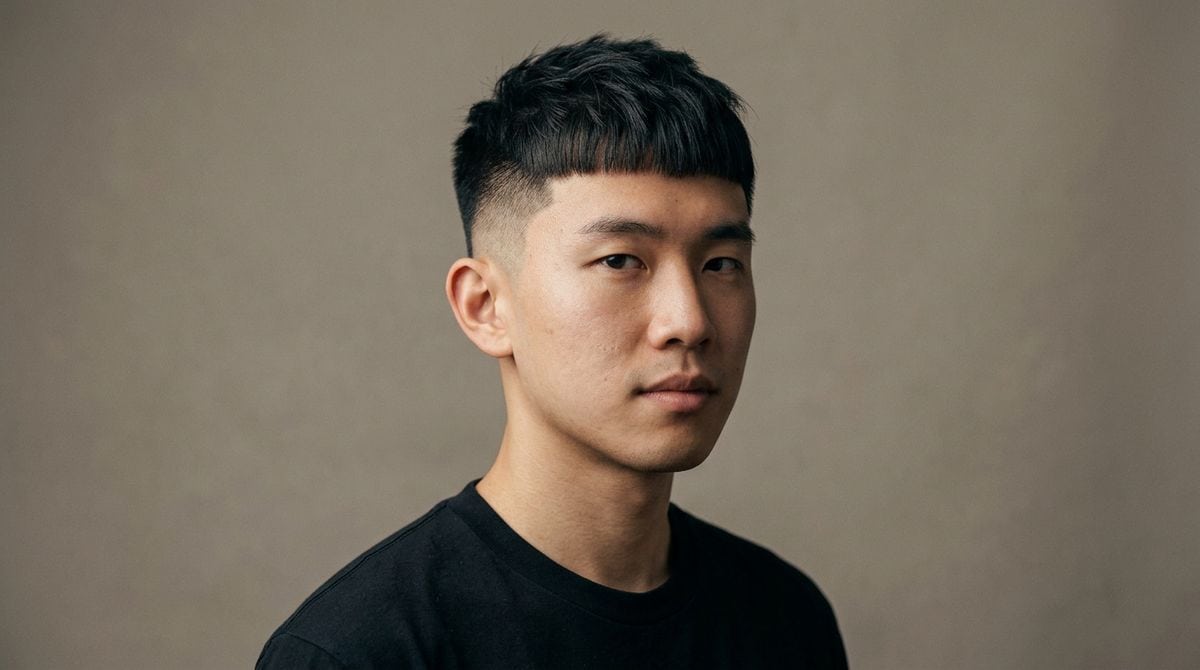
Hair type. Straight hair is the easiest, because it lies forward and holds a clean line. Thick hair gives the fringe body, but needs thinning or the top can puff out. Wavy hair works with some texturising so the waves do not lift the fringe. Curly and coily hair can wear a French crop kept short, with the fringe cut dry so the barber can see where the curl settles.
Receding hairlines. This is the French crop's best trick. The fringe comes forward over the corners of the hairline and softens a receding front without anything that looks like a cover-up. Keep the fringe short and dense rather than long and thin, which shows scalp and draws the eye to the very area you want to play down. The haircuts for balding men page covers other options.
When it is less suited. A very low forehead, where a fringe leaves little skin showing, can look crowded. And if you hate hair on your forehead, this is the wrong cut.
Work and lifestyle. It looks tidy in an office, survives helmets and training, and needs only one product, if any. A taper rather than a skin fade makes it more conservative.
How to ask a UK barber for a French crop
Say "French crop", then give the details for each part. Barbers vary in how they read the name, especially on how short the fringe goes.
The sides. Choose taper or fade, and how high.
- "French crop with a taper, grade 2 on the sides going to a 1 at the neck, no skin."
- "French crop with a mid skin fade, starting around the temple."
- "Low fade, from a grade 2 down to a 0.5, keep it tight round the ears."
The top. Give a length in centimetres. "About 3cm on top, textured so it sits forward."
The fringe. Say where it should sit and how it should finish. "Fringe about halfway down my forehead, fairly straight but not blunt" or "short fringe, a finger's width or two above my eyebrows, a bit broken up."
Also mention:
- your hair type, especially if it is thick, wavy or curly;
- any cowlick at the front, which can stop the fringe lying forward;
- how often you come in, because a high skin fade looks scruffy far sooner than a taper;
- if you wear glasses, since that changes where the fringe looks best.
Bring a photo if you have one, and point out what you like about it. Then still agree the grades.
Styling a French crop
This is one of the quickest styles there is.
Towel dry until damp. Push the hair forward from the crown with your fingers, so it falls towards the fringe. If you want more texture or control, take a pea-sized amount of matte clay or paste, warm it between your palms and work it through the top from back to front. Finish by shaping the fringe with your fingertips.
For a cleaner classic look, keep the fringe flatter and more even. For something messier, pinch small sections to separate them.
Use one product, not three. Short hair goes greasy and heavy quickly, and a matte finish suits this cut far better than shine. Wavy hair often looks best scrunched with a little cream and left to dry. A hairdryer on low, pointed forward while you push the hair with your fingers, helps on hair that will not lie forward.
Upkeep and how often to cut
Hair grows roughly 1cm a month. On a French crop the fringe is usually the first thing to annoy you, as it starts reaching the eyebrows, and the sides start bulking out above the ears.
- Skin fade or high fade: every two to three weeks.
- Low fade or taper: every three to four weeks.
- Classic scissor-cut sides: four to six weeks.
Between appointments, tidy the neck and around the ears with a trimmer if you like. Leave the fringe alone. Home fringe trims are how French crops end up lopsided.
Variations and growing it out
Small changes give quite different French crops without turning it into another haircut.
- Classic French crop. Tapered or scissor-cut sides, about 2 to 3cm on top, a neat fringe. The conservative version.
- French crop with a skin fade. Sides taken to skin, usually as a mid or high fade. Sharper, more contrast, more upkeep. The skin fade page explains how that finish is done.
- Blunt fringe. The fringe cut dead straight. Bolder, and heading towards an Edgar.
- Textured French crop. Heavier point cutting on top and a broken fringe. Halfway to a textured crop.
- Longer crop. 4 to 5cm on top with a softer, heavier fringe.
To grow it out, keep the sides trimmed and let the top and fringe run on. The fringe will reach your eyes before the top looks long, so at that stage start pushing it to one side or up. After two or three months there is enough length for a short side-swept cut or, with the sides kept tight, a quiff.
Domande che ci vengono poste
What is a French crop haircut?
A short haircut where the top, usually 2 to 4cm, is pushed forward into a short fringe across the forehead, with the back and sides faded or tapered. It is styled forward rather than up, and it sits close to the head.
Is a French crop good for a receding hairline?
Yes, it is one of the better options. The fringe comes forward over the corners and softens them without looking like a cover-up. Keep the fringe short and dense, and the sides tight, so the top looks fuller by comparison.
How short should the sides be on a French crop?
Whatever you prefer. A common choice is a fade from a grade 2 down to a 0.5 or skin at the bottom. For a softer look, a taper with a grade 1 to 2 at the neck and no skin showing. Tell the barber if you do not want to see bare skin.
Does a French crop work on thick hair?
Yes, as long as the barber thins the top and the fringe. Thick hair gives the fringe body, but without debulking the top can puff up and look square. A matte clay holds thick hair better than a cream.
Can you have a French crop with curly or wavy hair?
Wavy hair is very good for it, because the movement does the texturing for you. Curly hair works with a little more length on top and the fringe cut dry, so it does not spring up shorter than intended. A taper or low fade keeps it softer than a high one.
How often does a French crop need cutting?
Every two to three weeks with a skin or high fade, three to four weeks with a low fade or taper, and up to six with scissor-cut sides. The fringe is usually what tells you it is time.
Other crops
Close relatives, and how they differ.
Sfoglia in base a ciò che ti interessa
La stessa directory, vista da un'altra prospettiva.