
Dissolvenza conica bassa
Short at the sideburns and the nape only, with the rest of the sides left at length.
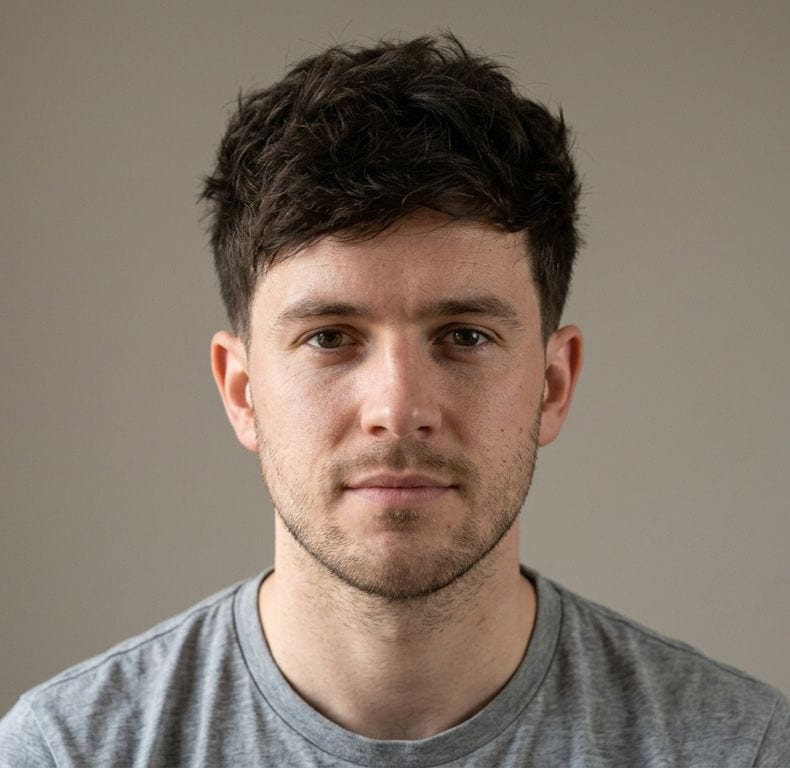
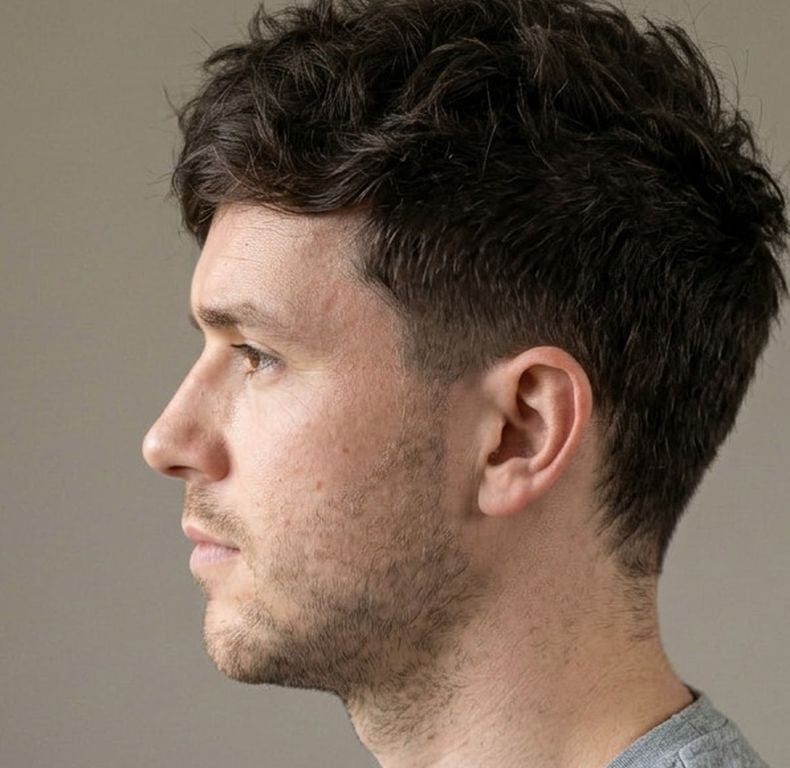
A low taper fade takes the hair short only at the very edges of the hairline, at the sideburns just above the ear and at the nape of the neck. Everything above that, including the hair over and around the ear, keeps its length. From the front it looks like a tidy traditional cut, and up close you see one clean, close edge. It is the quietest cut in the full hairstyles directory that still counts as a fade.
In sintesi
- Chiamato anche
- Low taper
- Sides
- Kept at length above the ear, scissor cut or a grade 3 to 4
- Top
- Any length, usually 3 to 6cm and textured
- Where it starts
- Just above the ear, at the sideburn and the nape only
- Goes down to
- A grade 0 or 1 at the very edges
- Manutenzione
- A tidy-up every 3 to 4 weeks
- Il meglio su
- Anyone who wants a clean edge without bare skin on the sides
- Da evitare se
- You want a sharp, high-contrast look
- Popularised by
- Jude Bellingham (with curls on top, cut by his Birmingham barber), John Legend (on a short afro)
5 £ di sconto sulla tua prima consegna
A fresh cut looks sharpest with a clean neckline. A sharp blade keeps it that way between visits, without the razor burn a blunt one leaves.
5 £ di sconto sul tuo primo abbonamento o ordine VIP – un solo sconto per cliente, disiscriviti con un clic
How to ask your barber
- Say where it stopsAsk for a low taper: short at the sideburns and the neckline only, with the sides above the ear left at length.
- Give the bottom lengthSay how short the edges go. A grade 0 or 1 is usual, or skin if you want it sharper.
- Describe the topGive the length in centimetres and say whether you want it textured or kept neat.
- Ask for a tapered necklineA neckline that fades out naturally grows out better than a squared one.
Le variazioni
The same cut, worn differently. What changes is the length, where the short part starts and how the top is styled.
Will it work with your hair?
Hair type decides how a cut sits and how fast it loses its shape. The table below is the short version.
| Straight | Opere | Clean edges show well. Keep the sides long enough to lie flat. |
|---|---|---|
| Wavy | Ideale | Length on the sides lets the waves sit naturally, with a neat finish. |
| Curly | Ideale | Keeps all the volume and only tidies the outline. |
| Coily | Ideale | A classic pairing. The taper keeps the temples and nape crisp. |
| Spesso | Ideale | Ask for the sides thinned so they do not puff out above the taper. |
| Fine or thinning | Opere | Subtle, so it does not draw the eye to a thinner top. |
Si adatterà al tuo viso?
Where a cut adds height and where it takes width away decides how it sits with your face shape. Hair type matters more, but this is the short version.
| Ovale | Ideale | Balanced proportions, so the cut itself decides. |
|---|---|---|
| Rotondo | Opere | Keep the sides tight and let the texture add some height. |
| Quadrato | Ideale | Texture on top softens the angles. |
| Oblungo | Opere | Keep the height down and push the texture forward. |
| Cuore | Opere | Texture brought forward suits it better than height. |
| Diamante | Opere | Keep some fullness on top and at the temples. |
Beard styles that go with it
Hair and beard are one outline. These keep the proportions right with this cut.



What a low taper fade is
The word that matters is "low". Every taper shortens the hair towards the hairline. What separates a low taper from its siblings is where the short part begins, and on a low taper that is as far down as it can go, just above the top of the ear at the sideburn and only a couple of centimetres up from the neckline at the back.
The very bottom is usually taken to a grade 0 or a grade 1 (somewhere between bare clipper and 3mm). It then blends up through a grade 2 into the length you already have on the sides, which is often a grade 3 or 4 (9 to 12mm) or scissor cut. There is no band of bare skin across the side of the head. The natural shape of your hairline stays where it was, only shorter and neater.
That is why it grows out so gently. Because the short part is so small, a few weeks of growth softens the edge rather than leaving an obvious line.
Low taper vs mid taper, high taper and low fade
Il dissolvenza conica page covers the whole family. In short, the three tapers are the same idea started at three different heights.
- Low taper. Starts just above the ear at the sideburn and low on the nape. The hair around and above the ear is untouched.
- Mid taper. Starts roughly level with the middle of the ear, so more of the sideburn is short and the edge shows from the front.
- High taper. Starts up at the temple. The most contrast of the three, and the most upkeep.
A low taper is also easily confused with a dissolvenza bassa. They start at a similar height, but a low fade runs the short band right round the head, above the ears and across the back, while a low taper only touches the sideburns and the neckline. If you want the sides around your ears left alone, the word you need is "taper".
Who suits a low taper fade
Almost anyone, which is the point of it. The things worth thinking about are hair type and how much attention you want.
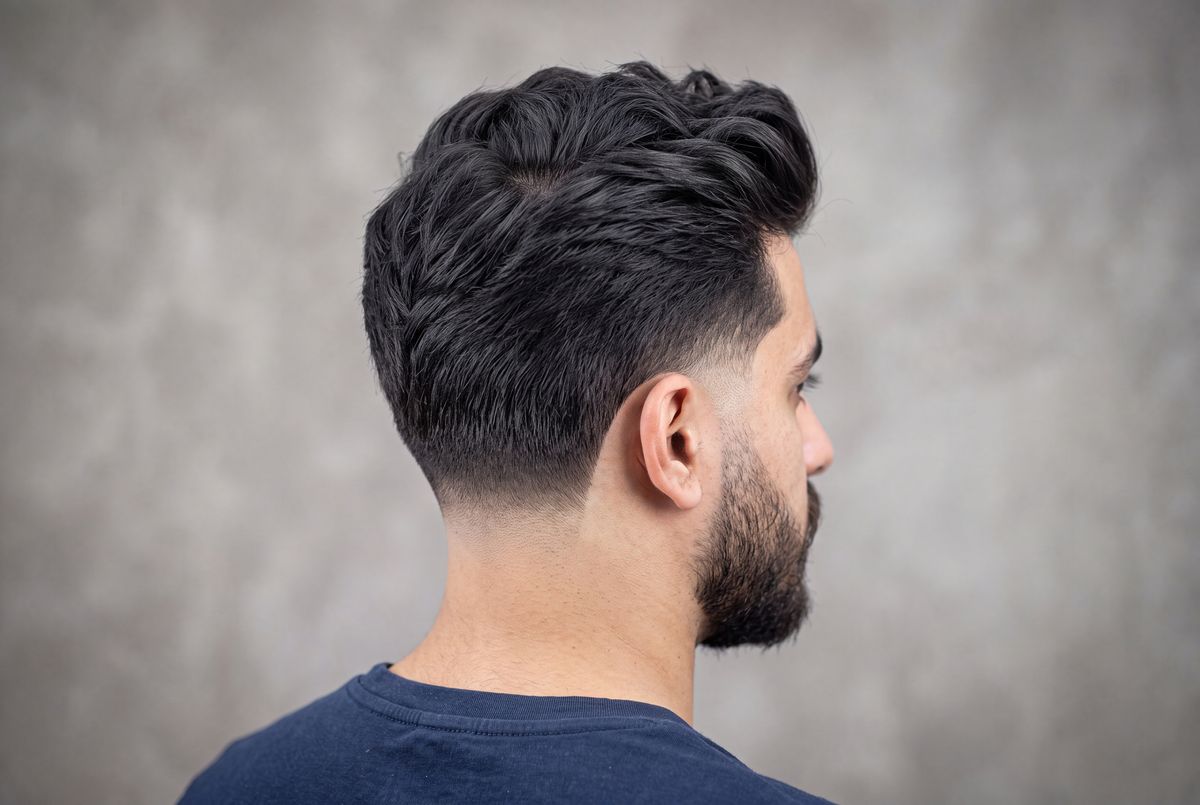
Capelli lisci. Works well. Keep the sides long enough to lie flat, around a grade 3 or longer, or they can stick out above the taper.
Wavy hair. One of the best matches. The length on the sides lets the waves sit naturally, and the taper stops the outline looking shaggy as it grows.
Curly and coily hair. A classic pairing. The taper cleans up the temples and nape and leaves every bit of volume on top. A barber used to curly or afro hair will usually shape the curls dry first, because curls shrink as they dry and a length that looks right wet can end up much shorter.
Capelli folti. Fine, though ask for the sides thinned out. Without that, thick hair above a low taper can push outwards and make the head look wider than it is.
Fine or thinning hair. It works because it is subtle and does not put bare skin next to a thinner top. If your temples are receding, a low taper is the safest of the three heights for the same reason. The haircuts for balding men page goes further.
Work and school. A low taper is about as conservative as a modern haircut gets. It will pass in any office, uniform or school that allows short hair at all.
The one reason to skip it is if you want contrast. If the point is a sharp, obvious fade, a low taper will feel like it has barely been done.
How to ask your barber for a low taper fade
Barbers hear "fade" and often reach for the clippers higher than you meant. Give them three things.
Where it stops. Say "low taper, just the sideburns and the neckline, leave the sides above the ear at length". Touching the top of your ear helps.
How short at the bottom. A grade 0 or 1 is usual. Ask for a half grade (about 1.5mm) if you cannot decide. Skin is possible and gives a crisper edge, but it shows regrowth within a week, which undoes much of the reason for choosing a low taper.
What happens on top. Give a length in centimetres, or say how much to take off. Most low tapers are worn with 3 to 6cm on top.
Two details worth adding. Ask for the neckline tapered rather than squared off, because a tapered neckline grows out more gracefully. And if you wear a beard, ask for the sideburn to be blended into it so there is no step between hair and beard. Bring a photo from the side and the back, since a front-on photo shows almost nothing of a taper.
What to wear on top
The taper only decides the edges, so the top can be almost anything short to medium.
- Textured crop. 3 to 5cm, choppy and matte. The most common pairing and the least effort.
- Side part. 4 to 7cm combed over. The low taper keeps it smart enough for an interview.
- Ciuffo. Needs a low taper more than most, because the sides need enough length to sit under the volume.
- Curls or an afro. Left full, with the taper only tidying the outline.
- Forward fringe. Pushed forward over a short top, close to a crop.
Styling
Not much is needed. The taper itself takes no styling at all.
For a short textured top, a pea-sized amount of matte clay or paste worked through dry hair is enough. Wavy hair does well with a light salt spray or cream on damp hair, left to dry naturally. For curls, a curl cream or leave-in conditioner through damp hair keeps them defined. A side part wants a light cream and a comb.
Whatever you use, keep it off the tapered edges. Product on the short hair at the sideburns makes it look greasy and darker than the rest.
How often to get it cut
Every three to four weeks keeps it looking deliberate. Hair grows roughly 1cm a month, so by week four the grade 0 at the edges is closer to a grade 3 and the taper has softened into the sides. That still looks tidy, which is the advantage over a skin fade that looks grown out after a fortnight.
With a longer top, many men stretch to five weeks. Between cuts, tidy the neckline with a trimmer if you like, but leave the blend alone. Cutting into the taper at home is the quickest way to put a visible step in it.
Variations
- Low skin taper. The edges go to bare skin. Sharper, but needs cutting every two weeks.
- Low taper with a beard. The sideburn fades straight down into the beard.
- Low taper with a line-up. A sharp edge put around the forehead and temples, common on coily hair.
- Growing it out. If you are heading for longer hair, a low taper keeps the outline neat while the rest grows.
Domande che ci vengono poste
What is the difference between a low taper and a low fade?
Both start low, but a low taper only shortens the sideburns and the neckline. A low fade carries the short band right round the head, above the ears and across the back. A low taper leaves the hair around your ears at its normal length.
How short is a low taper fade?
At the very edges, usually a grade 0 or 1, which is between bare clipper and 3mm. It blends up into whatever length the sides are, commonly a grade 3 or 4. Skin at the bottom is possible but not the usual version.
How long does a low taper fade last?
It looks sharp for about two weeks and tidy for three to four. With a longer top, five weeks is fine. It grows out more gently than any other fade because so little of the head is cut short.
Is a low taper fade good for thick hair?
Yes, as long as the barber thins the sides. Thick hair that is left heavy above a low taper tends to push out, so the taper looks like a narrow band under a wide head of hair.
Can you get a low taper fade with a receding hairline?
It is the best of the three taper heights for it. The taper starts below the temple, so it leaves hair at the sides of the forehead instead of drawing a line to the recession. Keep the top textured rather than slicked flat.
Is a low taper fade professional?
Yes. It is the most conservative taper and passes in practically any workplace or school that allows short hair.
Other tapers
Close relatives, and how they differ.
Sfoglia in base a ciò che ti interessa
La stessa directory, vista da un'altra prospettiva.