
High Taper Fade
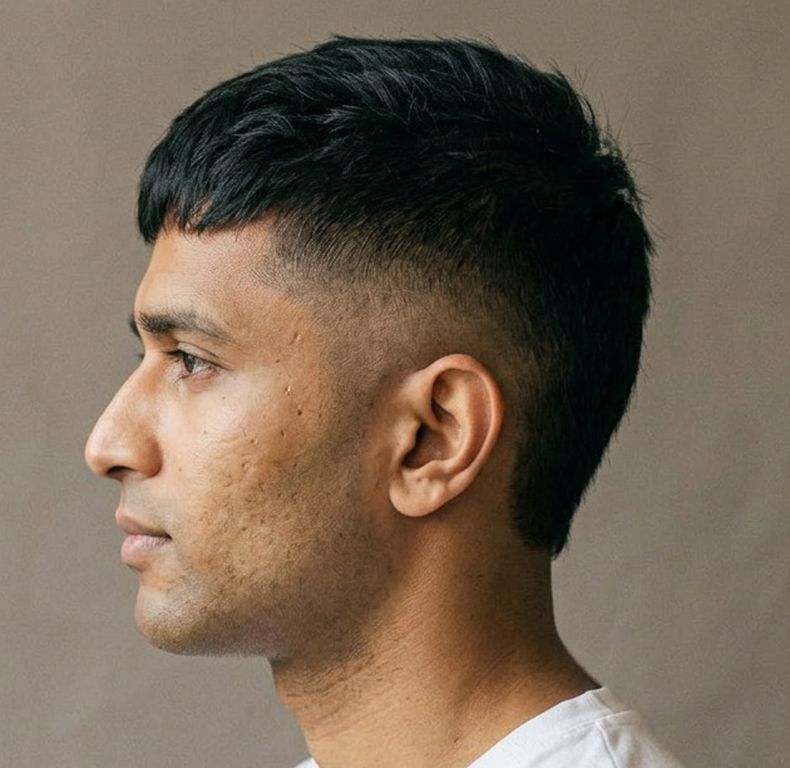
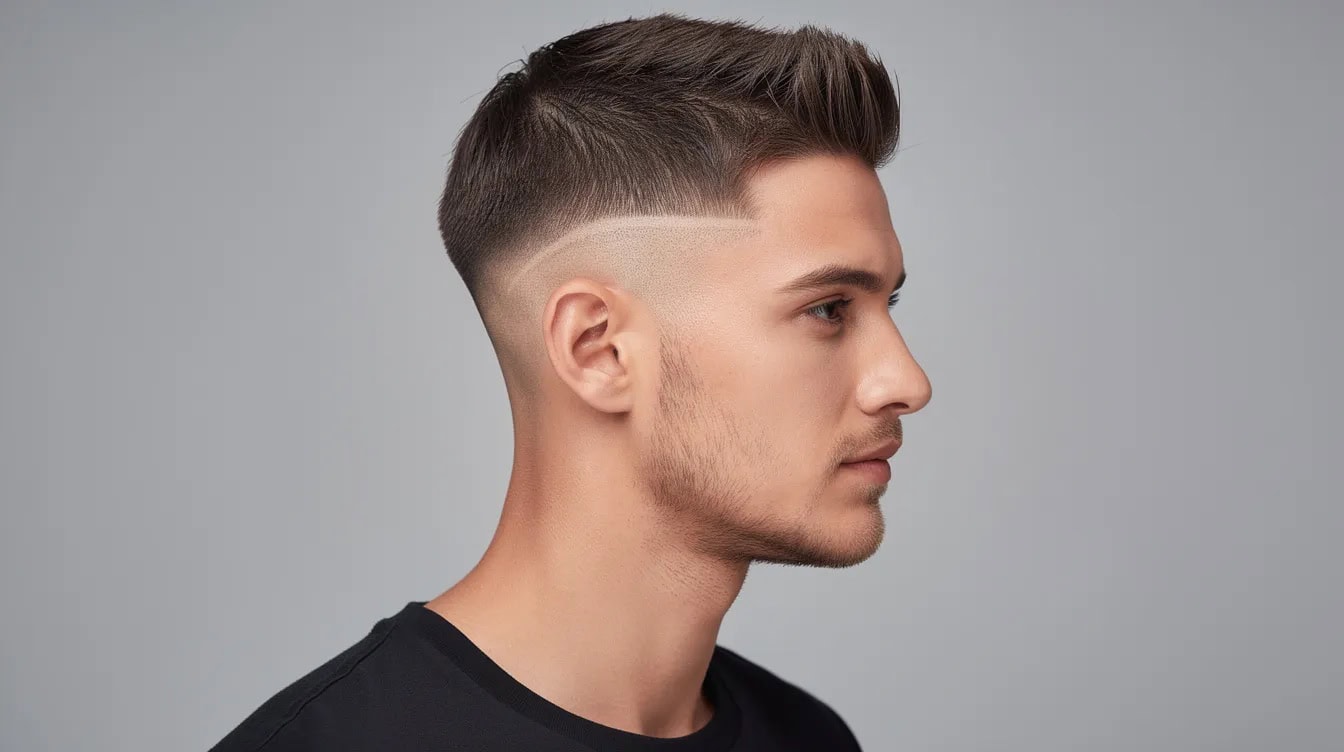
The taper climbs to the temple at the sideburn and up the back, for a sharper outline.
A high taper fade starts the taper up at the temple, so the sideburn is short from the temple down and the nape is short a long way up the back of the head. The hair behind and above the ear still keeps its length, which is what keeps it a taper rather than a full fade. It is the sharpest and highest-contrast of the three tapers, and the one that needs the most upkeep. You can compare it with the gentler versions in every cut in the directory.

At a glance
- Also called
- High taper
- Sides
- Short from the temple down at the sideburn, length kept behind the ear
- Top
- 2 to 5cm, often cropped forward
- Where it starts
- Level with the temple at the sideburn, high on the nape
- Goes down to
- A grade 0 or 1, or skin
- Upkeep
- Every 2 weeks to keep the edges sharp
- Best on
- Round and oval faces
- Avoid if
- Your hairline is receding at the temples
£5 off your first delivery
A fresh cut looks sharpest with a clean neckline. A sharp blade keeps it that way between visits, without the razor burn a blunt one leaves.
£5 off your first subscription or VIP order - one per customer, unsubscribe with 1 click
How to ask your barber
- Show where it startsAsk for a high taper starting level with your temple at the sideburn, and high on the nape.
- Say how shortA grade 0 or 1, or skin for more contrast.
- Say what staysAsk for the hair behind and above the ear to keep its length, so it stays a taper rather than a full fade.
- Describe the topA crop, curls or whatever you wear, with the length in centimetres.
The variations
The same cut, worn differently. What changes is the length, where the short part starts and how the top is styled.
Will it work with your hair?
Hair type decides how a cut sits and how fast it loses its shape. The table below is the short version.
| Straight | Works | Keep some length on top or it can look severe. |
|---|---|---|
| Wavy | Works | Fine, though the higher taper shows more skin at the temple. |
| Curly | Ideal | Lifts the shape and clears the sides. |
| Coily | Ideal | A sharp, clean outline that suits short coily hair. |
| Thick | Ideal | Takes the bulk away at the temples. |
| Fine or thinning | Avoid | Bare temples draw attention to a receding hairline. |
Will it suit your face?
Where a cut adds height and where it takes width away decides how it sits with your face shape. Hair type matters more, but this is the short version.
| Oval | Ideal | Balanced proportions, so the cut itself decides. |
|---|---|---|
| Round | Ideal | Height on top and short sides lengthen a round face. |
| Square | Works | A strong jaw carries it; keep some length on top. |
| Oblong | Avoid | Height on top and tight sides make a long face look longer. |
| Heart | Works | Keep the top modest so the forehead does not look wider. |
| Diamond | Works | Tight sides can make the cheekbones look wider; keep a little length there. |
Beard styles that go with it
Hair and beard are one outline. These keep the proportions right with this cut.



What a high taper fade is
All three tapers shorten the hair at the edges of the hairline. The high taper starts its short section highest, level with the temple at the sideburn, and well up the nape at the back. The bottom is usually a grade 0 or 1 (bare clipper to 3mm), and often skin, blending up through a grade 1 and 2 into the length above.
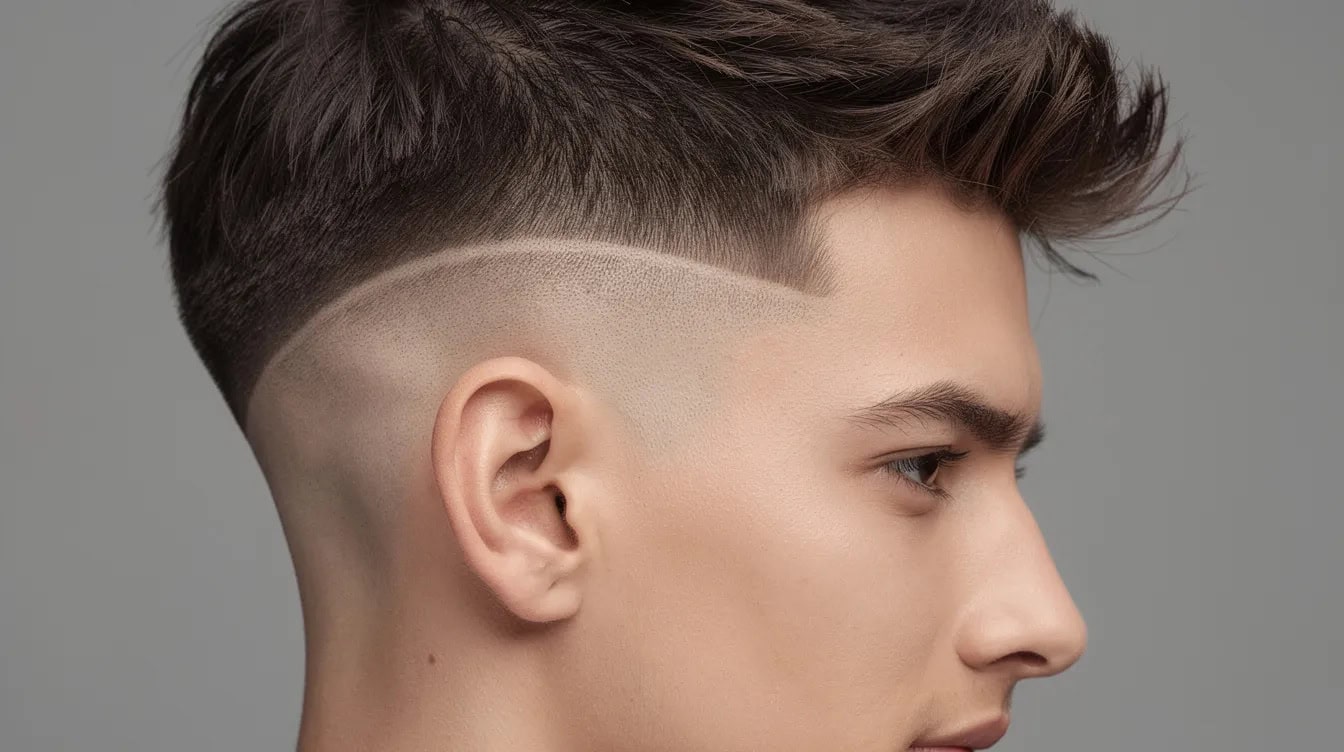
Because the short section covers the whole sideburn, the outline of the cut changes. From the front you see clean, close sides at the temples and the hair on top sitting clearly above them. That contrast is the whole appeal.
What it does not do is take the entire side of the head down. The hair behind the ear and across the upper back of the head stays at length. Once that goes short too, you have a high fade, which is a different and more severe cut.
High taper vs low and mid taper
The taper fade page has all of them side by side. The short version is that height changes three things at once: how much shows, how fast it grows out and who it suits.
- Low taper. Starts just above the ear. Barely visible, lasts three to four weeks.
- Mid taper. Starts around the middle of the ear. Visible from the front, lasts two to three weeks.
- High taper. Starts at the temple. Obvious from any angle, looks its best for about two weeks.
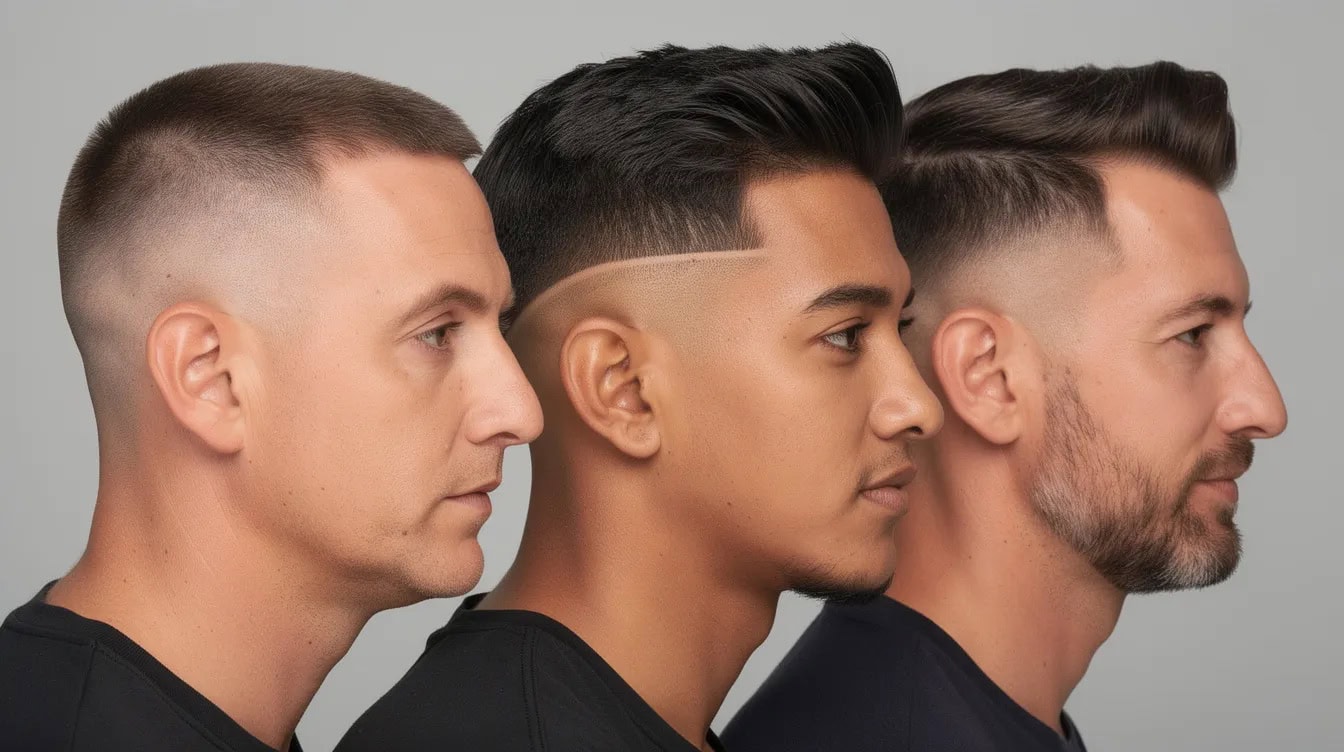
If you have never had a taper before, a high one is a big first step. A mid taper is a safer start, and you can take it higher next time. Going the other way means waiting for the sides to grow back.
Who suits a high taper fade
Curly and coily hair. The best match. Curly hair tends to grow outwards at the temples, and a high taper removes exactly that bulk, so the shape lifts rather than spreads. On coily hair it gives a crisp, clean outline, often finished with a line-up.
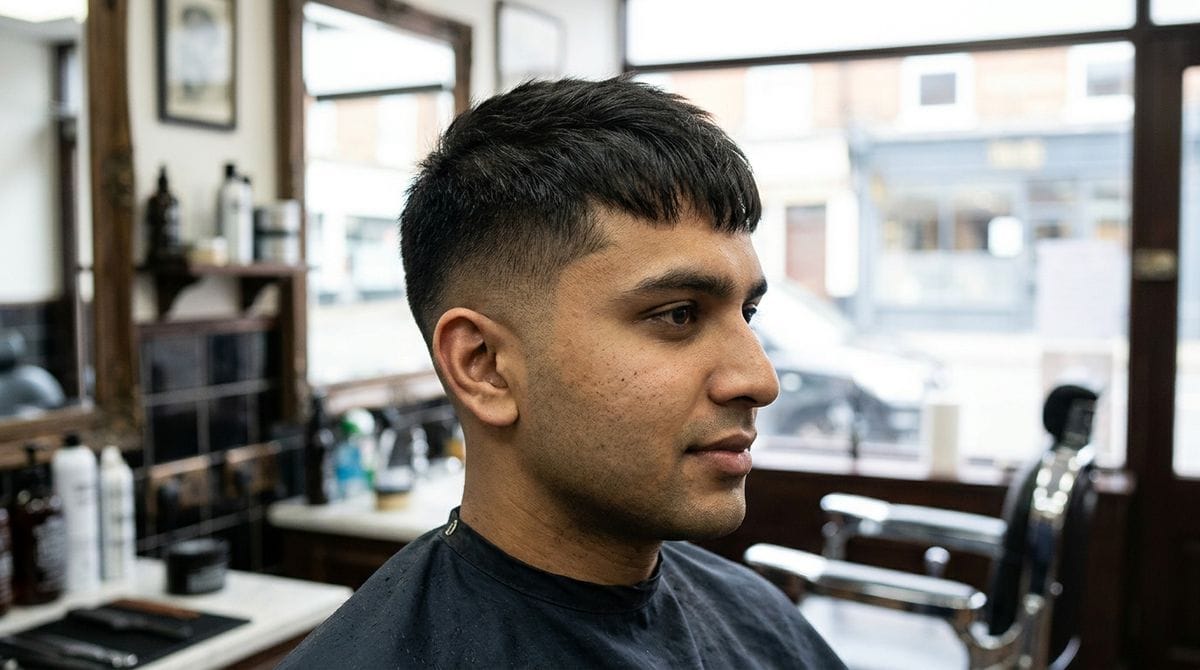
Thick hair. Good for the same reason. All the weight at the sides of the head goes.
Straight hair. Works, but keep some length on top. A high taper under a very short straight top can look severe.
Wavy hair. Fine. The higher start shows more skin at the temple, which some people like and some do not.
Fine or thinning hair, or a receding hairline. Avoid it. A high taper takes the sides short right up to the temples, which is where a hairline recedes first. It puts bare skin next to the recession and draws a line to it. A low taper does the opposite. The haircuts for balding men page has better options.
Face shape. On a round face, the cleared sides make it look narrower. On a long or narrow face, a high taper plus height on top can make it look longer still, so keep the top flatter or choose a mid taper.
Head shape. It shows more of your head than the lower tapers. Any bump, dip or scar at the back or sides will be on display.
Work. A neat high taper passes in most offices, but it is more of a statement than the lower two. Taken to skin, with a design or a hard part, it is a long way from conservative.
How to ask your barber for a high taper fade
Show where it starts. Ask for a high taper and touch your temple. Say it should start level with the temple at the sideburn and high on the nape.
Say what stays. This is the instruction that gets missed. Ask for the hair behind and above the ear to keep its length, so it stays a taper rather than becoming a high fade. Without it, many barbers will carry the fade round the back.
Say how short. A grade 0 or 1 at the bottom, or skin for the most contrast. If you want it softer, ask for a grade 1 or a grade 1.5 (about 4.5mm) and say "not down to skin".
Describe the top. Give the length in centimetres. Most high tapers are worn with 2 to 5cm on top.
If you have a beard, ask for the sideburn to be blended into it. With a thick beard, it often looks better if the taper is kept a touch lower at the sideburn, so there is no sudden jump from skin to dense beard. And bring photos of the side and back.
What to wear on top
- Textured crop. About 3cm, fringe pushed forward. The common pairing and very little work.
- Curls. The taper lifts the shape and clears the sides.
- Buzzed top. A grade 3 or 4 on top over a high taper. Next to nothing to do in the morning.
- Line-up. A sharp edge put around the forehead and temples. With a short straight fringe it becomes an Edgar.
- Side part. Works, though it reads sharper and more modern than the same top over a low taper.
Styling
The sides need nothing. The top takes a small amount of matte paste or clay on dry hair for a crop, a curl cream on damp hair for curls, and nothing at all for a buzzed top. If the top is fine and flat, a blow-dry with the roots lifted at the front gives it enough height to balance the short sides.
How often to get it cut
About every two weeks to keep it looking like a high taper. Hair grows roughly 1cm a month, and with the short section reaching right up to the temple, half a centimetre of growth shows quickly.
By week three or four, the outline has softened and the cut looks more like a mid taper than a high one. If two-weekly cuts are not realistic, either ask for a grade 1 at the bottom instead of skin, which hides the regrowth for longer, or choose a lower taper. A quick neckline and sideburn tidy at the barber between full cuts also helps.
Variations
- High skin taper. Bare skin at the bottom. The most contrast at the temple, and the shortest life.
- High taper with a line-up. Crisp corners at the temples.
- High taper with curls. Curly top left long.
- Lowering it. If you want something calmer, ask the barber to start the next taper lower. It takes a cut or two to grow the old line out.
Questions we get asked
What is the difference between a high taper and a high fade?
A high taper shortens the sideburns from the temple down and goes high on the nape, but the hair behind and above the ear keeps its length. A high fade takes the whole side and back down short. Ask for the hair behind the ear to stay long if you want the taper.
Where does a high taper start?
Level with the temple at the sideburn, and well up the nape at the back. Touch your temple when you ask, because the word "high" means different heights to different barbers.
How often does a high taper fade need cutting?
Every two weeks to keep it sharp. At three to four weeks it looks closer to a mid taper.
Is a high taper fade good for a receding hairline?
No. It takes the sides short right up to the temples, where a hairline recedes first, and makes the recession more obvious. A low taper is the better choice.
Can I get a high taper without going to skin?
Yes. Ask for a grade 0.5 or grade 1 at the bottom and say "not down to skin". You keep the height and the shape, and it grows out a little more gently.
Other tapers
Close relatives, and how they differ.
Browse by what matters to you
The same directory, cut a different way.