
High and Tight
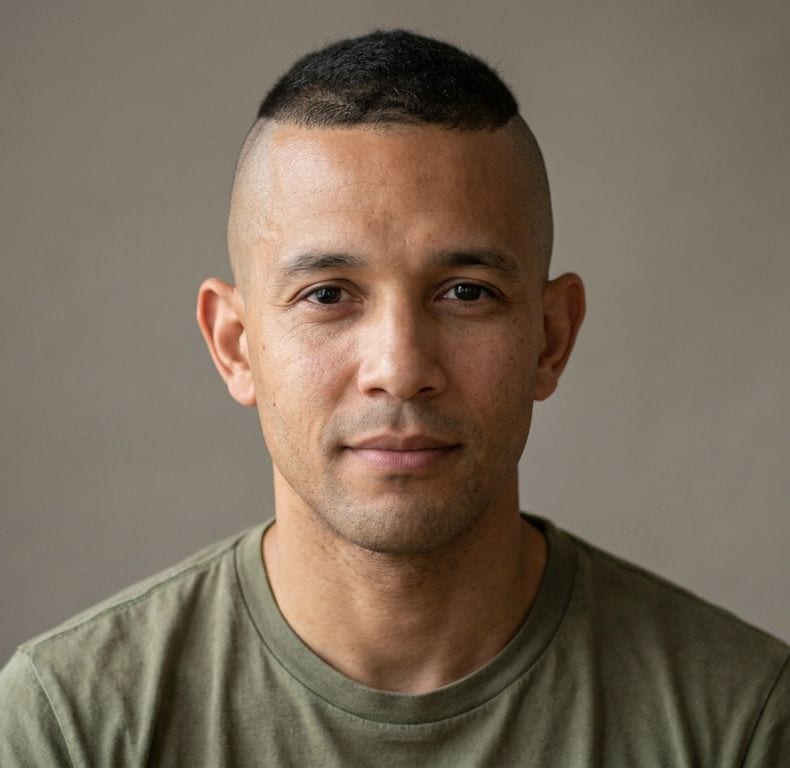
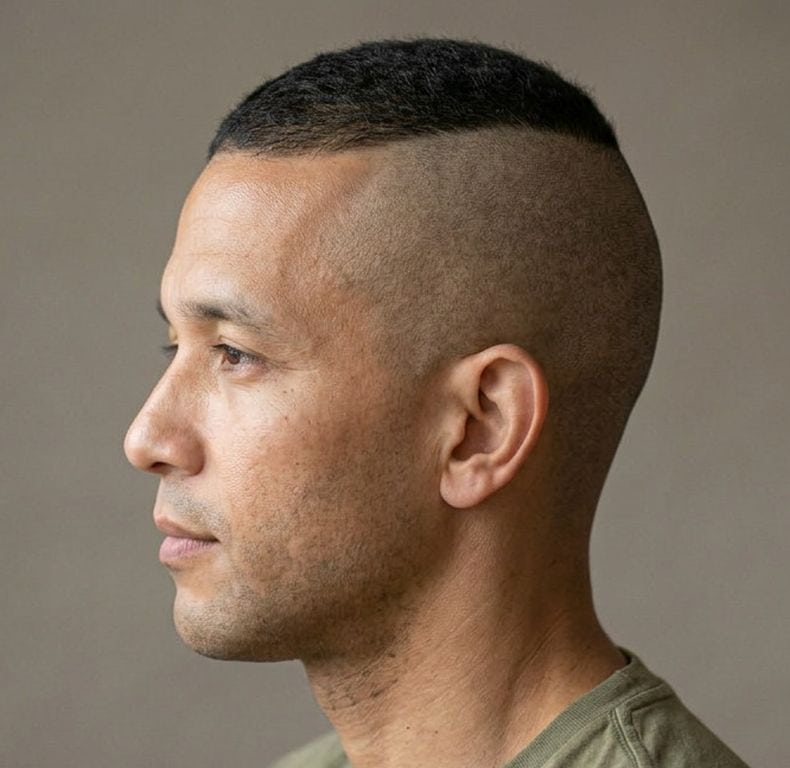
The sides and back clippered very short up to the top of the head, leaving a short patch on top.
A high and tight is a very short men's haircut where the back and sides are taken down to skin or a grade 0, all the way up to where the side of the head turns into the top, leaving a small, short patch of hair on top. The top is usually a grade 3 or 4 (9mm or 12mm), or up to about 2cm. It is the most severe of the classic cuts and the one most closely tied to military barbering. For gentler short options, the full hairstyles directory has plenty.
Em resumo
- Também conhecido como
- Military cut
- Sides
- Very short, often a grade 0 to skin
- Top
- A short patch, grade 3 to 4 or up to 2cm
- Where it starts
- Up to where the side of the head turns into the top
- Manutenção
- Every 1 to 2 weeks
- O melhor em
- Oval and square faces
- Evite se
- You want any softness at the sides
- Popularised by
- Aitch (with a skin fade at the Brit Awards), Jason Statham (short all over to work with a receding hairline)
5 £ de desconto na sua primeira entrega
A fresh cut looks sharpest with a clean neckline. A sharp blade keeps it that way between visits, without the razor burn a blunt one leaves.
5 £ de desconto na sua primeira subscrição ou encomenda VIP — uma por cliente; cancele a subscrição com um clique
How to ask your barber
- Ask for a high and tightVery short sides and back up to the top of the head, short on top.
- Give both gradesFor example a grade 0 sides and a grade 3 on top.
- Fade or hard lineSay whether you want the sides blended into the top.
- Book aheadEvery week or two if you want it to stay sharp.
As variações
The same cut, worn differently. What changes is the length, where the short part starts and how the top is styled.
Will it work with your hair?
Hair type decides how a cut sits and how fast it loses its shape. The table below is the short version.
| Straight | Ideal | Short and even. |
|---|---|---|
| Wavy | Ideal | The waves are cut out at this length. |
| Curly | Obras | Curls only show on the patch on top. |
| Coily | Ideal | Neat and sharp on coily hair. |
| Espesso | Ideal | Removes all the side bulk. |
| Fine or thinning | Ideal | Short everywhere, so thin areas barely show. |
Vai ficar bem no teu rosto?
Where a cut adds height and where it takes width away decides how it sits with your face shape. Hair type matters more, but this is the short version.
| Oval | Ideal | Balanced proportions, so the cut itself decides. |
|---|---|---|
| Redondo | Obras | Fine, though very short all over can make the face look rounder. |
| Quadrado | Ideal | A strong jaw carries a very short cut well. |
| Oblongo | Obras | Keep a little length at the sides so the face does not look narrower. |
| Coração | Obras | Works, though it shows the full width of the forehead. |
| Diamante | Evitar | Very short sides make the cheekbones look wider. |
Beard styles that go with it
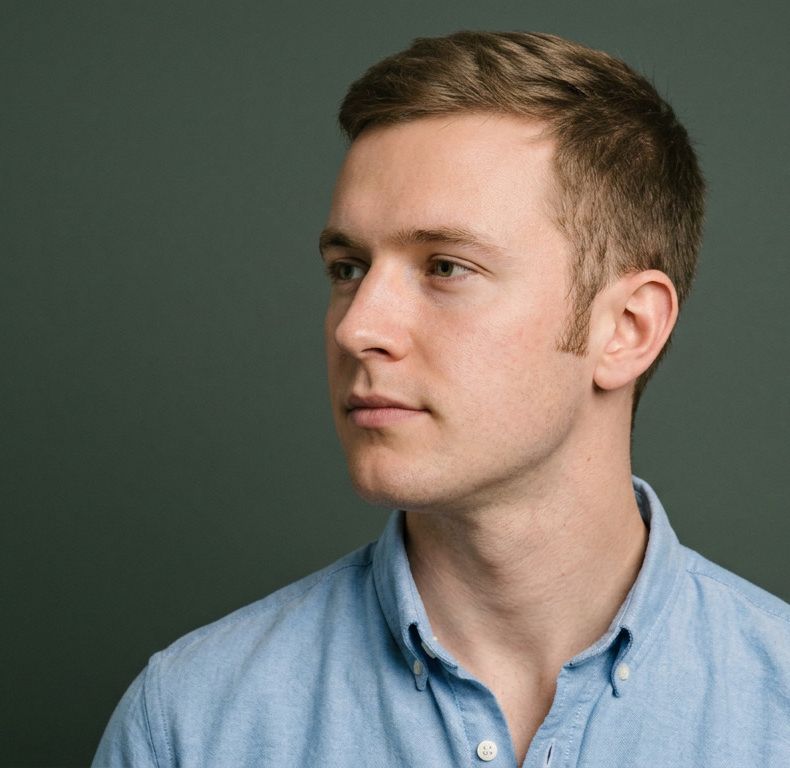
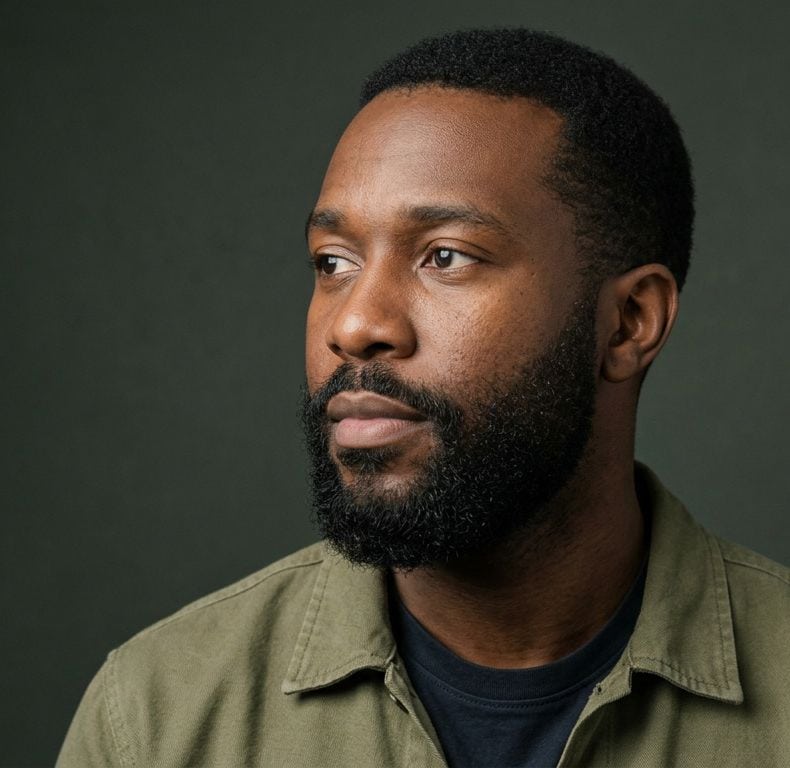
Hair and beard are one outline. These keep the proportions right with this cut.

What a high and tight is
Two things define it, and the name gives both away. The sides are high, meaning the short part runs right up the head, well above the temples, to the point where the head starts to curve over. And they are tight, meaning close to the skin, usually a grade 0 (no guard, about 0.5 to 1mm) or shaved.
What is left on top is a compact patch, short and usually brushed up or forward. From the front it looks like a strip of hair on an otherwise very short head. From the side the contrast is stark.
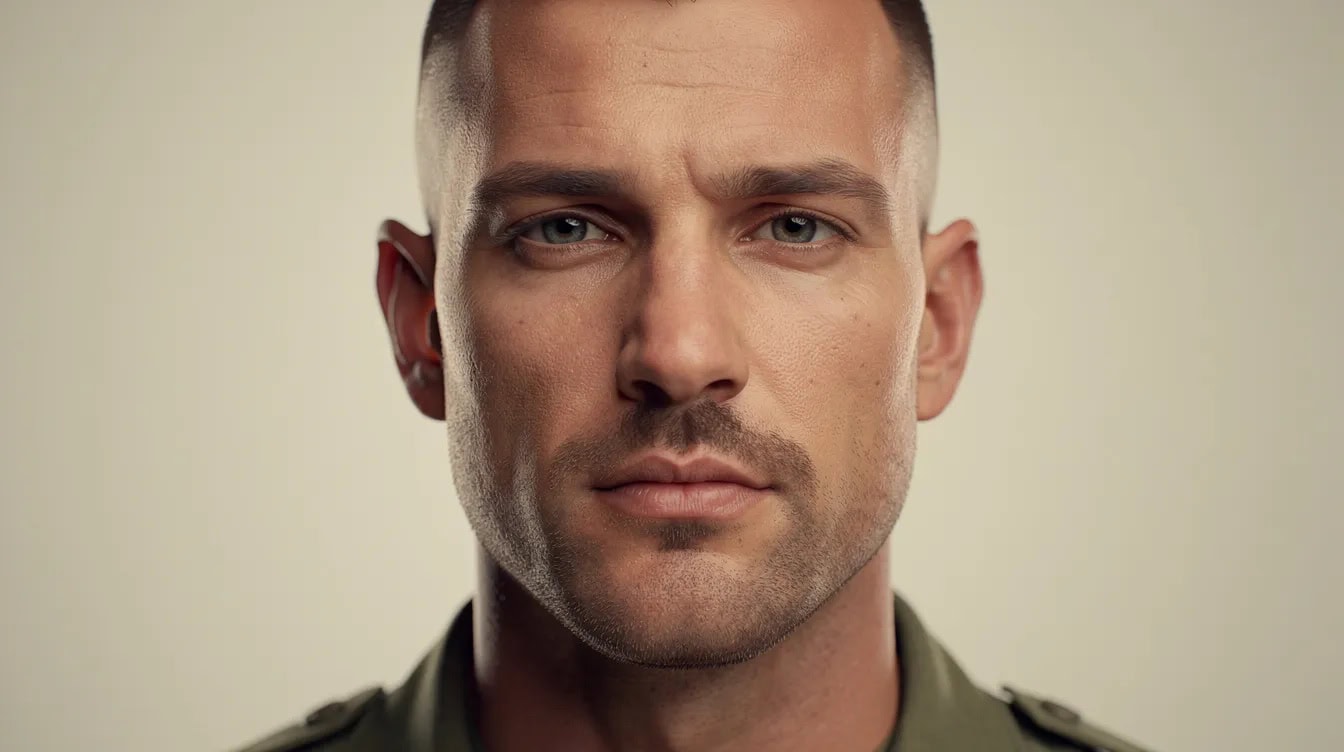
The transition between sides and top is quick. Some barbers blend it over a short band. Others leave a fairly abrupt line. Either way there is far less gradual blending than in most fades, which is what gives it its hard silhouette.
The cut comes from military barbering, where short, practical hair has long been the norm, and it still reads that way. It is a statement of tidiness rather than fashion.
High and tight vs crew cut and buzz cut
All three are short, and they are easy to mix up at the barber.
A buzz cut is one length all over, or close to it. There is no real difference between the sides and the top, so there is no contrast.
A crew cut has short tapered sides, usually a grade 1 to 3, and a slightly longer top of 1 to 3cm, graded longest at the front. The sides are short but not shaved, and they stop lower down the head. It is softer and far more forgiving.
A high and tight takes the sides much shorter and much higher than a crew cut, and leaves a smaller patch on top. Think of it as a crew cut pushed to the extreme.
It also overlaps with the high fade. A high fade starts at a similar height but blends more gradually and usually leaves more length on top to style. A high and tight is shorter on top, sharper at the transition and not really styled at all.
Who a high and tight suits
Head shape matters more than anything else here. With the sides shaved high, every bump, flat spot and scar on the head is on show. If you have never seen the shape of your head, a skin fade with a bit more length on top is a gentler way to find out.
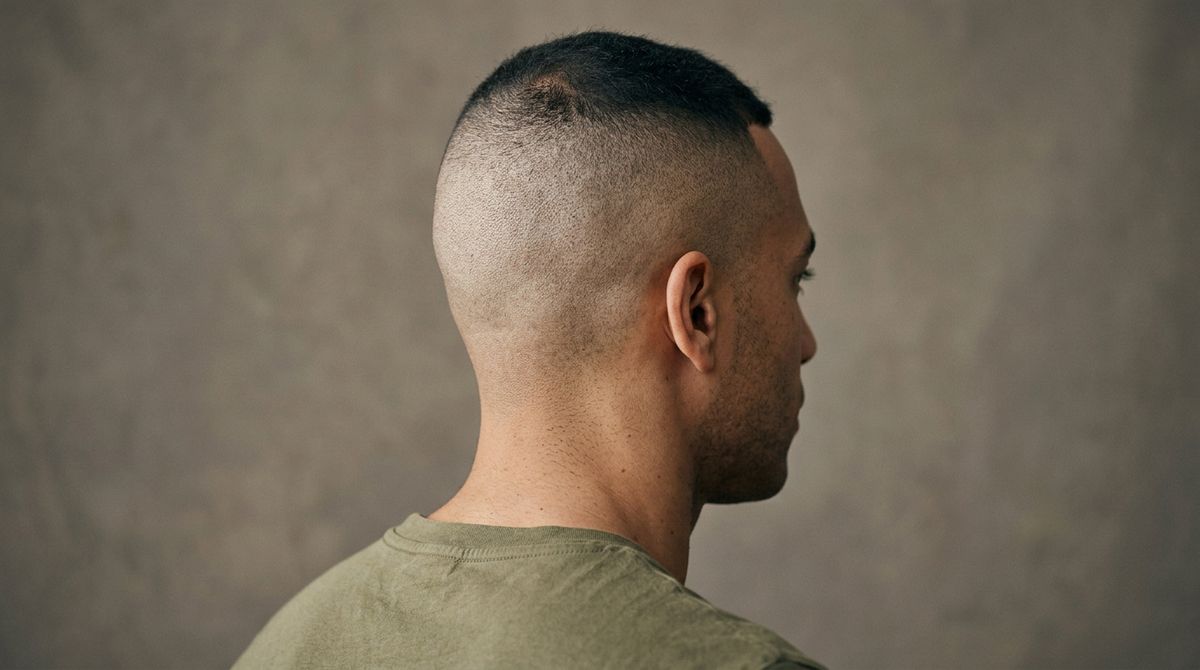
Face shape. Oval and square faces suit it best, because the cut puts the jaw and cheekbones on display. On a round face, keep the top towards 2cm so the cut adds some height. On a long, narrow face, the tight sides can make the head look narrower still.
Hair type barely matters. Straight, wavy, curly and coily hair all work, because there is so little length anywhere. Thick, coarse hair stands up on top on its own. Fine hair works too, but keep the top a little longer so the scalp does not show through.
Receding or thinning hair is a decent fit. With everything short, there is little contrast between a receding hairline and the hair around it. If thinning is more advanced, the haircuts for balding men page goes further.
Lifestyle. It needs almost no styling and dries in seconds, which is the whole appeal. It also needs the barber far more often than most cuts. And it is a strong look, so think about how it will go down at work. If you want any softness at the sides, this is not the cut.
How to ask a UK barber for a high and tight
Most barbers know the name, but be specific about the three numbers.
- The sides. "A grade 0 on the sides and back, taken up high, to where the head turns." Ask for skin if you want it shaved, which the barber will finish with a foil shaver. Ask for a grade 0.5 (about 1.5mm) or a grade 1 (3mm) for a slightly softer version.
- The height. Point to where you want the short sides to stop. A high and tight goes higher than people expect, often to the top of the temple or above.
- The top. "A grade 3 on top" (9mm) or "a grade 4" (12mm). Ask for scissors and about 2cm if you want a little more length and movement.
- The transition. Say whether you want it blended through a short band or left as a sharper line. A blended version is sometimes called a high and tight fade.
- The front. Ask for the hairline to be left natural or lined up square, depending on how sharp you want it.
A photo from the side and the back helps, because the height of the sides is what people get wrong most.
Styling and daily care
There is almost none. Towel dry and brush the top up or forward with your hand. If the top is towards 2cm, a very small amount of matte clay or paste will hold it up. That is all.
The exposed scalp needs a little thought. It burns in the sun, so a hat or sunscreen on a bright day is sensible. And a tidy neck matters more than usual. Keeping the hair below the neckline shaved between cuts stops the outline blurring from behind.
Upkeep and how often to cut
Every one to two weeks. This is the high and tight's one real cost. Skin or a grade 0 shows growth within days, and after a fortnight the sharp contrast has gone and it looks like a grown-out buzz cut.
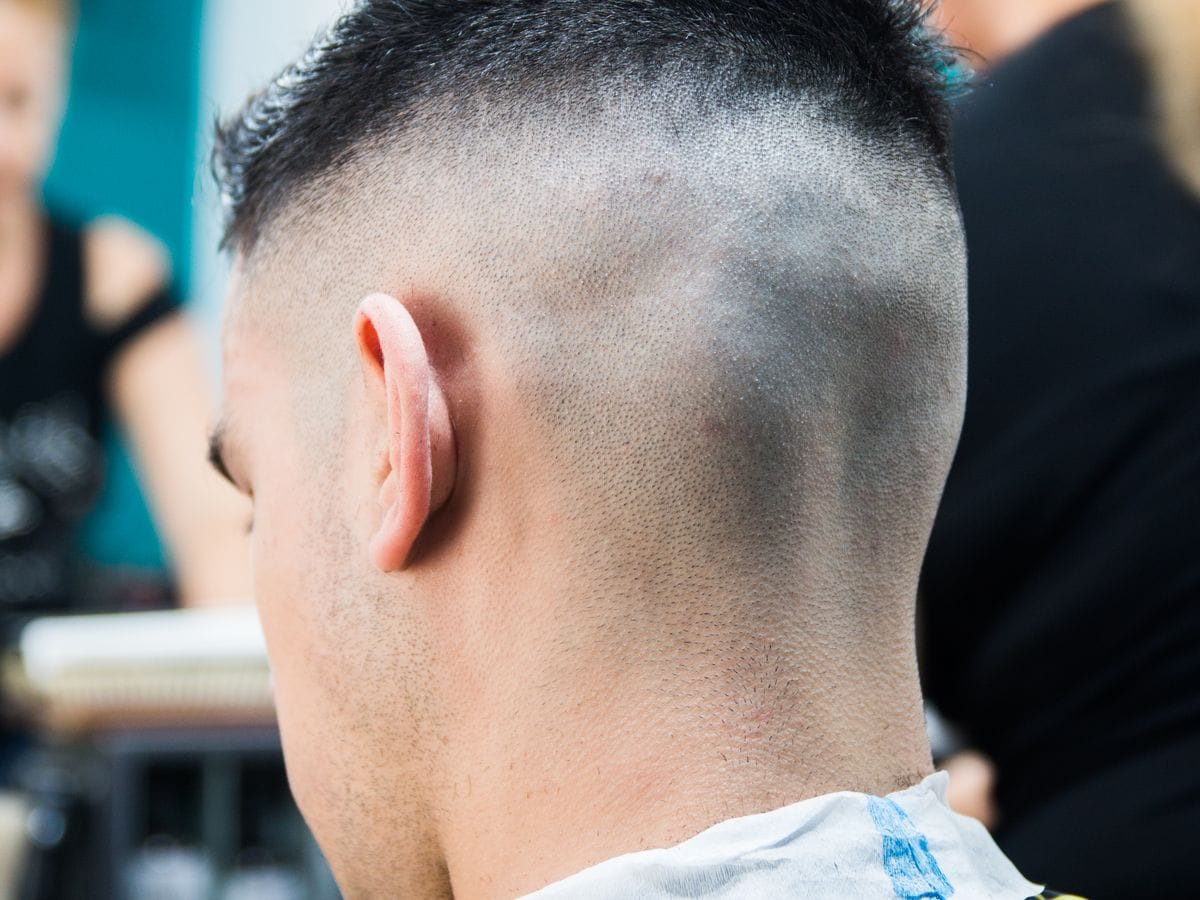
If that is too often, the softer version with a grade 1 on the sides and a grade 4 on top can stretch to two or three weeks. Some people keep the sides shaved at home between cuts. It can be done with care, but the line between sides and top is easy to ruin, so leave that edge to the barber.
Growing out of a high and tight
It grows out awkwardly at first, because the sides start from almost nothing. Keep the neckline and the line around the ears tidy and, after four to six weeks, there is enough on the sides for the barber to blend it into a crew cut or a short back and sides. Ask them to lower the transition gradually over two or three visits.
Variations
- Classic high and tight. Grade 0 sides, grade 3 top. The traditional version.
- High and tight fade. The sides blended through a short fade rather than one grade. Slightly softer.
- Skin high and tight. The sides shaved to skin. Maximum contrast.
- Longer-top high and tight. About 2cm on top, scissor cut. A little softer, and better on fine hair.
- Recon. The top shaved as well, leaving only a small patch towards the crown. The most extreme version.
For the rest of the short, traditional cuts, see the classic haircuts collection.
Perguntas que nos fazem
What is a high and tight haircut?
A very short haircut with the back and sides taken down to skin or a grade 0, high up the head to where it starts to curve over, and a short patch left on top, usually a grade 3 or 4 or up to about 2cm. It has its roots in military barbering.
What grade is a high and tight?
Usually a grade 0 or skin on the sides and back, and a grade 3 (9mm) or grade 4 (12mm) on top. A softer version uses a grade 0.5 or 1 on the sides.
What is the difference between a high and tight and a crew cut?
A crew cut has tapered sides at a grade 1 to 3 that stop lower on the head, and a top of 1 to 3cm. A high and tight takes the sides much shorter, usually to skin or a grade 0, and much higher, with a smaller, shorter patch on top.
How often does a high and tight need cutting?
Every one to two weeks to keep the contrast sharp. A softer version with a grade 1 on the sides can go two to three weeks.
Is a high and tight good for a receding hairline?
It can be. With everything cut very short, there is little contrast between the receding corners and the rest of the hair, so the recession draws less attention than it would with longer sides.
How do I make a high and tight look less harsh?
Leave more on top, a grade 4 or about 2cm, use a grade 1 on the sides instead of skin, and ask for a natural hairline at the front rather than a squared-off line-up.
Other short clipper cuts
Close relatives, and how they differ.
Pesquise o que é importante para si
O mesmo diretório, visto de uma perspetiva diferente.