
Lampshade moustache
narrow at the nose, wider at the mouth
A lampshade moustache is a trapezoid: narrow under the nose, widening as it comes down toward the mouth, with straight sides and a straight bottom edge. The shape is exactly what the name suggests. It is one of several block moustaches in the directory, separated only by where the sides fall.
It also goes by the cop stache, the copstash standard and the pyramid moustache, all describing the same thing.
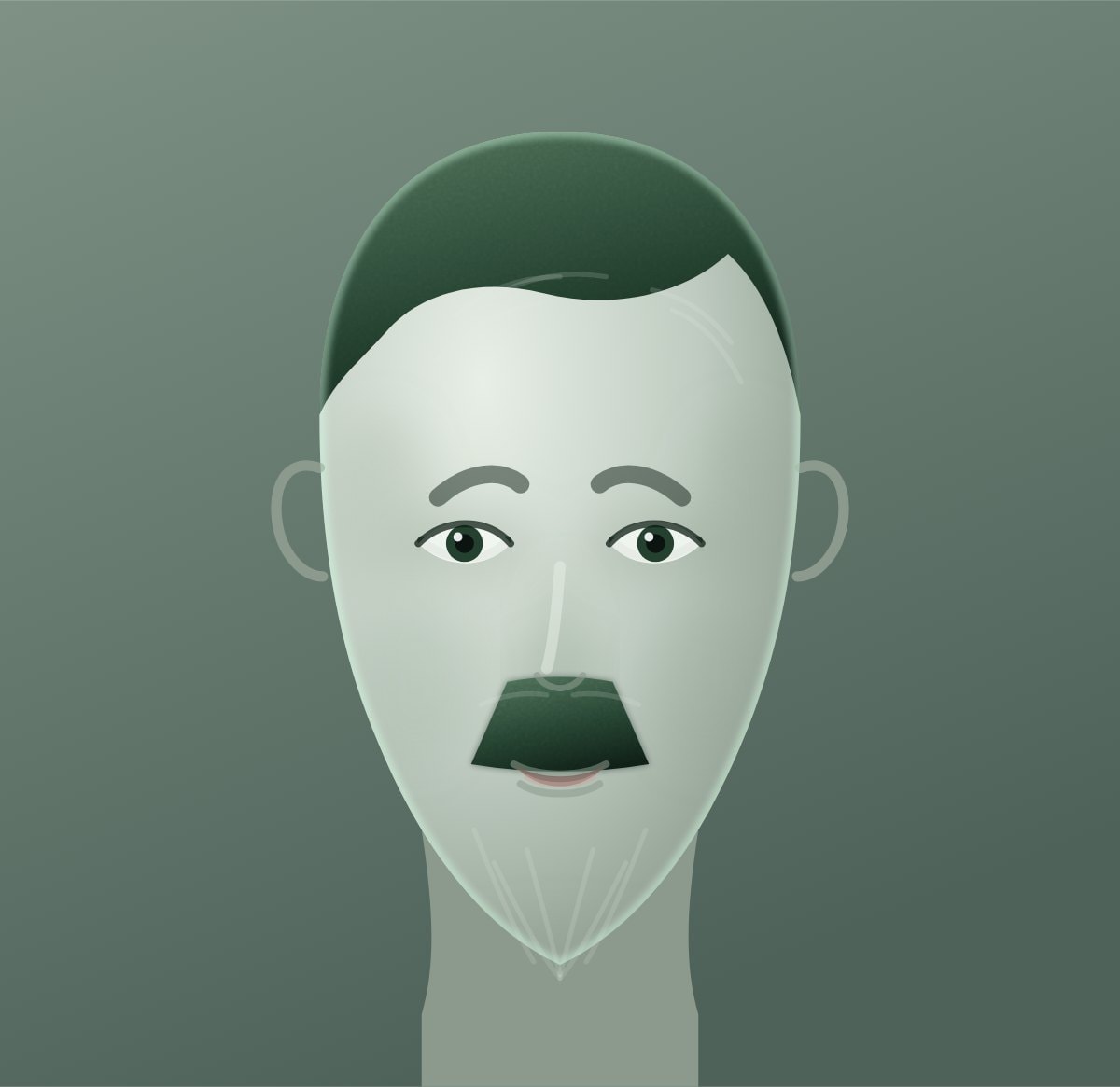
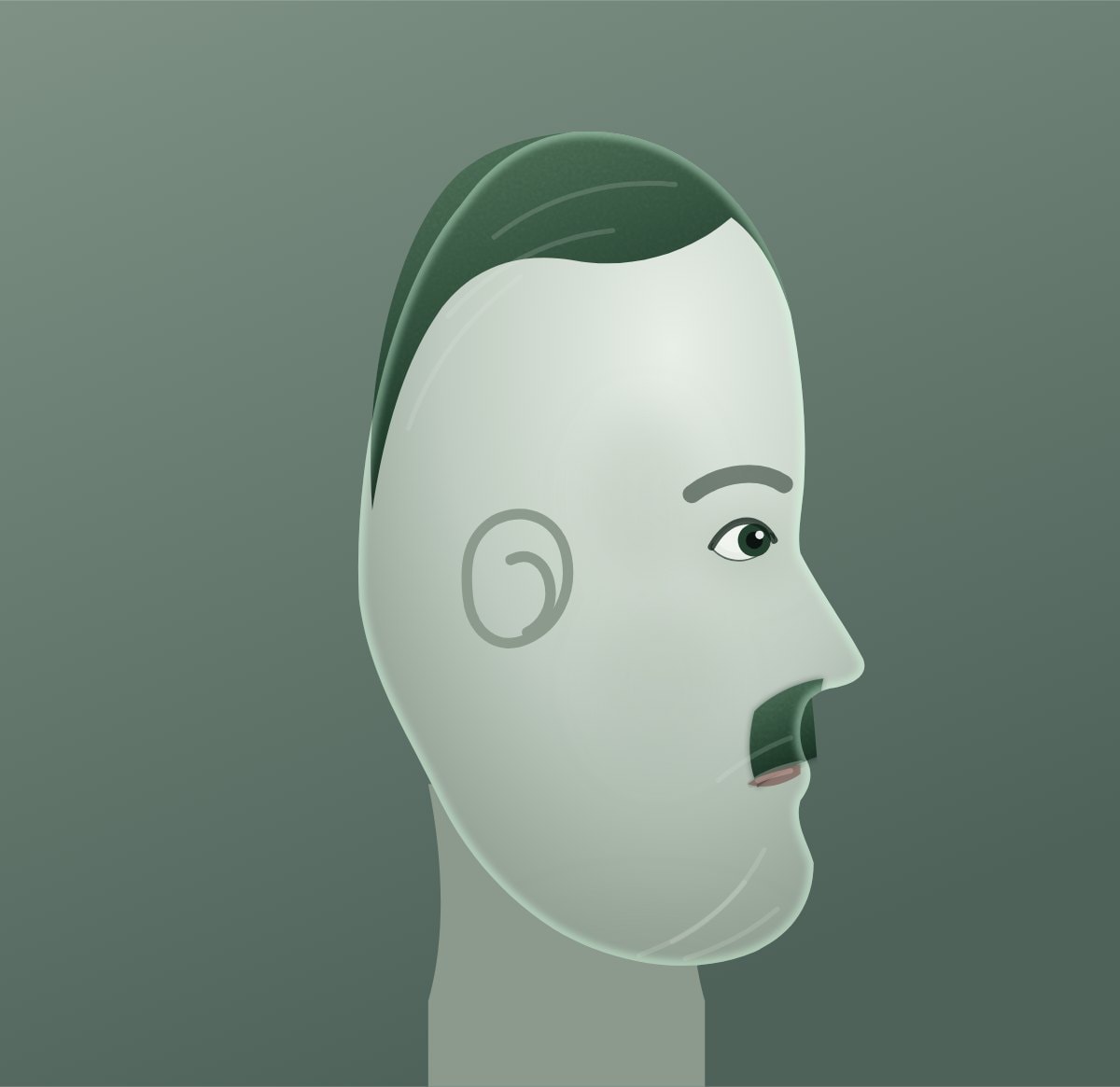
At a glance
- Also known as
- Cop stache, copstash standard, pyramid moustache
- What it is
- Trapezoid shape, wider at the bottom.
- Length
- Short, under an inch
- Growing time
- 3 to 4 weeks
- Trim how often
- Every 3 to 4 days
- Best face shapes
- Any
- Moustache
- Yes
£5 off your first delivery
The trapezoid only holds its shape if the bottom edge is cut clean and the cheeks stay bare.
£5 off your first subscription or VIP order - one per customer, unsubscribe with 1 click
The variations
The same shape, worn differently. What changes is length, density and how much you take off at the edges.
Will it suit your face?
Where a style puts weight, and where it takes it away, is what decides whether it suits you. The table below is the short version.
| Oval | Ideal | No shape to correct, so anything from a pencil to a handlebar sits well. |
|---|---|---|
| Round | Works | Go wider than the mouth rather than heavier, so it does not add bulk. |
| Square | Ideal | A strong jaw carries a heavy moustache without looking top-loaded. |
| Long | Ideal | Horizontal weight across the lip breaks up the length. |
| Heart | Works | Draws the eye down from a broad forehead. |
| Diamond | Works | Adds width across the middle of the face. |
How to cut one, in four steps
- Grow it out3 to 4 weeks. No trimming at all in that time, including the hairs hanging over your lip.
- Set the shapeComb it down and flat, then cut to your outline. Never cut it wet, it dries shorter than you cut it.
- Clear the lipTrim along the top lip line so it does not end up in your mouth. Scissors give more control than a trimmer here.
- Wax and trainWarm the wax between your fingers first, work it in from the centre out, then shape the ends.
Full detail, tools and the common mistakes are in the guide below.
What separates it from a chevron
Both are thick moustaches covering the top lip, and the two get confused constantly.
A chevron follows the natural line of the lip and tapers outward, so its widest point is at the sides. It looks grown.
A lampshade has straight cut sides that angle outward from top to bottom, so its widest point is at the bottom edge. It looks cut.
That difference is what gives the lampshade its slightly formal, deliberate character, and it is why it became the standard moustache for uniformed services in America to the point of acquiring a nickname for it.
Who it suits
Any face shape. It is small enough not to change proportions, so nothing rules it out.
It reads as tidy and unremarkable in almost any setting, which makes it the most workplace-safe moustache on this site alongside the pencil.
It needs moderate density rather than heavy growth. The shape comes from the cut lines, so it works at a density where a walrus or a cowboy would look thin. That makes it a good option if your moustache is decent but not spectacular.
Growing it
Three to four weeks. There is not much hair involved and the corners of the mouth are the last part to fill, which is where the width comes from.
Leave it entirely alone for the first fortnight. Shaping early sets the width too narrow.
Cutting it
Set the length first with a guard, four to eight millimetres, across the whole moustache.
Cut the sides straight and angled. Start narrow just under the nostrils and angle outward as you come down, so the bottom is wider than the top. Straight lines, not curves, and that is the whole style.
Cut the bottom edge straight along the lip line, taking off anything that reaches your mouth.
Use the philtrum as your centre and work outward on both sides so the two halves match.
Trim it dry and combed. Wet moustache hair hangs longer than it really is.
Keeping it
Every week or two for the length and the bottom edge. The sides hold their shape reasonably well once cut.
Comb it down daily so it lies flat rather than spreading.
No wax needed. If it will not lie flat, a very small amount of balm.
Wash it. Any moustache is the part that meets everything you eat and drink, and it discolours first.
Where it goes wrong
Cutting the sides curved. That makes it a chevron.
Making it too narrow at the bottom. It becomes a toothbrush, which is a very different thing.
Letting it grow over the lip. The bottom edge should be a clean line above the mouth.
Uneven sides. The straight cuts make asymmetry more obvious than on a grown-in shape.
Questions we get asked
What is a lampshade moustache?
A trapezoid moustache, narrow under the nose and wider at the bottom, with straight cut sides. Also called a cop stache or pyramid moustache.
What is the difference between a lampshade and a chevron?
Shape and edges. A chevron tapers outward naturally and looks grown. A lampshade has straight cut sides angling outward and looks deliberately shaped.
Why is it called a cop stache?
It became the default moustache in American policing, and the nickname stuck.
How long does it take to grow?
Three to four weeks.
Does it need wax?
No. Comb it down daily and use a little balm only if it will not lie flat.
Can I grow one with a moderate moustache?
Yes, that is one of its strengths. The shape comes from the cut lines rather than from bulk.
Other moustaches
Same shape, different length or moustache.
If this one is too much work
Same idea, less of your morning.
Browse by what matters to you
The same directory, cut a different way.