
Painter's brush moustache
a straight block stopping at the mouth corners
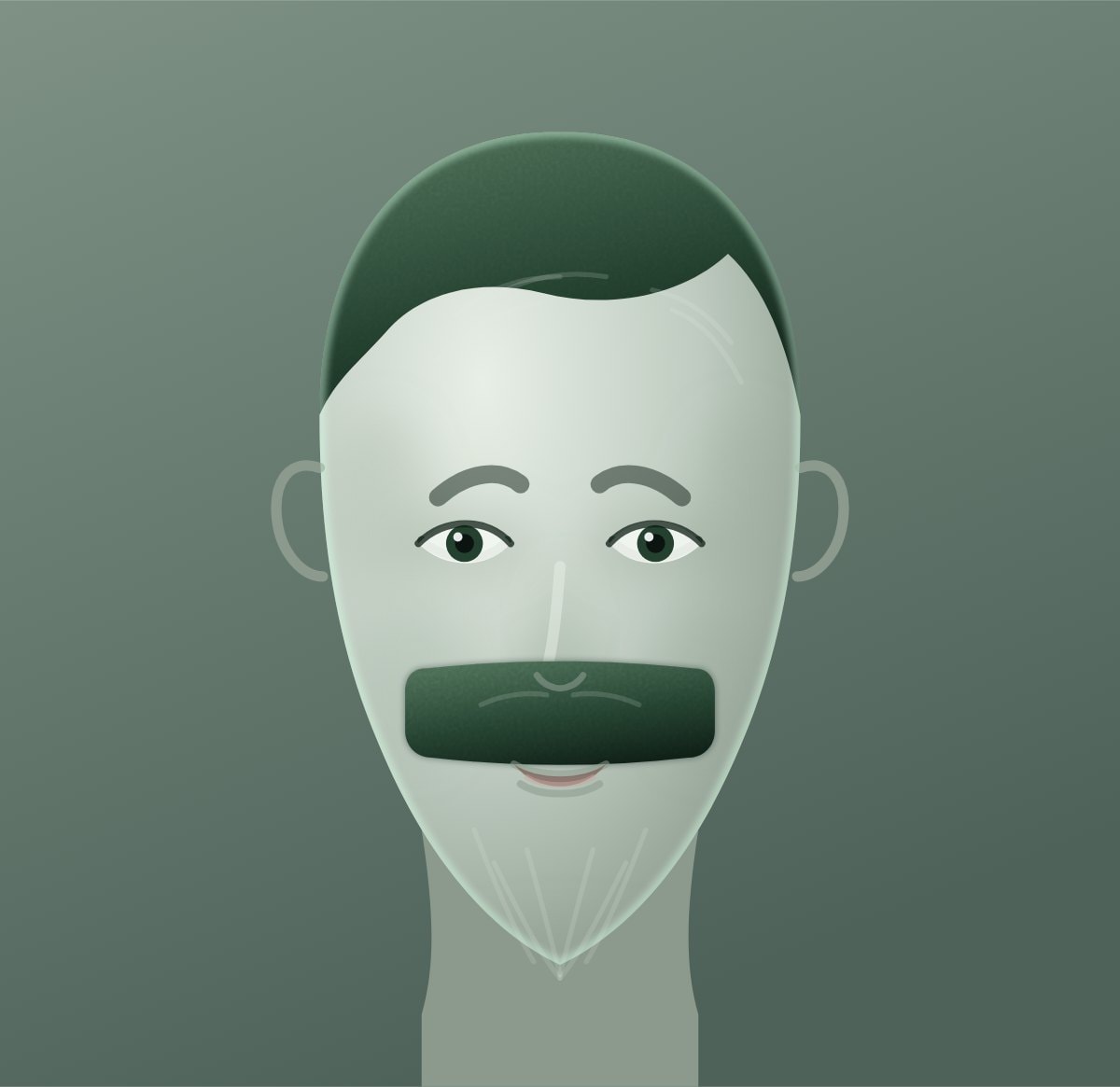
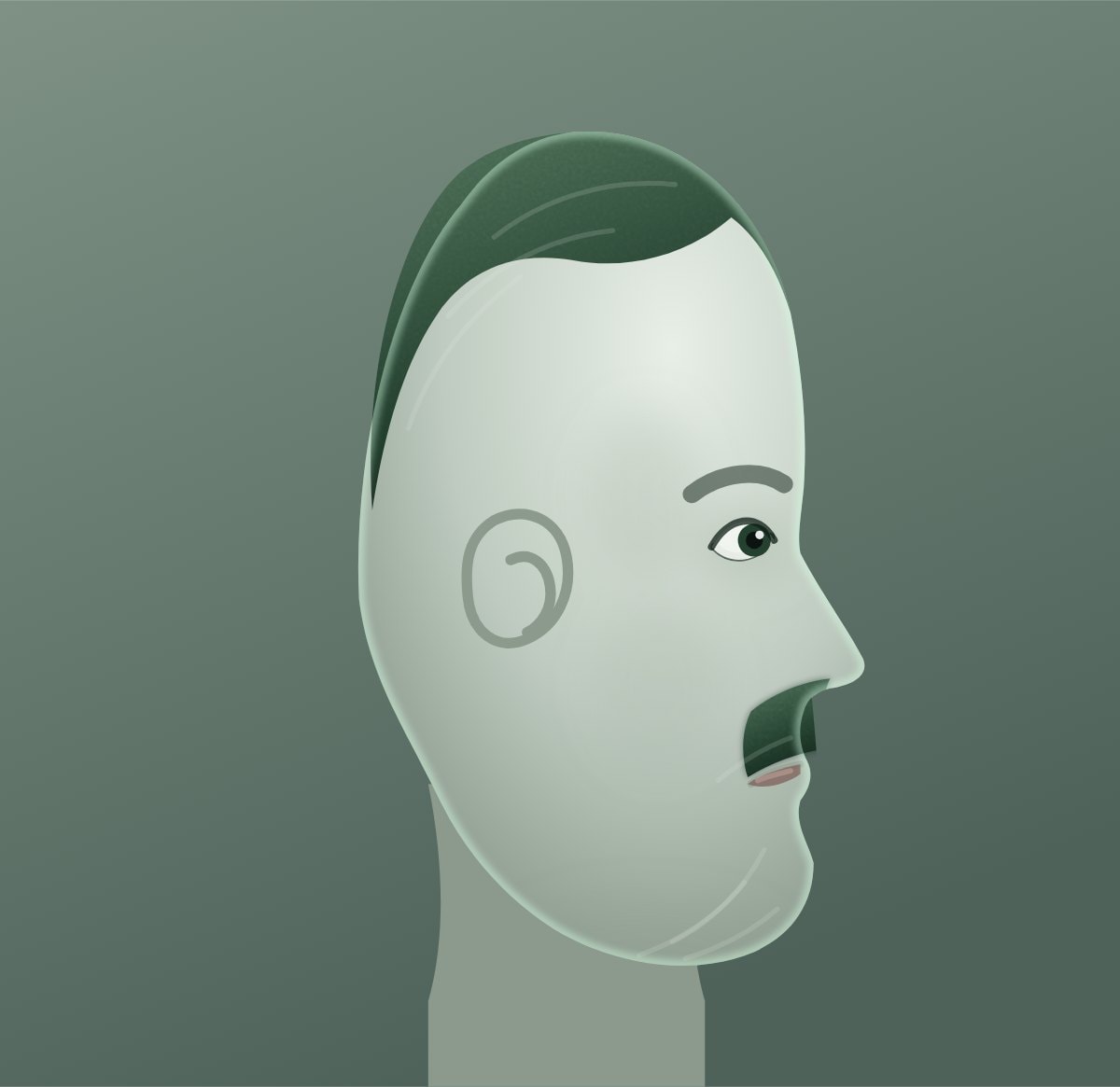
A painter's brush is a thick moustache with a straight bottom edge and squared-off sides, running the full width of the mouth and stopping at the corners. It looks like the head of a flat brush, which is where the name comes from. Stopping at the corners is the detail that separates it from the walrus and the cowboy, both in the directory.
At a glance
- Also known as
- Nothing else in common use
- What it is
- A straight-edged block stopping at the mouth corners.
- Length
- Short, under an inch
- Growing time
- 3 to 4 weeks
- Trim how often
- Every 3 to 4 days
- Best face shapes
- Oval, Round
- Moustache
- Yes
£5 off your first delivery
A flat bottom edge is only flat if it is cut with something sharp enough to leave a line.
£5 off your first subscription or VIP order - one per customer, unsubscribe with 1 click
The variations
The one shape, and how it is usually worn.
Will it suit your face?
Where a style puts weight, and where it takes it away, is what decides whether it suits you. The table below is the short version.
| Oval | Ideal | A controlled shape on a face with nothing to correct. |
|---|---|---|
| Round | Works | The flat edge gives a horizontal without adding much width. |
| Diamond | Ideal | Adds width across the middle without overwhelming finer features. |
| Heart | Ideal | Squares off the lip line under a broad forehead. |
| Square | Works | Enough weight to hold its own against a strong jaw. |
| Long | Avoid | Stops at the mouth corners, so it adds less width than a long face wants. |
How to cut one, in four steps
- Grow it outThree to four weeks with no trimming, including the hairs over your lip. The corners fill in last.
- Cut the bottom flatThis is what separates it from a chevron. Comb it down, cut a straight line rather than following the curve of your lip.
- Stop at the cornersTake the sides back so they end level with the corners of your mouth, not past them.
- Round the cornersTake the hard corners off with scissors. A block with sharp corners reads as a toothbrush.
Full detail, tools and the common mistakes are in the guide below.
What defines it
A straight bottom edge, cut level rather than following the curve of the lip. This is the main thing, and it is what gives the style its blunt, tidy character.
Squared sides that stop at the corners of the mouth. Not tapered, not extending past.
Even thickness throughout. No thinning at the edges.
Against a chevron, which is the closest relative: a chevron follows the lip line and angles outward, so it reads as grown. A painter's brush is cut into a rectangle and reads as shaped.
Against a toothbrush: same straight edges, but a toothbrush is much narrower, stopping at the nostrils rather than the mouth corners. The extra width is what keeps a painter's brush free of the association.
Who it suits
Oval and round faces. The horizontal line across the middle of the face is useful on a round face because it draws the eye across rather than emphasising fullness, and an oval face carries it without adjustment.
It needs decent density, since there is no shaping trick to disguise thin patches. The straight edges expose gaps rather than hiding them. Moderate growth is fine; sparse growth is not.
Growing it
Three to four weeks. The corners of the mouth fill in last and that is where the width comes from, so judge it at four weeks rather than two.
Leave it alone entirely while it grows in. Shaping early gives you something narrower than you wanted.
Cutting it
Set the length with a guard, five to eight millimetres, evenly across.
Cut the bottom edge straight, level with the ground rather than following the curve of your lip. This is the cut that makes the style and the one people get wrong by instinct.
Square the sides at the corners of the mouth. Vertical cuts, both sides matching, using the philtrum as your centre reference.
Do not taper anything. The block shape is the point.
Trim dry and combed down.
Keeping it
Every week or so. The straight edges grow out of true faster than a natural shape does, because any stray hair breaks the line.
Comb it downward daily.
No wax. A little balm if it will not sit flat.
Wash it a couple of times a week.
Where it goes wrong
Following the lip line. Instinctive, and it turns the style into a chevron.
Cutting it too narrow. Stop at the corners of the mouth, not inside them, or it drifts toward a toothbrush.
Uneven sides. Straight cuts make asymmetry obvious.
Growing it on sparse hair. The blunt edges expose thin patches.
Questions we get asked
What is a painter's brush moustache?
A thick moustache with a straight bottom edge and squared sides, running the full width of the mouth and stopping at the corners.
What is the difference between a painter's brush and a chevron?
Edges. A chevron follows the lip and tapers outward. A painter's brush is cut into a straight-edged block.
What is the difference between a painter's brush and a toothbrush?
Width. A toothbrush stops at the nostrils. A painter's brush runs the full width of the mouth, which is why it does not carry the same association.
How long does it take to grow?
Three to four weeks, and judge it at four rather than two since the corners fill last.
Does it suit a round face?
Yes, well. The horizontal line draws the eye across the face rather than emphasising its fullness.
How often does it need trimming?
Weekly. Straight edges lose their line faster than a natural shape does.
Other moustaches
Same shape, different length or moustache.
If this one is too much work
Same idea, less of your morning.
Browse by what matters to you
The same directory, cut a different way.