
Van Dyke
How to Grow, Shape and Keep the Gap
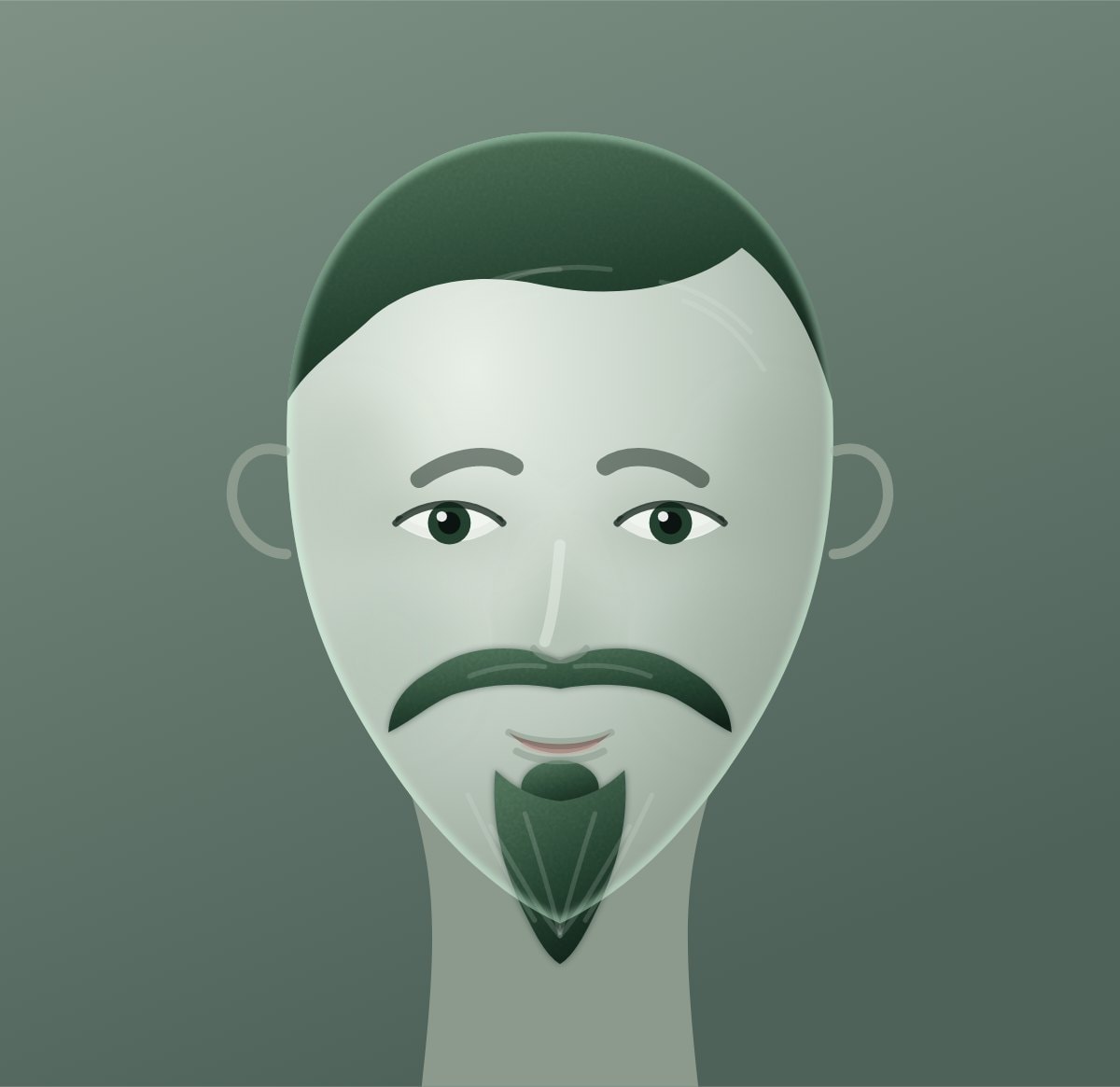
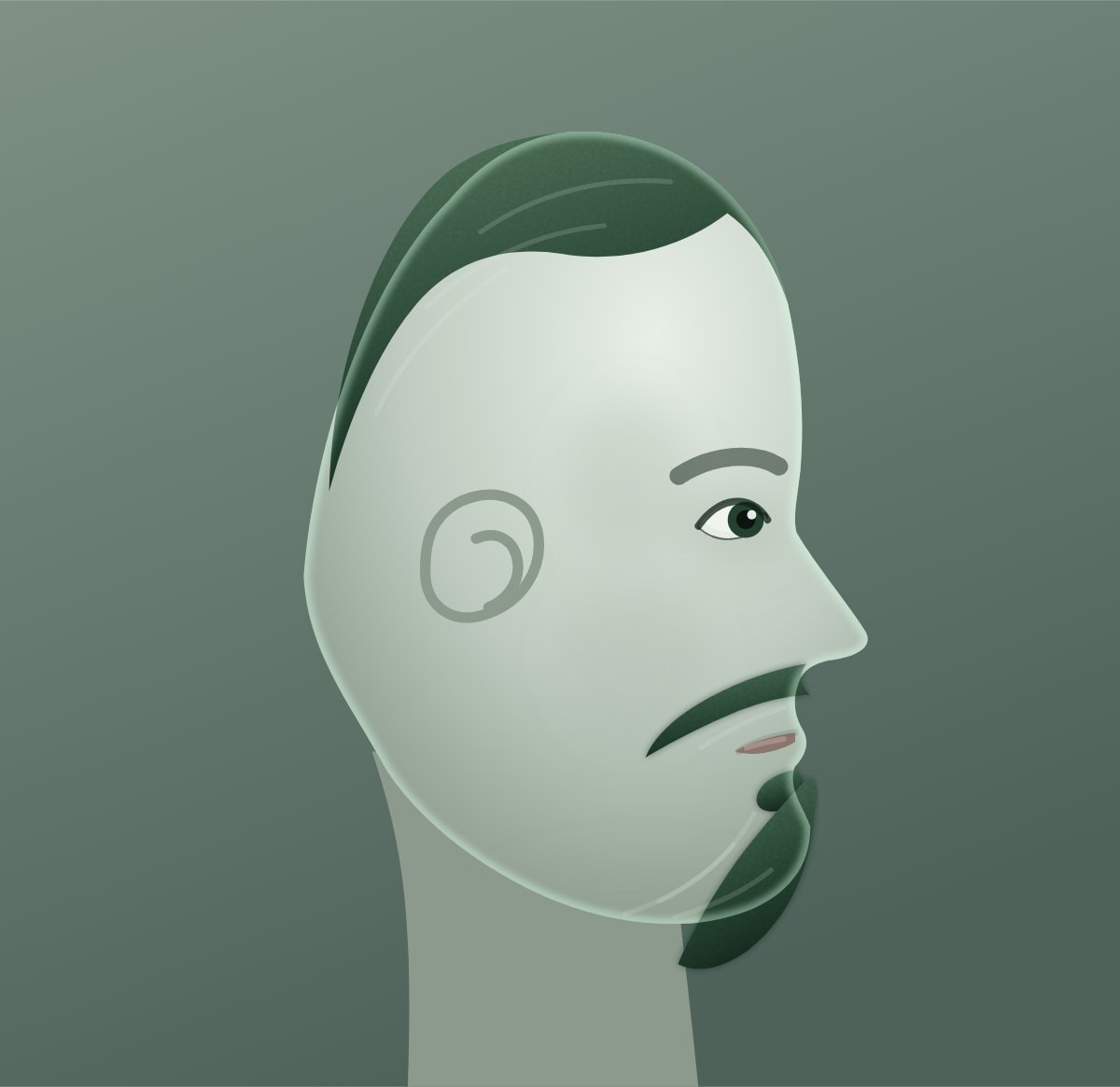
A Van Dyke beard is a pointed chin beard with a moustache that stays deliberately separate from it. The bare skin either side of the mouth is not an accident or a stage on the way to something fuller. It is the entire style.
At a glance
- Also known as
- Nothing else in common use
- What it is
- Pointed chin beard with a disconnected moustache.
- Length
- Short, under an inch
- Growing time
- 3 to 4 weeks
- Trim how often
- Every 1 to 2 days
- Best face shapes
- Round, Oval, Square
- Moustache
- Yes
£5 off your first delivery
A Van Dyke depends on the gap between the moustache and the chin staying open. Closing it takes a sharp edge, not a determined one.
£5 off your first subscription or VIP order - one per customer, unsubscribe with 1 click
The variations
The same shape, worn differently. What changes is length, density and how much you take off at the edges.
Will it suit your face?
Where a style puts weight, and where it takes it away, is what decides whether it suits you. The table below is the short version.
| Oval | Works | Nothing to correct, so it comes down to preference. |
|---|---|---|
| Round | Ideal | Length at the chin pulls the face longer and the bare cheeks stop it widening. |
| Square | Works | Softens a heavy jaw by drawing the eye to a narrower point at the chin. |
| Long | Avoid | Adds length to a face that is already long. Go wider at the cheeks instead. |
| Heart | Ideal | Weight at the chin balances a broad forehead and a narrow jaw. |
| Diamond | Works | Fills out a pointed chin, though keep it short or it exaggerates the point. |
How to cut one, in four steps
- Grow it out3 to 4 weeks. You cannot see where your growth is dense until it is in, and shaping early is why most first attempts fail.
- Set the lengthTrim the chin and moustache with a guarded trimmer on dry hair, so it sits at its true length.
- Shave the cheeksDownward, with the grain, short passes and light pressure. Pressing harder gives razor burn, not a closer shave.
- Cut the outlineLast, with a precision trimmer. Work from the outside inward on each side, checking both sides between passes.
Full detail, tools and the common mistakes are in the guide below.
What makes a Van Dyke a Van Dyke
Three things have to be true. There is hair on the chin, usually worked to a point. There is a moustache. And there is clear skin between the two, on both sides.
Close those gaps and you have a circle beard. Lose the moustache and you have a goatee. Extend the chin section along the jaw and you are into anchor beard territory. The Van Dyke shape is defined by what is missing as much as by what is there.
The cheeks are shaved clean, and so are the sideburns. Nothing connects the Van Dyke facial hair to your hairline, which is part of why it reads as constructed rather than grown.
Where the name comes from
Anthony van Dyck was a Flemish painter working in the seventeenth century, and the pointed beard with the separate moustache appears throughout his portraits of the court of Charles I. The style took his name, though the spelling drifted along the way. You will see Van Dyke, Vandyke and van Dyck all used for the same beard style.
It has come back repeatedly since, usually when a more constructed look is in fashion. It reads as deliberate in a way that a full beard does not, which is either the appeal or the problem depending on your taste.
Van Dyke beard styles worth knowing
Classic Van Dyke. Moustache above, pointed chin below, two clean gaps. The reference version and the one to learn on.
Extended Van Dyke. The chin section grown longer and waxed to a finer point. More striking, and it needs the extra length to hang right, so add a month.
Van Dyke with a soul patch. A tuft left directly under the lower lip, joined to the chin beard or floating separately. This is how many people wear it without realising the soul patch is a distinct element.
Modern Van Dyke. A softer, rounder chin and a broader Van Dyke moustache, with the gaps kept narrower. Easier to live with and less theatrical.
Van Dyke over stubble. The full Van Dyke shape with a few days of growth on the cheeks instead of bare skin. It breaks the classic rule, but it softens the contrast and makes the style far more forgiving day to day.
Who it suits
A Van Dyke beard lengthens the face and narrows it. The point at the chin pulls the eye down, and the bare cheeks take width out of the middle.
That makes it good on a round face, where there is width to lose, and on an oval one, where nothing needs correcting. It is the wrong instinct on a long or narrow face, where you are adding length to something that already has plenty.
A weak or receding chin is worth thinking about. The point can help by suggesting more chin than there is, but only if you keep it short. Grown long it hangs rather than projects, which does the opposite.
The real requirement is a moustache and a chin that both come through reasonably dense. This style has nowhere to hide a patch, because there is so little hair to begin with.
What you need
A Van Dyke beard requires more precision than length, so the kit reflects that.
A beard trimmer with guards sets the length on the chin and the Van Dyke moustache. A detail trimmer or a bare blade cuts the gaps and the point. A razor and shaving cream take the cheeks and sideburns down properly, because a trimmer alone leaves a shadow and this beard style depends on real contrast.
A small comb helps you pull the moustache down flat before cutting it, and a hand mirror lets you check the gaps in profile, which is where uneven work shows up first.
Growing it
Three to four weeks before you shape anything.
Grow the moustache and chin together and keep the cheeks and neck shaved throughout, so you are always looking at a tidy face with two growing areas rather than a general fuzz.
Do not cut the gaps early. They are the last thing you set, not the first, because you need to see where your moustache actually reaches before you decide where it stops.
A Van Dyke beard takes less growing time than most, which is one of its attractions. What it takes instead is attention afterwards.
Shaping it
Work with the hair dry and combed down.
Set the moustache. Trim the Van Dyke moustache to length with a beard trimmer, keeping it clear of the lip line. On this beard style the moustache is usually narrower than the mouth, which exaggerates the separation and makes the gaps read more strongly.
Set the chin. Take the chin beard to length, then decide your point. A tighter point is more dramatic and less forgiving. A softer one is easier to keep even.
Shave the cheeks and sideburns. All of it, with a razor and shaving cream rather than a trimmer. Any stubble here softens the outline, and a Van Dyke beard depends on hard contrast between hair and skin.
Cut the gaps last. This is the part that makes it. Work from the outside inward on each side, taking small amounts, and check both sides between passes. The two gaps should mirror each other, and the eye is very good at spotting when they do not.
Check in profile. A Van Dyke that looks balanced straight on can be visibly lopsided from the side, because the gap is a three-dimensional shape rather than a line.
Keeping it
Every one to two days, and it is the gaps that drive that.
Facial hair fills a gap faster than it does anything else, because you are watching a small bare area rather than a general length. Two days of growth in the corners of the mouth and the Van Dyke shape starts collapsing toward a circle beard.
The cheeks need shaving on the same schedule. The whole style is contrast between hair and skin, and stubble on the cheek kills it.
Once a week, take longer over it. Re-cut the point, check the gaps against each other, and make sure the Van Dyke moustache has not crept down over the lip.
If you want a version that survives a busy week, the Van Dyke over stubble is the one. Letting the cheeks carry a day or two of growth costs you some of the sharpness but buys back most of the maintenance.
What goes wrong
The gaps close. The defining fault. If you only do one thing on schedule, make it this.
The point gets blunt. Repeated small trims round it off without you noticing. Re-establish it weekly rather than nibbling.
The gaps are different sizes. Cut them in the same session, alternating sides, and check in profile as well as straight on.
The moustache overgrows the chin. They need to stay in proportion, and the moustache grows faster.
The cheeks get left. A Van Dyke with stubbled cheeks reads as a face that needs a shave rather than as a beard style.
Van Dyke, goatee, circle beard and anchor
These four get confused constantly, and the differences are simple.
A goatee is chin hair, with or without a moustache, joined or not. It is the loosest term of the four and the others are all arguably versions of it.
A circle beard joins the moustache to a rounded chin beard, closing the ring. It is the easiest of the four to maintain, because there is no gap to defend.
A Van Dyke keeps the moustache separate and points the chin. Hardest to keep, sharpest to look at.
An anchor beard takes the pointed chin and adds a line along the jaw, so it covers more of the face. It is often what people mean when they describe a Van Dyke facial hair look as "more aggressive".
Questions we get asked
How long does it take to grow a Van Dyke beard?
Three to four weeks before shaping. It is quicker than most beard styles because it needs hair in only two small areas.
What is the difference between a Van Dyke and a goatee?
A Van Dyke always has a separate moustache and a pointed chin. A goatee may have no moustache at all, or a joined one, and the chin is usually rounded.
Does a Van Dyke beard suit a long face?
Not especially. It adds length and takes width from the cheeks, which is the wrong direction on a long face. Round and oval faces get more from it.
Why do the gaps keep closing?
Because hair fills a small bare area quickly and the change is gradual. A Van Dyke beard requires attention every day or two, and the corners of the mouth are the first thing to check.
Can you grow a Van Dyke with patchy facial hair?
Only if the patchiness is on your cheeks, which get shaved anyway. A patchy moustache or chin shows badly here, because there is so little hair for the eye to average out.
Is a Van Dyke beard high maintenance?
Yes, among the highest in this directory. The growing is quick, but holding two gaps and a point means a blade in your hand most mornings.
What is the difference between a Van Dyke and an anchor beard?
The jaw. An anchor beard takes the pointed chin of a Van Dyke and adds a line running along the jawline on both sides. A Van Dyke beard leaves the jaw completely bare.
Can you wear a Van Dyke with a full beard?
No, they are opposites. A full beard connects everything; the Van Dyke beard style is defined by disconnection. If you are growing out from a Van Dyke toward a full beard, the circle beard is the natural stop in between.
Other chin beards
Same shape, different length or moustache.
If this one is too much work
Same idea, less of your morning.
Browse by what matters to you
The same directory, cut a different way.