
Neckbeard
Where Your Beard Neckline Should Actually Sit
Most people searching this are not trying to grow one. They are trying to get rid of one, and what they actually need is the beard neckline: where it sits, how to find it, and how to cut it without leaving the skin raw.
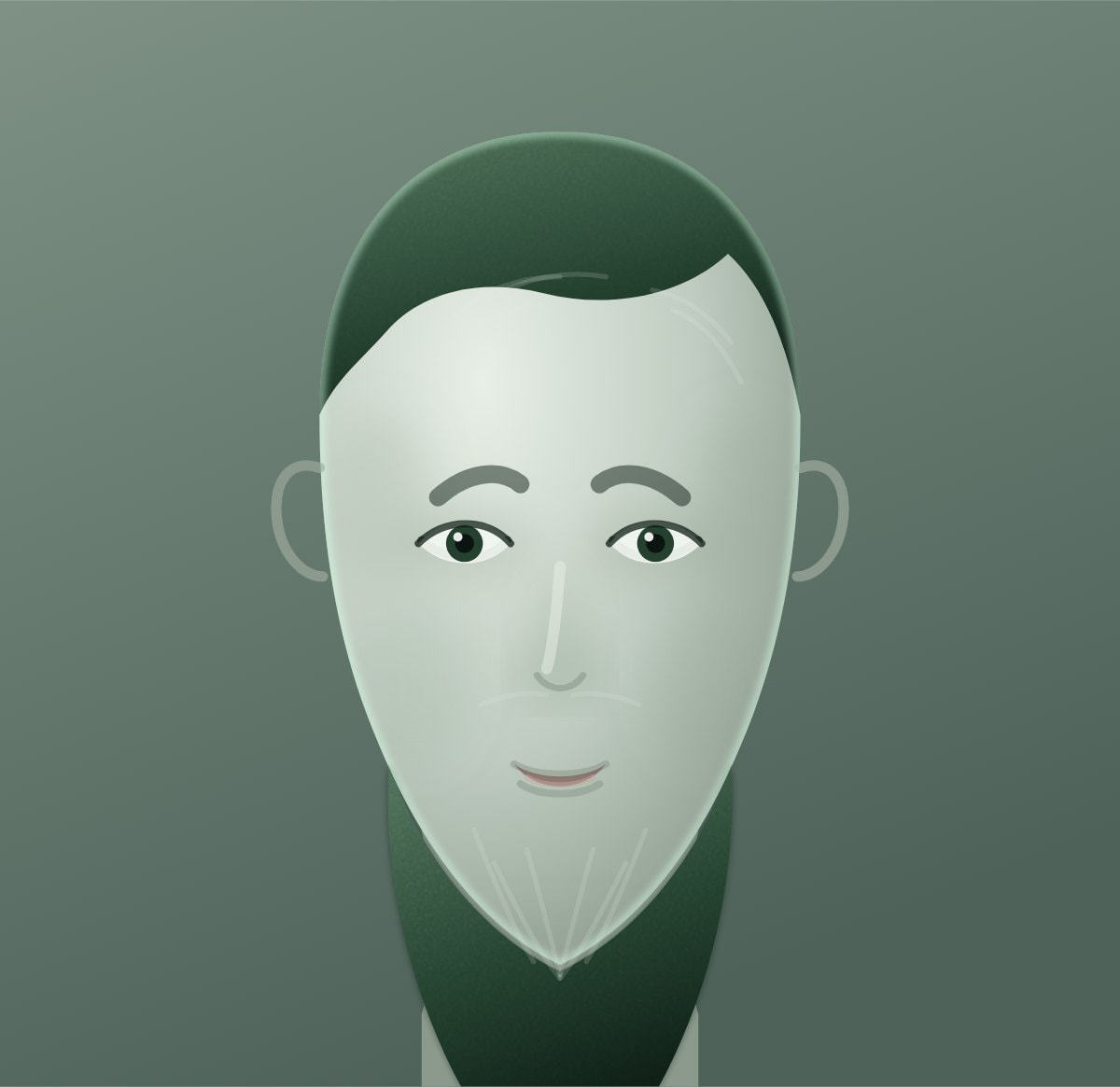

At a glance
- Also known as
- Nothing else in common use
- What it is
- Growth on the neck with the face shaved. Documented, not recommended.
- Length
- Short, under an inch
- Growing time
- 3 to 4 weeks
- Trim how often
- Every week or two
- Best face shapes
- Any
- Moustache
- No
£5 off your first delivery
If you are growing one deliberately, the face above it still needs shaving, and that is where a sharp blade earns its keep.
£5 off your first subscription or VIP order - one per customer, unsubscribe with 1 click
The variations
The one shape, and how it is usually worn.
Will it suit your face?
Where a style puts weight, and where it takes it away, is what decides whether it suits you. The table below is the short version.
| Oval | Works | Works, though it is doing less than it would on a softer face. |
|---|---|---|
| Round | Ideal | A defined line along the jaw gives the face an edge it does not have. |
| Square | Avoid | Traces a jaw that is already sharp and reads as heavy. |
| Long | Works | Keep it low and wide rather than deep. |
| Heart | Works | Adds definition to a narrow jaw. |
| Diamond | Works | Widens the jaw, which is usually what a diamond face wants. |
How to cut one, in four steps
- Grow it out3 to 4 weeks. You need enough along the jaw to see the line before you cut it.
- Mark the lineFollow the jawbone with your fingers first. The line sits on the bone, not below it.
- Cut the top edgePrecision trimmer, working from the ear forward on both sides, a little at a time.
- Shave everything elseCheeks, neck and, on a chin curtain, the moustache. The style only reads if the bare skin is properly bare.
Full detail, tools and the common mistakes are in the guide below.
What a neck beard is, briefly
Hair on the throat with the face shaved, or a beard whose lower boundary has been left to run down the neck. It is not a style anyone chooses so much as one that happens when the beard neckline is never set.
That is the whole of it. The rest of this page is about the line, because that is the useful part.
Where the beard neckline goes
Two fingers above your Adam's apple. Put two fingers flat on your throat with the bottom one resting on the Adam's apple, and the top of your upper finger marks the height.
From that centre point, the line curves upward on both sides toward the back corner of the jaw, meeting roughly where your earlobe would drop to. It is a curve, not a straight band, and it sits under the jaw rather than on it.
The single most common error is cutting along the jawbone itself. That removes the shadow beneath the jaw that makes a jaw look sharp, and it leaves the beard sitting on the face like something stuck on. The perfect beard neckline is always lower than people expect.
Finding your own line
Tilt your head back and feel for where the underside of your jaw meets your throat. That soft corner is your reference.
Then check it in profile, because a beard neckline that looks right straight on is often wrong from the side. Use a hand mirror or a phone camera and look at yourself from a three-quarter angle, which is how most people actually see you.
Mark it before you cut. A washable pencil or even the edge of a comb held against the skin gives you a line to follow, and it is far easier to commit to a line you can see than one you are imagining.
Prep, especially on sensitive skin
Most neck problems start before the blade touches you.
Warm water first, for a minute at least. Facial hair absorbs water and softens as it does, and soft hair cuts with a fraction of the pressure dry hair needs. A hot flannel held against the throat does the job if you are not shaving straight after a shower.
A pre shave oil helps if your skin reacts badly. It sits between the blade and the skin and lets the razor glide rather than drag, which is what most people are actually feeling when they blame the blade.
Then shaving cream, worked in properly rather than smeared on. The job of lather is to hold water against the facial hair, not to look impressive in the mirror. Give it thirty seconds.
Cutting it
Work on clean, dry skin with the beard combed downward.
Start at the centre. Set the lowest point first, two fingers above the Adam's apple, and cut a short horizontal section there. That anchors everything else.
Work outward and upward. Take the line from the centre toward each ear in small movements, following the curve rather than cutting a straight line to the jaw corner.
Check both sides against each other. Chin up, mirror straight on, then in profile. Necklines drift high on the dominant-hand side.
Take the rest off. Below your line, everything goes. A trimmer with no guard, then a razor and shaving cream for a clean finish if you want the edge to be crisp.
Soften the top edge. A hard line has an artificial appearance up close. Going over the top few millimetres with a longer guard gives you a softer neckline that still reads as deliberate, which is closer to a natural line than a razor edge is.
Avoiding razor burn and ingrown hairs
The neck is the worst place on the face for both. The skin is thinner, it moves while you shave it, and neck hair often grows in swirls rather than one direction.
Shave with the grain, not against it, even though against gives a closer result. On a neck, against the grain is what produces ingrown hairs.
Use shaving cream rather than dry shaving, take short strokes, and rinse the blade often. Let the weight of the razor do the work. Pressure is what causes razor burn, and a blunt blade makes you press harder without noticing.
If you already get ingrown hairs, a gentle exfoliating scrub two or three times a week helps by keeping the follicle clear. Do not scrub immediately after shaving.
Sharp blades matter more here than anywhere else on the face. A blade that is fine on your cheeks will drag on your neck.
Adjusting it for different beard styles
The principle holds across beard styles, but the execution changes.
On a short boxed beard or anything closely trimmed, the beard neckline is highly visible and wants sharp lines, with the top edge softened only slightly.
On a long beard, the beard neckline matters less visually because the hair hangs over it, but a long beard still needs the line cut or it reads as unkempt from the side.
On stubble, you can be softer. A hard neckline under a few days of growth looks over-engineered.
If you have a double chin or a fuller neck, set the beard neckline slightly lower rather than higher. A high line emphasises the fullness by drawing a hard edge across it.
If you have sensitive skin, favour a softer neckline over sharp lines. Every millimetre of crisp edge is another pass with the blade, and on a reactive neck that is the trade you are actually making.
What goes wrong
Cutting along the jaw. The most common and the most damaging to how your jaw reads. It takes two to three weeks to grow back.
Going too high after weight loss or gain. The reference point moves. Re-check it rather than working from memory.
Uneven sides. Always check in profile as well as straight on.
Shaving against the grain. Closer, and the main cause of ingrown hairs on the throat.
Leaving it too long between cuts. Every week or two keeps the line where you put it.
Questions we get asked
Where exactly should a beard neckline be?
Two fingers above the Adam's apple at the centre, curving up on both sides toward the back corner of the jaw. Under the jaw, never along it.
How do I fix a beard neckline that has been cut too high?
Stop cutting the neck entirely for two to three weeks and let it grow back, then re-set the line lower. There is no faster fix.
Why do I get ingrown hairs on my neck and not my face?
Neck skin is thinner and neck hair often grows in swirls, so shaving against the grain catches hairs and turns them back on themselves. Shave with the grain and exfoliate gently between shaves.
Should the neckline be a straight line or a curve?
A curve. A straight band across the throat is one of the clearest signs of a home job, and it gives the whole beard an artificial appearance from the side.
What is the best way to get a natural line rather than a hard edge?
Cut the line, then go back over the top few millimetres with a longer guard. That blurs the transition just enough. A razor-sharp neckline looks drawn on unless the beard above it is very short.
How often should I re-cut my beard neckline?
Every week or two for most beard styles. Leave it longer and the shape you cut stops being the shape you have.
Does a neckline change if I have a double chin?
Yes, set it slightly lower. A high line draws a hard edge across the fullest part and emphasises it.
Other jaw line styles
Same shape, different length or moustache.
If this one is too much work
Same idea, less of your morning.
Browse by what matters to you
The same directory, cut a different way.