
The Colonel’s Journal / Beards and facial hair
British Army Beards: Embracing Facial Hair After a Century-Long Ban
Last updated on
Can British soldiers have beards now? Yes, since late March 2024, the British Army permits beards after lifting a century-old ban on British Army beards. This move aligns with modern societal trends and aims to enhance recruitment and morale.
Key Takeaways
The British Army has lifted its century-long ban on beards, effective from March 2024, reflecting a move towards modernizing personal grooming standards.
Strict grooming regulations have been established to ensure beards are kept professional, with specific guidelines on length and maintenance to uphold the Army’s disciplined image.
The policy change is anticipated to enhance recruitment and morale by making the Army more appealing to a younger demographic that values personal expression.
The Historic Ban Lifted
In a historic move, the British Army has lifted its longstanding ban on beards. This decision, effective from March 2024, marks the end of a century-old tradition that required soldiers to remain clean-shaven. King Charles’ approval of this change came after a lengthy review of the Army’s appearance rules, reflecting a significant shift in the Army’s approach to personal grooming. The change aligns the Army with modern societal norms, where facial hair is increasingly accepted and even celebrated.
The lifting of the beard ban was not a decision made lightly. It signifies a broader effort to modernize the British Army’s image and make it more appealing to new recruits. With facial hair becoming more common among young men, this policy change is a step towards aligning military standards with contemporary trends.
The Royal Approval
King Charles’ approval of the new beard policy breaks with a century-long military tradition. As Commander-in-Chief, the King had to sign off on the change, and the Army announced it with his approval.
It followed a review in which the Army consulted regular officers and soldiers, reservists and veterans, who were overwhelmingly in favour of lifting the ban.
Reactions from the Ranks
The new beard policy has elicited mixed reactions from soldiers and officers. Many welcomed the change as a step towards modernity and personal expression, while others worried about a potential decline in disciplined appearance. Some personnel described the permitted beards as ‘scruffy looking,’ raising questions about maintaining a smart turnout.
Those split opinions show how hard a change this size is to bring in. While the policy aims to align with modern trends and boost morale, it must also ensure that the disciplined and professional image of the British Army is upheld.
New grooming standards have been established to address these concerns and ensure that beards are maintained to high standards.
New Grooming Standards for Beards
With the new policy allowing beards, the British Army has established strict grooming standards to ensure that facial hair is kept neat and professional. These regulations balance personal expression with the disciplined image of the armed forces. Soldiers are permitted to grow beards, but they must adhere to specific guidelines regarding length and grooming.
The new grooming standards specify that beards must be trimmed and maintained between Grade 1 (2.5mm) and Grade 8 (25.5mm or one inch). Additionally, beards must be trimmed off at the cheekbones and neck, with no patchy growth allowed.
Details on the permitted beard styles and grooming requirements for allowed beards follow.
Permitted Beard Styles
The British Army’s new policy allows only full beards, which must be well-groomed and tidy. Soldiers are required to keep their facial hair neat, with regular inspections to ensure compliance with the grooming standards. This ensures that soldiers can express themselves through their beards while maintaining a professional appearance.
The policy explicitly permits only full beards and only facial hair, with no allowance for partial or patchy or uneven growth. This ensures uniformity across the ranks and addresses concerns about an unkempt appearance. The focus on regular grooming and inspections reflects the Army’s commitment to maintaining high appearance standards.
Grooming Requirements
The British Army’s new grooming policy includes detailed requirements to ensure beards are properly maintained and do not detract from the disciplined image of the forces. Beards must be trimmed off at the cheekbones and neck, and must not exceed a length of 25.5mm. This ensures that facial hair remains neat and professional at all times. For anyone taking up the change from a clean-shaven start, our guide to growing a beard covers the first few months, including where to set the neckline and cheek lines.
Routine checks will ensure compliance with these grooming standards. The Army emphasizes that maintaining a well-groomed beard is key to upholding the military’s disciplined image and ensuring that soldiers present themselves professionally. These measures address concerns about the potential for beards to undermine the Army’s appearance policy.
Impact on Recruitment and Morale
The decision to allow beards is part of a broader effort to modernize the British Army and make it more appealing to new recruits. By aligning its grooming standards with modern societal trends, the Army aims to attract a younger demographic that values self-expression and personal grooming choices. This change is expected to have a positive impact on recruitment and enhance the morale of serving soldiers.
The new policy reflects the Army’s recognition of changing societal norms and the need to adapt to remain relevant and appealing to potential recruits.
Boosting Recruitment
Allowing beards could make military service more appealing to individuals seeking a workplace that respects personal grooming choices. The Army’s review found that serving personnel, reservists and veterans were overwhelmingly in favour of the change, suggesting that the new policy could attract more recruits who value the freedom to grow facial hair.
Modernizing its appearance standards aims to draw in a younger demographic that may have previously been deterred by strict grooming policies. This change is part of a broader effort to ensure that the Army remains an attractive career option for new recruits.
Enhancing Morale
The freedom to grow facial hair is expected to strengthen soldiers’ sense of identity and belonging. The change had the backing of General Sir Patrick Sanders, then Chief of the General Staff.
Facial hair, particularly beards, has historically been a symbol of valor and resilience, as seen during the Crimean War. Allowing beards acknowledges that history and gives soldiers a sense of pride and identity. This change is expected to have a positive impact on morale and overall soldier satisfaction.
Historical Context: Facial Hair in the Armed Forces
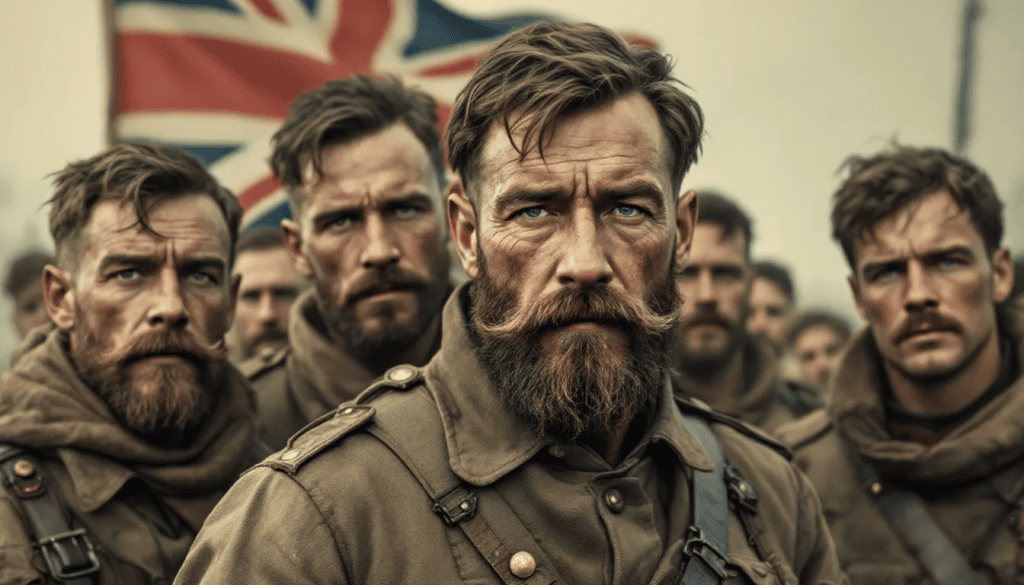
Lifting the beard ban is a big shift in the British Army’s approach to personal appearance policies. Historically, beards were banned to ensure the effective fit of gas masks, which were crucial for safety during combat operations. The recent change reflects a modern shift in military grooming standards and personal expression.
Facial hair has a storied history in the British military, with regulations evolving to reflect broader societal attitudes.
Crimean War and Beards
During the Crimean War, facial hair became a symbol of bravery and resilience among British soldiers. The harsh conditions of the campaign led many soldiers to grow beards as a mark of their endurance and masculine strength. Photographs of returning veterans taken for Queen Victoria in 1856, known as the Crimean Heroes series, show just how many of them came home bearded.
Allowing beards again connects today’s Army with that part of its history.
Comparisons with the Royal Navy and Royal Air Force
The Army was actually the last of the three services to allow beards. The Royal Navy and Royal Air Force got there first, each for its own reasons.
The Royal Navy has a long-standing tradition of allowing sailors to grow a “full set” with permission, and the Royal Air Force started allowing beards in 2019, five years before the Army.
Addressing Concerns and Criticisms
The new beard policy has raised concerns and criticisms, particularly regarding operational effectiveness and uniform standards. Some military personnel fear that allowing beards could compromise the traditional image of discipline and grooming within the Army.
Operational Effectiveness
One of the primary concerns is that beards may hinder the effectiveness of personal protective equipment, such as gas masks. In high-risk situations, a proper seal is crucial for the safety of soldiers, and facial hair could potentially interfere with this functionality.
Despite these concerns, the Army has implemented grooming standards to ensure beards are kept neat and do not compromise the fit of protective equipment. Regular checks will ensure compliance, addressing safety concerns while allowing soldiers to express themselves through facial hair.
Maintaining Uniform Standards
A disciplined and cohesive image is essential in the armed forces. Senior non-commissioned officers have emphasized the need for strict grooming standards to ensure that the new policy does not undermine the Army’s professional appearance. Beards must be neatly trimmed and free from uneven growth to maintain uniformity.
The new regulations balance personal expression with the Army’s reputation for professionalism and smart turnout. By enforcing these grooming standards, the Army aims to uphold its disciplined image while allowing soldiers the freedom to grow beards.
Prominent Figures and Their Perspectives
The change had support from the top of the Army, and was signed off by the King as Commander-in-Chief.
General Sir Patrick Sanders
General Sir Patrick Sanders was Chief of the General Staff, the professional head of the Army, when the ban was lifted, and the change went ahead with his backing.
Senior Non-Commissioned Officers
Senior non-commissioned officers have also expressed their support for the new beard policy, acknowledging its potential to lift soldier morale and give the troops a sense of identity. This cultural shift allows personnel to express their individuality while maintaining the disciplined image of the Army.
These officers emphasize balancing personal expression with military discipline to ensure operational efficiency and uphold professional standards. Adapting grooming standards reflects the evolving nature of military culture and can lead to a more modern and inclusive environment for service members.
Summary
The lifting of the century-old ban on beards in the British Army represents a significant shift towards modernization and personal expression. Approved by King Charles, this change reflects a broader effort to align military standards with contemporary societal norms. The new grooming standards ensure that beards are kept neat and professional, balancing personal freedom with the disciplined image of the Army.
By allowing beards, the British Army aims to attract new recruits and enhance the morale of serving soldiers. This policy change acknowledges the historical significance of facial hair in the military and gives the troops a sense of identity and belonging. Despite some concerns about operational effectiveness and maintaining uniform standards, strict grooming requirements and regular checks will ensure that the Army’s professional image is upheld.
Frequently Asked Questions
Why has the British Army lifted its ban on beards?
The British Army lifted its ban on beards to modernize its standards and better align with contemporary societal norms, thereby enhancing its appeal to potential recruits.
What are the new grooming standards for beards in the British Army?
The new grooming standards for beards in the British Army require that they be well-groomed, trimmed to a length between Grade 1 (2.5mm) and Grade 8 (25.5mm), and trimmed off at the cheekbones and neck. Regular inspections will be conducted to ensure adherence to these standards.
How will the new beard policy impact recruitment?
The new beard policy is likely to enhance recruitment by appealing to younger candidates who prioritize personal grooming choices, thus positioning military service as a more modern and inclusive option.
What are the concerns about allowing beards in the Army?
Allowing beards in the Army raises concerns regarding their interference with the fit of gas masks and other personal protective equipment, as well as the potential impact on the Army’s disciplined and professional appearance.
What historical significance does facial hair have in the British Army?
Facial hair in the British Army historically signifies bravery and resilience, particularly noted during the Crimean War. The current policy reflects this significance while aligning with contemporary societal norms.
Missed a spot?
More from Beards and facial hair
How to Grow a Beard: A Practical Guide
Key Takeaways Genetics set the ceiling. Lifestyle, grooming and patience decide how close you get to it, and that means at least...

What Does Beard Oil Do? Benefits and Tips for a Healthier Beard
Wondering what beard oil does? Simply put, it moisturises your beard and the skin underneath, preventing dryness and itchiness.
The Barber Pole: History, Symbolism, and Cultural Significance
Key Takeaways Walking down any main street, the sight of a spinning barber pole immediately signals where to find professional...