
The Colonel’s Journal / Beards and facial hair
The Barber Pole: History, Symbolism, and Cultural Significance
Last updated on
Key Takeaways
- The barber pole originated in medieval times when barbers performed bloodletting and surgical procedures alongside haircuts and shaves
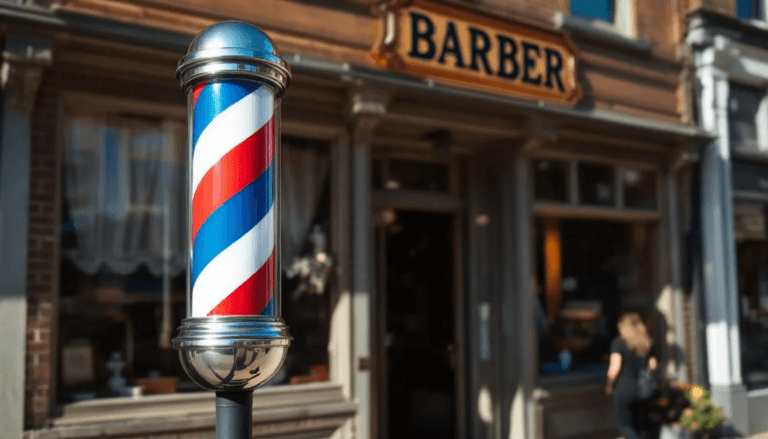
- Red and white stripes symbolize blood-stained and clean bandages from bloodletting practices, while blue represents veins or venous blood
- The spiral pattern comes from bloody bandages that were hung outside and twisted in the wind, later replaced by painted wooden poles
- In 1540, English law put barbers and surgeons in one company but split what each could do; the two formally went their separate ways in the 1740s
- Today’s barber pole remains an iconic symbol of the barbering profession, though modern barbers focus solely on grooming and hair services
Walking down any main street, the sight of a spinning barber pole immediately signals where to find professional grooming services. With its red and white stripes spiraling upward, it is one of the oldest and most recognizable trade signs in the world. It also has a somewhat gruesome history that connects modern barbershops to medieval medical practices.
What began as a practical advertisement for bloodletting services eventually evolved into the cheerful symbol of haircuts and shaves we know today. The change took centuries of legal and cultural shifts that separated medical practice from grooming services.
Origins and Ancient History
Barbering goes back to humanity’s earliest civilizations. Archaeological evidence suggests that Bronze Age societies developed the first razor tools, marking the beginning of organized grooming practices. These early implements, though crude by today’s standards, established barbering as one of mankind’s oldest trades.
The formal introduction of barbering to European culture occurred in Rome around 296 B.C., when the practice was brought from Sicily. Roman barbershops quickly became social hubs where men gathered to discuss politics, business, and current events. These establishments, known as “tonstrina,” were central to male social life in Rome.
The very word “barber” derives from the Latin “barba,” meaning beard. In Roman culture, a clean-shaven face became the norm for respectable citizens, and a young man’s first shave was marked with a ceremony of its own.
The Medieval Barber-Surgeon Era
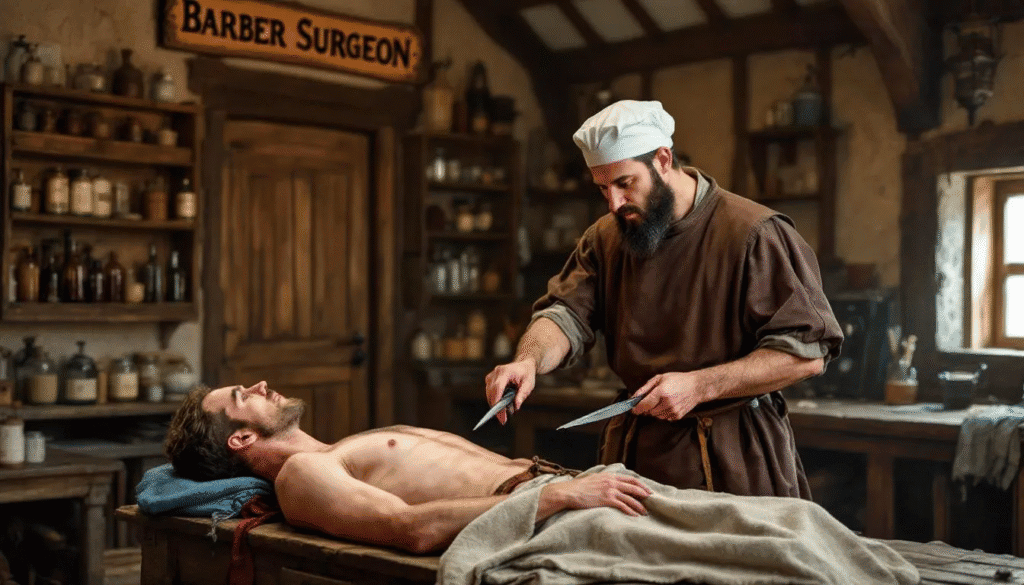
During the Middle Ages, the role of barbers expanded dramatically beyond simple grooming services. Medieval barbers, called barber surgeons, performed medical procedures that would be unthinkable in modern barbershops. These practitioners handled everything from routine haircuts to complex surgical treatments, making them essential healthcare providers for common people who couldn’t afford academic physicians. During this period, barbers also worked as surgeons and dentists.
They routinely performed bloodletting procedures, which were believed to cure ailments ranging from common colds to serious diseases. These skilled practitioners could set bones, extract teeth, treat wounds, and even perform minor surgeries. The patient gripped a pole during bloodletting procedures to encourage blood flow, and that pole later became the symbol of the trade.
Professional organization began early in the medieval period. Barbers in France are often said to have organised as early as 1094, though the records from that far back are thin, and guilds went on to set standards and regulations for the expanding profession. This early guild system would become the foundation for professional barbering across Europe.
In Paris, the College de Saint-Come was founded in 1210, creating an important distinction between two types of medical practitioners. Academic surgeons, who wore long robes and held university degrees, were considered the elite of the medical profession. Barber surgeons, identifiable by their short robes, provided practical medical services to the general population. This division established a professional hierarchy that would influence the development of both barbering and surgery for centuries.
English barbers received their first royal charter in 1462, when they were formally recognized as the Company of Barbers. This official recognition legitimized their dual role in society and established legal protections for their practice. The guild system provided training, quality control, and professional standards that turned barbering from a simple trade into a respected profession.
In 1540 King Henry VIII issued a statute creating the United Barber Surgeon’s Company. This organization formally united barbers and surgeons under one professional umbrella, while simultaneously beginning the process that would eventually separate the two professions entirely. Barbers and surgeons remained part of the same trade guild until the mid-1740s.
Bloodletting and Medical Practices
Bloodletting was central to medieval medical practice, and barber surgeons were its primary practitioners. This procedure was based on the ancient theory of humoral medicine, which held that illness resulted from an imbalance of bodily fluids. By removing “bad blood,” practitioners believed they could restore health and treat a wide variety of conditions.
The tools and procedures used during bloodletting sessions were sophisticated for their time. Barber surgeons employed specialized knives, lancets, and cupping devices to carefully control the amount of blood removed. Leeches were also commonly used for more precise bloodletting, particularly in sensitive areas where surgical cutting might prove dangerous.
The pole that patients gripped during these procedures served multiple practical purposes. Gripping the staff helped distend veins, making them more visible and accessible for the barber surgeon. The physical tension also helped patients cope with the discomfort of the procedure. A brass basin was often attached to the top of the pole, serving as a vessel for collecting leeches or catching blood during the treatment.
Bloodletting was used for a wide range of complaints. Medieval people sought treatment for everything from headaches and fever to more serious conditions like pneumonia and plague. While modern medicine has thoroughly debunked the therapeutic value of bloodletting for most conditions, the practice was performed with genuine belief in its healing powers.
The frequency and popularity of bloodletting made it a cornerstone of the barber surgeon’s business. Unlike the academic surgeons who served wealthy clients, barber surgeons provided affordable medical care to common people. This accessibility made them indispensable members of their communities and established the foundation for their enduring professional identity. Barbers were often the only medical practitioners available to patients who could not afford physicians.
The Symbolism Behind Red, White, and Blue Colors
The colors of the barber pole come from medieval medical practice. Each color represents a specific element of the bloodletting procedure, creating a visual advertisement that medieval people could easily understand and recognize.
Red stripes on the pole represent arterial blood and the blood-stained bandages used during procedures. This bold color served as an immediate indicator that medical services were available, signaling to potential patients that a trained practitioner worked within. The red also symbolized the life force that medieval medicine sought to balance through bloodletting.
White stripes symbolize the clean bandages and hygiene practices that distinguished professional barber surgeons from untrained practitioners. The contrast between red and white communicated both the medical nature of the services and the cleanliness standards maintained by the establishment. White also represented the pole itself, the staff that patients gripped during procedures.
The blue found on many modern barber poles, particularly in the United States, has multiple interpretations. Some sources suggest blue represents venous blood, creating a complete picture of the circulatory system alongside the red arterial blood. Others attribute the blue to patriotic symbolism, with the red, white, and blue reflecting the American flag and demonstrating national pride.

The familiar spiral pattern that defines the barber pole has equally practical origins. After bloodletting procedures, used bandages were hung outside shops to dry. As these bloody bandages twisted in the wind, they created a natural spiral pattern that became associated with barber surgeon services. This organic advertising method was eventually replaced by painted wooden poles featuring the same spiral design, providing a cleaner and more permanent advertisement.
As medical understanding advanced and hygiene standards improved, the literal display of medical waste became unacceptable. The painted pole preserved the symbolic meaning while presenting a more appealing storefront appearance.
Separation of Barbers and Surgeons
Barbering and surgery separated gradually, driven by advancing medical knowledge and changing social expectations.
The first major step toward separation occurred in England with the 1540 statute that created the United Barber Surgeon’s Company. While this legislation initially united the professions, it also placed important restrictions on practice scope. Barbers were limited to haircuts, shaves, bloodletting, and tooth extractions, while more complex surgical procedures were reserved for trained surgeons.
This legal framework prevented barbers from performing the advanced surgical treatments that had previously been part of their practice. The statute specifically barred surgeons from providing basic grooming services like shaving and hair cutting, creating distinct professional territories for the first time. These restrictions reflected growing recognition that medical and grooming services required different types of training and expertise.
France followed a similar path under Louis XV, who banned barbers from performing surgery entirely in 1743. This royal decree represented a more complete separation than had occurred in England, reflecting the French monarchy’s desire to raise the status of surgical practice and distinguish it from common trade activities. The ban forced barbers to focus exclusively on grooming services while leaving surgical practice to university-trained physicians.
The establishment of the Royal College of Surgeons in London in 1800 marked the final institutional separation of the professions. This organization provided formal medical education and professional standards that were far beyond the scope of traditional barbering guilds. Surgery had evolved into a sophisticated medical specialty that required extensive anatomical knowledge and surgical training.
Some accounts say professional symbols changed too, with barbers switching to blue and white poles while surgeons kept red and white. It’s a popular story, but there’s little hard evidence for it, and red and white is still the classic British barber pole.
The separation process varied significantly across different regions and kingdoms. Some areas maintained combined practices well into the 19th century, while others enforced strict professional boundaries much earlier. These variations reflected local political structures, guild systems, and medical traditions that shaped professional development differently across Europe.
Modern Barber Pole Significance
Today’s barber pole is a purely commercial sign, though it still carries centuries of tradition. Modern spinning barber poles often feature the red, white, and blue color scheme, particularly in the United States, where the patriotic symbolism has become deeply embedded in barbershop culture.
The mechanical spinning mechanism that characterizes many contemporary poles serves both practical and aesthetic purposes. The continuous motion attracts attention from passersby while creating the classic spiral illusion. This kinetic element distinguishes the barber pole from static signage and maintains its effectiveness as a marketing tool in busy commercial districts.
Global recognition of the barber pole extends far beyond its European origins. The symbol has become universally understood across Australia, Europe, and the Americas as an indicator of professional barbering services.

Contemporary barbers have embraced the pole’s heritage value while adapting it to modern business needs. Many establishments use the symbol to communicate authenticity, craftsmanship, and connection to traditional grooming techniques. The pole links today’s barbers to the old trade and helps differentiate professional barbers from generic hair salons.
Modern barbers focus exclusively on hair cutting, beard trimming, and traditional shaving services, but they still put the pole outside.
In the UK there’s no rule saying a barber has to put a pole up. It’s tradition rather than law, and that’s the case in most places.
FAQ
Why do some barber poles spin while others don’t?
The spinning mechanism is typically motorized and serves to attract attention while creating the classic spiral illusion effect. Static poles are often chosen for aesthetic reasons, cost considerations, or local preferences. Spinning poles are more common in high-traffic commercial areas where visibility is important.
Are there legal requirements for displaying barber poles?
Not in the UK. Nothing says a barbershop has to display a pole, and in most countries it’s tradition rather than law. If you’re opening a shop, check with your local council about signage and planning permission.
What’s the difference between American and European barber pole designs?
American barber poles commonly feature red, white, and blue stripes, often attributed to patriotic symbolism reflecting the U.S. flag. European poles more frequently display the traditional red and white color scheme, maintaining closer connections to the historical bloodletting symbolism. The basic spiral pattern and cylindrical shape remain consistent across regions.
When did barbers stop performing medical procedures entirely?
The timeline varied by country and region. In England, the 1540 statute began restricting barber surgeons to limited procedures, while France banned barbers from surgery in 1743. The complete separation was largely achieved by the early 1800s in most developed countries, coinciding with the establishment of formal medical schools and surgical colleges. Some rural areas maintained combined practices longer due to limited access to trained physicians.
Do modern barbershops have to display a barber pole?
No, displaying a barber pole is traditional but not mandatory in most jurisdictions. Many contemporary barbershops choose alternative signage that reflects modern branding preferences while still maintaining professional licensing requirements. However, the pole remains popular because of its instant recognition value and connection to barbering heritage, making it an effective marketing tool for establishments that want to emphasize traditional services and craftsmanship.
Missed a spot?
More from Beards and facial hair

How to Grow a Beard: A Practical Guide
Key Takeaways Genetics set the ceiling. Lifestyle, grooming and patience decide how close you get to it, and that means at least...

What Does Beard Oil Do? Benefits and Tips for a Healthier Beard
Wondering what beard oil does? Simply put, it moisturises your beard and the skin underneath, preventing dryness and itchiness.

British Army Beards: Embracing Facial Hair After a Century-Long Ban
Can British soldiers have beards now? Yes, since late March 2024, the British Army permits beards after lifting a century-old ban...