
Koteletten
Styles, Lengths, and How to Trim, Fade and Grow Them
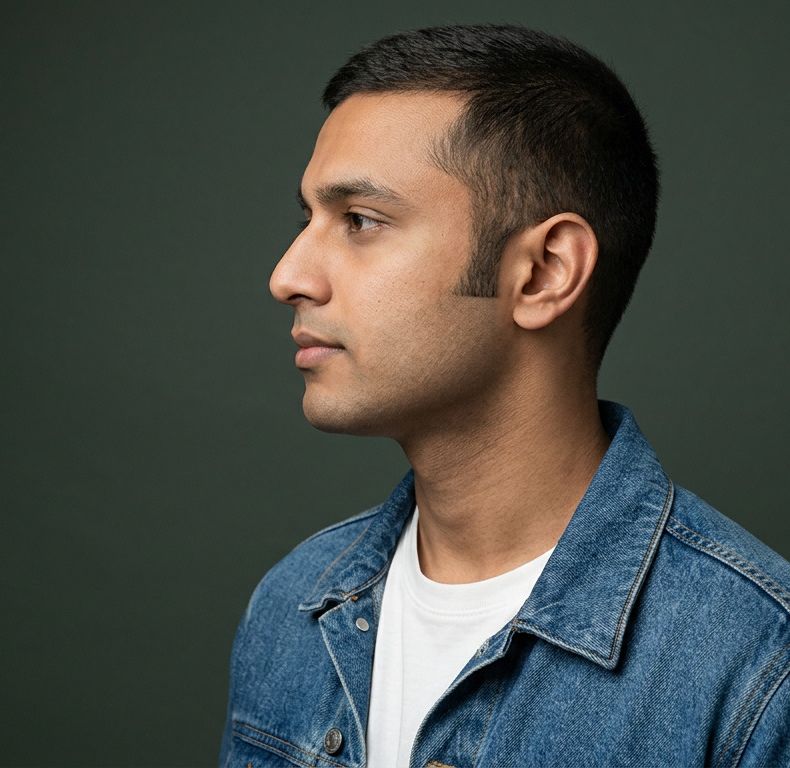
Sideburns are the strip of hair that runs down the side of your face, in front of the ear, from the hairline at your temple towards the jaw. Everyone with a full head of hair has them. What you choose is where they stop, how wide you leave them and whether they blend into your haircut, your beard or neither. They turn up in almost every style in the Verzeichnis, einschließlich derer, die sie abrasieren.

Auf einen Blick
- Auch bekannt als
- Sideboards
- Was es ist
- Haare, die an der Seite des Gesichts vor dem Ohr herabfallen.
- Länge
- Kurz, weniger als ein Zoll
- Wachstumszeit
- 3 bis 5 Wochen
- Wie oft trimmen?
- Alle ein bis zwei Wochen
- Am besten geeignete Gesichtsformen
- Beliebige
- Schnurrbart
- Nein
- Bekannt geworden durch
- Ambrose Burnside (US Civil War general the word comes from), Elvis Presley (1950s rock and roll), David Tennant (actor)
5 £ Rabatt auf Ihre erste Lieferung
Koteletten zeichnen sich dadurch aus, dass alles um sie herum entfernt wird. Die Wangen und der Kiefer werden täglich abgenommen.
5 £ Rabatt auf Ihr erstes Abonnement oder Ihre erste VIP-Bestellung – einmal pro Kunde, Abmeldung mit einem Klick
Die Varianten
Die gleiche Form, unterschiedlich getragen. Was sich ändert, sind die Länge, die Dichte und wie viel man an den Rändern abschneidet.
Passt es zu Ihrem Gesicht?
Ob ein Stil zu Ihnen passt, hängt davon ab, wo er betont und wo er kaschiert. Die folgende Tabelle gibt einen kurzen Überblick.
| Oval | Ideal | Genügend Platz über die Wange hinweg, um die Breite aufzunehmen, ohne dass es eng wird. |
|---|---|---|
| Rund | Werke | Long and narrow lengthens the face. Wide and full only broadens it. |
| Platz | Ideal | Passt sich einem kräftigen Kiefer an, anstatt mit ihm zu konkurrieren. |
| Lang | Ideal | Gerade die Breite an den Wangen lässt ein langes Gesicht kürzer wirken. |
| Herz | Werke | Gleicht eine breite Stirn aus, wenn der Haarschnitt unterhalb des Wangenknochens endet. |
| Diamant | Werke | Verleiht dem Kieferbereich mehr Breite, obwohl die Wangenknochen bereits breit sind. |
So schneidet man eines in vier Schritten
- Comb them downComb the hair flat so you can see its real length and where it actually ends.
- Länge festlegenGuarded trimmer, one or two settings shorter than the hair above, running downwards with the growth.
- Cut the bottom lineGuard off. Straight across or on your chosen angle. Finish one side, then match the other, and check them level with a finger at the bottom of each.
- Shave the edgesShave below the line and tidy the front edge with a sharp blade, so the sideburn reads as a shape.
Ausführliche Informationen, Hilfsmittel und die häufigsten Fehler finden Sie im folgenden Leitfaden.
Was sind Koteletten?
Sideburns are the hair in front of each ear where your haircut meets your face. They start at the hairline by the temple and run down past the ear. Left around ear level, they are sideburns. Carried on down the cheek and along the jaw, they become Koteletten, which is a different style with a lot more work attached.
In Britain you will also hear them called sideboards, and older writing calls them side whiskers. The word itself comes from Ambrose Burnside, an American Civil War general with enormous side whiskers. They were called burnsides after him, and over time the two halves swapped round into sideburns.
Are sideburns facial hair or head hair? A bit of both, and that is what makes them awkward. On most men the top of the sideburn is soft and grows like the hair on your head, then it gets coarser lower down where it meets the beard area. Sideburns are the one piece of facial hair your barber and your razor both have a say in. Your barber looks after the top half and you look after the bottom, and the two of you have to agree on where it ends.
Their history explains why they look dated at some lengths and sharp at others. Big side whiskers were everywhere among Victorian men. Long, slim sideburns came back with 1950s rock and roll, Elvis Presley being the obvious one, and they got wider and bushier through the late 60s and 70s. Shorter, tidier haircuts in the 80s took them back up to the ear, and that is where most men have kept them since.
Sideburn styles
There are really two decisions here: how far down they go, and what the bottom edge and the sides look like. These are the types of sideburn cut worth knowing.
Kurze Koteletten stop around the top of the ear, where the ear joins the head. Neat and conservative. Very short hair, such as a buzz cut or a skin fade, usually wants them here.
Mid-length sideburns stop level with the middle of the ear, roughly where the ear opening is. This is the normal sideburn length, the way most men have them worn, and what most barbers will do if you say nothing.
Lange Koteletten run to the bottom of the earlobe or a little past it. They lengthen the face and read as a deliberate choice rather than a default. Any longer and wider and you are heading into mutton chop territory.
Zulaufende Koteletten get narrower as they come down. They soften the whole shape and stop thick hair looking heavy at the sides.
Squared sideburns finish in a hard horizontal line. Crisp and traditional, and they suit a strong jaw.
Angled or pointed sideburns are cut on a diagonal so the bottom comes to a point, usually towards the front. Usually worn short, it looks more modern, and the angle adds some definition to a rounder face.
Faded sideburns go from the length of your haircut at the top down to bare skin at the bottom, with no visible line. They are the usual partner to a fade haircut and are covered in their own section below.
Thick or big sideburns are worn at full width and some length. Grown wide and down the cheek they become mutton chops, and joined to a moustache they become a Wolverine.
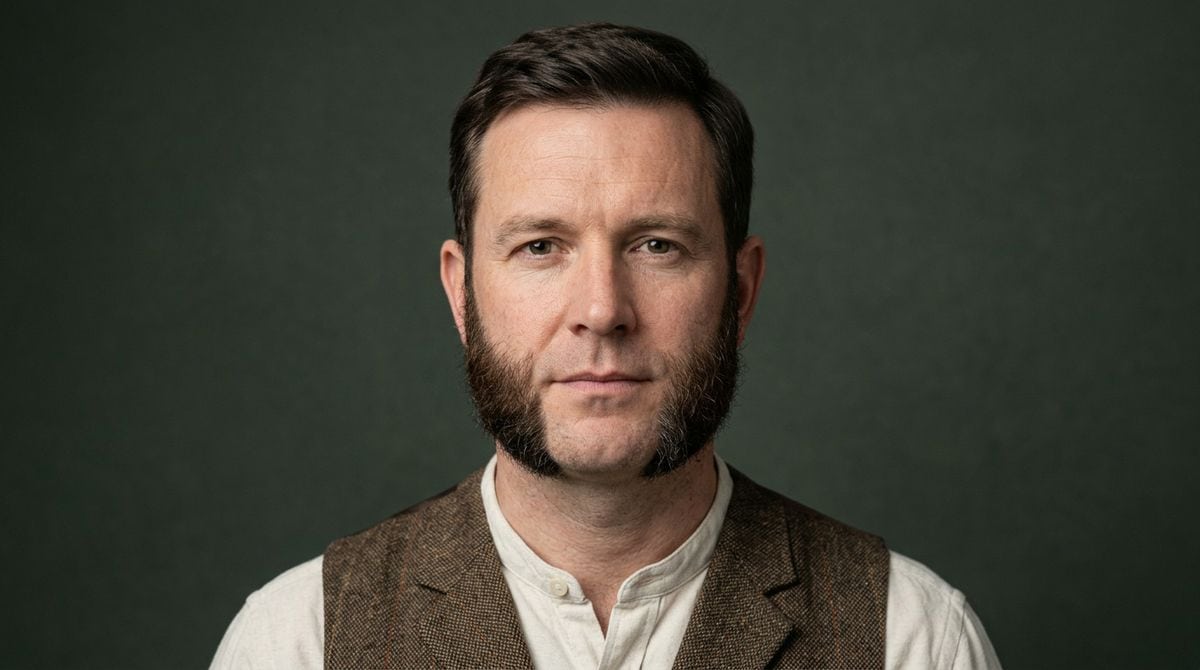
Connected sideburns carry straight on into a beard, as with a Vollbart oder ein Kinnriemen, so they stop being a separate shape at all.
Wie lang sollten die Koteletten sein?
For most men, mid-ear. It suits nearly every face and nearly every haircut, which is why it is the default. Here is how the lengths compare.
| Länge | Where it ends | Works best with |
|---|---|---|
| Kurz | Top of the ear | Very short hair, a long or narrow face, glasses |
| Mittellang | Middle of the ear | Almost anything, the safe default |
| Lang | Bottom of the earlobe | Longer hair, a round or square face |
| Extra long | Below the ear, towards the jaw | Longer hair and strong growth, close to mutton chops |
The chart is a starting point rather than a rule. Three things decide where yours should actually end.
Your face shape. Length and width do different jobs. Length makes a face look longer, so long, slim sideburns help a round face, while a long face looks better with them shorter. Width does the opposite: wide, full sideburns add breadth across the cheeks, which a long face can use and a round face cannot.
Your haircut. Sideburns should look like they belong to your hair. Short back and sides with long sideburns looks disconnected, and long hair with tiny sideburns looks like an accident. As a rough guide, the shorter your hair, the shorter and closer the sideburns. If you change your haircut a lot, change the sideburns with it.
Glasses and hairline. If you wear glasses, keep the bottom edge clear of the arm of your frames, either above it or a good bit below it, because a line that ends right on the arm looks like a mistake. If your hairline is receding, keep them a touch fuller rather than very short. A tiny sideburn draws the eye up to the temple.
One rule nearly everyone agrees on: do not take them above the top of the ear unless you are shaving them off completely. A sideburn cut too high leaves a strange blank patch between the hair and the ear.
How to trim sideburns
You need a trimmer with a guard, a comb and a razor for the clean-up. Do it after a haircut if you can, so you are cutting to the shape you actually have.
Comb them down. Comb the hair down and flat so you can see its real length and where it actually ends.
Legen Sie die Länge fest. Use a guarded trimmer, usually one or two settings shorter than the hair just above, so the sideburn does not look heavier than your haircut. Run it downwards, with the growth. On longer sideburns you can comb the hair out and take the ends off with scissors over the comb instead.
Cut the bottom line. Take the guard off and decide the height. Cut straight across for a square finish, or on a slight angle if that is the style. Finish one side completely before you start the other. Copying a finished line is much easier than building two at once.
Check they are level. Face the mirror straight on and put an index finger flat at the bottom of each sideburn. If your fingers are not level, neither are your sideburns. You can also use a fixed point on each ear, such as where the top of the ear meets your head. Do not turn your head to look at each side, because that is how one ends up higher than the other.
Tidy the front edge. Sideburns creep forward onto the cheek over a few weeks. Trim the front edge back to a clean line so the strip keeps its width.
Shave the edges. Shave the skin below and in front of the sideburn with a sharp blade, going with the grain. The skin in front of the ear is thin and the angle is awkward, so take it slowly and stretch the skin flat with your other hand. If you are wondering how far down to shave, shave everything below the line you just cut, and no higher.
How to fade sideburns into your haircut
A sideburn fade takes the sideburn from the length of your haircut at the top down to skin at the bottom, so there is no line at all. It is what most barbers do with a fade haircut, and it is easy enough to keep up at home between cuts.
Work in bands from the bottom up. Say the sides of your hair are cut with a number 2. Take the bottom third of the sideburn down to bare skin with the trimmer, the middle third with a number 1, and leave the top at the 2 to match your hair. Then go over each join with the half size in between, flicking the trimmer out as you go so you do not leave a ridge.
Keep the fade on both sides at the same height, using the same finger check as above. The usual mistake is starting the bare section too high, which leaves a gap that reads as a missing sideburn rather than a fade. If in doubt, start low. You can always take it higher next time.
The same idea carries on down into a beard, where the hair gets longer instead of shorter. The Auslaufschnitt guide covers that version.

Sideburns with a beard
With a beard, the question is whether the sideburns join it or not.
Blended in. Most beards connect to the sideburns. Keep the beard a little longer than the sideburn and step the length up gradually through the cheek, so the sideburn turns into beard without a visible change. Cutting the sideburn at the same length as a long beard tends to make the whole thing look puffy at the sides, so keep the sideburns shorter and closer than the beard.
Disconnected. A beard without sideburns, shaved off between the ear and the top of the beard, is a Hollywoodian. It works well on men whose sideburns come through thinner than their beard, because it turns a weak spot into a deliberate gap.
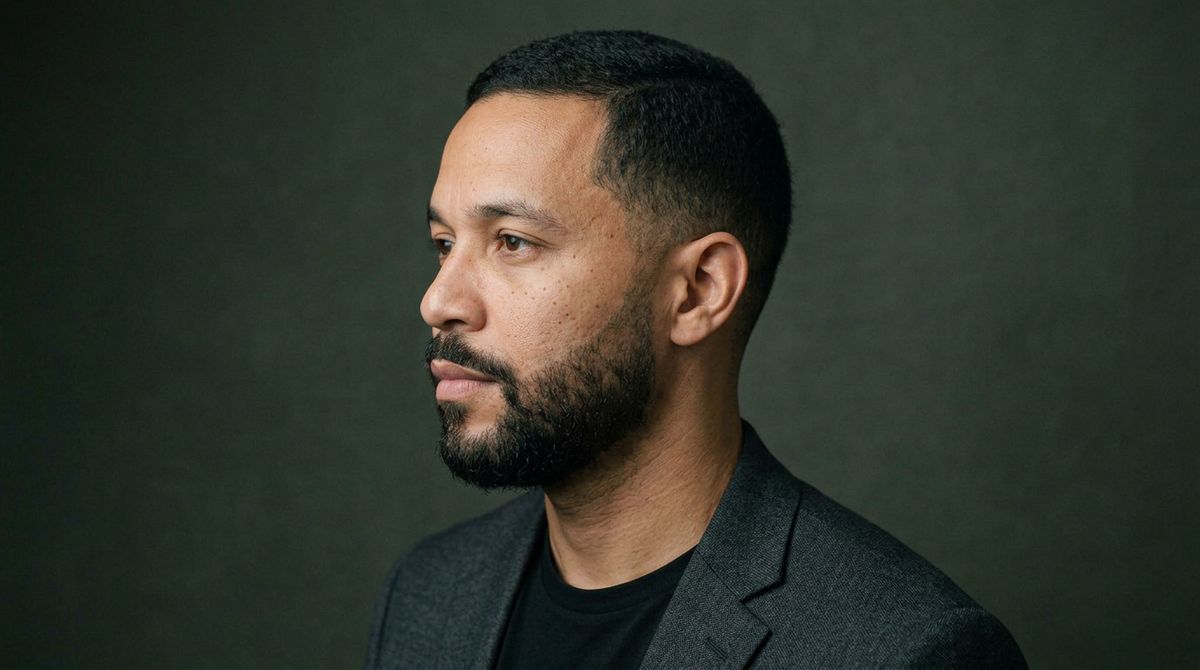
Sideburns and a moustache. Long sideburns with a moustache and a bare chin is a style in its own right. Joined across the top lip it becomes the wolverine. Kept apart it is simply sideburns and a moustache, and it needs a very clean chin and cheeks to look intended.
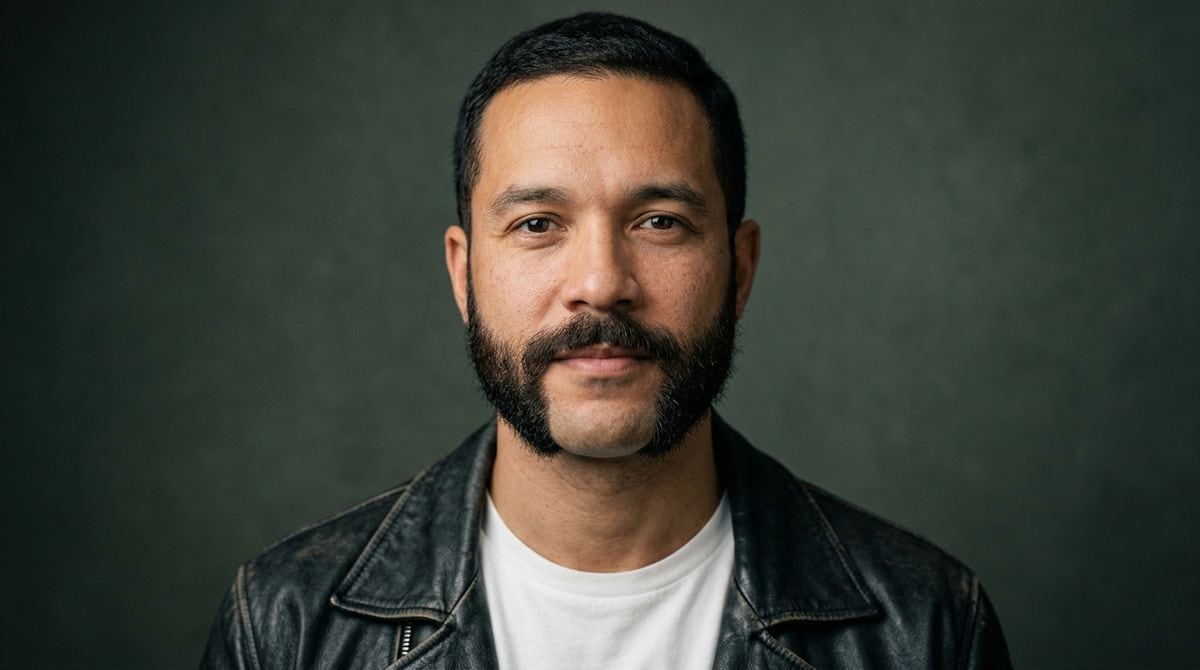
If your beard is patchy where it meets the sideburn, which is common, fading the sideburn down to the cheek usually hides it better than trying to grow through it.
How to grow sideburns
Growing sideburns mostly means not cutting them. Tell your barber to leave the sideburns alone at your next couple of cuts, and do not trim the bottom line yourself.
Give it three to five weeks before you judge them. The top half grows with your hair and the lower half grows like beard, often more slowly, so they look uneven for a while. Keep the front edge tidy and the cheek below shaved so they look like you are growing them on purpose, and leave the length alone.
How full your facial hair gets here is mostly down to genetics. Some men have dense sideburns that grow wide quickly, others have a thin strip that never fills out. If yours stay sparse, a shorter, tapered or faded sideburn will look better than a long thin one, because a long sideburn is only as good as its thickest point.
Keeping them tidy
Every week or two is enough, which makes sideburns about the lowest maintenance facial hair there is. If you get a haircut every four weeks or so, the sideburns get done then, and you only need to tidy the bottom line and front edge once in between.
The shaved skin around them needs doing more often than the sideburns themselves, usually whenever you shave the rest of your face.
Was läuft schief?
Sie enden auf unterschiedlichen Höhen. By far the most common fault, and it shows in every photo. Use the finger check before you finish.
Schneide mit abgewandtem Kopf. Turning your head to see each side changes where the line seems to be. Head straight, eyes forward.
Too long for the haircut. Cut your hair much shorter and leave the sideburns alone, and they look stuck on. They need to change with your hair.
Cut too high. Above the top of the ear, a sideburn stops looking short and starts looking like it was removed by mistake.
Nach links ausweichen. They creep forward over a few weeks. Trim the front edge, not just the bottom.
Fragen, die uns gestellt werden
Wie lang sollten die Koteletten sein?
Level with the middle of your ear suits most men. Go shorter with very short hair or a long face, and longer with longer hair or a round face. Avoid going above the top of the ear unless you are taking them off completely.
What are sideburns called in the UK?
Sideburns is the usual word, but plenty of people in Britain say sideboards. Side whiskers is the older term.
Are sideburns attractive?
That depends on who you ask, but well kept sideburns that match your haircut rarely look wrong. What looks bad is uneven, overgrown or very high sideburns. Shaving them off completely tends to make the face look unfinished.
Should sideburns be angled or straight?
Straight is the classic and the easiest to keep even. An angle looks more modern and adds a little definition to a round face, but it is harder to match on both sides. If you are trimming them yourself, start straight.
Should you shave your sideburns off?
Rarely. Most faces look better with at least a short sideburn, and taking them off completely only really works with a shaved head, a very tight skin fade or a disconnected beard like the Hollywoodian.
Was ist der Unterschied zwischen Koteletten und Backenbart?
Reach and width. Sideburns stop around the ear. Mutton chops carry on down the cheek and along the jaw, are much wider, and leave the chin shaved.
Should my beard connect to my sideburns?
Usually, yes. Most beards blend into the sideburns, with the sideburn kept a little shorter than the beard so the sides do not look puffy. A beard that deliberately does not connect is a Hollywoodian.
How long do sideburns take to grow back?
Around three to five weeks to get back to a normal length after being shaved off, though the lower half often comes back more slowly than the top.
Können Koteletten bei zurückgehendem Haaransatz helfen?
Keeping them slightly fuller gives the temple area something to hold onto. Very short sideburns tend to draw the eye up to where the hairline has gone back.
Andere Wangenformen
Gleiche Form, unterschiedliche Länge oder Schnurrbart.
Wenn das zu viel Arbeit ist
Das gleiche Konzept, aber weniger Zeitaufwand am Morgen.
Stöbern Sie nach dem, was Ihnen wichtig ist
Dasselbe Verzeichnis, aus einem anderen Blickwinkel betrachtet.