
Boxed beard
How to Get the Clean, Structured Look
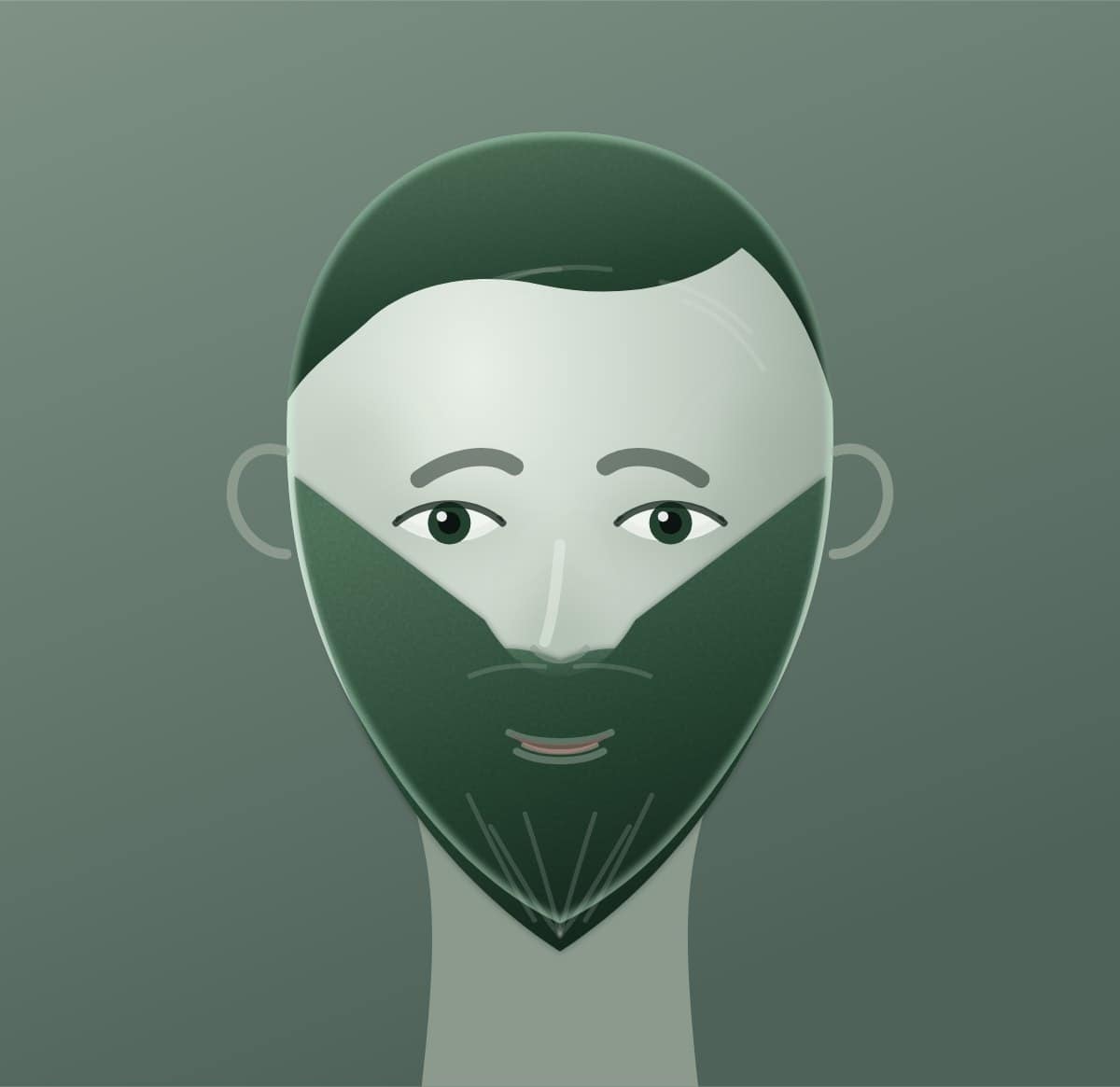
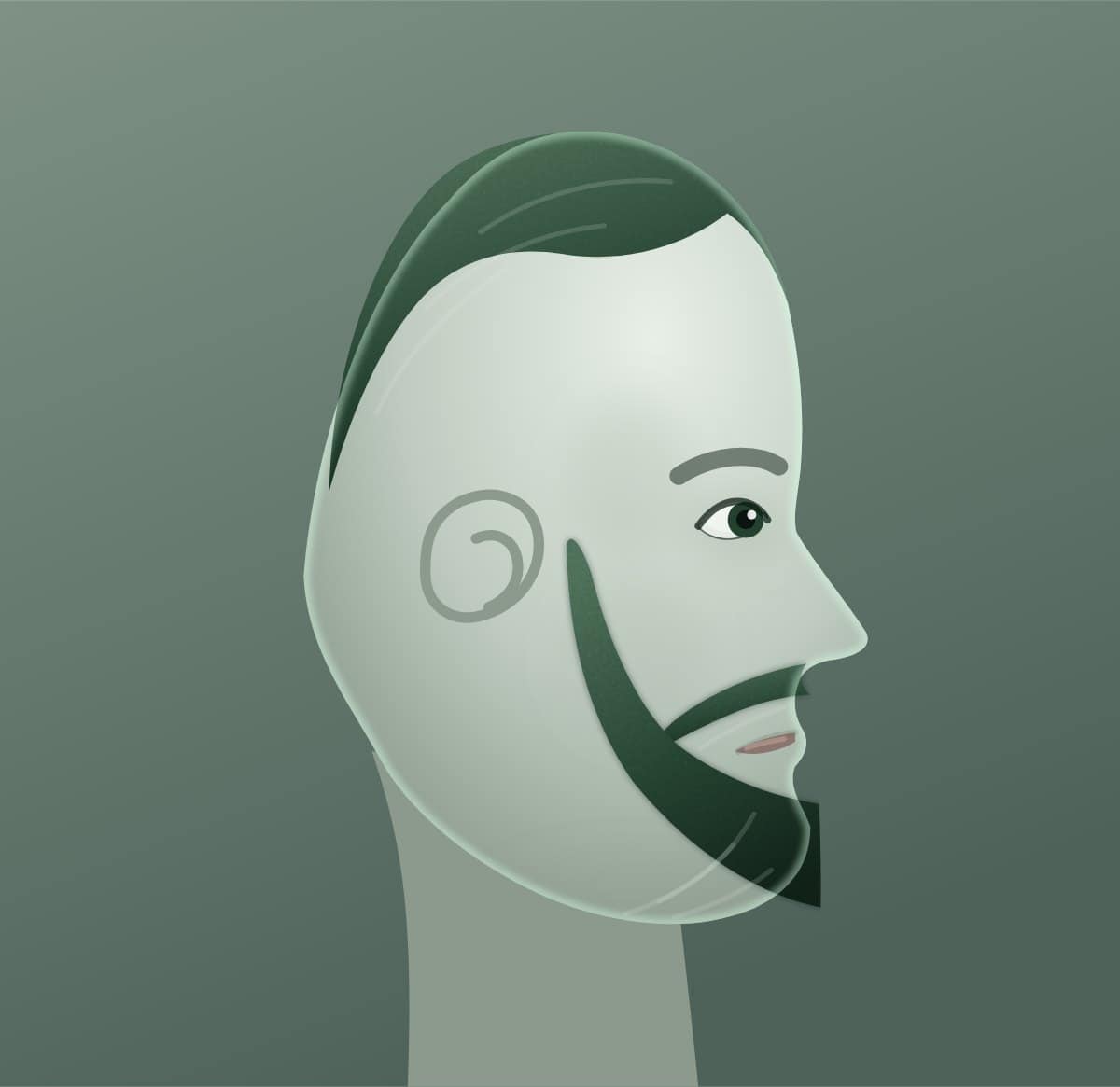
A short boxed beard is a full beard kept close and given hard, deliberate edges. The cheek line is cut straight, the neckline is set, and the whole thing is held at a uniform length. Nothing about it is left to chance, which is exactly the appeal.
At a glance
- Also known as
- short boxed beard
- What it is
- A short full beard with every edge squared off.
- Length
- Short, under an inch
- Growing time
- 3 to 4 weeks
- Trim how often
- Every 1 to 2 days
- Best face shapes
- Round, Square
- Moustache
- Yes
£5 off your first delivery
Every edge on a boxed beard is straight, which means every edge is obvious when it is not.
Valid on your first order of blades. We send the newsletter rarely, and you can unsubscribe in one click.
The variations
The same shape, worn differently. What changes is length, density and how much you take off at the edges.
Will it suit your face?
Where a style puts weight, and where it takes it away, is what decides whether it suits you. The table below is the short version.
| Ovale | Ideal | Takes almost any length and shape without fighting the proportions. |
|---|---|---|
| Rotondo | Works | Adds width where there is already width. A chin-led style suits better. |
| Quadrato | Works | Round the corners off or it doubles up on a jaw that is already strong. |
| Oblungo | Ideal | Width at the cheeks shortens the face. Keep the chin short, not pointed. |
| Heart | Works | Weight low balances a wide forehead, so long as the cheeks stay tidy. |
| Diamante | Ideal | Fills the narrow jaw and squares off the lower face. |
How to cut one, in four steps
- Grow it out3 to 4 weeks. Cutting into a beard that has not filled in leaves holes you then have to grow out again.
- Set the lengthStart on a longer guard than you think you need and work down. You cannot put it back.
- Set the necklineTwo fingers above the Adam's apple, curving up to behind the jaw. Higher than that and you lose the jawline.
- Tidy the cheeksFollow your natural cheek line rather than inventing a straight one. Take off anything above it.
Full detail, tools and the common mistakes are in the guide below.
What makes a beard boxed
The edges. A natural short beard follows wherever your growth happens to stop. A boxed beard imposes a shape on it: a straight cheek line, a defined neckline, and squared corners at the jaw.
Length is the other half. A short boxed beard sits somewhere around a quarter to half an inch, kept at a uniform length across the whole face. That evenness is what gives it the clean, structured appearance, and it is why the style rewards a good trimmer more than a good barber.
The moustache is connected, the sideburns are connected, and the beard runs continuously from one to the other. Disconnect any part of it and you have a different style.
Short boxed beard styles
Classic short boxed beard. Uniform length, straight cheek line, defined neck. The reference version.
Faded boxed beard. The same squared outline, with the cheek graded shorter toward the sideburn rather than cut to a hard line. Softer at the top, sharp everywhere else.
Corporate boxed beard. Slightly shorter again, with the cheek line dropped a little lower. The most conservative reading of the short boxed beard style, and the one that survives most dress codes without comment.
Boxed beard with a longer chin. Uniform on the cheeks, with a little more length left below the chin. It lengthens a round face without losing the structure.
Stubbled box. The full boxed outline at a few days' growth. Much easier to keep, and it suits patchy facial hair growth better than the full version.
Which face shapes it suits
A short boxed beard adds definition along the jaw and squares off the lower face, so the face shapes it helps most are the ones lacking that.
Round. Very good, provided you keep the sides tight and leave a little more length at the chin. The straight lines counteract the curves.
Oval. Works without adjustment. Most beard styles do.
Square. Good, but soften it. A boxed beard on an already square jaw can double up, so round the corners slightly rather than cutting them hard.
Oblong or long. The one to be careful with. Keep the beard short at the chin and let the cheeks carry a fraction more width, or the style stretches the face further.
Heart. Helpful. The weight along the jaw balances a broader forehead.
Beyond face shapes, the honest requirement is even facial hair growth. A boxed beard is defined by uniform length, and patches show up immediately against a hard edge.
What you need
A short boxed beard is cut rather than styled, so the kit is short.
An adjustable beard trimmer does the length. You want reliable guards, because uniform length across the whole face is the defining feature and a trimmer that varies will show it. A detail trimmer or a bare blade cuts the cheek line and the neckline, which need to be crisp rather than approximate.
A razor finishes the skin above the cheek line and below the neckline. A trimmer alone leaves a shadow, and on a boxed beard that shadow blurs the clean lines you just cut.
Beard oil after trimming, and a small comb to pull the hair down flat before you cut so you are working with its real length.
Growing the foundation
Three to four weeks before you box anything.
You need enough coverage to cut a continuous line through, particularly along the cheeks. Cutting a cheek line into growth that has not filled in leaves gaps sitting above a hard edge, which draws attention to exactly what you were hoping to hide.
Keep the neck shaved while it grows, but leave the cheeks alone. You cannot see where your natural cheek line falls until the hair is in, and that natural line is the reference for where the cut one should go.
Resist boxing it at two weeks. A short boxed beard cut into partial growth looks thin along the edges, and the only fix is growing it back.
Cutting the box
Dry beard, combed downward.
Set the length first. Take the whole beard to a uniform length with a guarded trimmer. Go one guard longer than your target on the first pass.
Cut the cheek line. Find where your growth naturally thins, then cut a straight line just below it. Lower than your instinct says: a high cheek line looks drawn on. Do one side, then match the second to it.
Set the neckline. Two fingers above the Adam's apple at the centre, curving up toward the back of the jaw. Everything below comes off.
Square the corners. Where the cheek line meets the sideburn and where the neckline meets the jaw, keep the angles crisp rather than curved. This is what makes it a box.
Tidy the moustache. Trimmed clear of the lip, in proportion with the rest.
Check both cheek lines in profile. They will look level straight on and be visibly different from the side.
Keeping it
Every one to two days, because a short boxed beard is defined by edges and edges blur fast.
The cheek line and the neckline both need re-cutting a couple of times a week. The even length needs a pass every few days, since beard hair does not grow at the same rate everywhere and the boxed beard shape drifts as some areas outrun others.
Regular trimming is less work than it sounds once it is a habit: a short boxed beard takes about five minutes every second morning, against twenty minutes once a week if you let it go and then have to rebuild the clean lines from scratch.
Beard oil once the beard is cut, worked into the skin rather than the hair. At this length the skin underneath sees a lot of air and a lot of blade.
What goes wrong
The cheek line creeps up. Every trim takes a fraction more. Within a month it is halfway up the cheek and impossible to fix quickly.
The neckline is set on the jaw. Removes the shadow that makes a jaw look sharp. Two fingers above the Adam's apple, not along the bone.
The two sides do not match. Cut one, then copy it. Check in profile.
The length stops being uniform. The chin usually outgrows the cheeks. A full-length pass every few days keeps it honest.
It gets boxed too early. Hard edges on incomplete growth show every gap.
Questions we get asked
How long does it take to grow a short boxed beard?
Three to four weeks. You need continuous coverage on the cheeks before cutting a line through it, or the gaps sit above the edge and show.
Can you have a boxed beard with patchy cheeks?
It is the hardest style for patchy facial hair growth, because a hard cheek line draws the eye straight to any gap. A stubbled box or a faded version handles it far better.
Where should the cheek line go?
Just below where your natural growth thins out. Lower than feels right. A high cheek line is the most common way this style goes wrong.
How often does a short boxed beard need trimming?
Every one to two days for the edges, and a full length pass every few days. It is among the higher maintenance beard styles for that reason.
What is the difference between a boxed beard and a full beard?
Edges and length. A full beard follows your natural growth and can be any length. A boxed beard is cut short, held at a uniform length, and given straight lines at the cheek and neck.
Does a short boxed beard suit a round face?
Yes, and it is one of the better choices. Keep the sides close and leave a little extra length at the chin so the straight lines do the work of adding structure.
Other full beards
Same shape, different length or moustache.
If this one is too much work
Same idea, less of your morning.
Browse by what matters to you
The same directory, cut a different way.