
Ducktail beard
The Long Beard With a Point
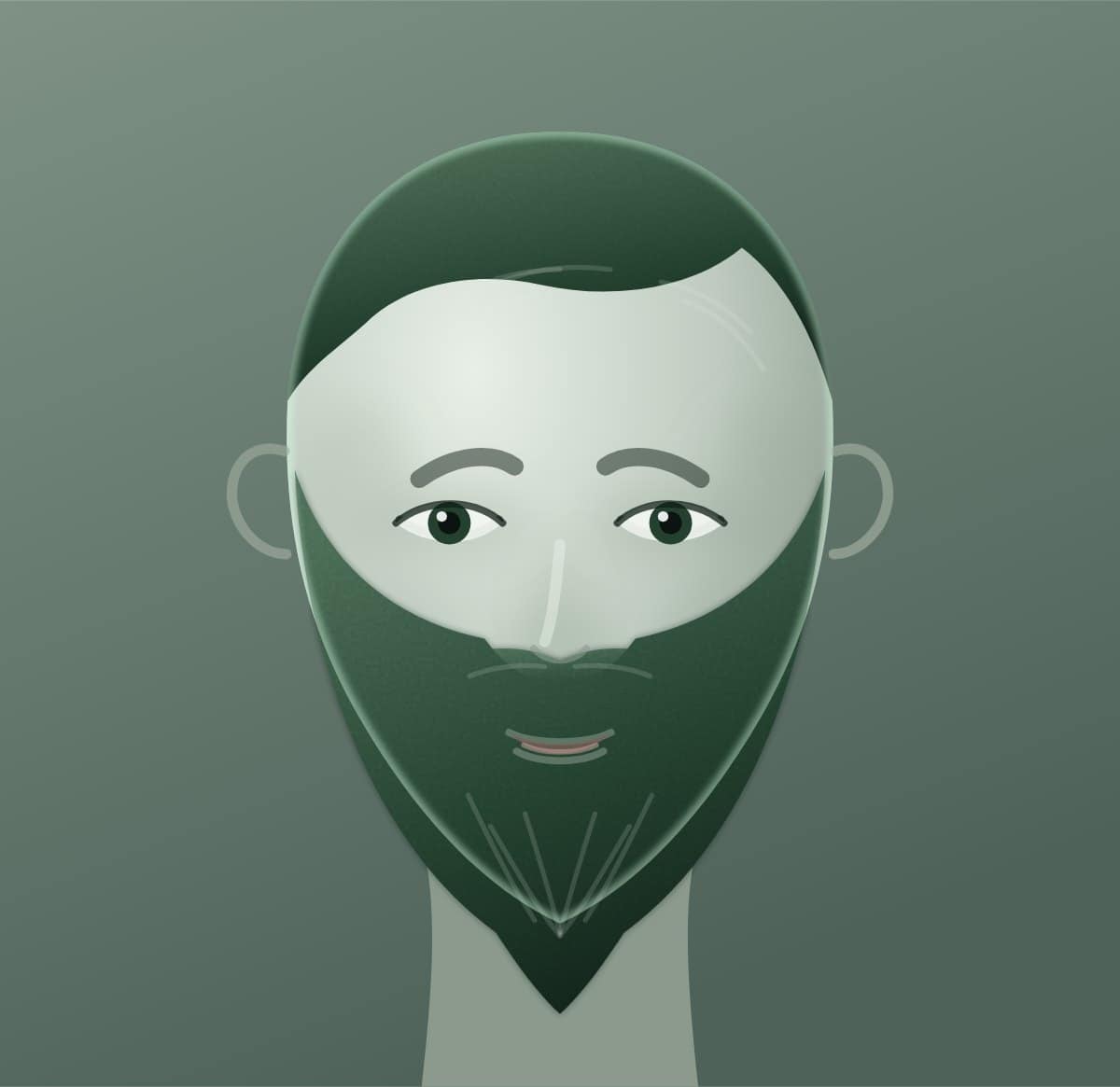
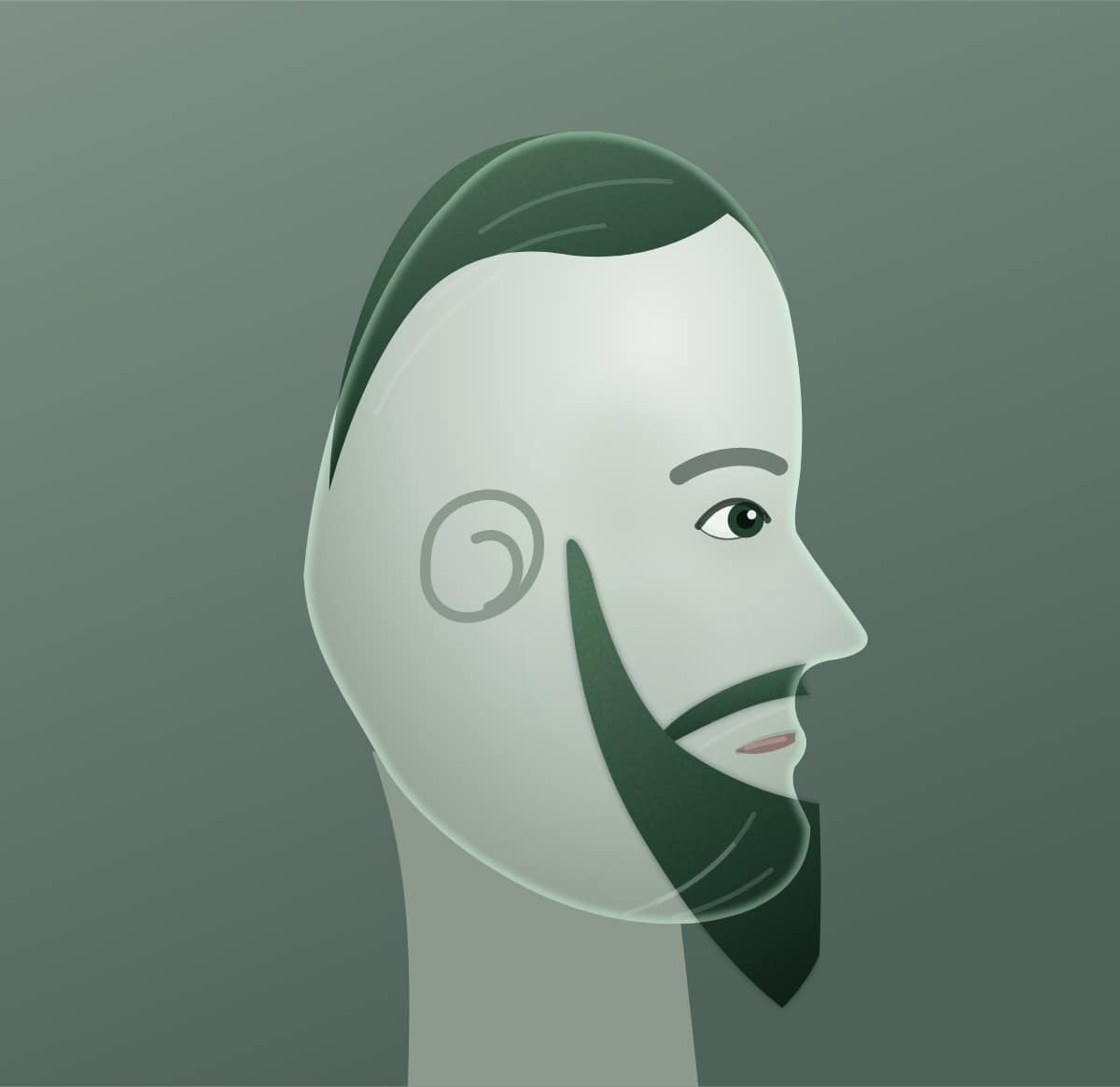
A ducktail beard is a full beard grown long and tapered to a point below the chin, so the outline narrows as it descends. The cheeks stay reasonably tidy and the length collects at the bottom, which is where the name comes from: the shape of a duck's tail.
At a glance
- Also known as
- Nothing else in common use
- What it is
- Full beard tapered to a point at the chin.
- Length
- Long, three inches and up
- Growing time
- 4 to 6 months or more
- Trim how often
- Every 3 to 4 days
- Best face shapes
- Round, Oval
- Moustache
- Yes
£5 off your first delivery
The taper needs the cheeks kept in check, or the point at the chin gets lost in the width above it.
Valid on your first order of blades. We send the newsletter rarely, and you can unsubscribe in one click.
The variations
The same shape, worn differently. What changes is length, density and how much you take off at the edges.
Will it suit your face?
Where a style puts weight, and where it takes it away, is what decides whether it suits you. The table below is the short version.
| Ovale | Ideal | Takes almost any length and shape without fighting the proportions. |
|---|---|---|
| Rotondo | Works | Adds width where there is already width. A chin-led style suits better. |
| Quadrato | Works | Round the corners off or it doubles up on a jaw that is already strong. |
| Oblungo | Ideal | Width at the cheeks shortens the face. Keep the chin short, not pointed. |
| Heart | Works | Weight low balances a wide forehead, so long as the cheeks stay tidy. |
| Diamante | Ideal | Fills the narrow jaw and squares off the lower face. |
How to cut one, in four steps
- Grow it out4 to 6 months or more. Cutting into a beard that has not filled in leaves holes you then have to grow out again.
- Set the lengthStart on a longer guard than you think you need and work down. You cannot put it back.
- Set the necklineTwo fingers above the Adam's apple, curving up to behind the jaw. Higher than that and you lose the jawline.
- Tidy the cheeksFollow your natural cheek line rather than inventing a straight one. Take off anything above it.
Full detail, tools and the common mistakes are in the guide below.
What makes a beard a ducktail
The taper. A full beard grown long and left alone spreads outward and squares off at the bottom. A ducktail beard style is deliberately narrowed, with the sides brought in and the length concentrated at the chin so the whole thing comes to a point.
That makes it the middle ground between a tidy short beard and a completely untamed one. There is real length, but the outline is controlled, which is why it reads as deliberate rather than as a beard that got away from someone.
The cheeks are usually left natural rather than shaved to a hard line, and the moustache is full and connected.
Ducktail beard styles
Classic ducktail beard. Full at the cheeks, tapered to a clear point three or four inches below the chin.
Short ducktail beard. The same taper at a much shorter length, an inch or two. Far quicker to grow and considerably easier to keep tidy, and the version most men actually wear.
Faded ducktail. The cheeks graded shorter toward the sideburn with the point left long. Sharper at the top, dramatic at the bottom.
Viking ducktail. Longer again, with the sides left fuller so the point is less pronounced. More volume, less definition.
Long ducktail beard. Six months or more, with the point reaching well down the chest. The most dramatic ducktail beard style and the one that needs the most daily combing.
Ducktail with a styled moustache. The beard tapered as usual with the moustache waxed separately, which gives the face two points of interest.
A pointed ducktail suits angular features, where the taper echoes the lines already there. A softer, rounder taper sits better on a face without much angle to it.
Which face shapes it suits
A ducktail beard adds length below the chin and narrows the outline, so it lengthens the face.
Round. The best fit. The point pulls the eye downward and counteracts width at the cheeks, which is exactly what a round face wants from a beard.
Oval. Works without adjustment.
Square. Good. The taper softens a hard jaw rather than emphasising it.
Long or oblong. The one to avoid, or at least to shorten. Adding a point to a long face stretches it further. A short ducktail beard is the compromise if you want the shape without the effect.
Heart. Helpful, since the weight at the bottom balances a wider forehead.
Beyond face shapes, a ducktail beard needs facial hair that grows reasonably straight and dense at the chin. The point is made of the longest hair you have, so thin growth there gives a wispy tip rather than a pointed ducktail.
Hair texture matters too. Curly beard hair resists forming a clean point and wants combing and a little oil to sit straight enough. It is perfectly possible, it just adds a step.
What you need
A ducktail beard is two jobs: length management and point shaping.
A beard trimmer with guards handles the sides and the taper. Guards across a wide range matter here, because a ducktail beard style is built from several lengths meeting each other.
Sharp scissors shape the point. A trimmer cannot do it: the tip needs cutting from both sides toward the centre, in small amounts, and a trimmer removes too much at once.
A wide-toothed comb pulls the beard hair straight before cutting and gets used daily afterwards. Beard oil goes into the skin as well as the hair.
Growing it
Four to six months for a classic, two to three for a short ducktail beard.
Grow everything without shaping for the first two months. You cannot taper a beard that has not filled in, and cutting the sides early takes away the length you will need later.
The neckline is the exception. Keep that cut throughout, because it is the one line that stops a growing beard looking neglected.
Around month two the beard reaches the stage where it is long enough to look untidy and too short to shape. That is normal and it passes. Do not begin styling before there is length to work with, because a ducktail beard style is subtractive: everything you cut is length you cannot put back.
How to style a ducktail beard
Comb the beard hair downward, dry, before you cut anything. Wet hair sits longer than it dries.
Trim the sides first. Take the cheeks and the sides of the jaw shorter with a guarded trimmer, working downward. This is what creates the taper: the sides come in, the bottom stays long.
Shape the point with scissors. The tip is scissor work, not trimmer work. Cut in small amounts from both sides toward the centre so the point forms symmetrically.
Leave the chin hair longest. Everything above it is graded shorter as it goes up.
Set the neckline. Two fingers above the Adam's apple, curving up toward the jaw.
Tidy the moustache off the lip line so it does not compete with the point below.
Check in profile. A ducktail is a three-dimensional shape and it reads differently from the side than from the front.
Keeping it
Every three to four days for the shape, plus daily care for the hair itself.
Trim the sides on schedule, because the taper flattens as the cheeks catch up with the chin. The point needs re-cutting weekly, since it is the part that shows wear first.
Beard oil daily, worked into the skin as well as the hair. At this length the skin underneath gets dry and itchy, and that is the itch people mistake for the beard itself.
Comb it downward every morning. A ducktail beard depends on the hair falling in one direction, and hair that has been slept on in three directions will not form a point.
What goes wrong
The taper flattens. The sides grow out and the beard squares off. Trim the cheeks on schedule rather than only cutting the point.
The point is cut with a trimmer. It comes out blunt. Scissors, from both sides, small amounts.
It gets shaped too early. Cutting the sides in month two removes length you need in month four.
The neckline is forgotten. A long beard with a neglected neck reads as unkempt whatever shape the bottom is.
Oil is skipped. The skin, not the beard, is what itches at this length.
Questions we get asked
How long does it take to grow a ducktail beard?
Four to six months for a full-length one. A short ducktail beard takes two to three months and is the more realistic starting point.
What is the difference between a ducktail and a full beard?
The outline. A full beard follows your natural growth. A ducktail beard is deliberately tapered so the sides narrow and the length gathers into a point below the chin.
Does a ducktail beard suit a round face?
Yes, it is one of the better choices. The point adds vertical length and the narrowed sides reduce width.
Can you grow a ducktail with patchy facial hair?
Patchy cheeks matter less than usual, because the sides get trimmed shorter anyway. Thin chin hair is the real problem, since the point is made from the longest hair you have.
How do you style a ducktail beard at home?
Trim the sides shorter with a guarded trimmer, then shape the point with scissors working from both sides toward the centre. Comb it down first and always cut it dry.
How often does a ducktail beard need trimming?
Every three to four days for the sides, and the point about once a week. Beard oil daily regardless.
Other full beards
Same shape, different length or moustache.
If this one is too much work
Same idea, less of your morning.
Browse by what matters to you
The same directory, cut a different way.