
Anchor beard
The Pointed Chin With a Jawline
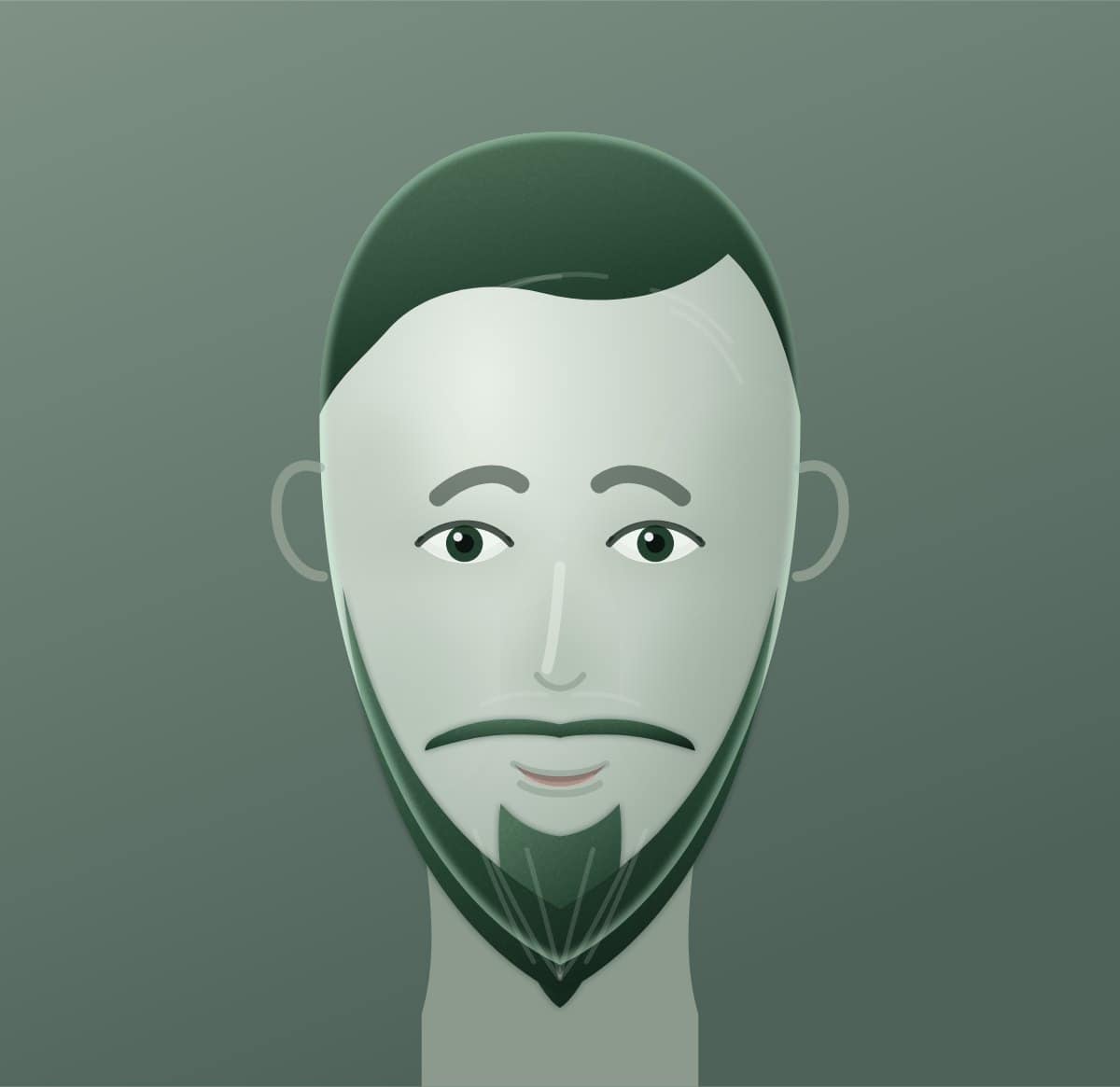
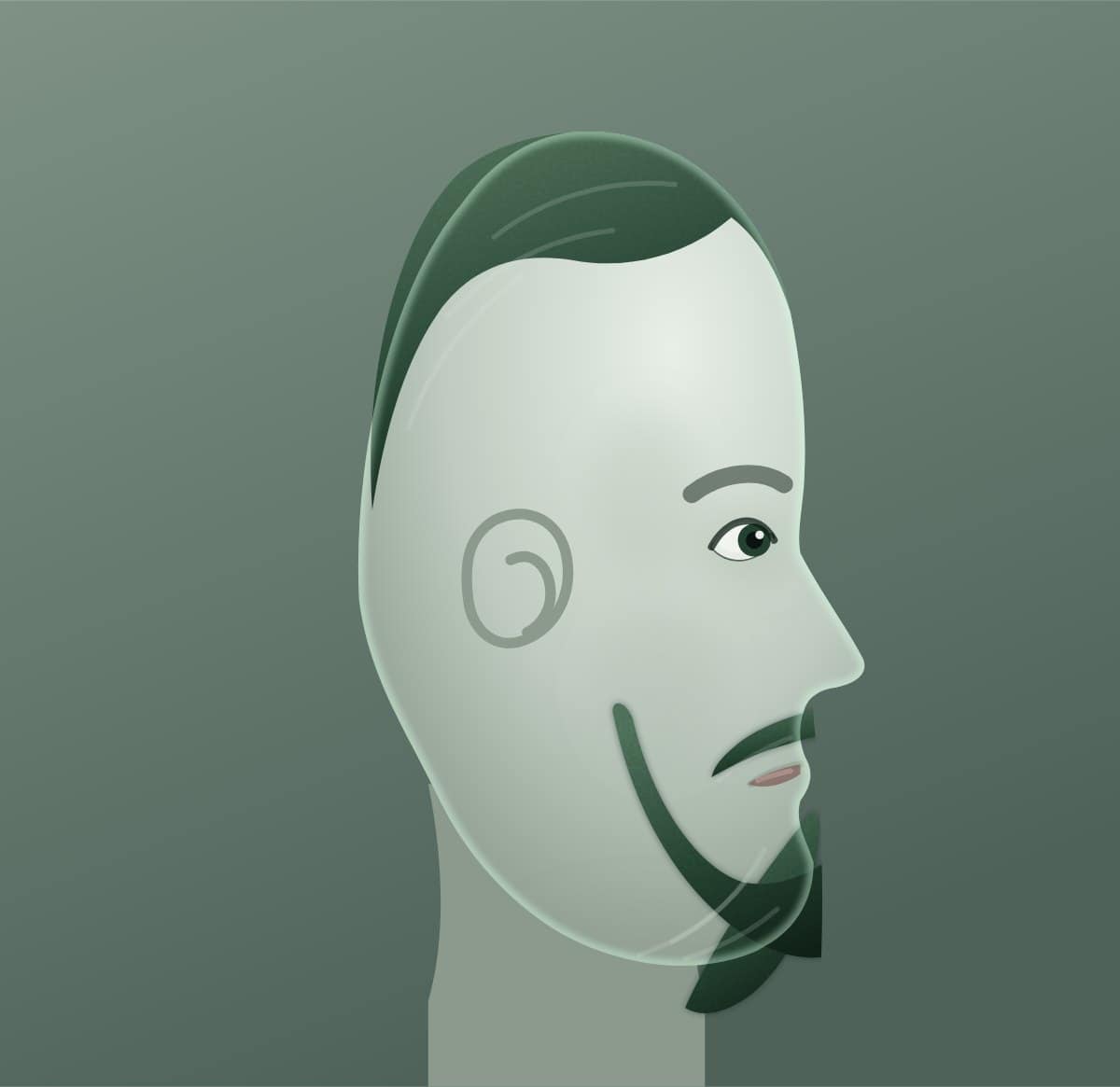
An anchor beard is a pointed chin beard with a thin line running back along the jaw on both sides, worn with a separate moustache. Seen from the front the shape resembles a ship's anchor, which is where the name comes from, and it is the most engineered-looking style in this directory.
At a glance
- Also known as
- Nothing else in common use
- What it is
- Pointed chin beard traced along the jaw, with a moustache.
- Length
- Short, under an inch
- Growing time
- 3 to 4 weeks
- Trim how often
- Every 1 to 2 days
- Best face shapes
- Oval, Square
- Moustache
- Yes
£5 off your first delivery
An anchor is all outline. The jaw line and the point both need cutting in, and both show every slip.
Valid on your first order of blades. We send the newsletter rarely, and you can unsubscribe in one click.
The variations
The same shape, worn differently. What changes is length, density and how much you take off at the edges.
Will it suit your face?
Where a style puts weight, and where it takes it away, is what decides whether it suits you. The table below is the short version.
| Ovaal | Works | Nothing to correct, so it comes down to preference. |
|---|---|---|
| Rond | Ideal | Length at the chin pulls the face longer and the bare cheeks stop it widening. |
| Vierkant | Works | Softens a heavy jaw by drawing the eye to a narrower point at the chin. |
| Langwerpig | Avoid | Adds length to a face that is already long. Go wider at the cheeks instead. |
| Heart | Ideal | Weight at the chin balances a broad forehead and a narrow jaw. |
| Diamant | Works | Fills out a pointed chin, though keep it short or it exaggerates the point. |
How to cut one, in four steps
- Grow it out3 to 4 weeks. You cannot see where your growth is dense until it is in, and shaping early is why most first attempts fail.
- Set the lengthTrim the chin and moustache with a guarded trimmer on dry hair, so it sits at its true length.
- Shave the cheeksDownward, with the grain, short passes and light pressure. Pressing harder gives razor burn, not a closer shave.
- Cut the outlineLast, with a precision trimmer. Work from the outside inward on each side, checking both sides between passes.
Full detail, tools and the common mistakes are in the guide below.
What makes it an anchor
Three elements, all deliberate. A chin section shaped to a point. A narrow strip tracing the jawline on each side. And a moustache kept separate from both, with bare skin between.
Take away the jawline strips and you have a Van Dyke beard. Join the moustache to the chin and you have a circle beard. Widen the jaw strips into a full band and you are into chin strap territory. The anchor beard shape sits between all three and borrows something from each.
The cheeks are shaved clean, and so is everything above the jaw line. Nothing connects to the sideburns.
The Iron Man question
People frequently ask for this style by describing Tony Stark, and they are more right than the internet generally allows.
Sources disagree about what Robert Downey Jr actually wears in those films. Some describe it as an anchor beard, others as a Van Dyke, others as a Balbo. The honest answer is that it borrows from all three: a narrow moustache kept separate, a chin section shaped to a point, and a jawline that is traced rather than filled.
If you take a picture to a barber, you will get a better result than if you use any single name. If you want a name, anchor beard style is the closest single word for it.
Who it suits
An anchor beard adds definition along the jaw and draws the eye to a point at the chin. It suits faces that want structure rather than softness.
Oval. Works well, with room for all three elements without crowding.
Square. Good, provided the jaw strips are kept genuinely thin. Thick ones on a strong jaw read as heavy.
Round. Helpful. The point lengthens and the jaw line adds an edge the face does not naturally have.
Long. Be careful. Keep the chin point short and let the jaw strips do the work, or the style stretches the face.
The requirement is facial hair that comes in evenly along the jaw. This style is mostly narrow lines, and a patchy beard shows badly in a line that is only a few millimetres deep. If your growth is uneven, a Van Dyke needs less continuous coverage because it has no jawline element at all.
Growing it
Three to four weeks.
Grow the whole lower face. Beard growth on the jaw is what decides whether the strips will be continuous, and you cannot judge that at ten days.
Keep the cheeks and neck shaved throughout so you are always looking at a tidy face with a defined growing area.
Cutting the shape
This is precision work and the most detailed cutting job here. Give it good light and time.
Set the length short. An anchor beard reads best close to the face. Length blurs the outline, and the outline is the style.
Shape the chin point. Scissors or a precision trimmer, working from both sides toward the centre so it forms symmetrically.
Cut the jaw strips. Follow the bone on each side, keeping the depth constant. A few millimetres is enough. Do one side completely, then match the second rather than alternating.
Set the moustache. Narrow, kept separate, trimmed clear of the lip line.
Cut the gaps. The bare skin either side of the mouth, between moustache and chin, is what makes this an anchor rather than a circle beard.
Shave everything else with a razor rather than a trimmer. A straight razor gives the cleanest edge if you are confident with one, though any sharp blade works. The contrast between hair and bare skin is doing half the job.
Keeping it
Every one to two days, and there is no low-maintenance version.
You are holding a point, two jaw lines and two gaps, all on a face that has to stay shaved. Miss a couple of days and the gaps close, which turns the anchor into something closer to a short beard with an odd outline.
Once a week, check the jaw strips are the same depth on both sides, and re-establish the point, which rounds off through repeated small trims without you noticing.
Beard care here is mostly skin care. There is very little hair and a great deal of shaved face, so a balm or moisturiser matters more than beard oil does.
What goes wrong
The point goes blunt. Repeated small trims round it off. Re-cut it properly every week.
The jaw strips differ. Cut one, copy it, check in profile.
The gaps close. Two days is enough. This is the fastest-changing part of the style.
It is grown too long. Length works against every element of the anchor beard shape.
The strips are too thick. They become a chin strap, which is a different style and a heavier look.
Questions we get asked
How long does it take to grow an anchor beard?
Three to four weeks. It needs continuous coverage along the jaw more than it needs length.
What is the difference between an anchor beard and a Van Dyke beard?
The jaw. Both have a pointed chin and a separate moustache, but an anchor beard adds a thin line along the jawline on each side. A Van Dyke leaves the jaw bare.
Is the Tony Stark beard an anchor beard?
Closest of the common names, yes, though sources also call it a Van Dyke or a Balbo. It genuinely borrows from all three, so taking a photo to your barber beats using any one name.
Can you grow an anchor beard with a patchy beard?
It is one of the harder styles for uneven growth, because the jaw strips are narrow and any gap shows. A Van Dyke is more forgiving, since it has no jawline element.
Is an anchor beard high maintenance?
Yes, among the highest here. A point, two jaw lines, two gaps and a shaved face means a precision trimmer in your hand most mornings.
How thick should the jawline strips be?
A few millimetres. Thin enough to read as a traced line rather than a band. Thicker and the anchor beard style becomes a chin strap.
Other disconnected styles
Same shape, different length or moustache.
If this one is too much work
Same idea, less of your morning.
Browse by what matters to you
The same directory, cut a different way.