
Pencil moustache
How to Grow, Shape and Keep One Sharp
A pencil moustache is a narrow line of hair sitting just above the top lip, usually two to six millimetres deep, with clean skin above it and clean skin below. That is the entire style. There is no length to hide behind and no shape to grow into, which is why it is one of the few looks where the shave matters more than the hair.

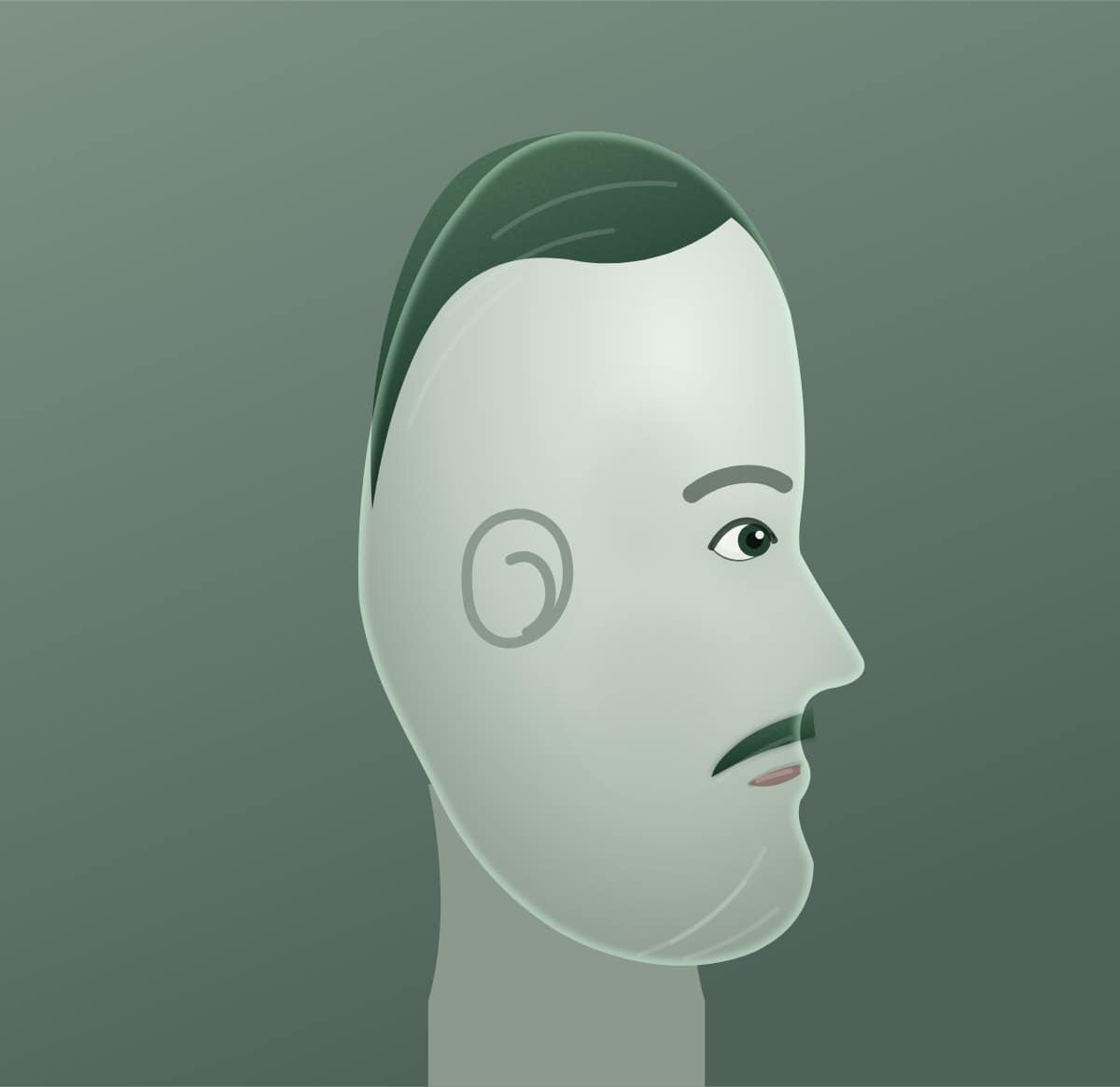
At a glance
- Also known as
- mouth brow
- What it is
- A thin line above the lip.
- Length
- Short, under an inch
- Growing time
- 2 to 4 weeks
- Trim how often
- Every 1 to 2 days
- Best face shapes
- Any
- Moustache
- Yes
£5 off your first delivery
A pencil moustache is a line a few millimetres wide. Nothing blunt is cutting that.
Valid on your first order of blades. We send the newsletter rarely, and you can unsubscribe in one click.
The variations
The same shape, worn differently. What changes is length, density and how much you take off at the edges.
Will it suit your face?
Where a style puts weight, and where it takes it away, is what decides whether it suits you. The table below is the short version.
| Oval | Ideal | No shape to correct, so anything from a pencil to a handlebar sits well. |
|---|---|---|
| Redondo | Works | Go wider than the mouth rather than heavier, so it does not add bulk. |
| Quadrado | Ideal | A strong jaw carries a heavy moustache without looking top-loaded. |
| Oblongo | Ideal | Horizontal weight across the lip breaks up the length. |
| Heart | Works | Draws the eye down from a broad forehead. |
| Diamante | Works | Adds width across the middle of the face. |
How to cut one, in four steps
- Grow it out2 to 4 weeks. No trimming at all in that time, including the hairs hanging over your lip.
- Set the shapeComb it down and flat, then cut to your outline. Never cut it wet, it dries shorter than you cut it.
- Clear the lipTrim along the top lip line so it does not end up in your mouth. Scissors give more control than a trimmer here.
- Wax and trainWarm the wax between your fingers first, work it in from the centre out, then shape the ends.
Full detail, tools and the common mistakes are in the guide below.
What counts as a pencil moustache
The test is the gap. A pencil moustache has bare skin visible between the base of the nose and the top of the hair, and the hair stops at or just past the corners of the mouth. Lose that upper gap and you have a chevron. Let the ends run down past the mouth and you are heading toward a horseshoe.
Depth is the other half of it. Anything much over six millimetres stops reading as a drawn line and starts reading as a small moustache that needs a trim. Most people who think theirs has stopped working have simply let it creep a millimetre a week for a month.
The name varies more than the style does. Pencil line moustache means the same thing. Mouth brow is an older term you will still see. In the US it is spelled mustache, which is worth knowing if you are searching for reference photos.
Pencil moustache styles
Classic pencil moustache. One unbroken thin moustache tracing the upper lip, stopping at the corners of the mouth. The version to start with.
Parted. A shaved gap at the philtrum splits the pencil line moustache in two. Symmetrical and precise, and it gives you a third edge to keep even.
Pencil with a goatee. The thin moustache above, hair below the lower lip. Adds weight for a heavier jaw and takes some pressure off the line.
Pencil over stubble. The line kept sharp with a few days of facial hair on the cheeks. The most forgiving version, because the contrast is softer.
Grown-out ends. The centre kept pencil-thin with the tips left long enough to wax upward. Months more growing, and it turns a restrained style into a statement.
Who it actually suits
The honest answer is that this style is less about your face shape than most, and more about your hair.
Dark, dense facial hair on the upper lip is what makes a pencil moustache work. The whole effect depends on contrast between hair and skin, so if your moustache hair comes through fair, ginger or grey, a line this thin can simply disappear in ordinary light. That is not a reason to avoid it, but it does mean going slightly deeper, closer to six millimetres than two, so there is enough to see.
Face shape matters at the edges. On a narrow face a pencil line moustache adds a horizontal accent across the middle, which helps. On a wide or heavy jaw a thin moustache can look undersized on its own, and it is usually better paired with something below the lip, a soul patch or a small goatee, to give it company.
The thing that rules people out is not the face, it is the skin. A pencil moustache needs the skin immediately above and below the hair shaved close, most days. If you get ingrown hairs, or your upper lip flares up when you shave two days running, this style will find that out quickly.
How long it takes to grow
Two to four weeks, which is short as these things go, because you only need one lip's worth of hair.
The temptation is to start shaping at ten days, when there is enough to see. Do not. Facial hair grows unevenly on the upper lip, and the sparse patch you cut around at day ten will have filled by day twenty-five, leaving your line in the wrong place. Wait until the growth stops changing.
If your top lip comes through patchy after four weeks, give it another fortnight before making a decision. Some people need six weeks to get a continuous line, and that is normal rather than a sign the style is not for you.
While it grows, keep everything else shaved as you normally would. A tidy face with an untidy top lip reads as deliberate. An untidy everything reads as neglect.
Cutting one, step by step
Work in good light, with the mirror at eye level and your head straight. Most uneven pencil moustaches are cut by someone looking slightly down or slightly to one side.
Take the bulk down first. Comb the hair flat toward the lip and trim it to roughly three to five millimetres, keeping the full width. You are making a flat, even surface to cut into, not setting the shape yet.
Set the bottom edge. This is the easy one, because your lip tells you where it goes. Take the hair down to the lip line, following the curve rather than cutting a straight bar across it.
Set the top edge. This is the cut that makes or breaks the pencil moustache. Shave downward from under the nose, leaving the depth you want. Work from the centre outward on each side and keep the blade parallel to the lip, not to the nose. Clear gel rather than foam is worth it here, because you can see exactly where the edge is landing.
Decide the ends. Stopping at the corners of the mouth is the classic version and the easiest to keep even. Running slightly past is a fuller look. Tapering inward is more delicate and less forgiving. Pick one and stay with it, because changing your mind halfway costs you two weeks.
Check, then stop. Rinse the blade, stand back, look at both sides. Taking a little more off is always available to you tomorrow. Putting it back is not.
If you have never cut one, having a barber set the shape the first time and then holding that line yourself is a reasonable way in. You are only maintaining a border someone else established, which is a much smaller job than establishing it.
Keeping it
Every one to two days, which is the real cost of a pencil moustache.
The daily job is not the thin moustache itself, it is the skin around it. Stubble coming through above the line makes the moustache look thicker and blurrier than it is, and that is the single most common reason a pencil moustache stops looking intentional. The hair itself only needs attention every few days.
Once a week, spend a little longer. Check the depth has not crept, re-cut the top edge, and compare both sides against a fixed reference like your nostrils or the corners of your mouth rather than judging by eye.
Use scissors for stray hairs rather than a trimmer. A trimmer head is wider than the mistake you are trying to fix.
If your hair is light, a brow pencil or beard pen in your own colour, used sparingly, adds definition. Used generously it looks drawn on in the wrong way, which is a different style entirely and rarely the one anyone means to wear.
Variations worth knowing
Classic. One unbroken line, stopping at the corners of the mouth. The most forgiving version and the one to start with.
Parted. A small shaved gap at the philtrum, the groove under the nose, splitting the line in two. It looks precise, and it is: you now have three edges to keep even instead of two, and the gap widens if you are careless.
Pencil and goatee. The line plus hair below the lower lip. Adds weight for a heavier jaw and takes some of the pressure off the moustache to carry the whole face.
Pencil over stubble. The moustache kept sharp with a few days' growth on the cheeks and chin. This is the version that reads as modern rather than vintage, and it is more forgiving because the contrast is softer.
Grown out at the ends. Keeping the centre thin and letting the tips grow long enough to wax upward. Months of extra growing and daily wax, but it is where the pencil line goes if you want it to be a statement.
Where it came from
The style belongs to the 1920s to 1940s, and it was partly a technical solution. Black and white film with hard studio lighting flattened faces, and a sharp dark line above the lip kept the mouth legible in close-up. Clark Gable, Errol Flynn and David Niven all wore one, and it became attached to evening dress and a certain kind of on-screen polish.
It went out with the fuller beards of the sixties and seventies and has come back in fits since, usually as a deliberate reference rather than a default. Little Richard wore a very thin one through the fifties. John Waters has worn one so narrow it looks pencilled on, which is more or less the point.
What goes wrong
It gets thicker without you noticing. A millimetre a week is invisible day to day and obvious after a month. Re-cut the top edge weekly whether it looks like it needs it or not.
One side sits higher. Almost always from cutting with your head tilted. Use a fixed mirror and pick a landmark on your face to measure against.
The skin gives up. Daily shaving over the same small area is hard on it. Sharp blades and single passes help more than any product. If it is getting sore, skip a day and accept a slightly soft edge, which looks better than irritation does.
Stubble blurs the line. Covered above, and worth repeating, because it accounts for more failed pencil moustaches than bad cutting does.
Questions we get asked
How long does it take to grow a pencil moustache?
Two to four weeks for most people. Some need up to six weeks to get a continuous line if their top lip comes through patchy. Wait until growth stops changing before you cut, or your edges will end up in the wrong place.
How thick should a pencil moustache be?
Between two and six millimetres deep. Under two is hard to keep even, and over six stops reading as a pencil line. If you are unsure whether yours still counts, it has probably crept.
Can you have a pencil moustache with patchy growth?
Yes, and it is more forgiving than most styles because it only needs one strip of hair. Go slightly deeper to cover thin spots, or pair it with a soul patch or goatee so the moustache is not carrying the look alone.
How often do you need to trim a pencil moustache?
The hair needs cutting every few days. The skin above and below needs shaving every one to two days, and that is the part that actually keeps it looking sharp.
Is a pencil moustache suitable for work?
A neat one reads as deliberate rather than eccentric, and in most workplaces that is enough. The version that raises eyebrows is the grown-out waxed one, not the classic line.
What is the difference between a pencil moustache and a chevron?
The gap. A pencil moustache leaves bare skin between the nose and the hair and is only a few millimetres deep. A chevron fills that space and sits thick against the top lip.
Does a pencil moustache suit a round face?
It can, though on a rounder or wider face the line alone can look small. Pairing it with a soul patch or a short goatee gives it more to work with and adds some length to the lower face.
Do you need wax for a pencil moustache?
Not for the classic version, which is too short to need holding. Wax only comes in if you grow the ends out to turn them upward.
Other moustaches
Same shape, different length or moustache.
Browse by what matters to you
The same directory, cut a different way.