
The Colonel’s Journal / Beards and facial hair
Why Do Men Have Beards? A Look at Evolution and Psychology
Last updated on
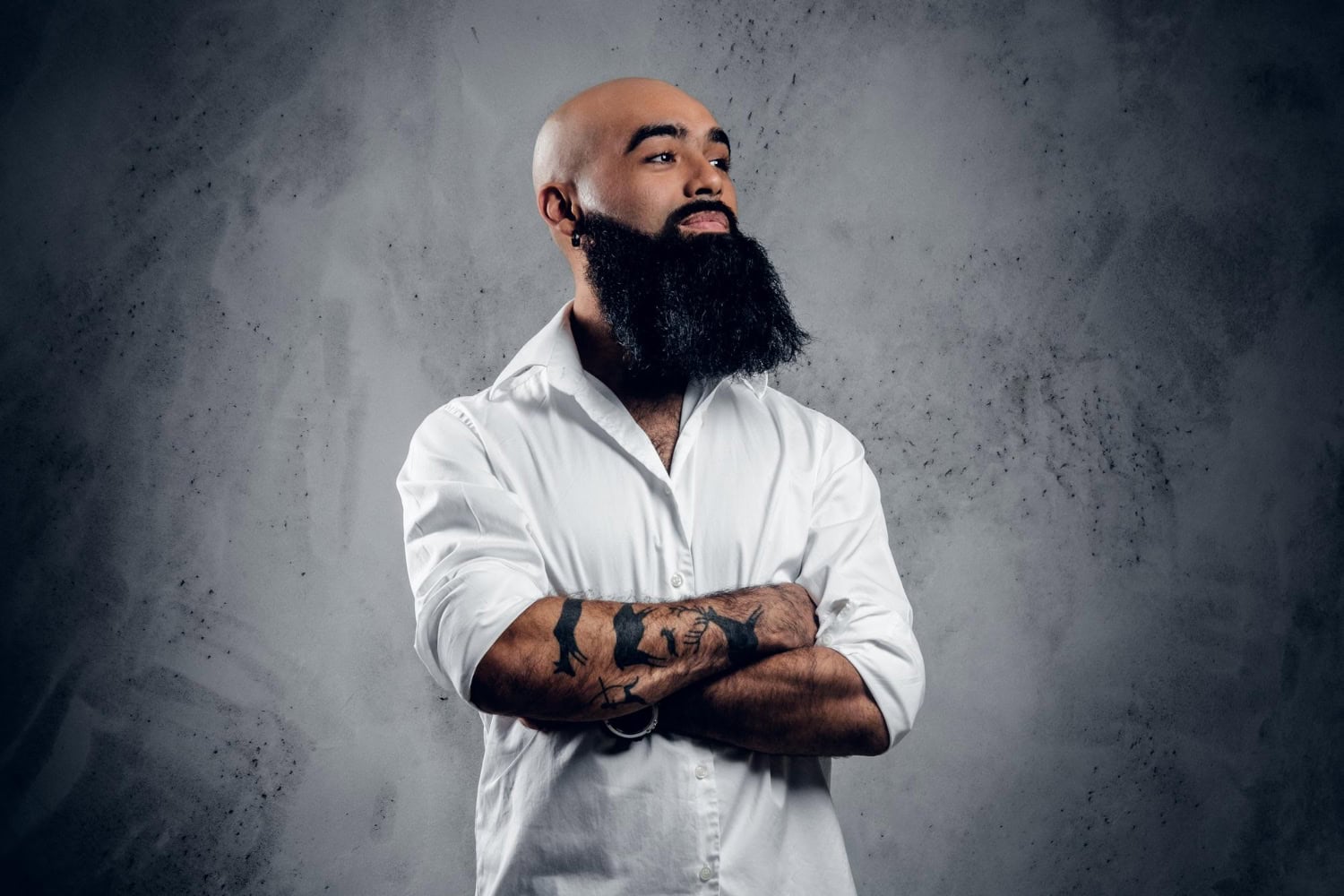
A man’s beard exists mainly due to evolution, biology, and social reasons. Evolutionarily, beards help attract partners and challenge opponents. Biologically, testosterone fuels beard growth, signaling maturity. Socially, beards are a sign of masculinity.
Key Takeaways
- Beards evolved as a means of attracting mates and deterring rivals, signaling health and masculinity.
- Cultural perceptions of beards vary, symbolising power, maturity, and social identity across different societies and historical periods.
- Proper growth and maintenance techniques are essential for a healthy beard, debunking myths about hygiene and professionalism in the workplace.
The Evolutionary Perspective
The story of beards begins with evolution. Facial hair in humans may have evolved under selective pressures related to male competition and attraction. The presence of beards in males can be traced back to our ancestors, where it played a part in survival and reproduction.
In the wild, physical traits often serve multiple purposes. For men, having a beard may have provided advantages in both attracting mates and deterring rivals. The thick growth of facial hair could signal health and vitality, making bearded men more appealing to potential partners and more intimidating to other men.
The prevalence of beards in the male population has been linked to competition among the same sex for mating opportunities.
Sexual Selection
Sexual selection has played a significant role in the development of men’s facial hair. Testosterone, the hormone responsible for beard growth and facial hair growth, peaks during puberty, marking sexual maturity. This is no coincidence; it signals to potential mates and rivals that a male can grow facial hair and is biologically ready to reproduce and compete.
The variation in beard development among individuals can be attributed to genetic heritage and environmental factors. This diversity means that while some men can grow a thick, bushy beard, others may have lighter or patchier growth. Despite these differences, the presence of a beard generally enhances a male’s attractiveness and dominance in the eyes of both females and other males.
Beards also play a role in intersexual attraction and intrasexual competition. A well-groomed beard can make a man appear more attractive and mature, while in competitive scenarios, it can signal dominance and strength. These factors combined illustrate how beards have been shaped by the forces of sexual selection throughout human history.
Protection and Function
Beyond attracting mates and deterring rivals, beards also serve practical purposes. They act as a protective barrier against environmental elements and potential injuries. For instance, a beard may block some UV radiation from the skin underneath, though it’s no substitute for sunscreen.
Similarly, body hair, including facial hair, has evolved to serve protective functions in both human and non-human primates. These traits have adaptive roles, such as thermoregulation and providing a layer of protection against environmental hazards.
Some researchers have even suggested beards evolved to cushion blows in a fight. A 2020 study from the University of Utah found that fleece-covered sheepskin samples absorbed more of a blunt impact than bare ones, but that’s a model in a lab, not a punch to the chin, so treat the idea as interesting rather than proven.
Psychological and Social Factors of Men’s Facial Hair
The significance of beards extends beyond biology into psychology and social dynamics. Beards may have developed as signals of male dominance and status through competition with other males. They also serve as a source of identity, allowing men to express their individuality within societal norms. Interestingly, all the facial hair seen on men today might not solely be aimed at attracting mates but also at asserting dominance in social settings.
In many cultures, beards are seen as a symbol of masculinity, power, and maturity. This perception influences how men’s facial hair is viewed by themselves and how they are perceived by others. The psychological impact of growing a beard can be profound, affecting self-esteem and social interactions.
Perception of Masculinity
Facial hair is often considered a symbol of masculinity. Men’s facial hair is perceived as stronger and more commanding in various cultures. This association with masculinity can signify power, maturity, and social status, enhancing a man’s appearance and perceived dominance. Some men prefer a clean-shaven look, which can also signify masculinity and social status.
Historically, beards have represented wisdom and cultural identity. In modern society, full-bearded men often appear more respected and powerful. The presence of facial hair and head hair can enhance the perception of a man’s age and social standing rather than attractiveness.
In competitive scenarios, beards can signify social dominance and attract potential mates. That mix of masculinity and social status is a big part of why many men grow beards.
Confidence and Self-Esteem
Growing a beard can significantly impact a man’s self-image and confidence. Many men feel that having a beard enhances their self-image by concealing features they might be self-conscious about, such as scars or jaw shape. This concealment can boost confidence levels, making men feel more comfortable in social situations.
Beards are often perceived as a desirable trait among both genders, contributing positively to a man’s confidence. The ability to grow and maintain a beard can become a source of pride and self-assurance, enhancing social interactions and personal fulfillment.
Cultural Significance of Beards
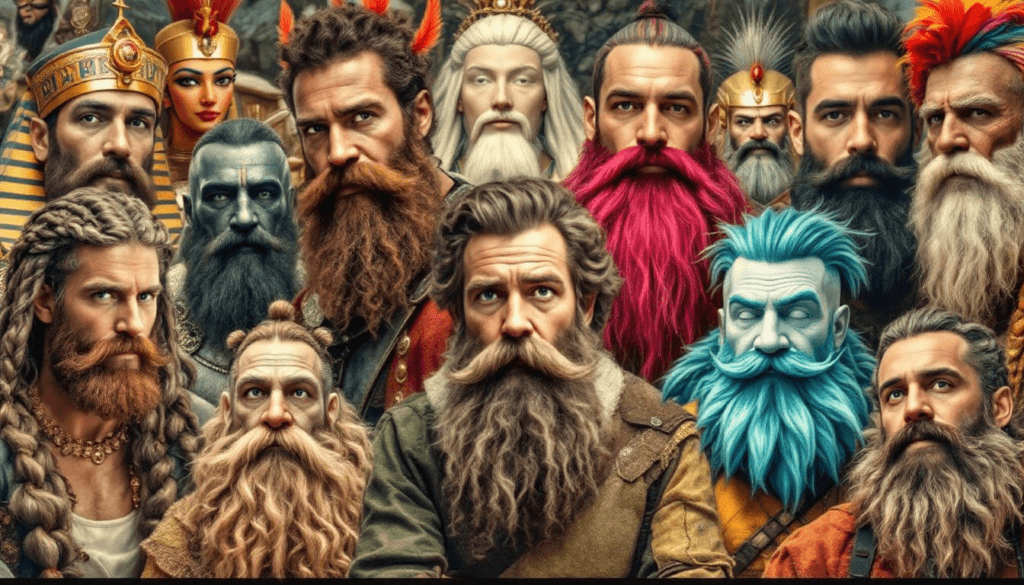
Beards hold significant cultural value across different societies and historical periods. They are often associated with authority and dominance, rooted in historical perceptions that have persisted through time. The cultural impact of beards influences social interactions and perceptions, acting as a signal of masculinity and maturity.
Beards can also signify traits such as age, social status, and healthiness, influencing how men are perceived in social contexts.
Historical Context
In ancient Egypt, most men kept their faces clean-shaven, but the beard was still a symbol of power. Pharaohs wore a ceremonial false beard strapped to the chin, and even Hatshepsut, one of the few female pharaohs, is shown wearing one.
In ancient Indian culture, long beards represented dignity, wisdom, and courage. In Mesopotamia, Assyrian carvings show kings and nobles with long, carefully curled beard styles. The Vikings also showcased their beards as symbols of strength and bravery, often styling them with braids and beads.
These historical examples illustrate how beards have been intertwined with notions of power, wisdom, and social hierarchy throughout history.
Modern Trends
The perception and popularity of beards have changed significantly in modern times. Big beards and whiskers were everywhere in Victorian Britain, but beards fell out of fashion in the West around the turn of the twentieth century.
Society has gone through various phases in the perception and popularity of beards. Today, beards have made a strong comeback, with many men embracing facial hair as a form of personal expression and style.
Beard Growth and Maintenance
Growing and maintaining a beard requires knowledge and effort. The typical timeline for growing a full beard ranges from 2 to 6 months, with daily growth rates averaging between 0.3 and 0.5 mm. Beard grooming involves techniques and styles that suit one’s face shape and personal preferences.
Proper maintenance is crucial for achieving a healthy and well-groomed beard. This includes regular trimming, moisturizing, and using appropriate grooming tools. Understanding how to care for a beard can make the process more enjoyable and rewarding.
Tips for Growing a Beard
When starting to grow a beard, it’s essential to resist the urge to trim or shape it for the first 4 to 6 weeks to allow it to fill out. During this initial phase, itchiness is common but can be alleviated through proper washing and moisturizing.
Using beard oils early in the growth process can help keep the facial hair soft and reduce itchiness. Regular trimming is also vital to manage split ends and maintain the beard’s shape as it grows.
Consistent grooming practices, such as applying beard oil and conditioner, are essential for maintaining a healthy and attractive beard. These tips can help men navigate the challenges of growing a beard and achieve the desired look.
Grooming Techniques
After the initial growing phase, regular trimming is crucial to maintain the beard’s shape and prevent a messy appearance. Trimming should be done when the beard is dry to accurately gauge its length and style.
Using a beard brush can enhance grooming by directing hairs, improving circulation, and exfoliating the skin. Investing in quality grooming tools, like clippers and scissors, can significantly enhance beard maintenance.
Common Misconceptions About Beards
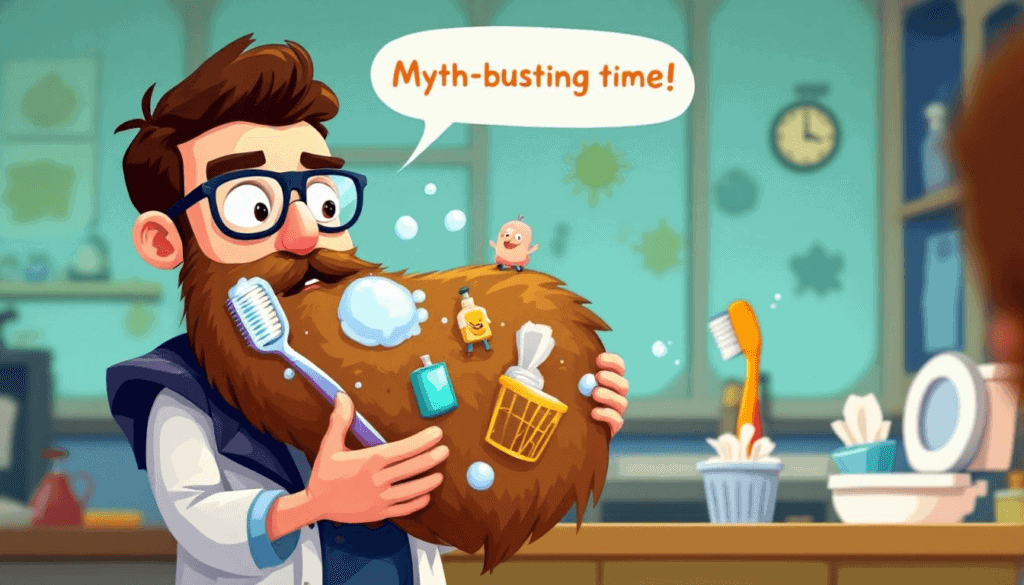
Despite their popularity, there are many misconceptions about beards. One common myth is that beards are unhygienic, but proper care and regular cleaning effectively maintain their cleanliness. Another misconception is that facial hair traps food, which can be avoided with proper grooming and eating habits.
Many people erroneously believe that shaving causes facial hair to grow back thicker or faster. This misconception is rooted in the appearance of freshly cut hair, which seems thicker due to the blunt edge. Understanding these myths can help men make informed decisions about beard care.
Beards and Hygiene
A well-maintained beard doesn’t inherently smell bad, provided it is washed and groomed regularly. Using appropriate cleansers and beard care products like oils and balms is essential for hydration and nourishment. Regular washing and grooming dispel the myth that beards are inherently dirty.
Proper care ensures that beards remain clean and pleasant, especially when styled with light stubble.
Professionalism and Beards
There is a changing perception of beards in professional environments. More workplaces are embracing facial hair as a valid personal expression, recognizing that it does not negatively affect job prospects as long as it is kept tidy. Many companies now acknowledge that beards do not impact job performance, allowing for more personal expression in the workplace.
Summary
Beards are a blend of evolutionary traits, psychological impacts, cultural significance, and practical considerations. From their role in sexual selection to their protective functions, beards have been shaped by both natural and social forces. They serve as symbols of masculinity, power, and personal identity, influencing how men perceive themselves and how they are perceived by others.
Missed a spot?
More from Beards and facial hair

How to Grow a Beard: A Practical Guide
Key Takeaways Genetics set the ceiling. Lifestyle, grooming and patience decide how close you get to it, and that means at least...

What Does Beard Oil Do? Benefits and Tips for a Healthier Beard
Wondering what beard oil does? Simply put, it moisturises your beard and the skin underneath, preventing dryness and itchiness.
The Barber Pole: History, Symbolism, and Cultural Significance
Key Takeaways Walking down any main street, the sight of a spinning barber pole immediately signals where to find professional...