
The Colonel’s Journal / Grooming & Guides
How often should you shave?
Last updated on

Everybody’s facial hair grows at a different rate, which means that each person’s shaving routine is different and requires a different time schedule. Another important factor to consider when deciding how often should you shave is what kind of beard style would you like to maintain.
So how often should you shave?
How frequently you should shave depends on several factors, including your skin type, your preferred facial hair style, and the rate at which your facial hair grows. Genetics and hormones play the biggest part in how thick and fast it grows.
There isn’t an exact answer to the question of how often you should shave as there are so many variables, but as a rule, shave as often as your look needs and your skin allows. Plenty of men shave every day without any trouble. If yours gets sore or red, give it a day off in between.
If you want to maintain a little stubble, shave every 3 to 4 days. And if a smooth, clean-shaven appearance is something you prefer, you’ll need to shave every day or two.
With a short beard, you’ll mostly be trimming, plus a shave once or twice a week to keep your cheek and neck lines sharp.
However, for those who like medium to longer beard styles, their shaving schedule looks a bit different. Start by picking the right shaving products. Every beard length requires different care. Trim your beard often, using a beard or stubble trimmer for a smarter look.
What happens if you shave too often?
When you shave, you also take off a thin layer of dead skin cells. That’s no bad thing, but with poor prep or a blunt blade, shaving every day can leave your skin feeling raw.
Going over the same patch too often, especially with a tired blade or heavy pressure, can lead to dryness, irritation, and redness.
Check out our beard styles directory to find the perfect beard style for you.

How often is too often?
There’s no fixed limit. If you want to be clean-shaven every day, you can be, as long as you prep properly, use a sharp blade and keep the pressure light. If your skin is sensitive or you keep getting razor burn, leave a day or two between shaves to let it settle.
Our top tips for the perfect shave:

1. Make sure your skin is moist to avoid ingrown hairs.
There’s nothing worse than shaving your dry facial hair. And yes we know you’re using shaving gel. Obviously! However, this may just not be enough for your shave routine.
Moisturizing is one of the most important things for the skin. Before shaving, after shaving or on regular basis, you should consider implementing this step into your skincare routine, if you haven’t already.
Moisturizer forms a barrier between your skin and the environment, especially cold, dry air, which can further dry your skin. Moisturizing also helps to rehydrate and improve the skin’s ability to retain water.
When your skin and hair are well hydrated, the hair softens and cuts more easily, helping to prevent irritation.
2. Don’t share a razor
Razor blades have the potential to spread skin illnesses as well as blood-borne viral infections such as Hepatitis B, C, and HIV. Razors can make micro-cuts on the skin as well as cut hair, which can be dangerous if infected.
Furthermore, you may not know how long another person’s razor has been used. His or her razor blades may be older than you realise, and shaving with a dull blade increases the likelihood of scratches, irritation, razor burn, and pimples.
If you use a refillable razor, consider storing up on blade cartridges so you don’t have to resort to using someone else’s razor if your blade becomes too dull. Having additional blades on hand can also come in handy if someone else uses your razor by accident, as you can easily switch the used blade for a fresh one to avoid cross-contamination.
3. Use an aftershave balm to soothe the skin.
This step isn’t 100% necessary but it helps calm irritated skin after shaving. And don’t forget to use our King’s Gambit Beard Oil for perfect styling.
4. Exfoliate before shaving to remove dead skin cells.
Exfoliating before shaving helps you avoid razor burn, ingrown hairs, and shaving nicks.
The pre-shave exfoliation will smooth your face enabling your razor blade to glide over, resulting in the closest shave. Exfoliating is worth adding to your routine since it removes dead skin cells, additional dirt, and oil, as well as the capacity to lift hairs so they do not sit flat against the skin.
To exfoliate before shaving you can use a sponge, brush, glove or a scrub. For best results, brush lightly and in short, circular movements. Rinse with warm water after about 30 seconds of cleansing. Exfoliating should be avoided if your face has wounds, open sores, or is burned. Following that, use an SPF-containing moisturiser.
This step can be done when practising hair removal on other body hair too, such as leg hair, armpit hair, and pubic hair whilst taking a warm shower.
5. Avoid shaving over a wound, cut or rash.
An open wound should never be shaved. Before shaving, wait until the region has healed. You will very certainly reopen the wound. Instead, try to close shave around it. It should heal in a few days, allowing you to resume your daily routine.
Any skin irritation, wound or redness of some sort should be avoided when shaving. As we learned so far, preparing the skin for the process is one of the most important things and skin wounds are best healed when left alone.
Home made aloe vera gel.
This is a natural way to soothe your skin. Aloe vera can help with minor wounds and inflammation, including light burns and skin irritation.
Step 1
Simply cut off a leaf from the plant. If you don’t have aloe vera at home you can use a store-bought leaf.
Step 2
Wash it thoroughly to remove any dirt before standing it upright in a cup or basin for 10 to 15 minutes. This permits the yellow-tinted resin in the leaf to drain.
Because the resin contains latex, which might irritate your skin, finishing this step is critical.
Step 3
After the resin has completely drained, rinse the leaves and peel off the thick skin with a vegetable peeler.
Step 4
Then scoop the gel into a blender and blend it for a few seconds until it becomes foamy and liquid.
And Voilà! The gel is ready to use.
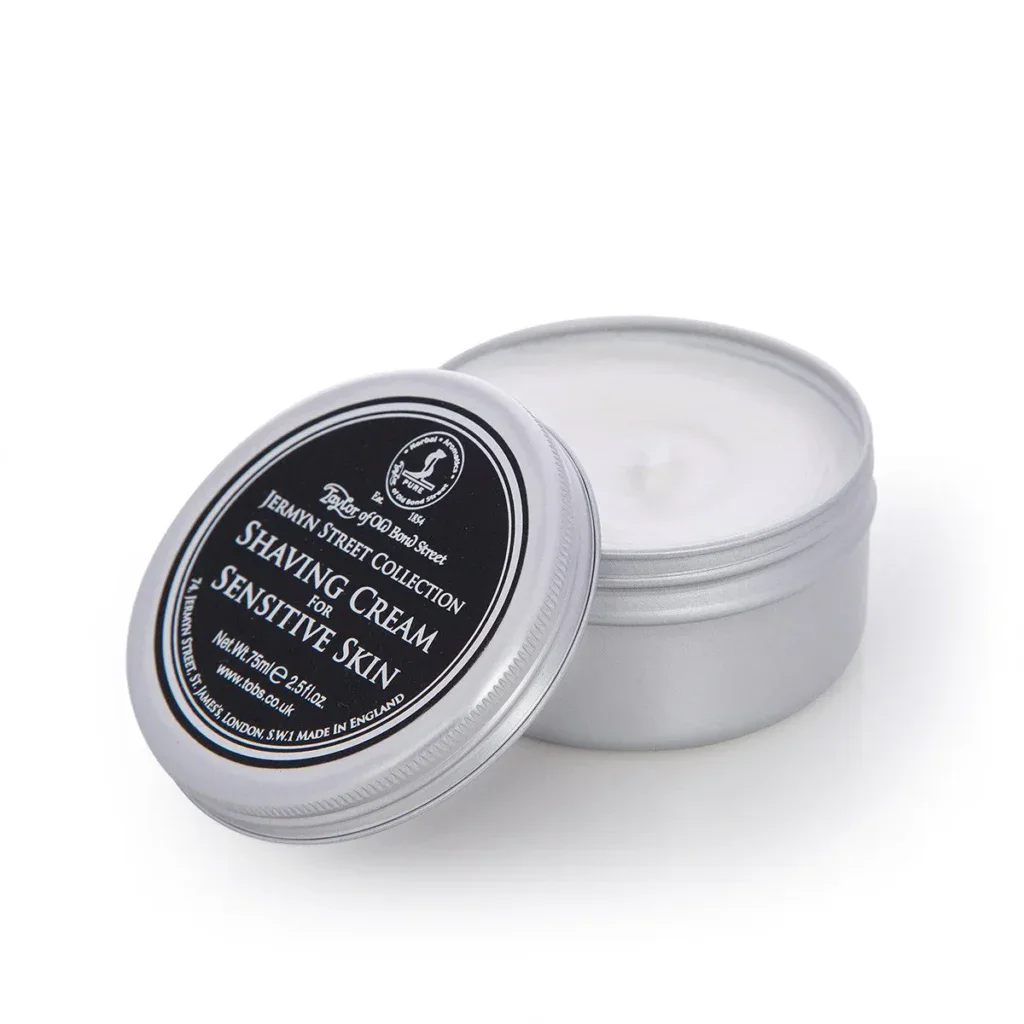
P.S. If you don’t have time for DIY, you can always use our Sensitive Shaving Cream with a modern fresh fougere fragrance with bergamot, lemon, lime and lavender supported by a heart of geranium, neroli and amber resting on a substantive base of musk, patchouli and vanilla, for the smoothest shave.
6. Don’t shave against the facial hair growth
To keep razor bumps at bay, shave with the grain, in the direction your hair grows.
Shaving against the grain gives you a closer shave, but it raises the chance of razor burn and irritation, so if you have sensitive skin, avoid it. If you do go against the grain, do a with-the-grain pass first, re-lather, and keep the pressure light.
7. Replace your razor often
This step is particularly important when shaving, and it depends on your shaving frequency. The more often you shave, the sooner you’ll need a fresh head. The longer you use your razor, the more bacteria, dead skin cells, shaving cream, and hair accumulate. Especially if you don’t rinse between strokes. The older the razor blade, the longer it will take to shave.
However even if your shaving frequency varies and despite what’s your hair type, or whether you’re using disposable razors, single blade razors, multiblade razors, cartridge razors or safety razors, they should be changed every 5 to 7 shaves, or sooner if the blade starts to tug. This will give you the best shave and make your frequent shaving feel like a treat rather than a chore.
By not changing your razor as often as you need, you increase the risk of having an infection. Throw away any razor blade that looks to be rusting or feels dull on your skin.

The American Academy of Dermatology recommends changing your razor blades every five to seven shaves, if not sooner.
Check our How often should you change your razor? article for more information.
With our Premium VIP and Classic Member razor subscriptions, you’ll never run out of blades. You choose how often your refills arrive, so there’s always a fresh one ready.
8. Don’t rush whilst shaving.
Shaving too quickly can result in nicks and cuts. If it happens, don’t bother putting a tissue on it because it will only stay there for five seconds. Instead, rinse the area and apply some antiperspirant to it. Aluminium chloride, used in antiperspirants, can restrict blood vessels and cause a nick to clot.
Or you can put an ice cube or eye drops on the affected area, which can restrict the blood vessels and help the nick clot faster. Then apply a balm to protect larger injuries and keep them from scabbing over.
Missed a spot?
More from Grooming & Guides
The Perfect Beard Neckline: How to Find It, Trim It and Keep It Clean
Set your beard neckline two finger widths above the Adam's apple, in a soft curve from ear to ear.
Can You Take a Razor on a Plane? The UK Rules for Hand Luggage
Cartridge and disposable razors are fine in UK hand luggage. Loose blades and loaded safety razors are not.
How to Shave Your Chest Without the Itch That Follows
Trim first, exfoliate, shave with the grain and moisturise while the skin is damp.