
Garibaldi beard
the wide, rounded full beard, and why it is easier than it looks
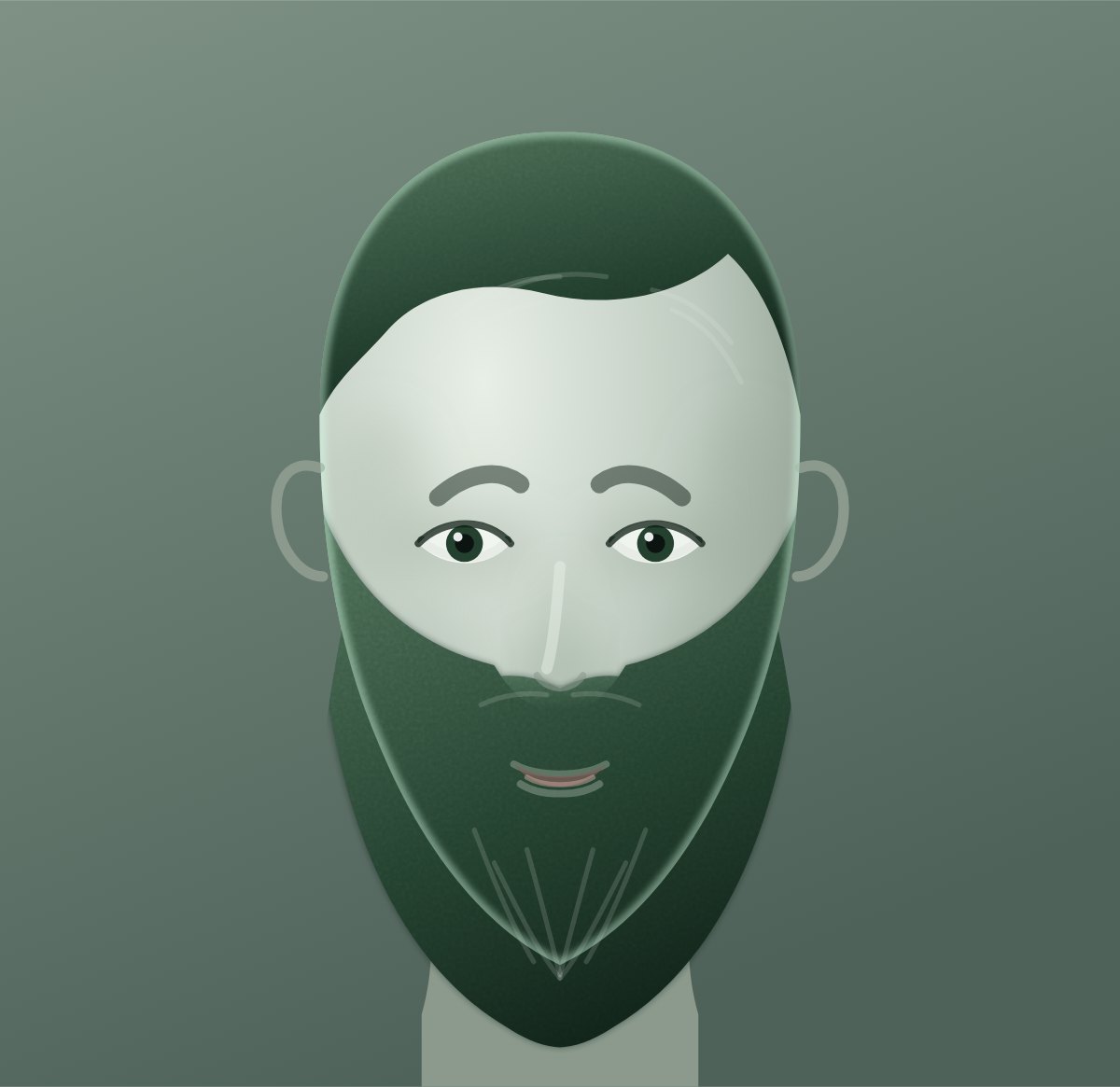
The Garibaldi is a full beard grown wide, with a rounded bottom edge and cheek lines left more or less where they grow. No carved edges, no point, no fade. It is one of the biggest beards in this directory and, once you have it, one of the least demanding.
This covers what separates it from other long beards, the honest timeline, and how to trim a rounded bottom without ruining it.

At a glance
- Also known as
- Nothing else in common use
- What it is
- Wide, rounded and full, with a natural edge.
- Length
- Long, three inches and up
- Growing time
- 4 to 6 months or more
- Trim how often
- Every 3 to 5 weeks
- Best face shapes
- Oval, Long
- Moustache
- Yes
£5 off your first delivery
Wide and rounded on top, clean underneath. The contrast is what makes the shape read.
£5 off your first subscription or VIP order - one per customer, unsubscribe with 1 click
The variations
The same shape, worn differently. What changes is length, density and how much you take off at the edges.
Will it suit your face?
Where a style puts weight, and where it takes it away, is what decides whether it suits you. The table below is the short version.
| Oval | Ideal | Takes almost any length and shape without fighting the proportions. |
|---|---|---|
| Round | Avoid | Adds width where there is already width. A chin-led style suits better. |
| Square | Works | Round the corners off or it doubles up on a jaw that is already strong. |
| Long | Ideal | Width at the cheeks shortens the face. Keep the chin short, not pointed. |
| Heart | Works | Weight low balances a wide forehead, so long as the cheeks stay tidy. |
| Diamond | Ideal | Fills the narrow jaw and squares off the lower face. |
How to cut one, in four steps
- Grow it out4 to 6 months or more. Cutting into a beard that has not filled in leaves holes you then have to grow out again.
- Set the lengthStart on a longer guard than you think you need and work down. You cannot put it back.
- Set the necklineTwo fingers above the Adam's apple, curving up to behind the jaw. Higher than that and you lose the jawline.
- Tidy the cheeksFollow your natural cheek line rather than inventing a straight one. Take off anything above it.
Full detail, tools and the common mistakes are in the guide below.
What makes a beard a Garibaldi
Three things.
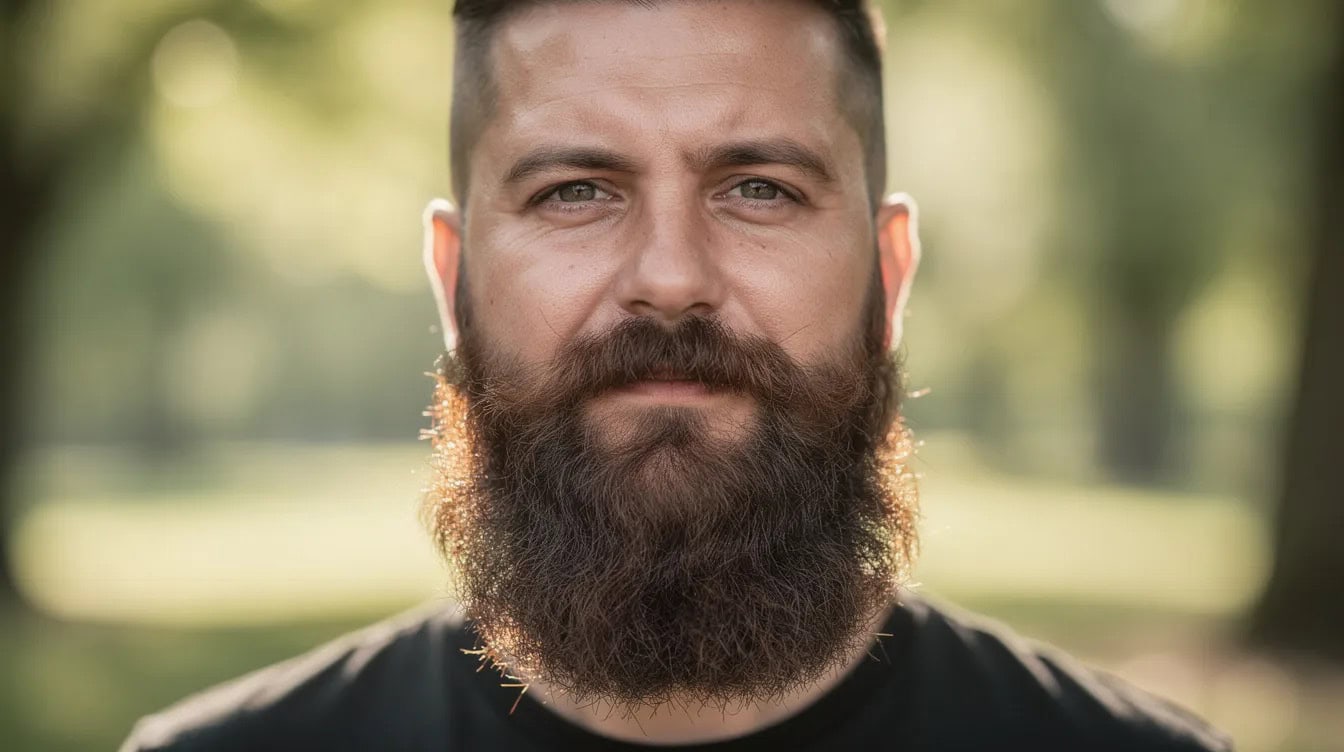
A rounded bottom. Not a point like a ducktail, not cut flat. A wide semicircle under the chin. This is the defining feature and the only shaping the style really asks of you.
Natural cheek lines. You tidy strays above the growth line, you do not carve a line into the cheek. That softness is deliberate, and it is what stops the beard reading as sculpted.
A full moustache, integrated. Grown into the beard rather than styled separately. That is the difference between a Garibaldi and a Verdi, which is the same rounded shape with the moustache waxed and kept apart.
Typical length is six to eight inches at the longest point, which is 15 to 20cm. Anything from about two inches with the rounded shape counts as a short Garibaldi.
It is named after Giuseppe Garibaldi, the Italian general whose beard became well known during his campaigns in the 1850s and 60s, and the style spread into general Victorian fashion from there.
The honest timeline
Facial hair grows about half an inch a month, so the arithmetic is unforgiving.
| What you have | Roughly |
|---|---|
| A short Garibaldi at two to three inches | 4 to 6 months |
| The classic version at four to six inches | 8 to 12 months |
| Eight inches and up | A year or more |
Weeks one to four: leave everything alone. It will itch. That is skin, not hair, and moisturiser helps more than patience.
Weeks six to eight: clean the neckline, nothing else. No cheek work, no shaping.
Month four or so: you have a short Garibaldi and can start rounding the bottom.
Month eight onward: the classic version.
The awkward stretch is roughly weeks four to ten, when it is long enough to notice and too short to have a shape. That is the entire cost of the style and you pay it once.
Why it is low maintenance, and what that actually means
The Garibaldi appears on our low maintenance list, which surprises people looking at a beard this size. The reason is that upkeep is about the number of edges you have to keep, not length.
There is no cheek line to redraw. No fade to blend. No point to keep symmetrical. The outline is a soft curve and the cheeks are wherever your beard stops. There is very little to get wrong on a Tuesday morning.
What it does need is an outline tidy every three to five weeks, and that is genuinely it for shaping. Compare that with stubble, which needs re-cutting every two or three days forever.
The trade is that you pay in months up front instead of minutes every week.
Trimming the rounded bottom
The one skill this style requires.
Wash and dry it fully first, and comb it down. Wet hair hangs longer than its real length and springs back shorter. Trimming a long beard wet is how men lose two months of growth in an evening.
Start with a longer guard than you think. Work down gradually. There is no way to put it back.
Work from the sides inward, toward the centre under the chin, in short conservative passes. You are aiming for a wide semicircle, so follow the curve rather than cutting across it.
Leave the cheeks alone beyond obvious strays above the growth line. Carving a cheek line here fights the whole style.
The neckline is the exception, and it does want a proper line: one to two finger-widths above the Adam's apple, in a soft U rather than a straight cut.
When in doubt, stop. A slightly long Garibaldi looks fine. An over-trimmed one takes a season to recover.
Daily care
Long beards need conditioning rather than cutting, and this is where the real routine lives.
Wash two or three times a week, not daily. Daily washing strips the oils that keep long hair flexible, and dry beard hair splits and breaks.
Oil it daily, on a slightly damp beard so it absorbs rather than sits on top.
Balm a few times a week on the longer versions, for enough hold to keep the shape through the day.
Comb it once or twice a day, downward and slightly outward at the cheeks, which is what preserves the wide silhouette. Skip this for a week and you get tangles that cost you length to remove.
Exfoliate the skin underneath about weekly. At this length the skin is easy to forget and it is where itch starts.
Who it suits
Oval and long faces get the most from it. The width at the sides is genuinely useful on a long face, where most beard advice is about adding width rather than length.
Round faces should go shorter and allow a little more length under the chin than at the sides, or the width works against you.
Square jaws suit it well, because the rounded bottom softens corners rather than repeating them.
Patchy cheeks are the real limit. Mild patchiness disappears at this length, since long hairs from the dense areas fall across thin ones. Genuinely sparse cheeks will not support the wide silhouette, and a tapered beard or a chin-led style is the better answer.
Where it goes wrong
Over-trimming the bottom. The commonest and most expensive mistake. Take less than you think.
Cutting the sides too short. You lose the width, and width is the style.
Carving a cheek line. It turns a Garibaldi into a boxed beard with delusions.
Trimming it wet. Covered above, and worth repeating.
Not combing it. Tangles at eight inches mean split ends, and split ends mean the beard stops getting longer because the ends break off as fast as the roots grow.
Questions we get asked
How long does it take to grow a Garibaldi beard?
Four to six months for a short version at two to three inches, eight to twelve months for the classic four to six inches, and a year or more beyond that.
What is a Garibaldi beard?
A wide, full beard with a rounded bottom edge, natural cheek lines and a full moustache grown into it. Typically six to eight inches at the longest point.
Who is it named after?
Giuseppe Garibaldi, the Italian general. His beard became widely known during his military campaigns in the 1850s and 60s and the style spread through Victorian fashion.
Is a Garibaldi high maintenance?
No, and that surprises people. There are no carved edges to keep, so it wants an outline tidy every three to five weeks. It does need daily oil and combing, which is true of any beard this length.
What is the difference between a Garibaldi and a ducktail?
The bottom edge. A ducktail tapers to a point, a Garibaldi is rounded and wide. The ducktail lengthens the face, the Garibaldi broadens it.
What is the difference between a Garibaldi and a Verdi?
The moustache. A Verdi is the same rounded shape with the moustache styled separately and often waxed. A Garibaldi grows the moustache into the beard.
Can I have a Garibaldi with patchy cheeks?
Mild patchiness stops showing at this length, because longer hairs fall across the gaps. Very sparse cheeks cannot support the width, and a different shape will serve you better.
Is it office-appropriate?
A shorter Garibaldi with a clean neckline is unremarkable in most workplaces now. An eight-inch one is a decision you will be asked about.
What haircut goes with it?
Something with less volume than the beard, so the two are not competing. Short sides with a little length on top is the usual answer, and letting the beard be the dominant feature is generally the right call.
Other full beards
Same shape, different length or moustache.
If this one is too much work
Same idea, less of your morning.
Browse by what matters to you
The same directory, cut a different way.