
Chin strap
Styles, Shaping and How to Keep the Line
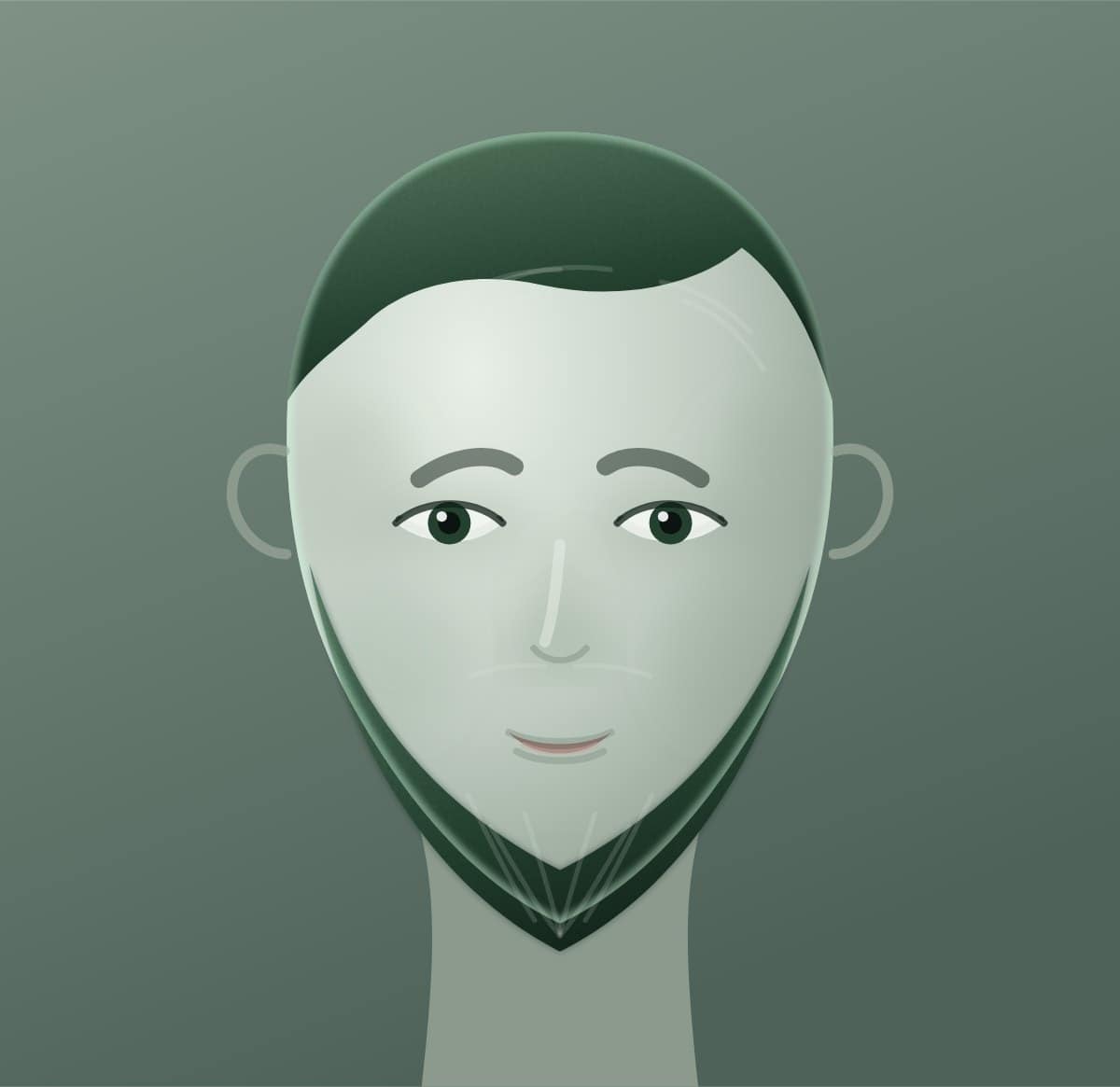
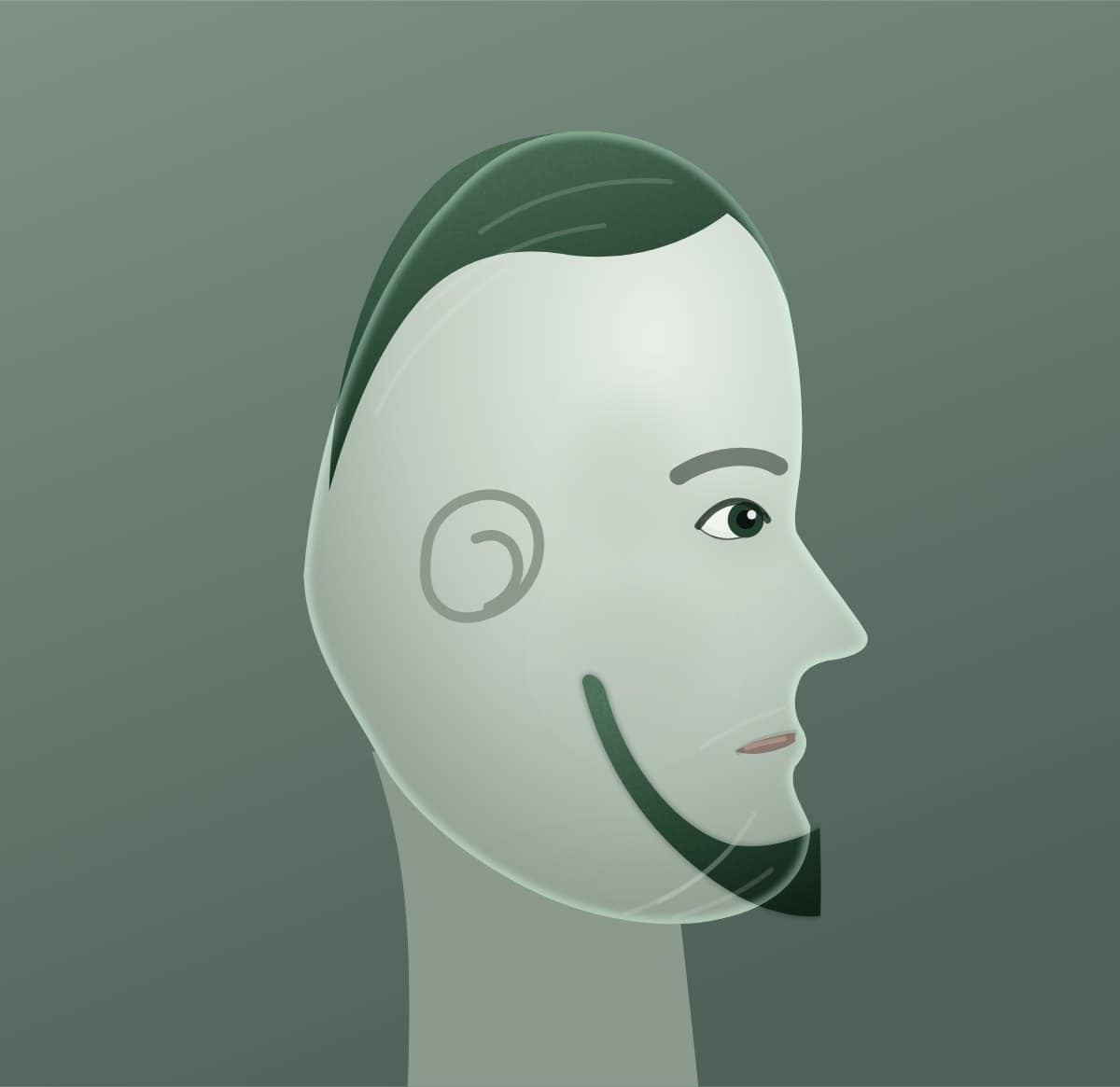
A chin strap beard is a narrow band of hair following the jawbone from one sideburn to the other, with the cheeks and neck shaved bare. It is one of the few beard styles that is entirely about a line, and it is judged almost purely on how clean that line is.
At a glance
- Also known as
- chinstrap beard
- What it is
- A narrow band following the jaw, cheeks bare.
- Length
- Short, under an inch
- Growing time
- 3 to 4 weeks
- Trim how often
- Every 1 to 2 days
- Best face shapes
- Crwn
- Moustache
- No
£5 off your first delivery
A chin strap is one narrow line and a lot of bare skin. There is no version of this that survives a blunt blade.
Valid on your first order of blades. We send the newsletter rarely, and you can unsubscribe in one click.
The variations
The same shape, worn differently. What changes is length, density and how much you take off at the edges.
Will it suit your face?
Where a style puts weight, and where it takes it away, is what decides whether it suits you. The table below is the short version.
| Ofal | Works | Works, though it is doing less than it would on a softer face. |
|---|---|---|
| Crwn | Ideal | A defined line along the jaw gives the face an edge it does not have. |
| Sgwâr | Avoid | Traces a jaw that is already sharp and reads as heavy. |
| Oblong | Works | Keep it low and wide rather than deep. |
| Heart | Works | Adds definition to a narrow jaw. |
| Diemwnt | Works | Widens the jaw, which is usually what a diamond face wants. |
How to cut one, in four steps
- Grow it out3 to 4 weeks. You need enough along the jaw to see the line before you cut it.
- Mark the lineFollow the jawbone with your fingers first. The line sits on the bone, not below it.
- Cut the top edgePrecision trimmer, working from the ear forward on both sides, a little at a time.
- Shave everything elseCheeks, neck and, on a chin curtain, the moustache. The style only reads if the bare skin is properly bare.
Full detail, tools and the common mistakes are in the guide below.
What a chin strap is
The band runs along the jawline itself, connecting the sideburns under the chin. Everything above it is shaved, everything below it is shaved, and the moustache is usually shaved too.
That leaves you with a strip of facial hair a centimetre or two deep tracing the bone. Because there is nothing else on the face, every wobble in the line shows. This is the style with the least margin for error in the whole directory.
Both spellings are in use: chin strap and chinstrap. They mean the same thing. Confusingly, so does the strap on a helmet and the device sold for snoring, which is why searching for chin strap styles turns up some unrelated results.
Chin strap beard styles
Classic chin strap. An even band following the jaw, roughly a centimetre deep, sideburn to sideburn. The reference version.
Thick chin strap beard. A wider band, two to three centimetres, which is more forgiving to cut and covers more of the jaw. The easiest version to live with.
Pencil thin chin strap. A very narrow line, sometimes only a few millimetres. Sharp, striking, and the least forgiving thing you can do to your own face without professional help.
Chin strap with a moustache. The band plus a separate moustache, with the gap between them shaved. It breaks up the outline and suits a longer face.
Chin strap goatee. The band plus a chin beard, joining the jawline to hair on the chin itself. More coverage, and a good option if a bare chin looks too severe on you. Of all the chin strap styles this is the most wearable.
Chin curtain. Related but distinct: the hair follows the jaw and fills in underneath rather than staying a narrow band. Worth knowing about as a fallback if the strap proves too much work.
Who chin strap styles suit
A chin strap beard draws a hard line along the jaw, which means it emphasises whatever jaw you have.
Round face. The best fit. A defined line gives the face an edge it does not naturally have, and it creates the impression of more structure.
Oval face. Works, though a subtle chin strap is doing less here than it would on a softer face.
Square or strong jaw. Be careful. Tracing an already sharp jawline can read as heavy. Of the chin strap beard styles, a thick band suits a strong jaw better than a thin chin strap beard, which sharpens what is already sharp.
Long face. Keep the band low and wide rather than deep, or add a moustache to break up the vertical.
Weak or receding chin. This is the honest one. A chin strap outlines the jaw, so if the jaw is soft, the line shows exactly where it is. A chin strap goatee or a chin curtain suits far better, because both add hair rather than drawing attention to the bone.
Density matters too. The band crosses the jaw and the chin, and it needs continuous facial hair coverage the whole way. Patchy growth in the middle of a narrow line is very visible, which is why a chin strap beard is a poor first choice if your facial hair is uneven.
What you need
The kit for a chin strap beard is short but the quality matters more than usual, because the whole style is edges.
A detail trimmer or a bare blade cuts both lines. A guarded beard trimmer sets the depth of the band. A razor and cream take the cheeks and neck down properly, since a trimmer leaves a shadow and this style depends on real contrast between facial hair and skin.
A hand mirror is worth having. The chin strap shape is judged in profile more than straight on, and you cannot see your own jawline from the side without one.
Growing it
Three to four weeks before you cut the line.
Grow the whole lower face rather than trying to shape a chin strap from the start. You need to see where your facial hair actually sits before deciding where the band goes, and that is not obvious at ten days.
Keep the neck shaved through the growing phase so the shape you eventually cut has clean skin to sit against.
Cutting the line
This is the whole style, so give it time and good light.
Find the jawbone. Run your fingers along it. The chin strap sits on the bone, not above it on the cheek and not below it on the neck.
Mark it if you can. A washable pencil or a light scoring pass with the trimmer gives you a line to commit to rather than one you are imagining.
Set the length. Take the band to length with a guarded trimmer, usually short. A chin strap beard reads better close than long.
Cut the top edge. With the guard off, working from the ear forward on each side, small amounts. Do one side fully, then match the second.
Cut the bottom edge. Same again, just below the jaw. The band should stay a consistent depth all the way round, which is harder than it sounds because the jaw curves.
Shave everything else. Cheeks, neck and, unless you are keeping one, the moustache. Use a razor rather than a trimmer so the contrast is real.
Check in profile. Straight on, both sides look fine. From the side, differences in depth are obvious.
Keeping it
Every one to two days, and there is no version of this that is low maintenance.
Two edges have to stay crisp, and the bare skin either side has to stay bare. Stubble on the cheek blurs the top edge, stubble on the neck blurs the bottom one, and either turns a chin strap beard into a face that needs a shave.
Once a week, check the depth of the band around its whole length. It thins where you cut most often, usually near the ears, and thickens where you cut least, and that drift is what turns a deliberate chin strap shape into an uneven one.
Part of why the chin strap beard remains popular despite the work is that it photographs well. A clean jaw line reads strongly in a picture, which is not true of every beard style.
What goes wrong
The line sits above the jaw. The most common fault. On the bone, not on the cheek.
The depth varies. Thicker at the chin, thinner at the ears, or the reverse. Check the whole run weekly.
The sides do not match. Cut one, copy it, check in profile.
It gets too thin. Every trim takes a little more. A pencil thin chin strap that started as a classic one is usually an accident.
The shaving gets skipped. Two thirds of this style is bare skin, and it only works while that skin is properly bare.
Questions we get asked
How long does it take to grow a chin strap beard?
Three to four weeks. Grow the whole lower face first so you can see your natural growth before committing to a line.
Where exactly should a chin strap sit?
On the jawbone itself. Run your fingers along the bone and follow it. Above the bone reads as a cheek line, below it reads as a neckline.
Is a chin strap beard high maintenance?
Yes. Two edges to hold and a face to keep shaved means attention every day or two. Among chin strap beard styles, a thick band is the most forgiving.
Does a chin strap suit a weak chin?
Not usually, because it draws a hard line along exactly the area you would rather soften. A chin strap goatee or a chin curtain works better.
What is the difference between a chin strap and a chin curtain?
Depth. A chin strap is a narrow band following the jaw. A chin curtain fills in beneath the jaw and covers the chin properly.
Can you have a chin strap with patchy facial hair?
Only if the patches are on the cheeks, which get shaved. A gap in the band itself is very visible, because there is nothing else on the face to distract from it.
Other jaw line styles
Same shape, different length or moustache.
If this one is too much work
Same idea, less of your morning.
Browse by what matters to you
The same directory, cut a different way.