
O Diário do Coronel / Cuidados e Guias
Itchy After Shaving? Why It Happens and How to Stop It
Última atualização em
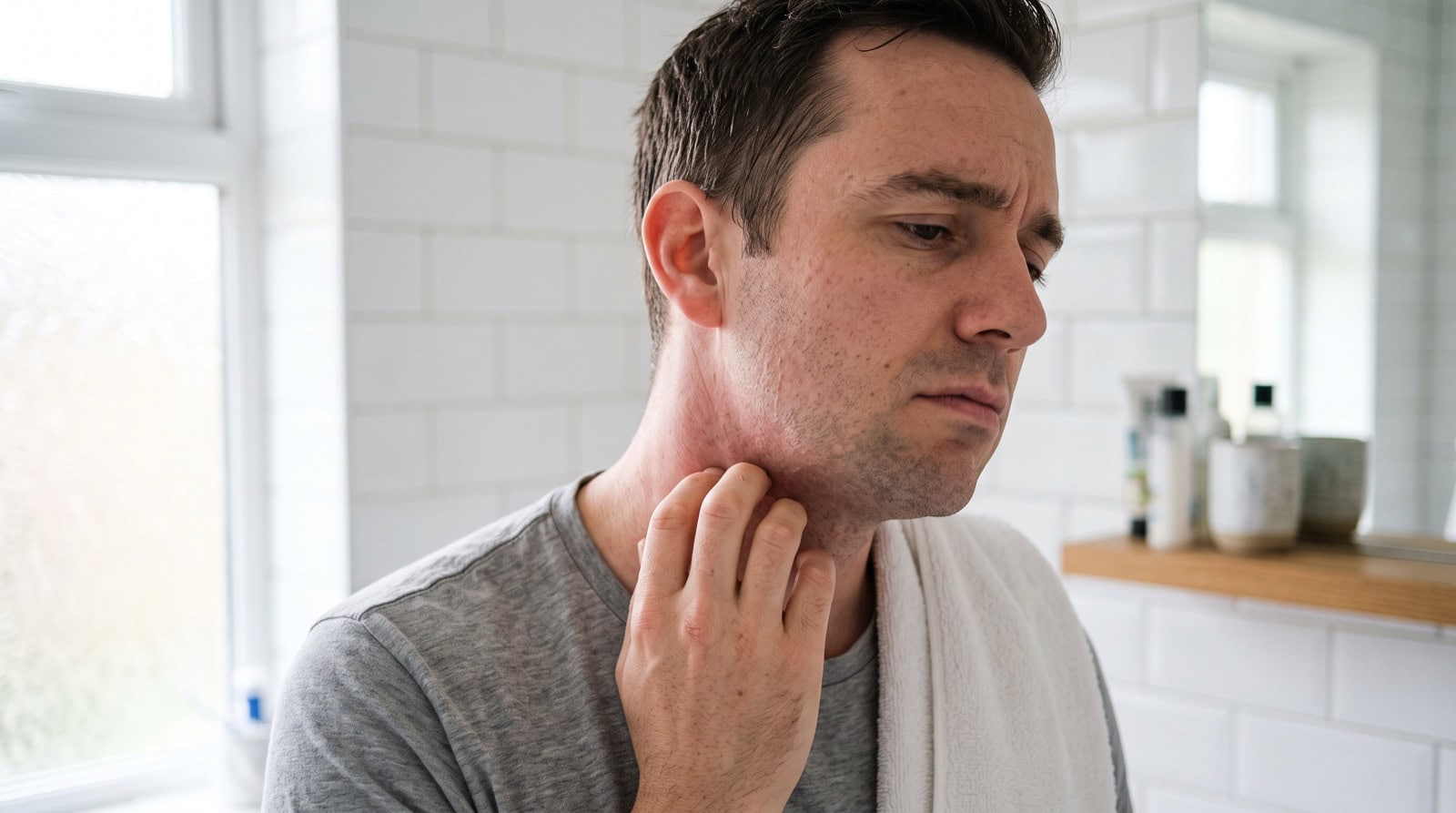
You finish a good shave, the skin feels smooth, and a few hours later it starts to prickle. By the next day you are scratching your neck, your chest or your shins without thinking about it. Itching after shaving is common, it is rarely serious (it is one of the most common kinds of shaving irritation), and it nearly always comes down to a handful of causes you can fix: dry skin, stubble growing back, a blunt blade, or something in the products you used. Here is how to calm the itch today, and how to change the shave so it stops coming back.
Nesta página
Pontos-chave
- Most post-shave itch is dry skin or regrowth. Shaving can leave skin dry and tight, and the cut tips prickle as they grow back.
- Quick relief: a cool, damp flannel, a fragrance-free moisturiser on slightly damp skin, loose clothing, and no scratching.
- Leave the area alone for a day or two. Shaving again over itchy skin keeps the cycle going.
- Prevention is mostly the shave itself. Warm water, a proper shaving cream, a sharp blade, light pressure and shaving with the grain.
- Consulte um farmacêutico ou um médico de família if the itch comes with spreading redness, heat, swelling, pus or a fever, or lasts more than a week or so.
What causes itchiness after shaving?
Usually more than one thing is going on at once. These are the common causes of itchy skin after shaving.
A blunt blade is one of the main causes of itchy skin after shaving. The Bearded Colonel envia recargas novas de cinco lâminas de acordo com o calendário que escolher, a partir de 1,75 £ por recarga.
Veja os planosDry skin. Shaving can leave skin feeling dry and tight, and dry skin itches. Central heating in winter and hot showers make it worse, because hot water washes away the skin’s natural oils.[1]
Stubble growing back. Freshly cut hair has uneven, sharp edges, which is what makes regrowth feel prickly, and the drier the hair, the pricklier it feels.[2] As the hair grows back over the next day or two, those ends rub against clothing. This is why the itch often arrives a day after the shave rather than straight away.
Ingrown hairs. Sometimes the cut hair curls back into the skin instead of growing out. That makes a small, itchy, sometimes sore bump[3], most often on the neck, the bikini line and wherever hair is coarse or curly. Shaving against the grain makes it more likely.
Dull blades. A dull razor drags and tugs at the hair instead of slicing it, and you end up going over the same patch again and again. That scrapes the skin and leaves it irritated even when nothing shows.
Harsh chemicals in shaving products. Strong fragrance, high alcohol content and menthol can all irritate skin that has just been shaved. Some people have an allergic reaction to a particular ingredient and get itchy, red skin every time they use it. Fragrance is second only to nickel as a cause of allergic contact dermatitis.[4]
Dry shaving or rushing. No water and no shaving cream means the blade is dragging over bare skin, and dry shaving is a classic cause of irritação causada pelo barbear.[5]
How to stop itching after shaving, right now
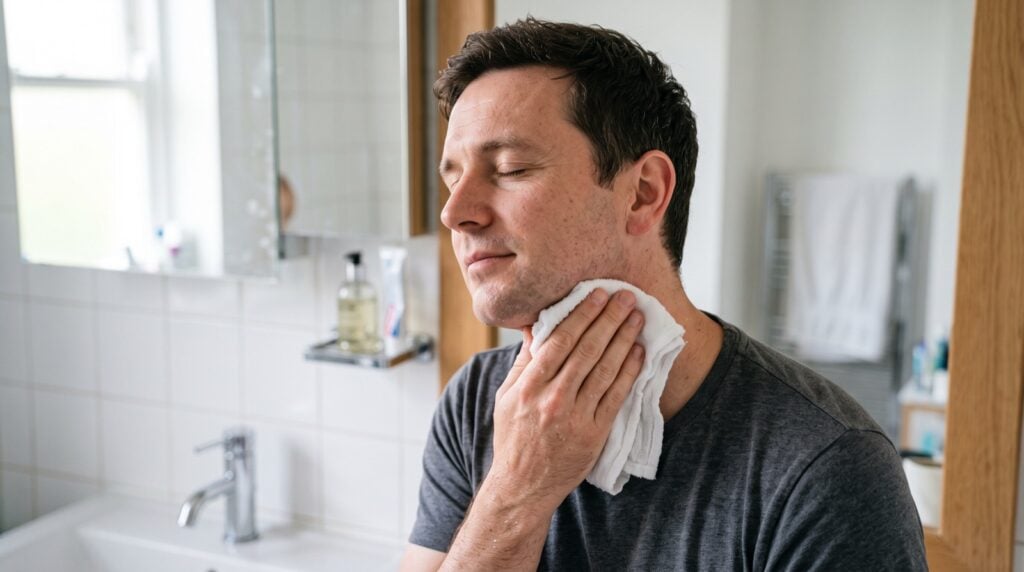
If you are reading this mid-scratch, start here.
- Use a cold compress. Soak a clean flannel in cold water, wring it out and hold it on the itchy area for five to ten minutes. Repeat a few times through the day. Cold helps calm irritated skin[6] and takes the edge off the urge to scratch.
- Moisturise while the skin is slightly damp. Pat dry, then apply a plain, fragrance-free moisturiser or aloe vera gel. Moisturiser applied to damp skin helps seal the water in.[1]
- Do not scratch. Scratching damages the skin barrier, makes the itch worse and can let infection in. If you have to do something, press or tap the area instead.
- Wear something loose. Tight waistbands, collars and seams rub newly shaved skin. Soft cotton is kindest.
- Skip the strong stuff. No perfumed aftershave, alcohol toner or menthol balm until the irritated skin settles.
- Avoid shaving it again yet. Give the area at least a day or two. Shaving over itchy skin starts the whole thing again.
A lukewarm (not hot) shower or an oatmeal bath can help if the itch covers a large area such as both legs.[5] For very itchy patches that do not settle, a pharmacist may suggest a mild hydrocortisone cream for a few days.[6] Ask them first, and check before using it on your face, on broken skin or on intimate areas.
Itchy legs after shaving
Legs get their own section because “why are my legs so itchy after shaving” is one of the most common versions of the question. A few things make legs worse than most areas.
- The skin is drier. The shins are where dry skin turns up more than anywhere else on the body[7], so shaving leaves them tight quickly.
- Large areas mean more passes. It is tempting to go over patches you missed without lathering again.
- Clothing rubs constantly. Jeans, tights and sports kit all brush against regrowing stubble.
To stop itchy legs after shaving, shave at the end of a warm shower when the skin and hair are soft, use plenty of shaving cream and re-lather before going back over anywhere, and moisturise from ankle to thigh straight after drying off. On days you are not shaving, keep moisturising. Our guides to shaving your legs as a man and to looking after legs and the bikini area go into more detail.
How to avoid itching: a shave routine that stops it coming back
Prevention matters more than any cream you put on afterwards. Good shaving techniques all have the same aim: cut each hair cleanly, once, without scraping the skin. That is how you prevent itchiness rather than treating it.
Soften the hair first. Shave during or just after a warm shower, or hold a warm, damp flannel on the area for a couple of minutes. Soft hair cuts with less effort. Gentle exfoliation a day or so beforehand helps clear dead skin that can trap hairs; our guide on se se deve fazer a esfoliação antes ou depois do barbear aborda a questão do calendário.
Apply shaving cream properly. Shaving cream holds water against the hair and puts a cushion between the blade and your skin, so the razor can glide smoothly instead of dragging. Work it in for a few seconds rather than dabbing it on. If you are shaving sensitive skin, pick a cream made for sensitive skin, without strong fragrance.
Use a sharp razor. The American Academy of Dermatology suggests a fresh blade every five to seven shaves to keep irritation down.[8] Change it sooner if it starts to pull. Our guide on com que frequência deve trocar a lâmina de barbear explica os sinais.
Go with the grain, lightly. Barbeie-se na direção do crescimento dos pêlos[8], with short strokes and no pressure. Shave carefully around the jaw, knees and ankles. Rinse the blades often. If you want it closer, go across the grain on a second pass rather than straight against it; here is por que é que fazer a barba na direção contrária ao crescimento dos pelos causa problemas.
Finish well. Rinse with cool water, pat dry with a clean towel (no rubbing), and moisturise straight away while the skin is still a little damp. This one habit makes the biggest difference to itchy skin after shaving.
Da estante do Coronel
Less scraping, less itching
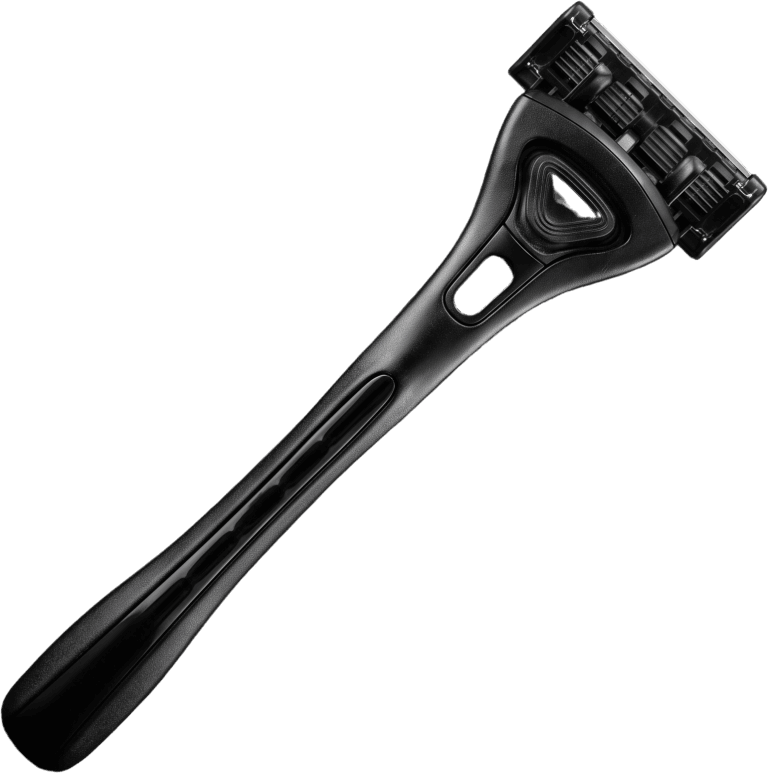
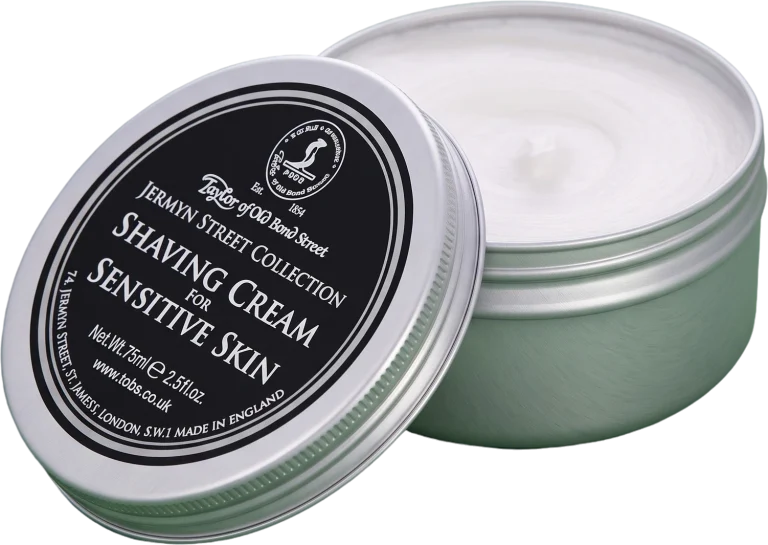
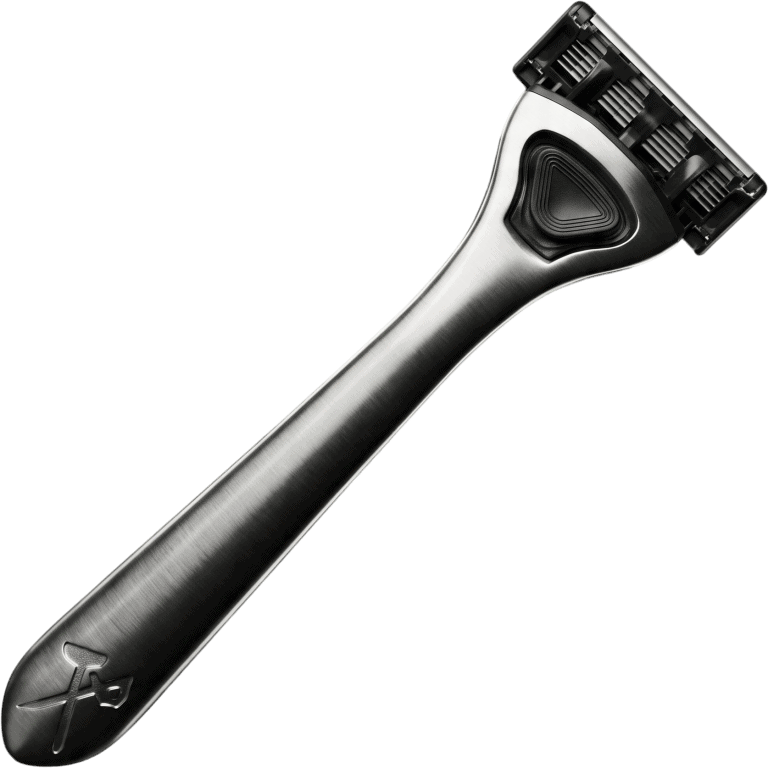
Todas as primeiras encomendas do modelo Classic ou VIP incluem uma garantia de reembolso de 30 dias. Experimente-o durante um mês e, se não for do seu agrado, reembolsamos-lhe o valor total sem que tenha de devolver o produto.
Area by area
Face and neck. The neck is where most men itch, because facial hair grows in several directions there and ingrown hairs are common. Map the grain before you shave, use plenty of shaving cream, and finish with a light, alcohol-free moisturiser.
Chest and body. Body hair is often coarser, and clothing rubs it all day. Trim first, shave with the grain, and moisturise. Our guide on how to shave your chest without the itch that follows has the full routine.
Underarms. Lots of friction and sweat. Shave with the arm raised high, rinse well and let the skin settle before deodorant goes on.
Below the belt and bikini line. The skin here is sensitive and folds a lot. Trim long pubic hair first, use a generous layer of shaving cream, shave only with the grain, and wear loose cotton underwear for the rest of the day.
If one of these sensitive areas itches every single time however careful you are, shave it less often, or trim instead of shaving to the skin. Some people move to other kinds of hair removal, such as laser hair removal, for the areas that never settle.
Ingrown hairs and itchy bumps
An ingrown hair looks like a small raised bump, sometimes with the hair visible under the surface. They itch, and they are very tempting to pick.
- Hold a warm, clean flannel on the bump for a few minutes to soften the skin.
- Once it has calmed, exfoliate gently to help the hair work its way out.
- Do not dig at it with tweezers or squeeze it. That is how a bump becomes infected, and it can leave a dark mark.
- Stop shaving over it until it has gone.
If you keep getting them, our guide on como eliminar os pêlos encravados covers treatment, and the one on irritações causadas pelo barbear goes into causes and prevention in more depth.
Harsh chemicals and soothing ingredients: what to put on itchy skin
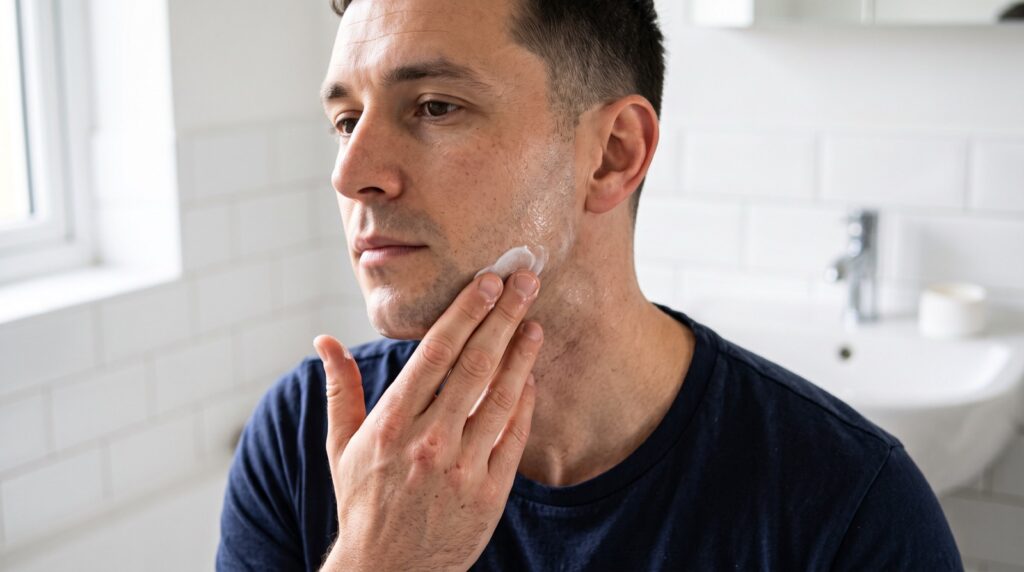
Gentle and plain is the rule. These are the ingredients commonly found in products for dry, itchy skin.
| Look for | O que faz |
|---|---|
| Gel de aloé vera | Soothing on freshly shaved skin[5] |
| Glycerin | Draws water into the skin[1] |
| Ceramides | Ajude a pele a atrair e a reter água[1] |
| Oatmeal | A long-standing ingredient for itchy, irritated skin[5] |
Whatever you choose, check the label and keep it simple. Avoid heavy perfume, high alcohol content, strong menthol and harsh scrubs on freshly shaved skin.
If you have eczema or tend to react to skincare, patch test anything new before putting it on a freshly shaved area. The American Academy of Dermatology suggests a coin-sized spot on the inside of your arm, twice a day for seven to ten days.[9]
Quando consultar um farmacêutico ou um médico de família
Most itching after shaving settles within a few days with the steps above. Get advice about skin problems that do not follow that pattern, especially if you notice:
- spreading redness, heat, swelling or increasing pain
- yellow or green pus, or clusters of pus-filled spots around the hair follicles
- a fever or feeling unwell
- itching that keeps you awake or lasts more than a week in the same place
- itching in areas you have not shaved, or scaly, cracked skin
A pharmacist is a good first stop and will tell you if you need your GP. If you have diabetes or anything that affects how your skin heals, get advice sooner.
Perguntas que as pessoas fazem
Why does my skin itch a day or two after shaving, not straight away?
That delayed itch is usually stubble growing back. The freshly cut ends feel prickly and rub against clothing a day or so later.[2] An ingrown hair can also take a day or two to show up.
How long does itching after shaving last?
For most people it settles within a few days with cool compresses, moisturiser and no further shaving over the area. If it lasts more than a week, or comes with redness, heat or pus, see a pharmacist.
Why are my legs so itchy after shaving?
Leg skin is drier than most, so shaving leaves it tight, and clothing rubs the regrowing hair all day. Shave in a warm shower with plenty of shaving cream, use a sharp blade, and moisturise straight after and on the days in between.
Is it OK to shave without shaving cream if I am in a hurry?
It is the fastest way to get itchy skin. Even half a minute with warm water and a thin layer of shaving cream is far better than dragging a blade over dry skin.
How often should I change my blade to stop the itch?
As soon as it starts to tug or drag. The American Academy of Dermatology suggests every five to seven shaves[8], sooner for coarse hair or body shaving.
Could the itch be something other than shaving?
Yes. Eczema, allergies, fungal infections and other skin conditions can all itch in shaved areas. If the itch appears when you have not shaved recently or spreads beyond the shaved patch, get it checked by a GP.
Fontes
- Harvard Health Publishing, 9 maneiras de combater a pele seca
- Cleveland Clinic, Will Shaving Make Your Hair Grow Back Thicker?
- NHS, Pêlos encravados
- DermNet, Alergia a fragrâncias
- Cleveland Clinic, Irritação causada pelo barbear: causas e tratamento
- DermNet, Barbear
- DermNet, Pele seca (xerodermia)
- Academia Americana de Dermatologia, Depilação: Como fazer a depilação
- Academia Americana de Dermatologia, Como testar produtos de cuidados da pele
Perdeu um lugar?
Mais de Cuidados e Guias
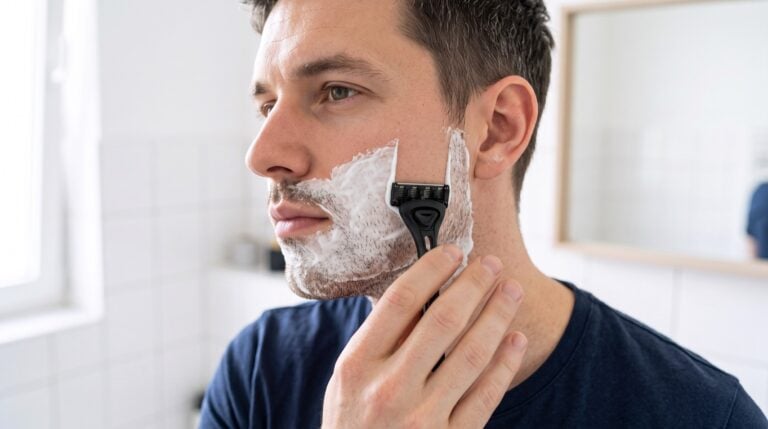
Single Blade vs 5 Blade Razor: How Many Blades Do You Actually Need?
A single blade razor uses one exposed edge. A 5 blade razor stacks five thin blades in a pivoting cartridge.
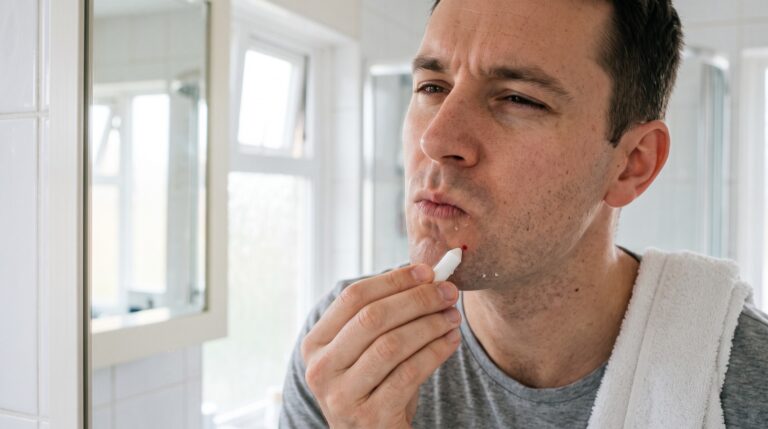
Styptic Pencil and Alum Block: How to Stop a Shaving Cut Bleeding
A styptic pencil is a small white stick that stops a shaving cut bleeding in seconds.
Os homens devem depilar-se os braços? O que acontece e como fazê-lo corretamente
A maioria dos homens nunca pensa nos pêlos dos braços até que algo os leve a fazê-lo. Uma nova tatuagem que queiras que as pessoas vejam.