
The Colonel’s Journal / Grooming & Guides
Should Men Shave Their Legs? Shave, Trim or Leave It
Last updated on

There is no rule in male grooming that says either way. Men can shave their legs if they want to, and plenty never will. If you are a swimmer, a cyclist, a bodybuilder, or you are just tired of hot, hairy shins under a pair of shorts, shaving or trimming your leg hair makes sense. If none of that applies, leaving it alone is fine too. This guide covers why men do it, what it costs you in time and itch, how to trim or shave your legs properly, and the bits people always ask about, like the thighs and the feet.
On this page
Key takeaways
- Whether men should shave their legs is down to the man. Sport, muscle definition, tattoos and comfort in the heat are the usual reasons.
- Trimming is the easy option. A body trimmer takes the bulk off, takes ten minutes and carries almost no risk of razor burn or ingrown hairs.
- Smooth legs need shaving every two to three days. Leave it longer and the regrowth itches.
- Shave with the grain, on warm wet skin, with a sharp razor and plenty of shaving cream. Take the knees and ankles slowly.
- The biggest problems are itchy stubble, razor burn and ingrown hairs, mostly on the thighs and the backs of the knees.
- Leg hair grows back the same thickness it was before. You can stop at any point.
Do men shave their legs?
Some do. As far as anyone can tell, most men leave their leg hair alone. You will find percentages online claiming to show how many men shave or trim their legs, but we could not trace any of them back to a survey we would trust, so we are not going to repeat them. What is easy to see is where it happens. Competitive swimmers and road cyclists have shaved their legs for decades, footballers and bodybuilders often do, and a lot of men who never think of themselves as “groomed” run a trimmer over their shins before a summer holiday.
Legs get through razor blades a lot faster than a face does. The Bearded Colonel posts fresh five-blade refills through your letterbox on the schedule you choose, so a sharp one is always in the drawer.
See the plansSo yes, it is normal for guys to shave their legs, and it is just as normal not to. Nobody at the gym or on the beach is checking.
Why men shave their legs
The benefits of shaving legs as a man fall into three groups: sport, looks and comfort.
Sport
Swimmers are the clearest case, and the sport with the best research on whether shaving helps athletic performance. In a 1989 study, collegiate swimmers who shaved their arms, legs and torso used less oxygen, built up less lactate and covered more distance per stroke over the same swim. The researchers put it down to lower drag in the water.[1] Many swimmers also say smooth skin lets them feel the water better, which is harder to measure but explains why the pre-race shave is a ritual.
Cyclists give practical reasons. Road rash is easier to clean and dress on bare skin after a crash, and taking plasters and tape off hairless legs hurts a lot less. Post-ride massage is easier too. Claims about aerodynamic gains are argued over endlessly, so treat those as a bonus at best.
Footballers shave for similar reasons: strapping, tape and shin pads sit better on smooth skin, and an injury from a slide tackle is easier to wash and look after. It can go wrong. In 2017 Real Madrid’s Marco Asensio missed a Champions League game with an infected spot on his leg, which Spanish reports blamed on shaving.[5] Male athletes in running and rugby often trim rather than shave, mainly to stop hair catching in compression kit.
Looks
Muscle definition shows up far more on smooth legs, which is why bodybuilders compete without body hair and many men who train their leg muscles hard like the look. Tattoos on the calves, shins and thighs also read much better without hair over them. Then there is plain preference. Some men like the clean look in shorts or swimwear, some partners prefer it, and that is reason enough.
Comfort
Thick leg hair holds sweat. In hot weather, or under gym kit, shaved or closely trimmed legs feel cooler and less itchy. Removing leg hair also makes skin care easier. Moisturiser and sunscreen spread more evenly on bare skin, which helps if your legs get dry in winter. Some men simply see it as part of their personal hygiene, the same as trimming anywhere else.
The downsides of shaving your legs
Before you start shaving, know what you are signing up for.
- Time. A man’s legs are a lot of skin. The first full shave can take half an hour, and keeping them smooth means doing it again every few days.
- Itchy regrowth. Leg hair comes back as blunt, prickly stubble within a day or two. The itch is usually worst in the first week.
- Razor burn and ingrown hairs. Both are common on the legs, especially the thighs, the backs of the knees and anywhere tight clothing rubs. Shaving a big area also means more chances for a nick.
- Dark dots. Some men get small dark spots on shaved legs, often called strawberry legs. They usually come from clogged or irritated pores and settle with better technique and exfoliation.
- Blade cost. Legs blunt a razor faster than your face, so you will get through more blades.
Most of these come down to technique and a sharp blade, which we cover below.
Should you trim or shave your leg hair?
For most men, trimming is the better starting point. A body trimmer with a guard takes leg hair down to a neat, even length without the blade ever touching skin, so there is very little risk of irritation. The legs still look natural, just tidier, and it slots into a weekly grooming routine without much effort. If you have never touched your leg hair before, trimming tells you whether you like the change before you commit to a razor.
Shaving gives you completely smooth legs, the closest shave you can get at home. It is the right call for swimmers, bodybuilders, anyone showing off leg tattoos, and men who simply prefer the feel. The trade-off is the upkeep and the itch.
Here is how the two compare side by side.
| Trimming | Shaving | |
|---|---|---|
| Result | Short, tidy, natural | Completely smooth |
| How often | Every 1 to 2 weeks | Every 2 to 3 days |
| Time per session | 10 to 15 minutes | 20 to 30 minutes at first |
| Risk of razor burn or ingrown hairs | Very low | Moderate |
| Regrowth | Barely noticeable | Prickly stubble in a day or two |
| Best for | First-timers, sensitive skin, runners | Swimmers, cyclists, bodybuilders, tattoos |
If you want longer-lasting results, waxing and hair removal cream are the other options. Our guide to shaving vs waxing vs hair removal cream goes through the pros, cons and costs of each. Laser hair removal is the long-term route, but it is expensive and done in a clinic.
How often should you shave your legs?
To maintain properly smooth legs, shave every two to three days. You do not need to shave daily, and daily shaving makes ingrown hairs more likely.[2] If you are fine with a bit of stubble, once or twice a week is enough.
Athletes often shave the day before a race or match rather than on a schedule. If you are trimming, every week or two keeps things even.
Watch your blade. The American Academy of Dermatology suggests replacing a blade after five to seven shaves.[3] Legs cover far more ground than a face, so if you shave them often, expect to change it sooner. Tugging, or new irritation in places that used to be fine, means it is blunt. There is more on this in how often you should change your razor.
Should you shave your thighs?
The thighs are where most men hesitate. You don’t have to shave the whole leg. Plenty of men shave from the ankle to just above the knee, the part that shows in shorts, and trim the thighs short. That avoids a hard line while keeping the thighs, which are more prone to ingrown hairs and chafing, out of the razor’s way.
If you do shave your thighs, go slowly where the skin is softer on the inner thigh, keep the strokes with the grain, and moisturise afterwards. Tight shorts or cycling kit rubbing on freshly shaved inner thighs is a common cause of irritation, so give the skin a day before a long run or ride. Whatever you do, blend it. Taper the trimmer guard down over a few centimetres so there is no obvious edge between shaved and unshaved hair.
Should men shave their feet?
If you shave your legs and wear sandals, flip-flops or no socks, you will probably want to deal with the hair on the tops of your feet and toes as well, or the line at the ankle stands out. It is a small area and quick to do. Use light pressure, as the skin over the tendons and toe joints is thin and bony, and do the toes one at a time. A trimmer is often easier than a razor here.
If you only trim your legs, a quick pass over the toes with the same trimmer is usually all the feet need.
How to shave your legs as a man
A normal multi-blade cartridge razor is all you need. You do not need a special body razor. The step-by-step guide to how to shave covers the basics in more detail, but here is how it works on legs.
- Trim first. If the hair is long, take it down with a trimmer before you pick up a razor. Long, thick hair clogs a blade in seconds and pulls rather than cuts.
- Shave in or after a warm shower or bath. Warm water softens the hair and the skin.[3] Give it a few minutes. Our piece on whether to shave before or after a shower explains why after is better. Exfoliate gently with a mitt or scrub to clear dead skin cells, but skip it if the skin is already sore.
- Use a proper shaving cream. Work a thick layer of lather over one section at a time for a comfortable shave. Shower gel, soap and thin shaving foam do not give the blade enough cushion. Never shave dry.
- Shave with the grain. On most men’s legs the hair grows downwards, so shave from knee to ankle on the shins. The backs of the thighs and knees can grow in odd directions, so feel which way it runs first. Use long, light strokes and let the razor do the job. Shaving with the grain helps prevent razor burn and bumps.[3]
- Rinse the blade often. Leg hair builds up fast. Rinse after every stroke or two.
- Go slowly over knees and ankles. Bend the knee to flatten the skin, and use short strokes around the ankle bone and Achilles. This is where most nicks happen.
- Rinse with cool water and pat dry. Then put on a fragrance-free moisturiser to soothe the skin while it is still slightly damp. Do the same on the days you don’t shave, since dry skin makes the itch worse.
From the Colonel’s shelf
Kit for a whole leg of shaving
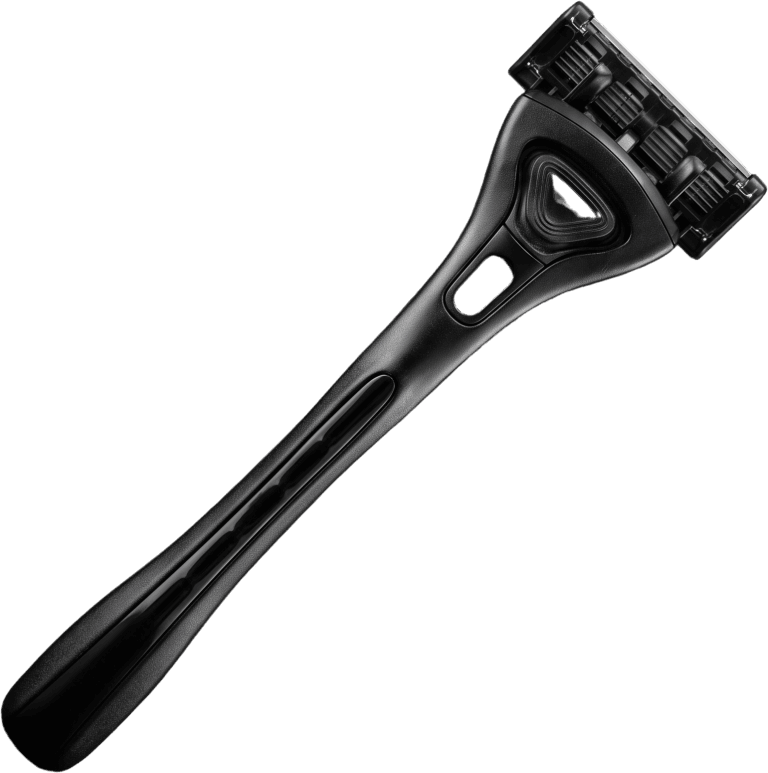
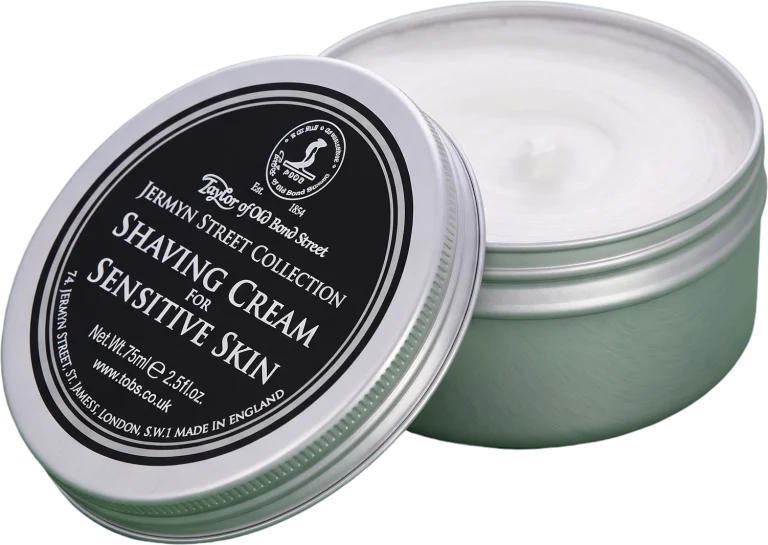
Every first Classic or VIP order comes with 30 days money back. Shave with it for a month, and if it is not for you, we refund it in full with nothing to send back.
Avoiding ingrown hairs and razor burn on your legs
Ingrown hairs happen when a cut hair curls back into the skin. They are more likely if your hair is coarse or curly, and the NHS lists the legs as one of the usual places for them.[2] Razor burn is the hot, red, stinging rash that can appear straight after a shave. The fixes overlap.
- Use a sharp blade and shave with the grain, with as few strokes as possible.[2]
- Do not shave every day if you are prone to bumps. Leaving a little stubble helps.[2]
- Exfoliate a couple of times a week between shaves to help trapped hairs free themselves.[2]
- Do not pick or squeeze them. That is how they get infected.[2]
If you get crops of red, itchy spots around the hair follicles after shaving, that can be folliculitis. Stop shaving the area until it settles and give the skin a proper break before you start again.[4] If a spot becomes painful, hot or swollen, or you feel unwell with it, see a GP.[2]
For the full treatment advice, see our guides on how to get rid of ingrown hairs and razor burn.
Who should think twice
Leg shaving is safe for most men. A few should take more care. If you have skin conditions such as eczema or psoriasis on your legs, shaving can set off a flare, so trimming is the gentler choice and your GP can advise. If you take blood-thinning medicine, small nicks bleed for longer, so an electric trimmer is the safer tool. Never shave over broken skin, a rash or an infected spot.
Questions people ask
Do girls prefer men with shaved legs?
There is no reliable data on this, and preference varies a lot from person to person. Some women and partners like smooth legs, many prefer leg hair left natural or neatly trimmed, and most care far less than men think. If you are doing it for someone else, ask them.
Are hairy legs attractive on guys?
Plenty of people think so. Hairy legs are the default for most men, and a lot of people find them more masculine than shaved legs. Trimming is a middle ground that keeps the hair but makes it look tidy.
What percent of straight men shave their legs?
We could not find a trustworthy figure. The numbers that circulate online come from marketing polls without published methods, so we would not rely on them. Shaving your legs says nothing about your sexuality either way. Swimmers, cyclists and footballers have done it for decades.
Do male models shave their legs?
Often, yes, or they trim them. Smooth or trimmed legs photograph more cleanly and show muscle definition better, so it is common for swimwear and fitness shoots. It depends on the brief, and natural leg hair is used too.
Does leg hair grow back thicker after shaving?
No. Shaving cuts the hair at the surface and leaves a blunt tip, which feels coarser and can look darker as it grows. The hair itself is no thicker, and it grows at the same rate. Our article on whether shaving makes hair thicker explains why.
Should men shave their legs when wearing shorts?
Only if you want to. If thick leg hair bothers you in shorts, a trim is usually enough to make it look tidier without the upkeep of shaving.
Should you shave your arms too?
Many men who shave their legs leave their arms alone, but if leg hair is gone and arm hair is thick, the difference can be noticeable. Our guide on whether men should shave their arms covers that one.
Sources
- Sharp RL, Costill DL. Influence of body hair removal on physiological responses during breaststroke swimming. Medicine and Science in Sports and Exercise, 1989.
- NHS, Ingrown hairs
- American Academy of Dermatology, Hair removal: How to shave
- DermNet, Folliculitis
- Sky Sports, Real Madrid’s Marco Asensio misses European tie with infected pimple (14 September 2017)
Missed a spot?
More from Grooming & Guides
Should Men Shave Their Arms? What Happens, and How to Do It Properly
Most men never think about their arm hair until something makes them. A new tattoo you want people to see.
Shaving vs Waxing vs Hair Removal Cream: The Honest Pros and Cons
Shaving, waxing and hair removal cream all get rid of unwanted hair, and each one is the right answer for somebody.

Should You Shave Before or After a Shower?
Most of us run the morning routine on autopilot, and the order of shower and shave is usually whatever we did as teenagers.